
The persistent 15-month contraction in the UK construction sector has fundamentally shifted the focus of asset management from new-build investment to the sophisticated life-extension of existing infrastructure. Identifying competent specialist structural repair contractors UK is no longer a routine procurement task; it’s a critical engineering necessity to avoid the catastrophic failures associated with substandard material application. You’re likely aware that general contractors often lack the nuanced technical design support required for complex remediation, which frequently results in unnecessary operational disruptions and compromised safety standards.
This article presents a comprehensive engineering framework to help you vet and select partners for high-stakes structural projects. You’ll gain a methodical checklist for evaluating technical proficiency against BS EN 1504 and PAS 2000:2026 requirements. We’ll explore how to ensure compliance with the Building Safety Regulator’s newest mandates whilst achieving the desired outcome of extended functional lifespan and minimal downtime for your critical assets.
Key Takeaways
- Distinguish between general maintenance and bespoke structural engineering to secure the long-term integrity of critical infrastructure.
- Assess specialist structural repair contractors UK through their technical command of advanced materials, including the application of proprietary Tyfo® Fibrwrap® systems.
- Verify contractor capabilities in providing bespoke engineering calculations and detailed feasibility studies for Carbon Fibre Reinforced Polymer (CFRP) reinforcement.
- Implement a robust quality assurance framework that monitors material mixing and application standards to ensure compliance with rigorous engineering benchmarks.
- Quantify the economic advantages of life-extension strategies that prioritise non-invasive composite technologies over traditional demolition and replacement.
Defining the Role of Specialist Structural Repair Contractors in the UK
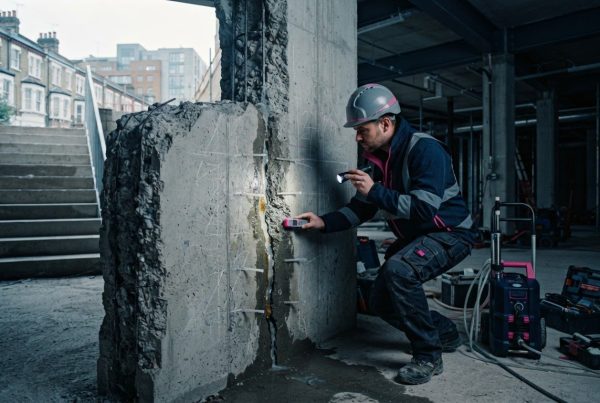
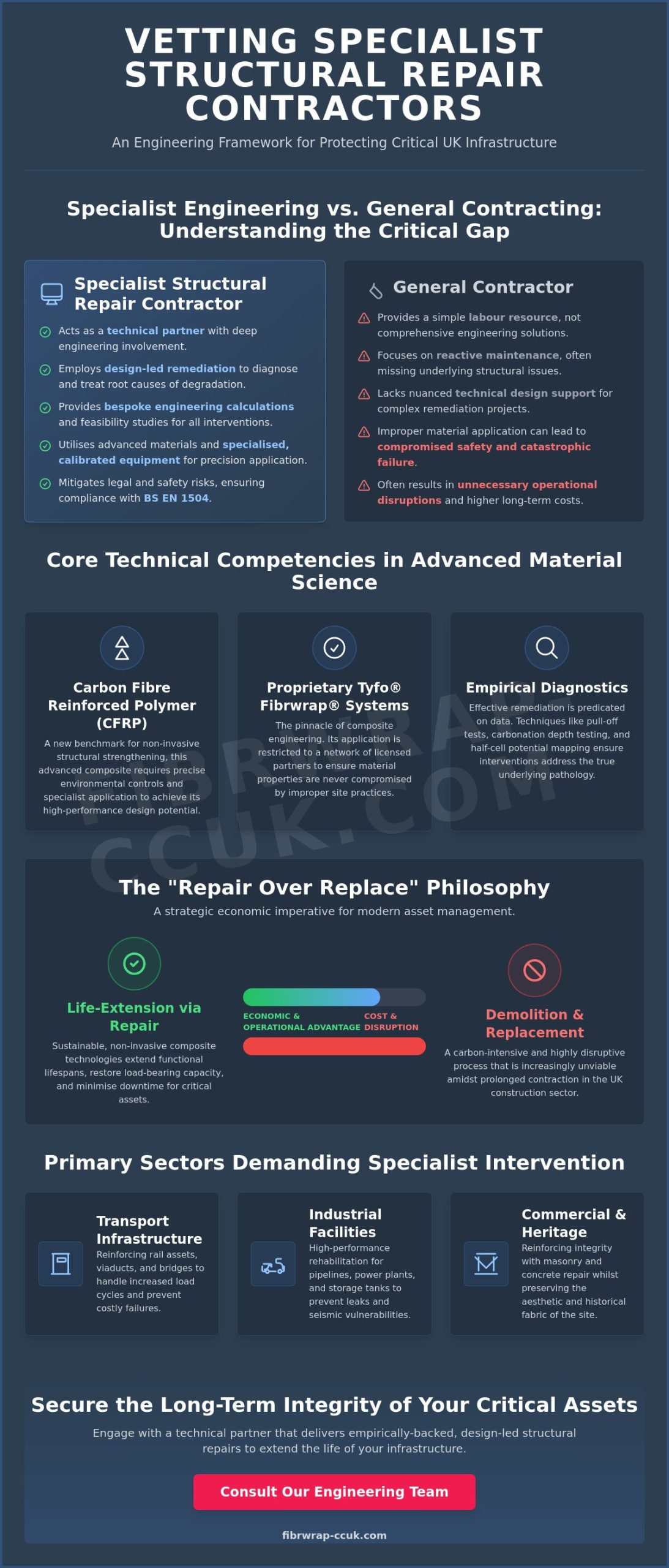
The distinction between a traditional builder and specialist structural repair contractors UK is defined by the depth of engineering involvement. Rather than providing a simple labour resource, a specialist acts as a technical partner. They focus on the fundamental principles of structural integrity and failure to diagnose the root causes of degradation. This shift from reactive maintenance to design-led remediation is essential as the UK’s infrastructure portfolio reaches critical age thresholds. It’s a move away from commodity services towards high-precision engineering interventions.
Adopting a “Repair over Replace” philosophy isn’t merely an environmental consideration; it’s a strategic economic imperative. With the S&P Global/CIPS UK Construction PMI showing a prolonged contraction as of early 2026, asset managers are increasingly prioritising the extension of functional lifespans. Structural strengthening using advanced materials offers a sustainable alternative to the carbon-intensive process of demolition and reconstruction. This approach allows essential assets to remain operational whilst their load-bearing capacities are restored or enhanced through sophisticated science.
Specialist vs. General Contractors: Understanding the Gap
General contractors often lack the calibrated equipment and specialised training required for the precision application of advanced composites. The gap is most evident in the requirement for bespoke engineering calculations. A specialist firm integrates an in-house design team to ensure that every intervention, from resin injection to Carbon Fibre Reinforced Polymer (CFRP) strengthening, is backed by empirical data. This rigour mitigates the legal and safety risks inherent in structural modifications. Improper execution by an untrained workforce can lead to catastrophic failure and significant liability for the asset controller.
Primary Sectors Requiring Specialist Intervention
Specialist intervention is most frequently demanded across three core sectors where the cost of failure is absolute. Transport infrastructure, including rail assets and viaducts, requires constant monitoring and reinforcement to handle increased load cycles. Industrial facilities, such as pipelines and power generation structures, necessitate high-performance rehabilitation to prevent operational leaks or seismic vulnerabilities. Finally, commercial and heritage buildings require a delicate balance; structural integrity must be reinforced through masonry reinforcement or concrete repair whilst the aesthetic and historical fabric of the site is meticulously preserved—a process that often runs alongside passive fire safety upgrades from specialists such as National Fire Ltd.
Core Technical Competencies: Advanced Systems and Material Science
Leading specialist structural repair contractors UK distinguish themselves through the integration of advanced material science into traditional civil engineering workflows. The adoption of Carbon Fibre Reinforced Polymer (CFRP) has established a new benchmark for structural strengthening; it’s a technology that requires precise environmental controls and high-modulus resins to achieve design performance. Within this technical landscape, the Tyfo® Fibrwrap® system represents a pinnacle of composite engineering. Its application is restricted to licensed partners to ensure that the material’s properties, validated through rigorous testing, aren’t compromised by improper site practices or substandard resin-to-fibre ratios.
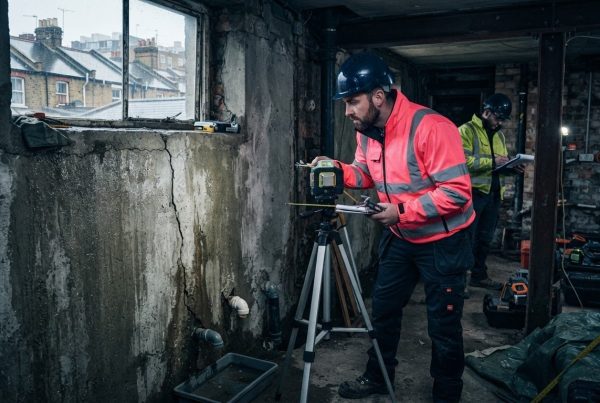
Effective remediation is predicated on empirical diagnostics rather than visual inspection alone. Techniques such as carbonation depth testing, pull-off tests for substrate tensile strength, and half-cell potential mapping for corrosion activity are fundamental to the diagnostic phase. These procedures align with the best practices advocated by the Concrete Repair Association (CRA), ensuring that the chosen intervention addresses the underlying electrochemical or mechanical pathology of the structure. Beyond standard reinforcement, a specialist’s repertoire includes critical safety interventions such as blast mitigation systems, seismic retrofitting, and pipeline rehabilitation. If you require a technical evaluation for a specific asset, you can explore our design capabilities to understand how these systems are tailored to unique structural requirements.
The Science of CFRP Strengthening
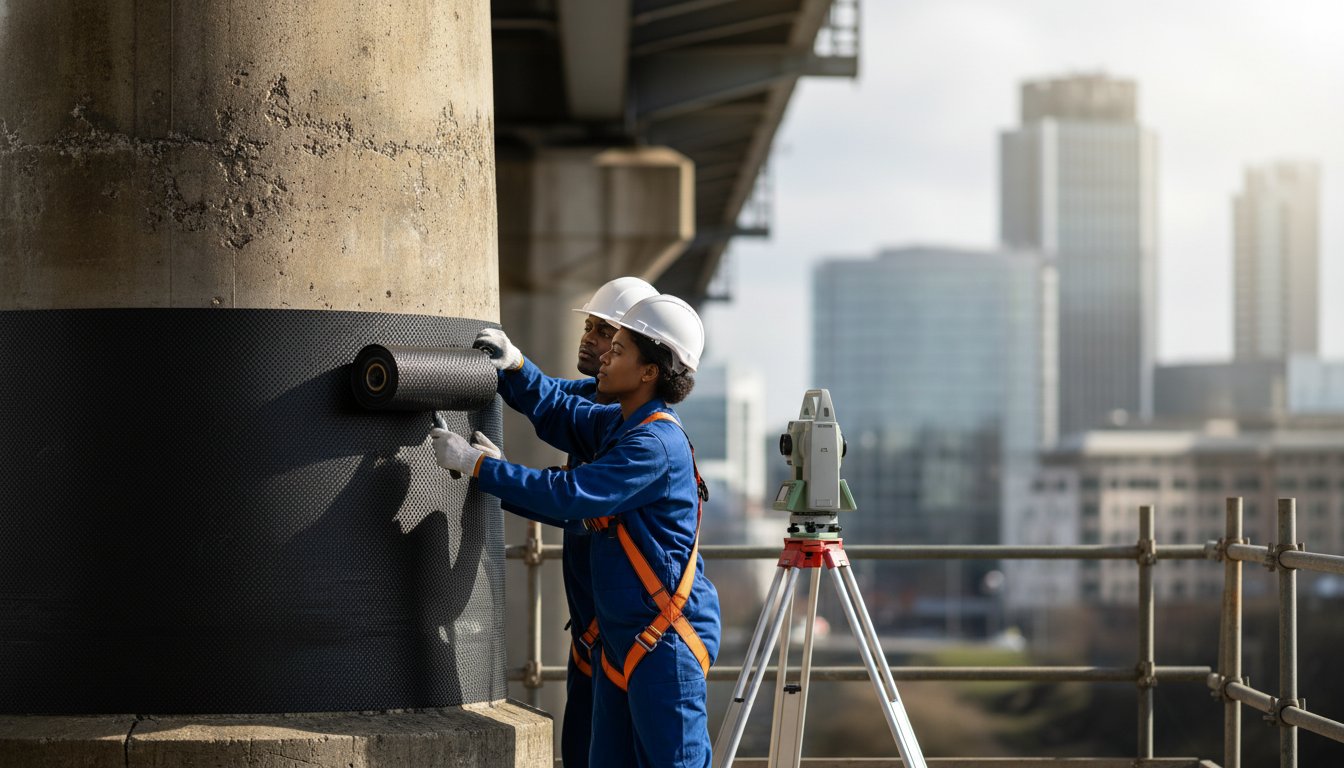
CFRP provides exceptional tensile strength whilst maintaining a minimal profile, which is particularly advantageous in environments where headroom or weight constraints are critical. The choice between wet lay-up systems and pre-cured laminates is dictated by the specific structural elements and the degree of curvature involved. Whilst pre-cured strips offer high longitudinal stiffness for beam soffits, wet lay-up systems provide the flexibility required for column wrapping and complex geometries. CFRP strengthening is a non-invasive method for increasing load-bearing capacity without altering structural geometry. This ensures that the original design intent is maintained whilst the structure is upgraded to meet modern loading requirements or to compensate for section loss.
Specialist Concrete Repair and Protection
Concrete spalling and reinforcement corrosion represent the most common threats to the longevity of the UK’s infrastructure. Targeted remediation involves more than just patching visible defects; it requires a deep understanding of chloride ion ingress and carbonation rates. Long-term durability is often achieved through the application of cathodic protection or resin injection and leak sealing to stabilise the internal environment of the concrete. For a more detailed analysis of these processes, you may refer to our guide on concrete repairs and structural remediation. By engaging specialist structural repair contractors UK, asset managers ensure that these interventions are executed with the precision required to halt degradation and secure the asset’s future.
The Engineering Checklist: Evaluating Design and Diagnostic Capabilities
The procurement of specialist structural repair contractors UK must be treated as a technical appointment rather than a labour-only subcontract. Asset managers should scrutinise the contractor’s ability to perform as a design-and-build entity. This evaluation begins with a four-point engineering checklist designed to ensure that any proposed intervention is backed by empirical rigour. First, verify if the contractor provides bespoke engineering calculations for every project. Second, assess their capacity to conduct feasibility studies for composite reinforcement. Third, evaluate the sophistication of their diagnostic testing equipment. Finally, determine their ability to integrate seamlessly with your existing project engineers and architects. A failure in any of these areas suggests a commodity-led approach that may compromise the long-term security of the asset.
Integration with the wider project team is often where the value of a specialist is most evident. They should possess the technical literacy to communicate complex material properties to lead consultants, ensuring that strengthening designs are compatible with the global structural model. This collaborative approach reduces the risk of design conflicts and ensures that the specialised repair works are harmonised with broader renovation or maintenance objectives. When vetting specialist structural repair contractors UK, request evidence of past collaboration on multi-disciplinary projects to confirm their ability to operate within high-level engineering ecosystems.
Bespoke Design and Technical Specifications
The necessity of tailored solutions cannot be overstated. “Off-the-shelf” repair products often fail to account for the specific boundary conditions and load requirements of a unique structure. Specialist contractors use technical data to justify strengthening designs, ensuring that every layer of Carbon Fibre Reinforced Polymer (CFRP) or every resin injection point is mathematically validated. This level of precision is explored further in our overview of bespoke engineering and design features. By choosing a design-led partner, you ensure that the remediation addresses the specific mechanical demands of the structure rather than applying a generic, and potentially insufficient, fix.
Structural Diagnostics and Asset Testing
Identifying the root cause of failure is a prerequisite for any successful remediation. Applying a superficial repair to a structure suffering from active chloride-induced corrosion or carbonation is a futile exercise. Asset managers should ask for evidence of previous carbonation and pull-off test reports as a standard part of the vetting process. These diagnostics provide the baseline data required to formulate a durable solution. Understanding the role of structural surveys in asset care is fundamental to this process. A contractor who cannot demonstrate proficiency in these diagnostic methods is unlikely to deliver a repair that survives the full intended service life of the infrastructure.
The Operational Checklist: Assessing Site Safety and Quality Assurance
The transition from a validated engineering design to site execution represents the phase of highest risk in any remediation project. When evaluating specialist structural repair contractors UK, asset managers must look beyond basic health and safety compliance to find evidence of sophisticated operational management. Absolute adherence to UK health and safety regulations is expected; however, the complexity of structural intervention requires additional layers of professional accreditation and a demonstrable history of successfully delivered specialist contracts. This track record serves as empirical proof that the contractor can manage the unique logistical challenges of infrastructure remediation whilst maintaining the structural integrity of the asset throughout the construction programme.
Operational excellence is further defined by the contractor’s ability to provide documented evidence of past performance in high-consequence environments. This includes a proven ability to work within the constraints of live operational infrastructure without compromising safety or project timelines. A specialist partner should demonstrate a methodical approach to site management, where every phase of the repair is sequenced to mitigate risk and ensure the long-term security of the structure.
Quality Assurance for Composite Application
The performance of Carbon Fibre Reinforced Polymer (CFRP) is heavily dependent on the environmental conditions present during installation. Rigorous temperature and humidity monitoring are critical because these variables directly influence the resin’s viscosity and curing kinetics, which in turn affect the bond strength between the composite and the substrate. Asset managers should mandate the submission of a comprehensive QA/QC plan specifically for composite resin systems. This plan must detail documented procedures for material mixing, application thickness, and curing times. It’s equally vital that the workforce consists of manufacturer-trained and certified installers, such as those authorised for Tyfo® Fibrwrap® systems, to ensure that proprietary material properties are fully realised in the field.
Site Management and Temporary Works
Structural stability is often compromised during the remedial process, particularly when deteriorated concrete is removed or when load-bearing elements are temporarily weakened for reinforcement. The contractor’s ability to design and manage complex propping and shoring systems is a key indicator of their engineering competence. Understanding the role of a specialist engineering contractor involves assessing their approach to these secondary but vital structures. Temporary works design is a non-negotiable component of any structural strengthening project. If you’re preparing a tender for critical remediation, you should contact our technical team to review your operational requirements and ensure that your site protocols meet the highest safety and quality standards.
Strategic Asset Care: Why Specialist Engagement is the Logical Conclusion
The decision to engage specialist structural repair contractors UK represents a transition from tactical maintenance to strategic asset management. By prioritising engineering-led remediation over traditional demolition, asset controllers can significantly mitigate the financial and environmental costs associated with the built environment. This approach is rooted in the “Repair over Replace” philosophy, which has become increasingly pertinent as the UK construction sector navigates a period of economic contraction. The goal is to transform aging infrastructure into resilient, long-term assets through the application of sophisticated material science and disciplined project management.
Strategic engagement ensures that the remediation process is methodical and transparent. It begins with a comprehensive structural survey and diagnostic phase to establish a baseline of the asset’s current condition. This data informs the design of bespoke strengthening solutions, which are then executed under rigorous quality assurance protocols. The process concludes with a formal handover and the implementation of a long-term monitoring strategy. This holistic lifecycle approach provides the primary validation required to ensure that the structure remains fit for purpose throughout its extended service life.
The Economic Benefits of Life-Extension
The financial case for structural life-extension is compelling when compared to the capital expenditure required for complete asset replacement. CFRP strengthening offers a superior return on investment by restoring or increasing load-bearing capacity without the extensive downtime associated with reconstruction. This is particularly valuable when a change of use is required, as the structure can be upgraded to handle modern loading requirements whilst remaining operational. These economic considerations extend to the ground level as well; understanding underpinning and foundation remediation costs is essential for a complete financial evaluation of an asset’s future. By reinforcing existing concrete and masonry, managers avoid the substantial costs of waste disposal and the procurement of new, carbon-intensive materials.
Partnering for Long-Term Structural Security
Choosing a specialist partner creates a single point of technical accountability from the initial design phase through to final delivery. This continuity is vital for complex infrastructure where the interaction between new composite materials and the original substrate must be precisely managed. CCUK provides this integrated service, ensuring that every intervention is mathematically justified and site-verified. Long-term security is not achieved through a one-off fix; it requires ongoing asset monitoring and preventative maintenance programmes. This proactive stance prevents minor defects from evolving into systemic failures. To begin the process of securing your infrastructure, you should contact our specialist engineering team to discuss your project and develop a tailored remediation strategy for your critical assets.
Securing Infrastructure Longevity through Engineering Rigour
The transition from reactive maintenance to strategic asset care requires a fundamental shift in how stakeholders evaluate specialist structural repair contractors UK. As infrastructure ages, the reliance on design-led diagnostics and advanced material science becomes the only viable path to ensure structural integrity whilst avoiding the prohibitive costs of total replacement. It’s clear that the integration of bespoke engineering calculations and rigorous site quality controls is what separates a specialized technical partner from a generic maintenance provider.
CCUK operates as the exclusive UK licensee for the Tyfo® Fibrwrap® system, providing a comprehensive end-to-end service that encompasses design, supply, and installation. Our extensive project history across the rail, highways, and industrial sectors ensures that even the most complex remediation challenges are met with empirical precision. We invite you to consult with our specialist engineering team regarding your asset remediation requirements. By prioritising sophisticated science over simple repairs, you can effectively prolong the functional lifespan of your essential infrastructure.
Frequently Asked Questions
What makes a structural repair contractor a “specialist” in the UK?
A specialist is defined by the integration of design-led engineering and the application of advanced material science. Unlike general providers, specialist structural repair contractors UK possess the technical literacy to interpret complex structural failures and implement bespoke solutions such as Carbon Fibre Reinforced Polymer (CFRP) strengthening. Their role extends beyond labour to include diagnostic testing, bespoke design, and the management of high-performance proprietary systems.
How much does it cost to hire a specialist structural repair company?
The financial commitment is dictated by the unique engineering requirements of the asset and the specific material properties required for the design. Factors influencing the final valuation include the required material modulus, the extent of substrate preparation, and the complexity of the design-and-build phase. Asset managers should prioritise the long-term ROI of life-extension and reduced downtime over the initial cost of commodity labour.
Can specialist repairs be carried out whilst a building is still in use?
Yes, one of the primary advantages of advanced composite systems is their ability to be installed with minimal impact on building occupants. Non-invasive methods such as CFRP wrapping and resin injection require significantly less heavy plant than traditional steel propping or concrete jacketing. This allows essential infrastructure to remain operational during the remediation process, preventing the significant costs associated with total facility closure.
What is the difference between a structural survey and a general building survey?
A structural survey is an empirical investigation into the load-bearing capacity and material health of an asset’s primary frame. Whilst a general building survey offers a broad overview of a property’s condition, a structural survey utilises diagnostic tools like carbonation testing and half-cell potential mapping. This provides the technical data required to formulate a precise remediation strategy that addresses the root cause of degradation.
How long do CFRP structural strengthening repairs typically last?
CFRP systems are engineered for extreme durability and are typically designed to match or exceed the remaining functional life of the structure. The longevity of these repairs is predicated on the quality of the initial application and the strict monitoring of environmental conditions during the curing phase. These systems are resistant to corrosion and chemical degradation, ensuring long-term structural security without the need for frequent maintenance.
Are specialist structural repairs covered by professional indemnity insurance?
Professional indemnity insurance is a standard requirement for specialist structural repair contractors UK who assume responsibility for the design of the remediation works. This insurance provides essential cover for the technical specifications and engineering calculations provided by the contractor’s in-house design team. It’s a critical marker of professional accountability that distinguishes technical specialists from labour-only contractors who don’t provide design guarantees.
What certifications should I look for in a structural repair contractor?
Verification should focus on technical accreditations and manufacturer-led certifications. Relevant markers include membership in the Concrete Repair Association (CRA) and adherence to BS EN 1504 standards for concrete protection. Additionally, ensure the contractor is a licensed installer for proprietary systems like Tyfo® Fibrwrap®, as this confirms their workforce has undergone specialised technical training and follows documented quality assurance protocols.
How do specialist contractors handle repairs to listed or heritage structures?
Listed and heritage assets require a delicate balance between structural restoration and the preservation of historical fabric. Specialists utilise non-invasive masonry reinforcement and high-performance resins to stabilise structures without altering their external appearance. This approach ensures that the aesthetic integrity of the building is maintained whilst its load-bearing capacity is restored to modern safety standards using discreet, engineering-led interventions.