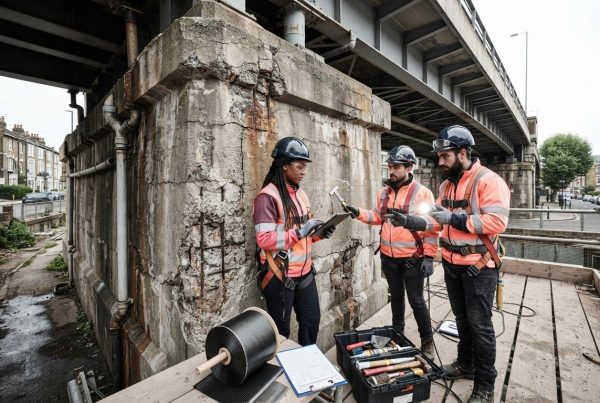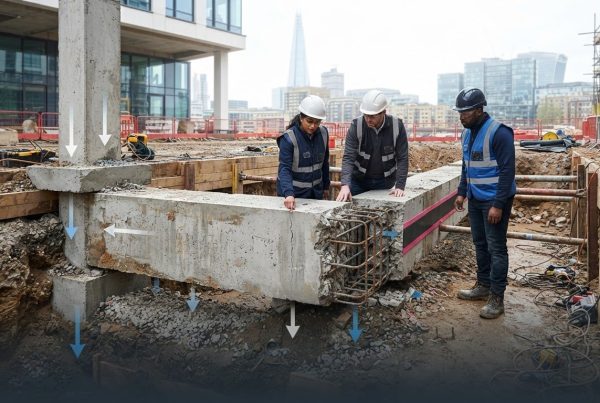


The assumption that a deteriorating concrete asset has reached the end of its functional life is often an expensive fallacy rooted in a lack of empirical data. For asset controllers managing ageing infrastructure, the visible onset of carbonation or chloride-induced corrosion frequently triggers a fear of total structural replacement. You likely recognise the mounting pressure to ensure safety under the Building Regulations etc. (Amendment) (England) Regulations 2026; however, the path to compliance shouldn’t rely on guesswork. High-specification structural surveys serve as more than a simple catalogue of defects; they are the essential diagnostic foundation for sophisticated engineering interventions.
This technical guide details how specialist testing protocols provide the critical data required to design effective remediation and strengthening strategies for industrial assets. You’ll discover the specific diagnostic methods used to determine the viability of systems like Carbon Fibre Reinforced Polymer (CFRP) and Tyfo® Fibrwrap® Systems. We provide a methodical roadmap that transitions from initial defect identification to the implementation of engineered solutions; this ensures the long-term utility of essential infrastructure through rigorous scientific analysis and proven engineering rigour.
Key Takeaways
- Establish the critical distinction between surface-level visual assessments and comprehensive structural surveys that quantify the actual load-bearing capacity of industrial assets.
- Identify the role of non-destructive testing (NDT) in gathering empirical material data to accurately diagnose subsurface defects without compromising structural integrity.
- Differentiate between standard chartered building surveys and specialist engineering inspections to ensure the appropriate level of technical rigour is applied to critical infrastructure.
- Learn how to interpret diagnostic outputs to calculate the residual service life of an asset and prioritise remedial interventions based on quantified risk profiles.
- Understand the methodology for translating complex survey data into bespoke strengthening designs using advanced materials such as Carbon Fibre Reinforced Polymer (CFRP).
Structural Surveys for Industrial and Commercial Assets: A Technical Overview
The management of industrial infrastructure requires a shift from subjective observation towards quantifiable material analysis. In this context, structural surveys are defined as comprehensive engineering assessments designed to evaluate the current load-bearing capacity and integrity of an asset. Unlike standard residential surveys, these technical evaluations are rooted in structural engineering principles, focusing on the complex interaction between material properties and applied stresses. For asset controllers, understanding the distinction between a cursory visual inspection and a targeted intrusive diagnostic survey is critical. Whilst visual checks might identify surface spalling or cracking, only intrusive investigations can reveal the underlying cause, such as latent reinforcement corrosion or sulphate attack.
Ensuring compliance with UK health and safety mandates, including the Building Regulations etc. (Amendment) (England) Regulations 2026, necessitates a rigorous approach to asset diagnostics. Ageing concrete and masonry structures are particularly susceptible to environmental degradation that isn’t always apparent to the naked eye. Prioritising these surveys allows for the identification of structural vulnerabilities before they escalate into catastrophic failures or require full-structure replacement. By adopting a methodical diagnostic approach, engineers can develop bespoke design solutions that extend the operational life of an asset whilst maintaining strict safety standards. Precision in data collection is the only reliable way to mitigate the fear of costly, unplanned replacements.
The Objectives of a Specialist Engineering Survey
A specialist survey is engineered to remove uncertainty from asset management. The primary objectives include:
- Identification of Hidden Defects: Detecting subsurface issues such as delamination, voiding, or the early stages of reinforcement carbonation that visual inspections miss.
- Quantification of Degradation: Utilising empirical testing methods, such as half-cell potential mapping or chloride ion analysis, to provide a mathematical basis for structural calculations.
- Establishment of a Diagnostic Baseline: Creating a detailed record of the structure’s current state to facilitate long-term monitoring and inform future life-extension strategies.
When to Commission a Structural Survey
The timing of a survey is often dictated by the asset’s operational lifecycle or specific external triggers. It’s essential to commission structural surveys during the following scenarios:
- Changes in Operational Requirements: When a facility undergoes a change of use or an increase in mechanical loading that exceeds the original design parameters.
- Post-Incident Evaluation: Following events such as fire, vehicle impact, or seismic activity where the residual strength of the structure is brought into question.
- Regulated Management Cycles: Routine inspections for critical national infrastructure where the cost of failure far outweighs the investment in proactive diagnostic testing.
Advanced Diagnostic Techniques and Material Testing
Effective asset management requires a transition from qualitative observations to quantitative diagnostics. In the context of high-value infrastructure, structural surveys must utilise non-destructive testing (NDT) to preserve the physical integrity of the asset whilst revealing internal conditions that are invisible to the naked eye. This empirical data is indispensable when evaluating the feasibility of composite strengthening systems; for instance, the interlaminar shear strength of a Carbon Fibre Reinforced Polymer (CFRP) system is entirely dependent on the tensile capacity of the host concrete. Without precise data, any strengthening design remains speculative and potentially non-compliant.
Precision is paramount. All material samples extracted from a site must undergo rigorous analysis within a UKAS-accredited laboratory to ensure the validity of the resultant data. This high level of scrutiny provides the legal and technical assurance required for high-consequence infrastructure management. By integrating laboratory results with in-situ observations, engineers can develop a comprehensive model of the structure’s current state. If you require a detailed assessment of your asset’s condition, our team provides specialist structural testing and diagnostic services to inform your life-extension strategy.
Concrete Condition and Carbonation Testing
The chemical stability of the concrete matrix is assessed through targeted carbonation depth testing. By applying a phenolphthalein indicator solution to freshly fractured concrete surfaces, the depth of the carbonation front is measured against the reinforcement depth. Cover meter surveys are simultaneously employed to map the orientation and depth of the steel reinforcement bars. In marine or industrial environments, chloride ion content analysis is conducted at varying depths to determine the risk of pitting corrosion, which can compromise the structural capacity long before surface cracking appears.
In-Situ Strength and Adhesion Testing
Determining the mechanical properties of the substrate is a prerequisite for any remedial intervention. Pull-off testing, or adhesion testing, is performed in accordance with BS EN 1542 to verify that the concrete’s tensile strength can support the bond of Tyfo® Fibrwrap® Systems. Whilst Schmidt hammer testing provides a non-destructive estimate of surface hardness and compressive strength, it’s often supplemented by core sampling. These extracted cores allow for definitive compressive strength verification in a laboratory environment, providing the mathematical certainty required for complex structural calculations and the design of seismic or blast mitigation systems.
Chartered Building Surveys vs Specialist Engineering Inspections
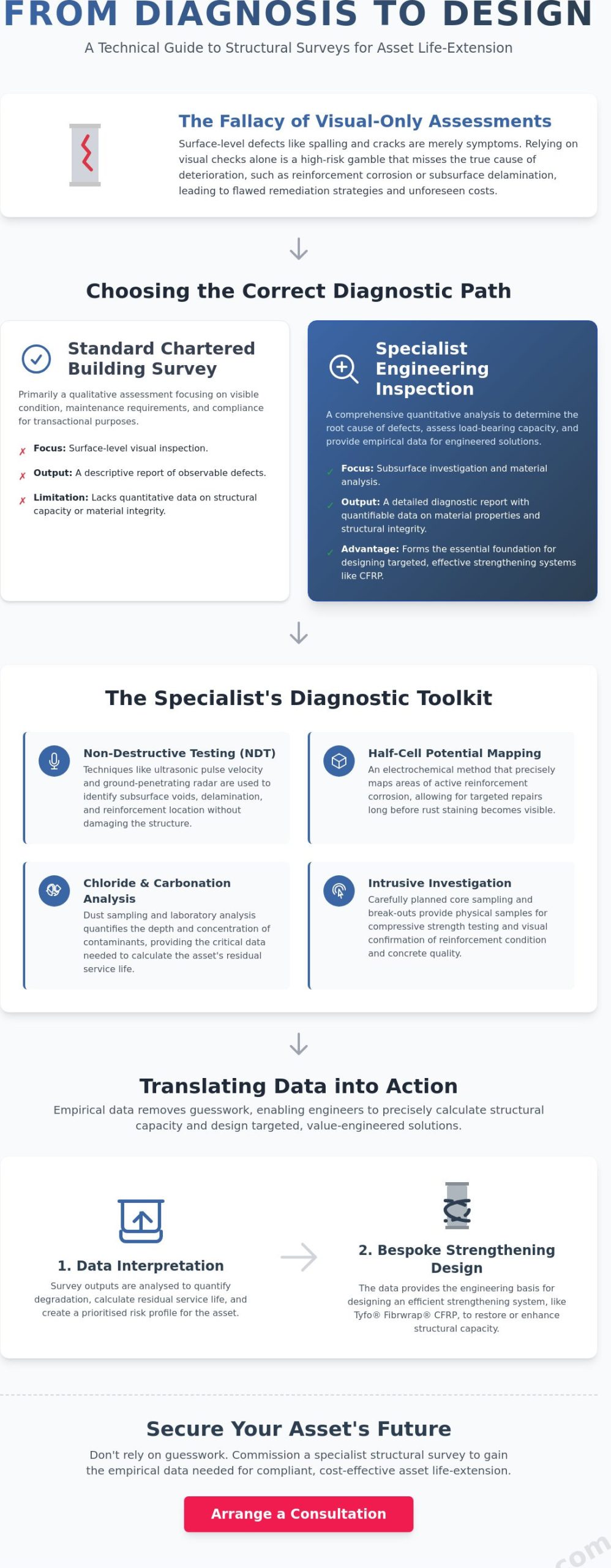
Whilst the term is often applied broadly across the construction industry, it’s vital to distinguish between general chartered building surveys and specialist engineering inspections. A standard RICS Level 3 survey is designed primarily to provide a comprehensive overview of a building’s fabric and general maintenance requirements. In contrast, structural surveys conducted by specialist engineers delve into the fundamental load-bearing capacity and material performance of an asset. Standard surveys frequently lack the technical depth required to identify deep-seated structural issues, such as the gradual loss of cross-sectional area in reinforcement bars or the subtle shift in stress distribution across a complex floor plate. By failing to account for these variables, a general survey may inadvertently overlook the early stages of a critical failure mechanism.
The primary distinction lies in the objective of the assessment. A building surveyor focuses on the condition of finishes, dampness, and visible defects; an engineer focuses on the structural load-path and the residual strength of the primary skeleton. Investing in deeper diagnostics early in the asset lifecycle provides a significant cost-benefit. It allows for targeted interventions that prevent the need for a full-structure replacement, which is often the inevitable result of neglected latent defects. For asset controllers, the choice between these two approaches should be dictated by the complexity of the structure and the consequences of its failure. In high-risk industrial environments, the rigour of an engineering inspection is the only way to ensure absolute reliability. When selecting partners for remediation work, engaging specialist structural repair contractors UK with verified technical proficiency against BS EN 1504 requirements is an equally critical procurement decision.
Scope of Work and Deliverables
RICS Level 3 surveys typically focus on building fabric and general maintenance, providing a descriptive list of visible defects. Conversely, specialist engineering structural surveys concentrate on load-paths, stress distribution, and the science of the materials themselves. The report outputs differ significantly; where a building surveyor provides a defect list, a specialist engineer delivers a diagnostic report supported by engineering calculations. These deliverables often include bespoke remedial designs, such as the strategic application of Carbon Fibre Reinforced Polymer (CFRP) to restore structural integrity to a specific element.
Qualifications and Professional Standards
The complexity of infrastructure diagnostics requires the oversight of a Chartered Structural Engineer (MIStructE). These professionals possess the specialised knowledge of material science and structural mechanics necessary to interpret data within the context of current Eurocodes and UK-specific technical standards. This level of expertise ensures that the proposed solutions are not only safe but also optimised for the specific environmental conditions of the site. Understanding the role of a specialist engineering contractor is essential for asset controllers who must transition from simple defect identification to engineered life-extension strategies that prioritise safety and proven results.
Interpreting Survey Results for Asset Life-Extension
The raw data yielded by structural surveys is of limited utility until it is subjected to rigorous engineering interpretation. This phase of the diagnostic process involves the translation of empirical material measurements into a coherent model of the asset’s current health. A critical metric derived during this analysis is the “residual service life”, which represents the calculated duration for which the structure can maintain its functional integrity under current or projected environmental and mechanical stresses. By identifying the gap between the structure’s actual capacity and its required performance, engineers can determine the precise strengthening factor needed to ensure long-term stability. This analytical rigour ensures that subsequent Structural Repairs are not merely reactive patches but are instead engineered life-extension strategies grounded in material science.
If your latest diagnostic report has identified critical vulnerabilities, contact our technical team to discuss specialised strengthening and life-extension solutions tailored to your asset’s specific risk profile.
Risk-Based Prioritisation of Defects
Once the survey data has been processed, defects must be categorised according to their impact on structural safety and durability. Immediate safety concerns, such as significant loss of reinforcement section or active structural movement, are prioritised to prevent catastrophic failure. Conversely, long-term durability issues, such as early-stage carbonation, are scheduled for preventative remediation. This risk-based approach is particularly critical when developing Professional Subsidence Repair strategies, where foundation stability must be assessed against current geotechnical data to determine the urgency of intervention. By focusing resources on the most critical vulnerabilities, asset controllers can manage budgets effectively whilst maintaining safety standards.
Calculating Load-Bearing Capacity Gaps
The transition from diagnosis to design requires the integration of survey findings into advanced structural models. Finite Element Analysis (FEA) is often employed to simulate how compromised elements behave under various loading scenarios. This modelling allows engineers to calculate the required “strengthening factor” for specific beams, columns, or slabs. For instance, if a geotechnical survey reveals significant soil degradation, the viability of Underpinning must be evaluated alongside the potential for superstructure strengthening. This data-driven approach ensures that every remedial measure is sized correctly to restore the asset’s design capacity and accommodate any proposed increases in mechanical loading.
From Diagnosis to Design: Implementing Remedial Strengthening
The synthesis of diagnostic data into an actionable engineering blueprint marks the critical transition from assessment to intervention. In this definitive phase, the empirical findings derived from high-specification structural surveys serve as the primary input for bespoke design solutions. Every material property identified during the testing phase, from the depth of carbonation to the residual tensile strength of the concrete substrate, informs the selection of remedial materials. For instance, the identification of specific environmental contaminants during the survey may necessitate the use of specialised resins or the integration of cathodic protection systems to mitigate further electrochemical degradation. This tailored approach ensures that the chosen intervention is precisely calibrated to the structural and chemical realities of the asset.
Implementing advanced composite solutions such as Tyfo® Fibrwrap® Systems is significantly more efficient when informed by precise diagnostic data. By targeting only the specific compromised elements identified during the survey, engineers can avoid the redundant application of materials; this reduces both project duration and capital expenditure. This methodology underscores the inherent sustainability of repair over total demolition and replacement. Prolonging the functional lifespan of existing infrastructure is not only an economic imperative but also a critical environmental strategy that aligns technical capabilities with broader corporate sustainability goals. It’s a brand of engineering that values the preservation of essential assets through sophisticated science. Ensuring the execution phase is entrusted to specialist structural repair contractors UK who can demonstrate compliance with PAS 2000:2026 requirements is fundamental to achieving the intended design outcomes.
Bespoke Design for CFRP Strengthening
The design of Carbon Fibre Reinforced Polymer (CFRP) systems requires the meticulous integration of pull-off test results into complex bond strength calculations. If the survey data reveals a substrate with lower-than-anticipated tensile capacity, the design must be adjusted to distribute stresses across a larger surface area to maintain safety factors. By tailoring the fibre orientation within Tyfo® systems, engineers can address specific stress concentrations and load-paths identified during the diagnostic phase. This level of precision is further explored in our guide to Tyfo Fibrwrap Installation, which details the practical application of these engineered designs on-site.
Ensuring Long-Term Performance
The completion of a remedial project doesn’t signal the end of the asset’s management cycle. Post-repair structural surveys and continuous monitoring are essential to verify the performance of the strengthening system under operational loads. A robust maintenance schedule, developed from the initial survey findings, allows asset controllers to track the structure’s behaviour and address minor issues before they necessitate further major interventions. This disciplined approach ensures that the investment in life-extension yields maximum long-term security and operational continuity. Contact our engineering team for a specialist survey to begin the process of securing your asset’s future through rigorous diagnostics.
Securing Infrastructure Longevity through Engineering Rigour
The transition from subjective condition assessments to quantifiable engineering data is the prerequisite for effective infrastructure guardianship. By prioritising high-specification structural surveys, asset controllers can replace the uncertainty of ageing concrete with empirical material science. These evaluations provide the mathematical foundation required to design precise strengthening interventions; this ensures that essential infrastructure remains compliant with evolving safety standards whilst avoiding the prohibitive capital expenditure associated with total structural replacement.
As the exclusive UK licensee for Tyfo® Fibrwrap® systems, our methodology is defined by specialist MIStructE led diagnostics and a proven track record in national infrastructure life-extension. We don’t merely catalogue surface defects; we provide the engineering roadmap necessary to restore and prolong structural integrity through advanced materials science. You’re invited to consult our engineers for a diagnostic structural survey to determine the optimal life-extension strategy for your asset. Ensuring the long-term security of your infrastructure is a methodical objective that is achieved through rigorous analysis and proven engineering excellence.
Frequently Asked Questions
What is the difference between a building survey and a structural survey?
A building survey typically assesses the general condition and maintenance requirements of a property’s fabric, whereas structural surveys focus specifically on the load-bearing capacity and material integrity of the primary skeleton. Whilst a building surveyor might identify damp or surface cracks, a structural engineer uses diagnostic testing to evaluate stress distribution and residual strength. This distinction is critical for industrial assets where structural performance under mechanical loads is the primary concern.
How much does a commercial structural survey cost in the UK?
The cost of a commercial survey is determined by the scale of the asset, the complexity of the structural form, and the requirement for specialist diagnostic testing. Industrial assessments are bespoke and reflect the technical rigour required for high-consequence infrastructure. Factors such as access requirements, the number of material samples required for UKAS-accredited laboratory analysis, and the inclusion of non-destructive testing (NDT) will influence the final investment needed to secure an accurate diagnostic profile.
Will a structural survey involve intrusive testing or drilling?
Intrusive testing is frequently required when visual inspections cannot provide sufficient empirical data to confirm the asset’s condition. This may include core sampling to verify compressive strength, drilling for carbonation depth indicators, or the exposure of reinforcement bars to assess cross-sectional loss. These activities are conducted methodically to ensure they don’t compromise the overall integrity of the structure whilst providing the necessary data for engineered life-extension strategies.
How long does it take to receive a specialist engineering survey report?
The timeline for delivery typically depends on the extent of laboratory analysis required for the extracted material samples. Whilst an initial site summary can often be provided shortly after the inspection, a comprehensive diagnostic report usually takes several weeks to allow for UKAS-accredited testing and complex structural modelling. This duration ensures that the final recommendations are grounded in verified material science rather than preliminary observations.
Can a structural survey determine the cause of concrete spalling?
A specialist survey is designed to identify the specific chemical or mechanical mechanism driving concrete degradation. By conducting chloride ion analysis and half-cell potential mapping, engineers can determine whether spalling is caused by chloride contamination, carbonation, or internal reactions such as alkali-silica reaction (ASR). Identifying the root cause is essential for selecting the appropriate remediation, such as cathodic protection or specialist concrete repair, rather than applying a temporary cosmetic patch.
Is a structural survey required before installing CFRP strengthening?
A comprehensive diagnostic assessment is a prerequisite for the design of any Carbon Fibre Reinforced Polymer (CFRP) system. Pull-off testing must be conducted to verify that the tensile capacity of the concrete substrate can support the bond of the Tyfo® Fibrwrap® system. Without the data provided by structural surveys, it’s impossible to calculate the required strengthening factor or ensure the long-term performance of the composite intervention.
What qualifications should I look for in a structural surveyor for infrastructure?
For complex industrial or commercial assets, it’s essential to engage a Chartered Structural Engineer, typically holding membership with the Institution of Structural Engineers (MIStructE). This ensures the professional possesses the advanced understanding of material science and structural mechanics required for high-consequence diagnostics. You should also verify that the firm has a proven track record in infrastructure life-extension and adheres to current Eurocodes and UK technical standards.