
The decision to decommission a degrading asset is frequently a failure of engineering strategy rather than a terminal material exhaustion. With the global repair construction market projected to reach $197.15 billion in 2026, the economic imperative to prioritise sophisticated structural repairs over wholesale replacement has never been more pronounced. Asset managers and engineers often find themselves constrained by the complexity of managing remediation within active environments; the threat of operational downtime is often as critical as the structural integrity itself.
The feasibility phase is a collaborative effort between structural engineers and specialist contractors to define the performance criteria of the remediation. During this stage, technical specifications are developed to dictate material selection, such as the specific grade of carbon fibre or the chemical resistance of the resin matrix. In instances where heritage aesthetics are as vital as structural capacity, engineers may discover more about Shaped wood components to ensure a sympathetic restoration. Bespoke calculations are performed to determine the exact number of composite layers and their orientation, ensuring that the strengthened element meets the required safety factors. This phase also includes the design of temporary works, which are necessary to support the structure and maintain safety whilst the primary load-bearing elements are being remediated.
This technical guide explores how expert-led interventions, particularly through the application of Carbon Fibre Reinforced Polymer (CFRP) and the Tyfo® system, facilitate significant asset life-extension whilst ensuring adherence to rigorous safety standards. It’s essential to recognise that as of 1 January 2026, the transition to ASCE 7-22 as the governing standard for environmental loads necessitates a more disciplined approach to seismic and wind-load retrofitting. We will examine the methodologies of structural strengthening and resin injection that allow for the maintenance of safety and regulatory compliance without the prohibitive costs of demolition.
Key Takeaways
- Identify the necessity of data-led diagnostics and non-destructive testing (NDT) to accurately assess internal health before commencing any remediation.
- Learn how modern structural repairs utilise Carbon Fibre Reinforced Polymer (CFRP) systems to restore load-bearing capacity; this approach bypasses the weight and installation complexities of traditional steel.
- Gain insights into the application of the Tyfo® Fibrwrap® system for high-performance structural strengthening and seismic retrofitting in active operational environments.
- Understand the critical role of bespoke engineering design and calculations in ensuring that remediation projects adhere to the latest regulatory safety standards.
- Examine the economic and environmental benefits of asset life-extension, where repairing existing infrastructure significantly reduces embodied carbon compared to new construction.
Defining Structural Repairs: Remediation vs. Routine Maintenance
Technical interventions designated as Structural repairs are defined by their ability to restore or enhance the load-bearing capacity of an asset. Whilst routine maintenance focuses on the preservation of aesthetics and the prevention of superficial decay, structural remediation is a critical necessity when the safety of the primary framework is compromised. It’s not merely a reactive measure. It’s a strategic process of structural stabilisation that ensures the continued functionality of infrastructure. Distinguishing between these two categories is vital for asset managers who must justify expenditure and manage risk effectively.
Effective engineering requires a shift from symptomatic treatment to rigorous root-cause analysis. Patching a crack without addressing the underlying movement or chemical degradation is a temporary fix. It often leads to accelerated failure. Modern structural repairs prioritises asset life-extension, treating infrastructure as a long-term investment. This philosophy utilises sophisticated science to ensure that essential assets remain operational well beyond their original design life. By focusing on the fundamental cause of distress, engineers can implement solutions that are both durable and economically viable.
Common Indicators of Structural Distress
The presence of concrete spalling and reinforcement corrosion represents a significant threat to structural safety. When the internal steel reinforcement oxidises, the resulting expansion exerts tensile pressure on the surrounding concrete, leading to delamination. Implementing professional concrete repairs is vital to arrest this cycle. It prevents catastrophic failure. Asset managers must also remain vigilant for signs that necessitate subsidence repair, such as stepped cracking in masonry or discernible foundation movement. These indicators often signal a loss of ground support that requires immediate structural strengthening to avoid systemic collapse.
The Regulatory Landscape for UK Infrastructure
Compliance with British Standards and Eurocodes is mandatory during any remediation project. These frameworks provide the technical benchmarks for material performance and design safety. Asset managers bear a significant legal obligation to maintain structural integrity and protect public safety under various UK health and safety legislations. Periodic inspections are the primary tool for identifying latent defects. By catching issues before they escalate, managers can avoid the high-cost demolition scenarios often associated with neglected infrastructure. This proactive approach ensures that all remediation work meets the stringent requirements of the UK regulatory environment.
Comprehensive Structural Diagnostics and Asset Testing
The efficacy of structural repairs is fundamentally dependent on the precision of the preceding diagnostic phase. It’s a risk to proceed with remediation based solely on visual observations; such an approach often ignores latent defects that can undermine the longevity of the repair. Instead, a comprehensive suite of non-destructive testing (NDT) is employed to quantify the internal health of the asset. Carbonation testing is prioritised to assess the depth at which the concrete’s alkalinity has been compromised, whilst chloride analysis is conducted to determine the risk of pitting corrosion in the reinforcement. Pull-off tests are also essential to evaluate the surface tensile strength of the concrete, which is a critical parameter for the successful adhesion of high-performance composite strengthening systems. Commissioning thorough structural surveys at this stage ensures that the full scope of deterioration is captured, providing the empirical foundation upon which all subsequent engineering decisions are made.
Rigorous diagnostics ensure that the root cause of deterioration is fully understood before any material is applied. This empirical approach avoids the pitfalls of symptomatic treatment, where the underlying issue remains unaddressed and leads to premature failure of the remediation. By establishing a baseline of material performance and chemical stability, engineers can select the most appropriate materials and techniques for the specific environment. This methodical process provides the necessary assurance that the final intervention will meet the required design life and safety standards.
Advanced Scanning and Mapping Techniques
Advanced scanning technologies provide a non-invasive window into the internal geometry of a structure. Ground Penetrating Radar (GPR) allows for the precise mapping of reinforcement density and the identification of subsurface voids that could compromise load distribution. When paired with 3D laser scanning, engineers can generate accurate digital twins that facilitate complex bespoke design and engineering calculations. For detecting deep-seated delamination or honeycombing, ultrasonic pulse velocity (UPV) testing is utilised to measure the consistency of the material matrix through wave propagation speed.
Interpreting Diagnostic Data for Engineering Design
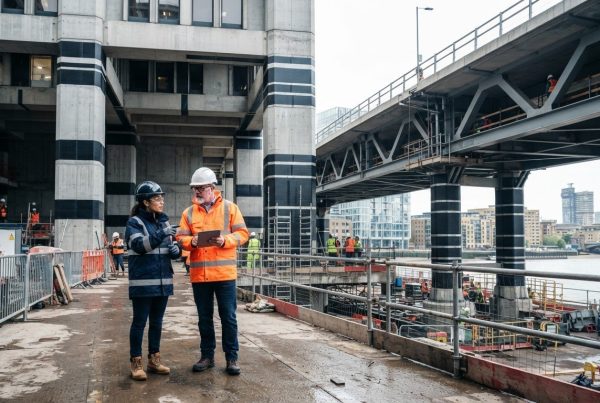
The transition from raw diagnostic data to a functional engineering design is where technical authority is truly established. Interpreting these results allows for the calculation of an asset’s residual structural capacity, which is the baseline for any strengthening requirement. By identifying specific ‘hotspots’ of degradation, remediation efforts can be concentrated where they are most needed, optimising both budget and timeline. Each asset requires a bespoke testing regime tailored to its specific environmental exposure and historical loading patterns. If you require a detailed assessment of your infrastructure, you may contact our technical team for a consultation.
Remediation Methodologies: Traditional Repairs vs. Advanced Composites
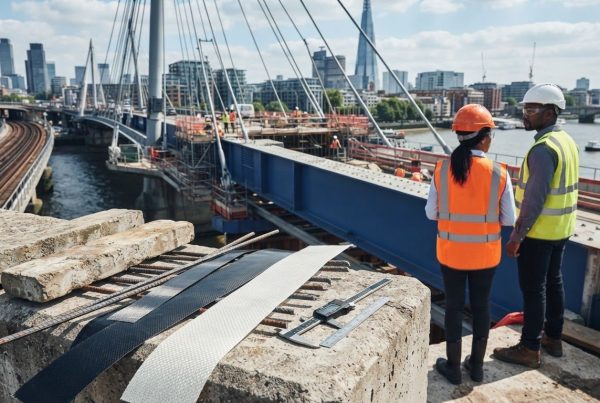
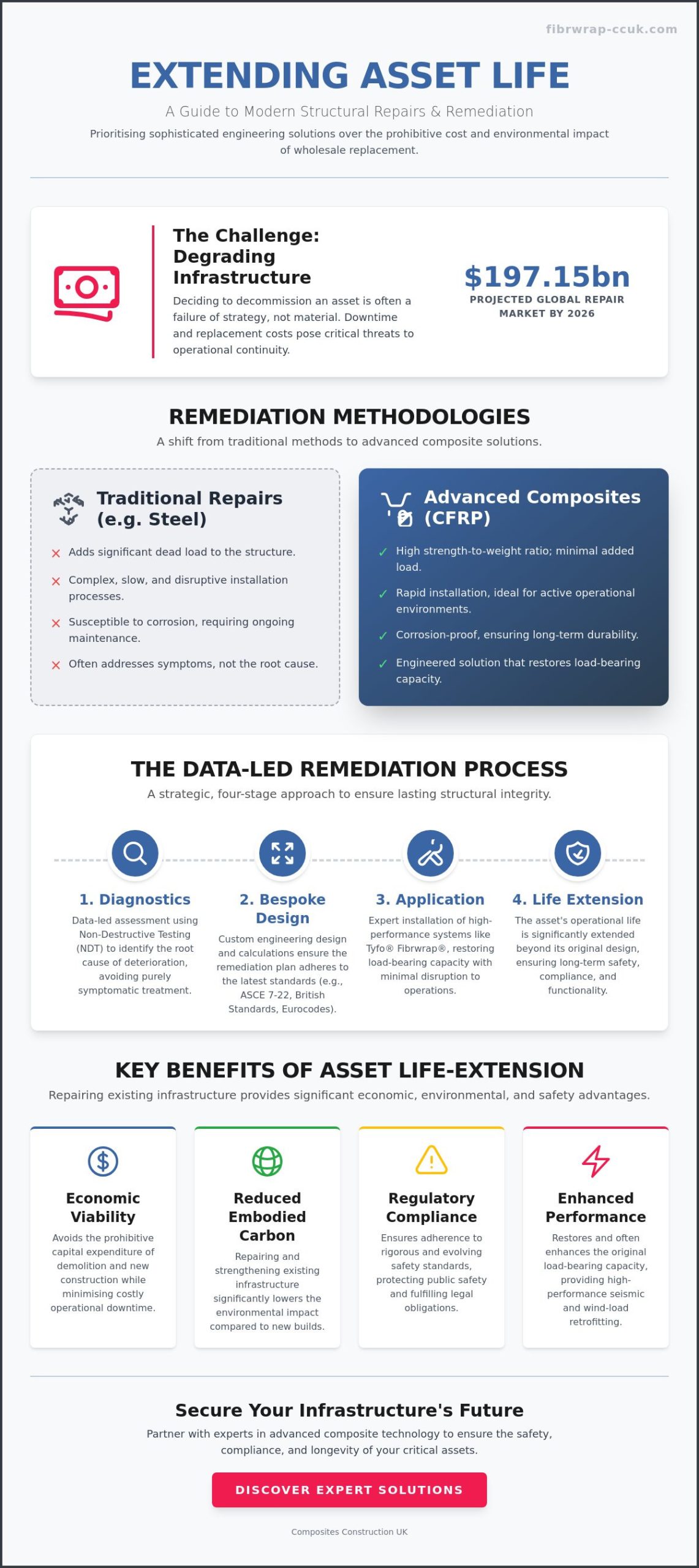
The selection of remediation methodologies is a critical engineering decision that dictates the long-term performance of an asset. Traditional approaches, such as steel plate bonding, were once the primary choice for increasing load-bearing capacity; however, these methods are often hampered by the physical mass of the material and the requirement for invasive mechanical anchors. In contemporary structural repairs, Carbon Fibre Reinforced Polymer (CFRP) systems have emerged as a superior alternative due to their exceptional strength-to-weight ratio and inherent resistance to chemical degradation. The Tyfo® Fibrwrap® system represents the pinnacle of this technology, providing a bespoke solution for complex strengthening requirements in bridges, pipelines, and industrial buildings. Unlike steel, these advanced composites don’t succumb to oxidation. This makes them the preferred choice for marine or chemically aggressive environments where traditional materials frequently fail. For heritage or commercial brickwork, the integration of masonry reinforcement is essential for ensuring lateral stability whilst maintaining the integrity of the original structure.
This evolution in structural repairs allows for the remediation of defects that were previously considered terminal. By leveraging the high tensile strength of composite materials, engineers can restore the integrity of a structure with a fraction of the material volume required by traditional methods. This shift doesn’t only improve the technical outcome; it also streamlines the logistics of the repair process, especially in active environments where space and time are at a premium. Ensuring that the partner delivering these advanced interventions possesses the requisite technical credentials is equally critical; asset managers should consult a structured framework for evaluating specialist structural repair contractors UK to verify compliance with BS EN 1504 and current Building Safety Regulator mandates.
The Mechanics of CFRP Strengthening
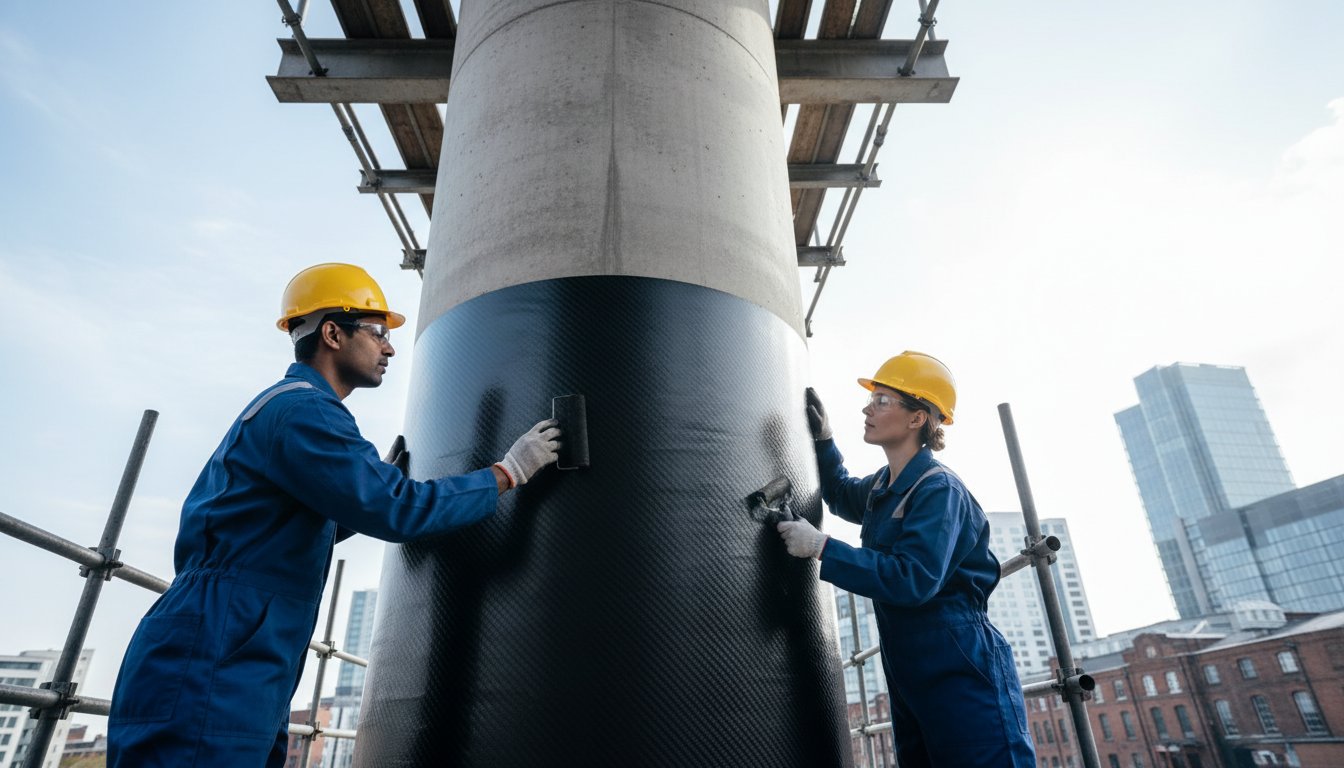
CFRP systems are engineered to enhance the flexural, shear, and axial load capacity of reinforced concrete elements by bonding high-strength fibres to the substrate using structural epoxies. These materials are exceptionally lightweight. They add negligible dead load to the structure, which is a vital consideration when the existing foundations are already operating near their design limits. The flexibility of the fabric allows for the seamless wrapping of columns and beams, even in confined spaces where traditional heavy machinery cannot be deployed. This versatility ensures that structural strengthening can be achieved with minimal disruption to the surrounding operational environment.
Traditional Remediation: Resin Injection and Grouting
Whilst advanced composites offer significant advantages for strengthening, traditional methodologies remain indispensable for specific structural defects. Epoxy resin injection is frequently utilised for the structural sealing of cracks, effectively restoring the monolithic nature of the concrete and preventing the ingress of moisture or carbon dioxide. For larger voids or ground stabilisation, cementitious grouting provides a robust solution to restore support and prevent further settlement. These methods are often used in conjunction with composite systems to provide a comprehensive remediation strategy. The choice between traditional and advanced methods is always dictated by the specific technical requirements of the defect and the desired design life of the intervention.
The Structural Repair Process: From Bespoke Design to Installation
The execution of high-performance structural repairs is a disciplined engineering cycle that extends far beyond the physical application of materials. It’s a process defined by technical rigour, where every stage is designed to mitigate risk and ensure the long-term security of the asset. A professional remediation workflow must transition seamlessly from initial feasibility studies to final commissioning, ensuring that the intervention is grounded in empirical data rather than speculative assessment. This methodical approach is essential for maintaining the integrity of critical infrastructure, particularly when managing complex repairs within active operational environments where the margin for error is non-existent. Engaging a specialist engineering contractor is fundamental to ensuring that this entire workflow is executed with the technical authority and material expertise required for long-term asset security.
Central to this workflow is the development of bespoke design and engineering calculations, which provide the theoretical foundation for the strengthening intervention. These calculations don’t only account for the current deficit in load-bearing capacity but also anticipate future environmental demands, such as the updated seismic and wind load standards under ASCE 7-22, which became mandatory on 1 January 2026. By integrating these advanced engineering parameters, the remediation strategy is tailored to the specific geometry and material properties of the asset, ensuring a precise match between the repair system and the structural requirement.
Phase 1: Engineering Feasibility and Design
The feasibility phase is a collaborative effort between structural engineers and specialist contractors to define the performance criteria of the remediation. During this stage, technical specifications are developed to dictate material selection, such as the specific grade of carbon fibre or the chemical resistance of the resin matrix. Bespoke calculations are performed to determine the exact number of composite layers and their orientation, ensuring that the strengthened element meets the required safety factors. This phase also includes the design of temporary works, which are necessary to support the structure and maintain safety whilst the primary load-bearing elements are being remediated.
Phase 2: Site Preparation and Material Application
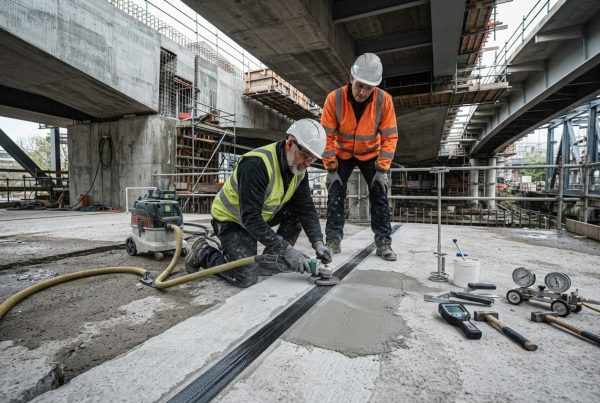
Substrate preparation is the most critical factor in ensuring the bond integrity of composite systems; the concrete or masonry surface must be mechanically prepared to achieve a specific profile that facilitates molecular adhesion. The professional installation of the Tyfo® Fibrwrap® system involves the precise saturation of the carbon fibres with a structural epoxy, followed by careful consolidation to eliminate air voids. Quality control measures, including the preparation of witness panels and on-site pull-off testing, are strictly enforced to verify that the installed system meets the design strength. If you require a technical consultation for an upcoming project, you may contact our engineering team to discuss your requirements.
Asset Life-Extension: The Economic and Environmental Case for Repair
The strategic prioritisation of structural repairs over demolition is an essential component of modern asset management. As the repair construction market grows at a CAGR of 7.1% toward a 2026 valuation of $197.15 billion, the focus has shifted from reactive fixes to proactive life-extension. This transition is driven by the dual necessity of fiscal responsibility and environmental stewardship. By deploying advanced materials like the Tyfo® Fibrwrap® system, engineers can restore the integrity of failing infrastructure whilst avoiding the massive capital expenditure and logistical upheaval associated with new construction. These interventions don’t just solve immediate defects; they preserve the inherent value of the built environment for decades to come.
Implementing a comprehensive remediation strategy ensures that assets remain compliant with evolving safety standards, such as the 2026 updates to UK and international building codes. It’s a method of safeguarding the future of essential infrastructure. By opting for sophisticated engineering solutions, asset managers can mitigate the risks of operational downtime and avoid the high-cost implications of structural failure. We invite stakeholders to contact our engineering team to discuss bespoke asset assessments and life-extension programmes tailored to their specific technical requirements.
Sustainability in the Built Environment
The environmental impact of the construction industry is heavily influenced by the carbon footprint of cement and steel production. By choosing structural repairs and strengthening over reconstruction, engineers significantly reduce the embodied carbon associated with a project. This approach supports the principles of the circular economy by repurposing and reinforcing existing assets rather than discarding them. It’s a vital strategy for achieving Net Zero targets. Sophisticated composite materials allow for high-performance remediation with minimal material volume, further reducing the environmental burden of logistics and site operations.
Maximising Total Cost of Ownership (TCO)
Investing in high-quality engineering remediation provides a superior return on investment compared to the cycle of minor, repetitive maintenance. High-performance systems like CFRP provide long-term durability that reduces the frequency and severity of future interventions. This proactive approach to structural health lowers the total cost of ownership by preventing the escalation of minor defects into emergency failures. Furthermore, a documented history of professional structural strengthening enhances the valuation of the asset and provides critical assurance for insurance and regulatory purposes. It’s a disciplined approach to financial and structural security.
Strategic Asset Life-Extension through Engineering Excellence
The successful implementation of structural repairs is no longer a matter of simple patch-and-repair; it’s a sophisticated engineering discipline that requires the integration of advanced materials and data-led design. By moving beyond symptomatic fixes, asset managers can address the fundamental integrity of infrastructure whilst meeting the stringent safety requirements mandated by the 1 January 2026 code updates. The shift toward high-performance composites represents a critical advancement in achieving long-term security and operational resilience across the UK’s national infrastructure networks.
As the exclusive UK licensee for the Tyfo® Fibrwrap® system, Composites Construction UK offers a comprehensive design-supply-install service grounded in decades of technical success. Our proven track record in national infrastructure life-extension provides the assurance that every project is executed with the engineering rigour necessary to ensure safety and longevity. Partner with CCUK for bespoke structural strengthening and remediation solutions to safeguard your assets against future environmental and operational demands. Protecting the built environment is a shared responsibility that requires absolute reliability and technical expertise.
Frequently Asked Questions
What is the difference between structural and non-structural repairs?
Structural repairs are defined by the restoration of an asset’s load-bearing integrity, whereas non-structural repairs focus on aesthetic or superficial remediation. Whilst non-structural work might involve the application of decorative coatings or the replacement of architectural finishes, structural interventions address the fundamental safety and stability of the framework. These critical works are necessary when the primary structure’s performance has been compromised by material degradation or increased loading requirements.
How long do structural repairs typically last when using CFRP?
Interventions utilising Carbon Fibre Reinforced Polymer (CFRP) systems, such as the Tyfo® Fibrwrap® system, are typically designed for a service life exceeding 50 years. Because these materials are inherently resistant to corrosion and chemical attack, they often outlast the original reinforced concrete elements they strengthen. This long-term durability is verified through accelerated ageing tests and empirical data from over three decades of global project history.
Can structural repairs be carried out whilst a building is still in use?
The lightweight and low-impact nature of advanced composite systems allows for structural repairs to be conducted whilst a building remains fully operational. Unlike traditional steel plate bonding or concrete jacketing, which require heavy machinery and extensive temporary works, CFRP installation involves minimal equipment and generates very little noise. This efficiency significantly reduces operational downtime and avoids the high costs associated with asset closure or relocation.
What are the primary causes of structural failure in UK concrete infrastructure?
The primary drivers of degradation in UK concrete infrastructure are reinforcement corrosion caused by carbonation and chloride ingress. These chemical processes lead to the expansion of steel reinforcement, resulting in concrete spalling and a loss of load-bearing cross-sectional area. Additionally, many older assets were designed to historical standards that didn’t account for the increased environmental loads specified in the 1 January 2026 update to the ASCE 7-22 standards.
How much do professional structural repairs cost for commercial assets?
The cost of remediation is determined by the complexity of the structural deficit and the specific material requirements of the bespoke design. Whilst general 2026 market data suggests foundation repairs average between $2,300 and $8,500, industrial-grade structural repairs for commercial assets require detailed engineering assessments. These calculations ensure that the investment is proportional to the required life-extension and the resulting increase in total asset value.
What is the role of a structural engineer in the remediation process?
A structural engineer is responsible for the technical validation of the remediation strategy, from the initial diagnostic phase to the final design of the strengthening system. They perform the critical calculations required to determine the residual capacity of the asset and ensure that the proposed solution adheres to British Standards and Eurocodes. Their role is essential for providing the necessary assurance that the repaired structure will meet its intended performance criteria.
Is it always better to repair a structure than to replace it?
Repairing an existing asset is frequently the superior choice from both an economic and environmental perspective. The repair construction market is expected to grow by 7.1% in 2026 as stakeholders increasingly recognise the benefits of avoiding the high embodied carbon associated with new cement production. Unless a structure has reached total material exhaustion, life-extension through sophisticated remediation is the most sustainable path toward achieving industry Net Zero targets.
What testing is required before structural repairs can commence?
A comprehensive suite of non-destructive testing (NDT) is required, including Ground Penetrating Radar (GPR) for reinforcement mapping and ultrasonic pulse velocity for detecting internal voids. Chemical analysis, such as carbonation depth and chloride profiling, is conducted to assess the risk of ongoing corrosion. Finally, pull-off tests are performed to verify that the substrate tensile strength is sufficient to ensure the long-term bond of the composite system. Detailed structural surveys that integrate these testing protocols provide the critical data framework necessary to design effective and durable remediation strategies.