
As of March 2026, the S&P Global/CIPS UK Construction PMI has remained below the 50-point expansion threshold for 15 consecutive months, marking the longest period of contraction since the global financial crisis. This economic climate, coupled with a 9.9% decline in concrete demand during 2025, necessitates a strategic shift from costly replacements toward sophisticated, engineering-led concrete repairs. You’re likely experiencing the pressure of managing ageing assets whilst facing the budgetary constraints of a two-speed market that prioritises life-extension over new builds.
This guide establishes a comprehensive framework for diagnosing structural defects and implementing advanced remediation using carbon fibre reinforced polymers (CFRP) and the Tyfo® Fibrwrap® system. We’ll examine the technical methodologies required to align with BS EN 1504 standards and the recent PAS 2000:2026 code of practice. By adopting these composite technologies, it’s possible to extend the operational lifespan of critical infrastructure by 30 to 50 years, ensuring structural integrity and safety through empirical engineering rigour and proven material science.
Key Takeaways
- Understand how data-driven structural surveys mitigate risk and prevent unforeseen project costs by ensuring a precise diagnosis prior to specifying remedial works.
- Discover the systematic methodologies for concrete repairs that align with BS EN 1504 to restore structural integrity to the UK’s ageing bridge and building stock.
- Evaluate the performance limitations of traditional hand-applied mortars against the superior load-bearing capabilities and durability of Carbon Fibre Reinforced Polymers (CFRP).
- Gain insight into how the Tyfo® Fibrwrap® system facilitates asset life-extension of 30 to 50 years through bespoke engineering design and advanced composite technology.
- Learn the essential role of integrated structural strengthening strategies in achieving comprehensive remediation that exceeds the service life of superficial patching.
Understanding Concrete Deterioration in UK Infrastructure
The systematic restoration of structural integrity and durability through engineered concrete repairs represents a critical intervention for the UK’s built environment. Rather than viewing repair as a secondary maintenance task, it’s defined in modern engineering as a precise technical process designed to reinstate the design life of an asset. The socio-economic implications of asset failure are profound; with the UK government targeting a £725 billion infrastructure investment over the next decade, the preservation of existing bridges, tunnels, and buildings is a fiscal and safety imperative. Many structures commissioned during the mid-20th century are now reaching the end of their predicted service lives, necessitating a transition from reactive maintenance to proactive structural repairs and remediation.
Traditional “patch and paint” methodologies are frequently inadequate because they fail to address the underlying electrochemical mechanisms of degradation. These superficial treatments often mask ongoing corrosion, leading to a false sense of security whilst structural capacity continues to diminish. Effective remediation requires a shift toward integrated solutions that combine material science with structural strengthening to ensure long-term stability.
Primary Causes of Concrete Failure
The various causes of concrete deterioration are often synergistic, accelerating the rate of decline beyond original design projections. Carbonation occurs when atmospheric carbon dioxide penetrates the concrete, reacting with calcium hydroxide to lower the internal pH from approximately 12.5 to below 9. This loss of alkalinity destroys the passive protective layer around the steel reinforcement, initiating corrosion. In highway and marine environments, chloride attack is the dominant threat. De-icing salts applied to UK roads during winter months introduce chloride ions that penetrate the concrete matrix, causing aggressive pitting corrosion even in high-pH environments. Additionally, structural fatigue must be addressed; many assets are now subjected to load demands and traffic volumes that far exceed their original 1960s or 1970s design specifications, leading to micro-cracking and accelerated ingress of harmful agents.
Identifying Spalling and Reinforcement Corrosion
A critical indicator of advanced degradation is spalling meaning the fracturing and detachment of concrete fragments from the main body of the structure. This is the visible culmination of the “rust expansion” cycle. As reinforcement steel corrodes, the resulting iron oxide occupies a volume between 6 and 10 times greater than the original metal. This expansion exerts immense internal tensile pressure, eventually exceeding the concrete’s capacity and causing the cover to break away. Engineers must carefully assess the severity of cracks to differentiate between non-structural shrinkage and structural defects. Whilst hairline cracks may appear benign, they often serve as conduits for moisture and chemicals, making early-stage concrete repairs essential to prevent the catastrophic loss of sectional area in primary load-bearing members. Where water ingress through cracks is identified, resin injection provides a precision-engineered solution for sealing structural discontinuities and restoring load-bearing integrity.
Essential Diagnostic Testing and Structural Surveys
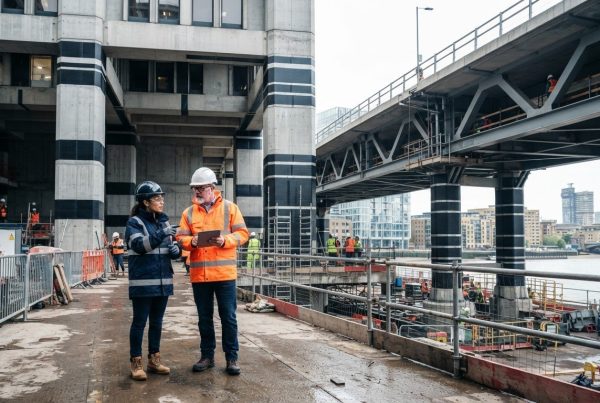
Precise diagnosis is the cornerstone of any effective structural remediation strategy. Without empirical data, the specification for concrete repairs remains speculative, often leading to significant project overruns or premature material failure. The transition from visual inspection to a sophisticated regime of non-destructive and semi-destructive testing is necessary to uncover latent defects that aren’t visible at the surface. Implementing Early Contractor Involvement (ECI) during this investigative phase ensures that the diagnostic findings are directly translated into a viable construction methodology, reducing the risk of unforeseen costs that frequently arise when subsurface conditions deviate from initial assumptions. Adherence to BS EN 1504 concrete repair standards requires this rigorous assessment to justify the selection of repair materials and strengthening systems.
Non-Destructive Testing (NDT) Methods
Non-destructive techniques allow for a comprehensive evaluation of the structure without compromising its current load-bearing capacity. Cover meter surveys utilise electromagnetic induction to determine the depth and spacing of reinforcement, which is critical for verifying whether the remaining concrete cover is sufficient to protect the steel from atmospheric carbonation. Half-cell potential mapping is employed to locate active corrosion zones by measuring the electrical potential between the reinforcement and a reference electrode. Additionally, ultrasonic pulse velocity testing provides data on the internal homogeneity of the concrete, allowing engineers to detect internal voids, delamination, or deep-seated cracks that could undermine the effectiveness of subsequent concrete repairs.
Chemical and Physical Analysis
Whilst NDT provides a broad overview, chemical and physical analysis offers the granular detail required for bespoke engineering. Dust sampling is conducted at varying depths to produce a chloride ion profile; this determines the extent of salt ingress and whether the reinforcement is at risk of pitting corrosion. Phenolphthalein testing is used on freshly exposed concrete surfaces to measure the depth of carbonation by observing pH-dependent colour changes. Finally, core sampling remains the most reliable method for verifying the actual material properties of the structure. These cores are subjected to laboratory compressive strength testing, ensuring that any new repair mortars or carbon fibre systems are compatible with the existing substrate’s modulus of elasticity. Integrating these findings into a bespoke structural design feature ensures that the remediation is tailored to the specific mechanical requirements of the asset.
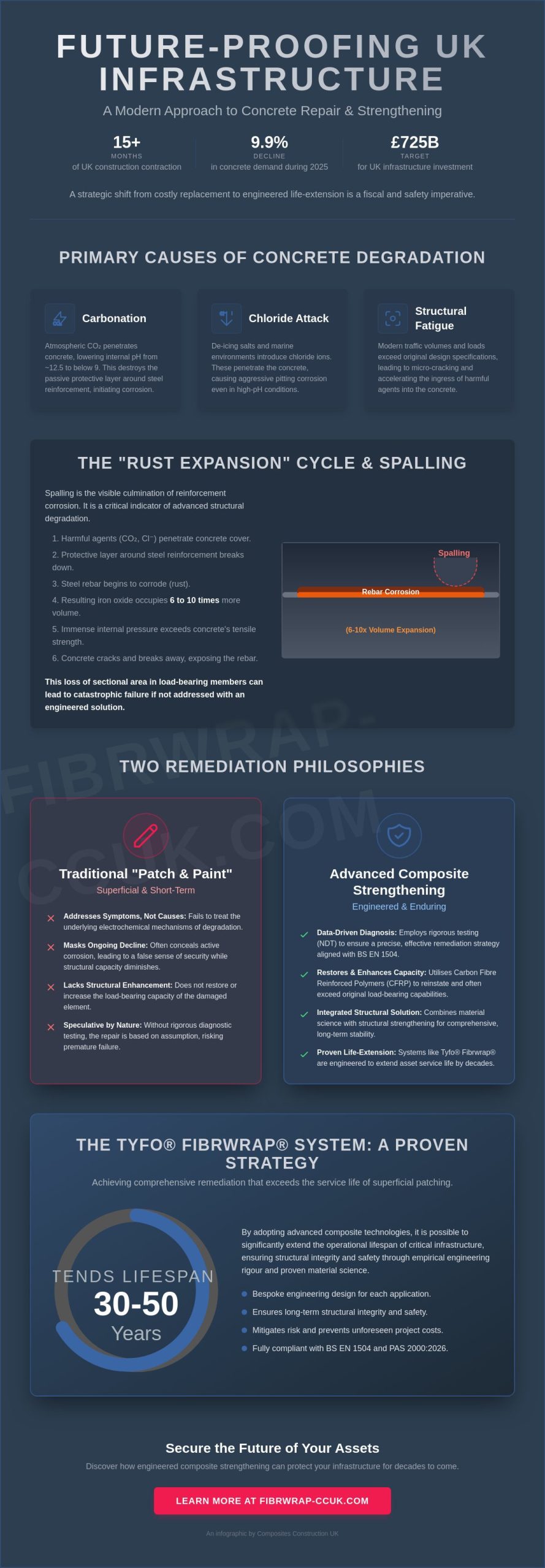
Comparing Traditional Patching with Advanced Composite Strengthening
The distinction between cosmetic maintenance and structural remediation is a critical factor in the long-term viability of UK infrastructure assets. Whilst traditional hand-applied mortars remain a staple for localised concrete repairs, they’re often insufficient for structures where the load-bearing capacity has been compromised by section loss or increased traffic demands. Conventional patching typically carries a service life of approximately 10 years before the surrounding substrate requires further intervention. In contrast, integrated composite solutions are engineered for life-extension periods of 30 to 50 years, aligning with the British Standards for concrete repair and the rigorous requirements of modern asset management.
Modern engineering demands a shift from these short-term fixes toward integrated concrete repairs that incorporate structural strengthening. This is particularly relevant when an asset’s original design parameters no longer accommodate current operational stresses. By combining high-performance repair materials with advanced composites, engineers can restore the structural integrity of a bridge or building whilst simultaneously increasing its flexural, shear, or axial capacity.
Limitations of Conventional Repair Methods
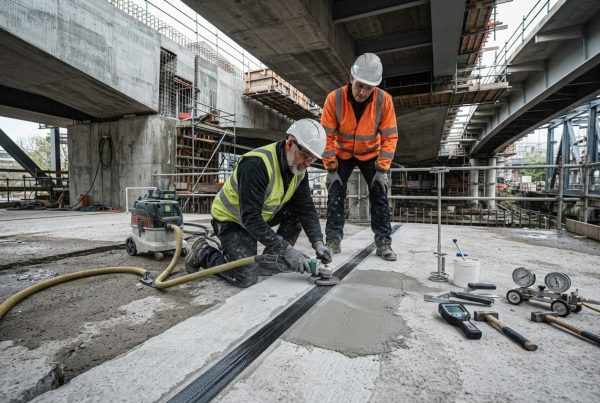
A primary technical challenge with traditional patch repairs is the “incipient anode” or halo effect. When a patch is applied using a new, high-alkalinity mortar, it creates a significant electrochemical potential difference between the repaired area and the adjacent chloride-contaminated concrete. This often triggers accelerated corrosion in the surrounding zones, necessitating the use of cathodic protection systems to manage the galvanic activity. Additionally, traditional methods for increasing load capacity, such as steel plate bonding, introduce substantial dead load to the structure and present logistical difficulties regarding clearance and handling in confined spaces.
The Advantages of CFRP and Tyfo® Fibrwrap®
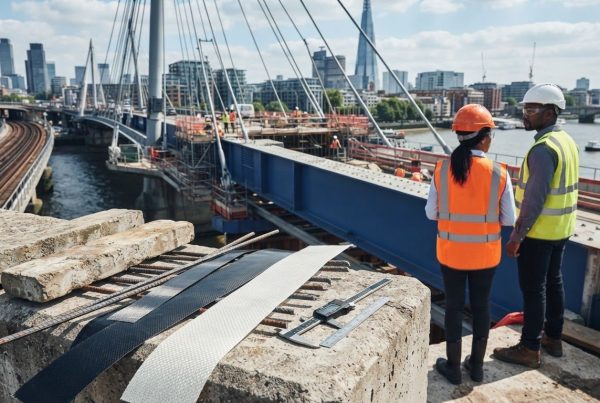
Carbon Fibre Reinforced Polymers (CFRP), specifically the Tyfo® Fibrwrap® system, offer a sophisticated alternative to traditional reinforcement. These materials possess a high strength-to-weight ratio, allowing for significant structural strengthening without adding the mass associated with steel or concrete jackets. Because composites are inherently resistant to corrosion, they don’t suffer from the same degradation cycles as metallic reinforcement, even in high-chloride environments. The installation efficiency of these systems is a decisive factor for critical highway and rail assets; the lightweight nature of the fabric allows for rapid application, which minimises downtime and reduces the overall economic impact of the remediation programme. This methodology ensures that the repaired asset remains durable and compliant with safety standards for decades to come. The same composite principles that underpin structural repairs and strengthening above ground are equally applicable to pipeline rehabilitation, where CFRP systems are used to extend the service life of ageing cast iron and concrete mains without costly excavation.
Engineering Standards and the Remediation Design Process
The transition from diagnostic survey data to a construction methodology is governed by the BS EN 1504 suite of standards, which provides the regulatory framework for concrete repairs in the UK. Compliance requires more than the selection of high-performance materials; it necessitates a comprehensive design process that accounts for the interaction between new repair mortars and the existing parent concrete. Material compatibility is paramount; discrepancies in the modulus of elasticity or thermal expansion coefficients can induce significant interfacial stress, leading to delamination under cyclic loading. Where structural integrity is compromised, the remediation design must also incorporate detailed specifications for temporary works and propping to ensure asset stability whilst the primary reinforcement is exposed or replaced. For structures exhibiting active cracking or water ingress, the design process must also evaluate resin injection for structural remediation and leak sealing as a compliant intervention under BS EN 1504-5:2013 before composite strengthening systems are applied.
The Design-and-Build Advantage
Adopting a design-and-build approach allows for the development of bespoke design features that are meticulously tailored to specific asset geometries and structural requirements. This process often employs finite element analysis (FEA) to simulate load distribution and stress concentrations, which informs the precise specification of composite wrap layers and fibre orientation. By translating raw survey data into detailed technical engineering drawings, designers can optimise the placement of Carbon Fibre Reinforced Polymers (CFRP) to address shear or flexural deficiencies without redundant material use. Such precision is essential for complex infrastructure where traditional, off-the-shelf solutions fail to meet the required safety margins.
Quality Assurance and Compliance
The execution of structural remediation must adhere to the 11 principles defined within EN 1504, ranging from protection against ingress to the systematic restoration of structural strengthening. Given the technical complexity of these interventions, the selection of specialist concrete repair contractors with a documented pedigree in advanced materials is a critical risk-management step. Post-installation quality assurance is conducted through rigorous field testing, including pull-off tests to verify the bond strength between the repair system and the substrate. These empirical results provide the necessary assurance that the concrete repairs will perform as intended throughout the extended service life of the asset.
If you require technical assistance in developing a compliant remediation strategy for your infrastructure assets, contact our engineering team for a professional consultation.
Life-Extension Strategies: The Role of Tyfo® Fibrwrap® Systems
The implementation of Tyfo® Fibrwrap® systems represents the global benchmark for composite-based structural strengthening, offering a decisive shift away from the limitations of sacrificial patching. Whilst previous sections detailed the necessity of diagnostic precision and the mechanics of deterioration, this final phase focuses on the integration of advanced materials to achieve a holistic remediation solution. By combining traditional concrete repairs with high-performance carbon fibre reinforced polymers, engineers can address both the underlying corrosion and the requirement for enhanced load-carrying capacity. This integrated approach is particularly effective for bridge columns, beams, and industrial pipeline rehabilitation, where maintaining operational continuity is paramount.
The environmental rationale for this strategy is compelling. Choosing to extend the life of an existing asset by 30 to 50 years significantly reduces the carbon footprint associated with demolition and the production of new cement. In an industry where concrete demand fell by 9.9% in 2025, the transition toward a circular economy model is both an ecological and economic necessity. By preserving the embedded carbon within existing structures, asset managers can meet stringent sustainability targets whilst avoiding the massive capital expenditure required for complete reconstruction.
Technical Performance of the Tyfo® System
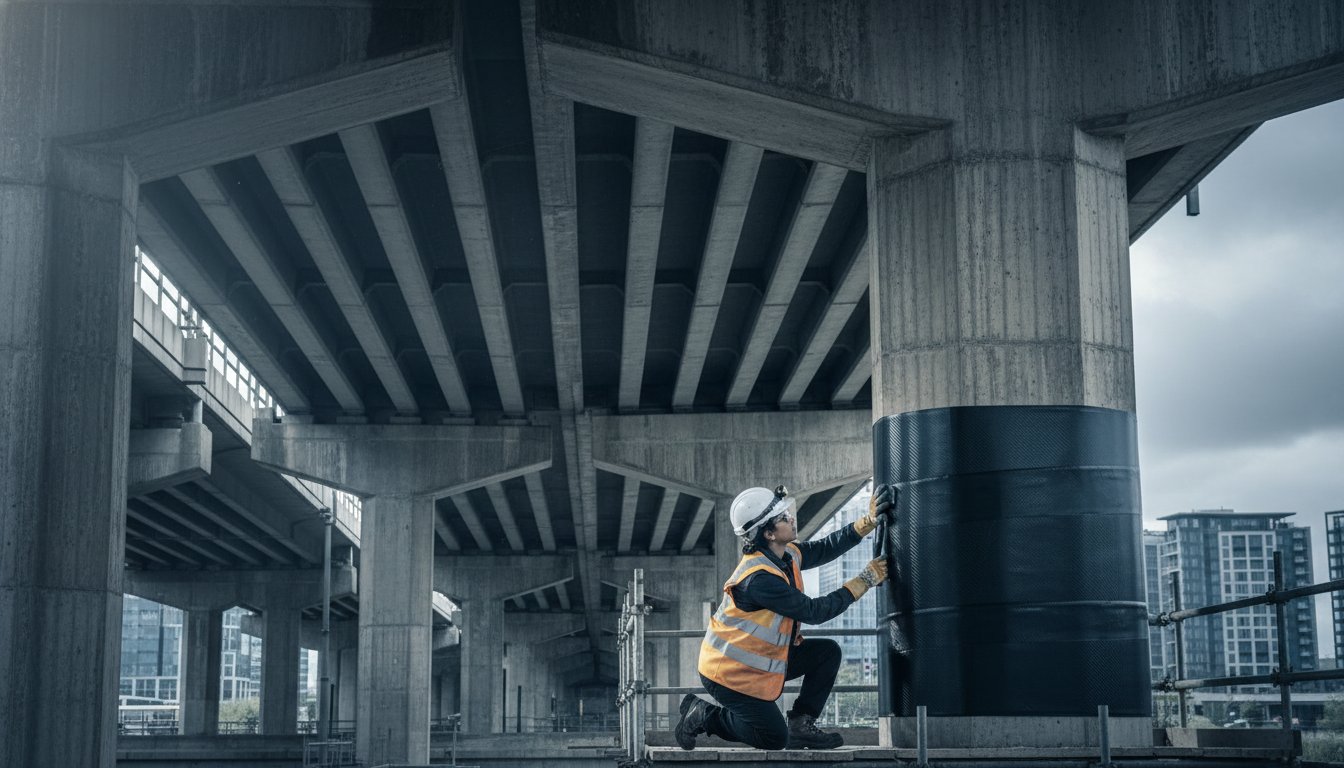
Specific attention must be paid to the Tyfo® Fibrwrap® installation process, which is engineered for both seismic retrofitting and structural upgrades. The system’s versatility is derived from bespoke resin formulations, such as Tyfo S epoxy, which are selected based on specific environmental exposure conditions and substrate requirements. These resins ensure a high-modulus bond that’s resistant to moisture and chemical ingress, effectively sealing the concrete repairs from further atmospheric attack. Because the integrity of the system depends on precise saturation and application techniques, the use of certified applicators is mandatory to ensure that the composite performs to its full design potential under service loads.
Securing the Future of the Asset
Long-term structural health is maintained through a combination of advanced materials and methodical monitoring. Composite systems facilitate a “repair rather than replace” philosophy, which aligns with the UK government’s 10-year infrastructure strategy and the broader goals of the construction sector’s reform. By reinforcing the existing structural fabric, these systems ensure that assets remain resilient against the increased load demands of modern infrastructure. This methodology provides a sustainable pathway for managing the UK’s ageing inventory whilst ensuring long-term fiscal security for asset managers. It’s a disciplined approach that prioritises engineering rigour over temporary fixes.
To determine the most effective remediation strategy for your specific project requirements, contact our engineering team for a technical feasibility study.
Securing the Future of the UK’s Structural Assets
The preservation of the UK’s built environment requires a definitive shift from cosmetic intervention toward sophisticated structural remediation. This guide has established that the combination of data-driven diagnosis and advanced composite technology is essential for addressing the accelerating deterioration of ageing assets. By utilising Carbon Fibre Reinforced Polymers, the load-carrying capacity of a structure is restored whilst its operational lifespan is extended by 30 to 50 years. It’s a methodology that prioritises safety and long-term fiscal responsibility over the recurring costs of traditional concrete repairs.
As the exclusive UK licensee for the Tyfo® Fibrwrap® system, Composites Construction UK provides a comprehensive design-and-build service for complex infrastructure. Our technical pedigree is supported by a proven track record in bridge, rail, and industrial asset life-extension across the United Kingdom. We remain dedicated to acting as guardians of infrastructure through empirical science and engineering rigour. To ensure the continued performance and safety of your structures, consult with our specialist engineers on your concrete repair project. Your assets deserve the security of a bespoke, high-performance solution.
Frequently Asked Questions
What is the typical lifespan of a professional concrete repair?
The service life of a repair depends on the methodology employed; traditional cementitious mortars typically provide approximately 10 years of durability before further intervention is required. In contrast, integrated solutions utilising the Tyfo® Fibrwrap® system are engineered for asset life-extension of 30 to 50 years. This longevity is achieved by addressing the underlying electrochemical mechanisms of degradation rather than merely masking surface spalling.
How much do structural concrete repairs cost in the UK?
According to verified industry data for 2026, cementitious repair mortars cost between £70 and £120 per m², whilst epoxy repair mortars range from £120 to £200 per m². For structural strengthening, CFRP plate bonding is priced at £200 to £500 per linear metre, and fabric wrapping typically costs between £150 and £350 per m². These rates reflect the technical complexity and material performance required for infrastructure-grade remediation.
Can concrete repairs be carried out in wet or cold weather?
Successful application requires strict environmental controls; most high-performance mortars and resins shouldn’t be applied if the substrate temperature is below 5°C or if the relative humidity exceeds 4%. Whilst the UK’s climate presents challenges, specialist contractors often utilise heated enclosures and moisture-tolerant primers to maintain the necessary conditions for curing. It’s essential that these parameters are monitored to ensure the long-term bond integrity of the repair.
What is the difference between concrete repair and structural strengthening?
Concrete repair focuses on the systematic restoration of an asset’s original structural integrity and durability following deterioration. Structural strengthening involves enhancing the member’s load-bearing capacity beyond its initial design specifications, often to accommodate increased traffic demands or seismic requirements. Both disciplines are frequently integrated within a single remediation programme to provide a comprehensive solution for ageing infrastructure.
How do you identify if a crack in concrete is structural?
A crack is generally considered structural if its width exceeds 0.3mm or if it follows the orientation of primary reinforcement, suggesting internal tensile distress. Engineers look for specific indicators such as rust staining, which signals active reinforcement corrosion, or displacement across the crack interface. Non-structural cracks, such as those caused by plastic shrinkage, are typically shallower and don’t compromise the overall stability of the member.
Is CFRP strengthening suitable for all types of concrete structures?
Carbon Fibre Reinforced Polymer (CFRP) is highly versatile and suitable for bridges, tunnels, pipelines, and industrial silos, provided the host concrete has adequate tensile strength to facilitate a secure bond. It’s an ideal choice for masonry reinforcement and seismic retrofitting because it adds negligible dead load to the structure. However, it’s not a substitute for concrete repairs; any existing corrosion or spalling must be addressed before the composite system is installed.
What are the legal requirements for concrete repair in the UK?
The primary technical standard is BS EN 1504, which governs the selection and application of products for the protection and repair of concrete. Compliance with the PAS 2000:2026 code of practice is also required to ensure that construction products are safe and fit for purpose. Furthermore, all structural works must align with the latest Building Regulations and, for residential assets, the NHBC Standards 2026 regarding material suitability and design investigation.
How long does a typical concrete remediation project take to complete?
Project duration is dictated by the volume of concrete repairs and the complexity of the required access; a localised repair might be completed within 14 days, whilst a major bridge strengthening project can span 3 to 6 months. Timelines must account for the curing periods of specialised resins and the logistics of temporary propping. Efficient project management and the use of rapid-cure materials can reduce downtime for critical highway and rail assets.