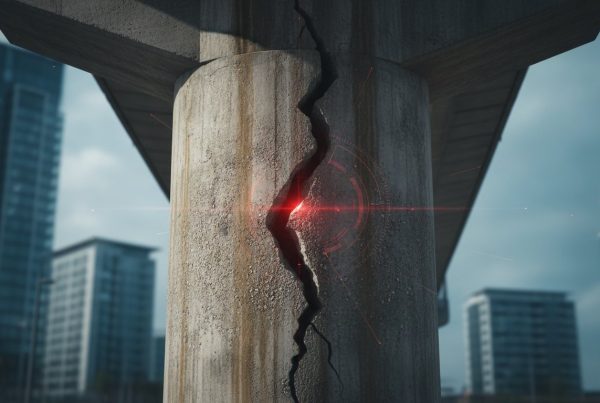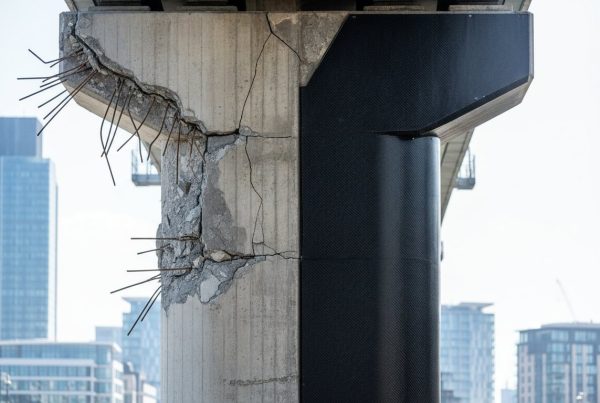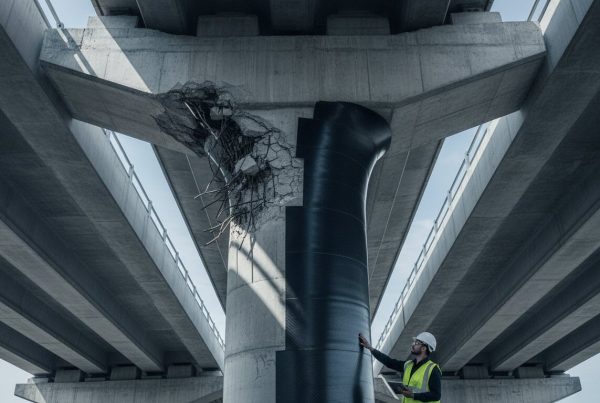

By 2025, it’s estimated that more than 30% of the United Kingdom’s aging masonry infrastructure will require significant structural intervention to mitigate the risks associated with environmental degradation and modern loading demands. It’s widely understood amongst structural engineers that the appearance of vertical cracking or the failure of lateral ties represents more than a maintenance deficit; it signals a critical compromise in the building’s load-bearing capacity. When existing steel components succumb to corrosion, the necessity for a durable, high-tensile masonry reinforcement strategy becomes paramount to prevent catastrophic failure.
This technical overview explores the methodologies required for effective structural stabilisation, ensuring all remediation works align with current UK structural standards and building regulations. We’ll examine how advanced carbon fibre reinforced polymers and the Tyfo® system facilitate structural strengthening whilst prioritising asset life-extension and safety.
Key Takeaways
- Gain an expert engineering overview of how high-tensile materials are integrated within mortar joints to provide masonry reinforcement, significantly enhancing resistance to lateral loads and environmental pressures.
- Evaluate the technical applications of Bed Joint Reinforcement (AMR) and helical bar systems for both major remediation projects and precision crack stitching requirements.
- Navigate the material selection process between traditional stainless steel and advanced composites, ensuring specifications align with UK environmental exposure classes and long-term durability requirements.
- Verify that structural designs maintain rigorous compliance with BS EN 845-1:2013 and Eurocode 6 (BS EN 1996) standards for ancillary masonry components and reinforced masonry.
- Explore the sustainability benefits of permanent structural stabilisation, focusing on the reduction of carbon footprints through strategic asset life-extension rather than full-scale demolition.
Understanding Masonry Reinforcement in Structural Engineering
Masonry reinforcement is defined as the strategic integration of high-tensile materials, typically stainless steel bed joint reinforcement or advanced carbon fibre reinforced polymers, within mortar joints or onto wall surfaces. This technical intervention is primarily designed to address the inherent structural limitations of unreinforced masonry. Whilst traditional masonry possesses significant compressive strength, it lacks the requisite tensile capacity to withstand modern loading requirements without assistance. By introducing these high-performance materials, the structural integrity of a building is enhanced, allowing for the effective management of lateral loads such as wind pressure, seismic activity, or earth retention in subterranean environments. The adoption of these Principles of Reinforcement ensures that brittle masonry units undergo successful structural remediation to meet current safety standards.
The Mechanics of Lateral Load Resistance
The application of masonry reinforcement transforms the mechanical behaviour of a wall, allowing masonry panels to act as structural beams between supports. This change in structural dynamics is essential for tall or long-span elevations that must resist significant out-of-plane forces. The efficacy of this system depends heavily on the bond strength between the reinforcement material and the masonry units; if the bond is insufficient, the tensile loads cannot be successfully redistributed. Within the context of structural strengthening, the choice of mortar and the surface preparation of the substrate are critical factors that engineers must specify with precision. In accordance with 2026 structural standards, the transfer of tensile stresses to the reinforcement is quantified through the precise interaction of shear-bond coefficients within the mortar-unit interface. For complex projects requiring bespoke engineering, our design feature services provide the necessary technical oversight for comprehensive asset life-extension.
Mitigating Cracking and Stress Concentrations
Thermal expansion and contraction represent a persistent threat to the longevity of masonry structures, often resulting in unsightly and structurally detrimental cracking. Bed joint reinforcement is utilised to manage these thermal stresses, effectively distributing the strain across the elevation and reducing the risk of localised failure. This technique allows for increased movement joint spacing in long elevations, which provides architects with greater aesthetic freedom whilst maintaining the building’s robust nature. Beyond thermal concerns, reinforcement is vital for addressing stress concentrations that naturally occur around openings such as windows and doors. These apertures create discontinuities in the masonry bond, leading to high-stress zones that are prone to diagonal cracking. Differential movement, whether caused by varying foundation depths or the interface between different structural materials, is also managed through the targeted application of reinforcement. This methodical approach to structural remediation ensures that the masonry can accommodate slight shifts without compromising the overall stability of the infrastructure.
Principal Methods of Masonry Stabilisation and Strengthening
The stabilisation of masonry structures requires a nuanced approach, often involving a combination of traditional mechanical fixings and advanced composite materials. Bed joint reinforcement, specifically through Automated Masonry Reinforcement (AMR), is frequently specified for new build projects to control shrinkage and enhance lateral load resistance. For existing structures, lateral restraint systems are employed to tie masonry leaves to the primary floor or roof diaphragms, preventing outward movement and ensuring the building acts as a single structural unit. This systematic approach to masonry reinforcement ensures that the original architectural character is preserved whilst the structural capacity is significantly augmented.
Traditional Bed Joint Reinforcement and Helical Bars
Retrofitting brick lintels and repairing fractured masonry often necessitates the use of stainless steel helical bars. Crack stitching involves the installation of these high-tensile rods across fractures, which are then encapsulated in a specialist, non-shrink grout to restore the wall’s integrity. Engineers typically specify 6mm diameter bars for standard domestic repairs, whereas 8mm bars are selected for commercial applications where higher shear loads are anticipated. This methodology is often cross-referenced with established standards such as the US Army Masonry Design Manual, which provides a rigorous framework for calculating reinforcement requirements in complex masonry assemblies. By following these empirical guidelines, practitioners can ensure that the tensile strength of the masonry is restored without introducing brittle failure points. For a comprehensive analysis of how bed joint reinforcement installation and structural mechanics interact under Eurocode 6 standards, engineers should consult specialist technical guidance to ensure full compliance.
Advanced CFRP Strengthening for Masonry
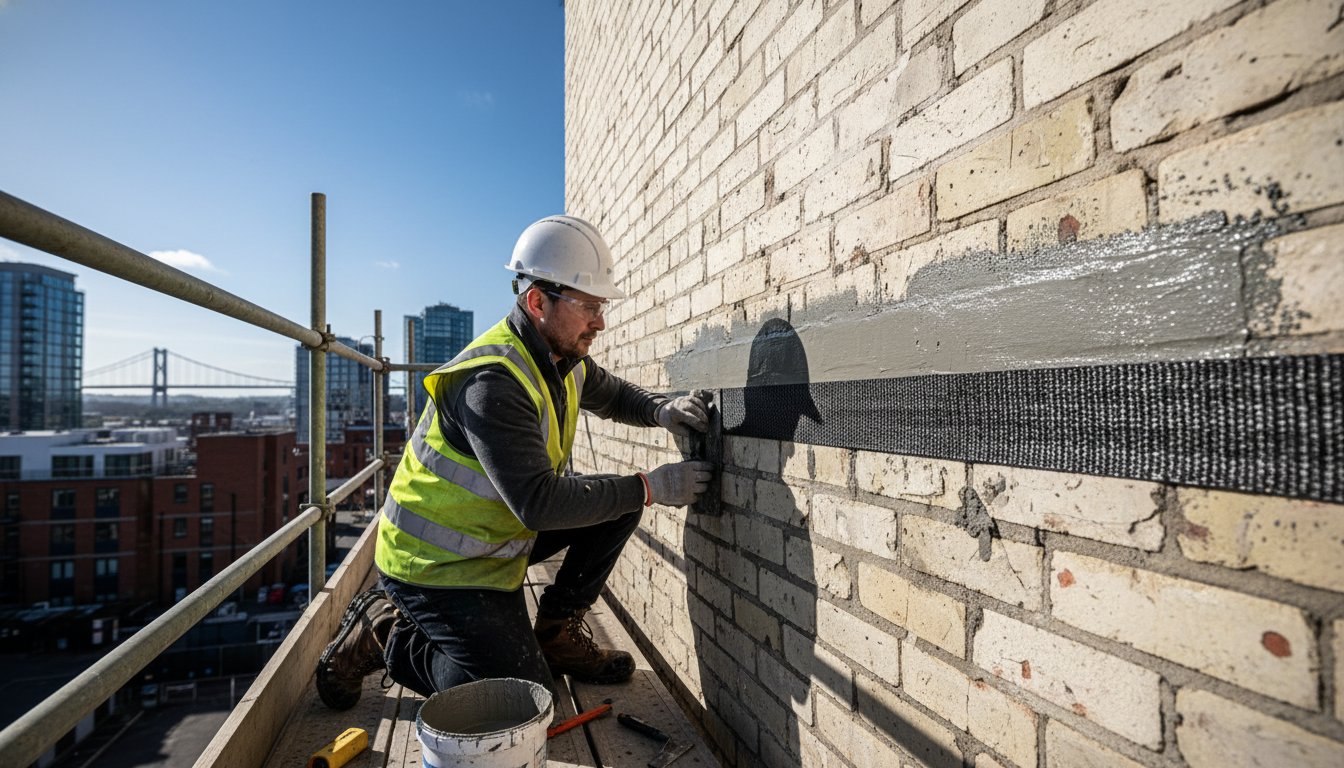
When traditional methods can’t provide the necessary load-bearing capacity, surface-mounted Carbon Fibre Reinforced Polymers (CFRP) offer a superior alternative. The Tyfo® Fibrwrap® system is particularly effective for masonry wall confinement, providing a high strength-to-weight ratio that doesn’t compromise the building’s aesthetic or spatial footprint. This technology is ideal for seismic retrofitting and blast mitigation, where the ductile properties of the composite material allow the masonry to absorb energy without catastrophic failure. These applications represent a significant advancement in masonry reinforcement, allowing for the rehabilitation of structures that might otherwise be condemned. For a detailed technical analysis of how these systems increase shear and flexural capacity, our guide to carbon fibre reinforcement for masonry walls provides an expert engineering overview of CFRP applications in line with current guidelines.
By focusing on asset life-extension, these systems offer a sustainable alternative to demolition and replacement. It’s a method that prioritises safety and long-term durability through proven science. For more information on how these solutions are integrated into bespoke engineering projects, it’s possible to review our design feature services to understand the technical rigour involved in every installation.
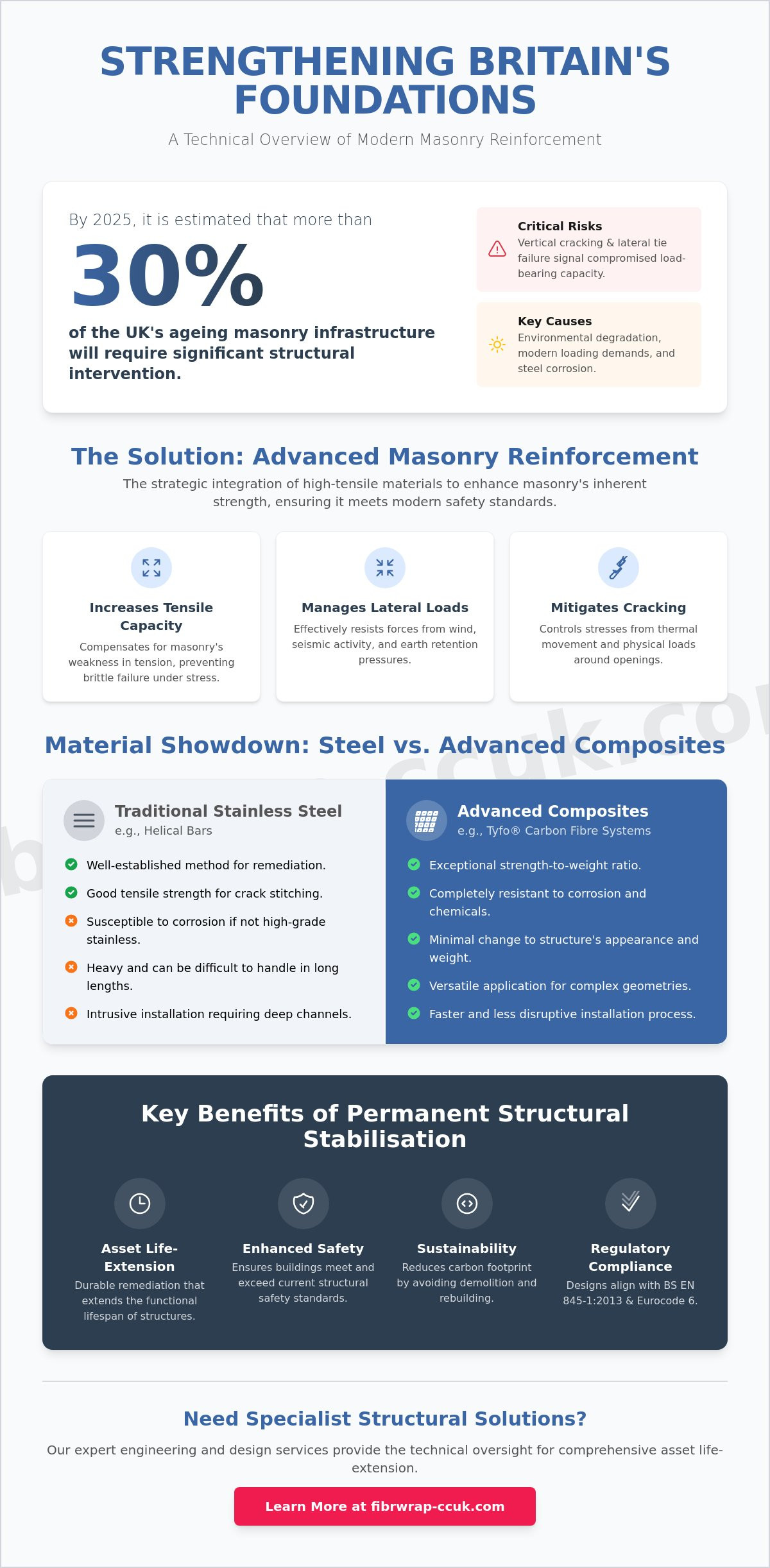
Material Selection: Traditional Steel vs Advanced Composites
Selecting appropriate materials for masonry reinforcement requires a rigorous assessment of environmental exposure classes as defined by BS EN 1996-2. For structures situated in coastal regions or industrial zones, designated as Exposure Classes MX3, MX4, and MX5, the historical reliance on galvanised steel has been superseded by more resilient specifications. While galvanised coatings provide sacrificial protection, their finite lifespan often leads to premature degradation in aggressive environments. The engineering industry’s transition toward austenitic stainless steel and carbon fibre reinforced polymers (CFRP) reflects a commitment to permanent structural remediation and asset life-extension.
Corrosion Resistance and Asset Longevity
Within the UK, Grade 304 and Grade 316 stainless steel are the established standards for external masonry leaves, providing the necessary resistance to oxidation in fluctuating moisture conditions. However, advanced composites such as the Tyfo® system offer a superior alternative where chloride-induced corrosion or carbonation is a critical concern. These materials are chemically inert. They remain unaffected by the alkaline environment of mortar or the ingress of road salts. By utilising non-metallic composites, engineers eliminate the risk of “rust bursting” where the volumetric expansion of corroding steel causes the spalling and catastrophic failure of the masonry face. This shift to inert materials significantly reduces long-term maintenance requirements and ensures the structural strengthening remains effective for the design life of the building.
Tensile Strength and Load-Bearing Capacity
The mechanical performance of masonry reinforcement is dictated by the relationship between the material’s tensile strength and the masonry’s existing stiffness. Standard helical bars typically provide an ultimate tensile strength in the region of 800 N/mm². In contrast, high-performance CFRP wraps can exceed 2,800 N/mm² depending on the specific fibre architecture and resin matrix employed. These advanced materials allow for significantly thinner reinforcement profiles. A CFRP laminate measuring less than 2mm in thickness can often provide equivalent load-bearing capacity to several courses of traditional steel bed-joint reinforcement. This low-profile nature is essential for preserving architectural finishes and maintaining original wall thicknesses on heritage or high-value assets. Asset managers seeking to understand the full technical scope of these high-modulus solutions can refer to our comprehensive resource on carbon fibre reinforcement for masonry walls, which details the structural mechanics and material performance in depth. You can also explore these technical specifications further through our bespoke design features, which prioritise the retention of structural integrity without compromising the building’s aesthetic character.
Asset managers must consider the lifecycle costs associated with different material grades. While stainless steel and composites involve a higher initial capital expenditure, they mitigate the risk of future remedial interventions. The selection process must always be evidence-led, ensuring the chosen material modulus is compatible with the masonry substrate to prevent localised stress concentrations. Where infrastructure assets also incorporate reinforced concrete elements, a broader understanding of concrete repairs and structural remediation is essential to ensure a holistic and compliant approach to asset life-extension.
Compliance and Technical Design Standards in the UK
The legal and technical framework governing masonry reinforcement in the UK is rigorous, requiring strict adherence to harmonised standards to ensure asset longevity. BS EN 845-1:2013 specifies the requirements for ancillary components, including bed joint reinforcement and wall ties. This standard ensures that materials possess the requisite tensile strength and corrosion resistance for long-term structural integrity. Compliance is not optional; it’s a fundamental requirement for any structural remediation project.
Eurocode 6 (BS EN 1996) provides the primary design framework for reinforced masonry, dictating the calculation of load-bearing capacities and stability. Since the UK’s exit from the European Union, the transition from CE marking to UKCA marking has become a critical compliance requirement. All reinforcement components must carry these marks to verify they meet established safety and performance criteria. Furthermore, structural design calculations must be backed by professional indemnity insurance. This provides the necessary financial security and professional accountability for asset managers and architects, ensuring that engineering liability is clearly defined.
Adhering to British and European Standards
Precision in installation is as vital as material quality. BS EN 1996-1-1 specifies minimum cover requirements to protect reinforcement from carbonation and moisture ingress. Lap lengths must be calculated based on the bar diameter and mortar strength to ensure effective stress transfer across the masonry unit. Testing protocols, such as pull-off strength and shear resistance tests, provide empirical validation of the bond between the masonry and the reinforcement. These standards often intersect with the management of thermal and moisture-related expansion, which is discussed in detail in our guide to movement joints in brickwork.
The Critical Role of Bespoke Structural Design
Generic, off-the-shelf solutions frequently fail to address the unique stress distributions found in complex structural failures. Effective structural remediation requires a bespoke approach. Modern engineering utilises Finite Element Analysis (FEA) to simulate load paths and identify stress concentrations before any physical intervention occurs. This digital modelling allows for the optimisation of reinforcement placement, reducing material waste whilst maximising safety. Our CCUK design feature illustrates how tailored engineering provides a higher degree of reliability than standardised repair kits, ensuring the masonry reinforcement performs as intended under peak loads.
For technical assistance with your structural calculations or to discuss a specific remediation project, contact our engineering team today.
Specialist Installation and Asset Life-Extension
The transition from temporary works to permanent structural stabilisation marks the critical final phase of any remediation project. Whilst temporary propping or shoring mitigates immediate collapse risks, it’s the application of permanent masonry reinforcement that restores the long-term load-bearing capacity of the asset. This shift requires a methodical approach where the load is transferred from temporary supports to the newly installed reinforcement systems without inducing secondary stresses in the masonry fabric.
Professional Installation and Quality Assurance
Achieving the design intent of a masonry reinforcement scheme depends entirely on the precision of the installation. For helical bar systems, the selection of the bonding agent is paramount. WHO 60 grout is frequently specified because its non-shrink, high-strength properties ensure a consistent mechanical bond between the stainless steel bar and the masonry substrate. If the grout fails to fill the void completely, the load transfer mechanism is compromised, leading to potential localised failures under thermal or structural movement.
When the project involves Carbon Fibre Reinforced Polymers (CFRP), surface preparation becomes the most significant factor in long-term performance. The masonry surface must be mechanically abraded and cleaned to expose the aggregate, ensuring the resin system can penetrate the substrate effectively. Following a rigorous Tyfo® Fibrwrap® installation protocol provides a benchmark for quality assurance, ensuring the composite material remains bonded for the duration of the asset’s life. Engineers should look for contractors who provide documented pull-off tests and material batch tracking to verify that the installation meets the required British Standards.
Sustainability through Structural Remediation
Choosing repair over demolition is a decision that aligns technical necessity with environmental responsibility. The carbon footprint of manufacturing new bricks, mortar, and steel for a replacement structure is immense. By contrast, masonry reinforcement allows for the preservation of existing building fabric, significantly reducing the volume of waste sent to landfill. Modern composite and helical solutions can extend the service life of historic or industrial masonry assets by 50 years or more, providing a sustainable alternative to the “knock-down and rebuild” mentality.
Successful remediation projects in the UK’s commercial and industrial sectors have demonstrated that even severely distressed structures can be salvaged. Whether it’s a Victorian warehouse undergoing a change of use or a critical retaining wall in a transport hub, targeted engineering interventions provide a cost-effective path to safety. Selecting a specialist engineering contractor requires a focus on their technical pedigree and their ability to provide bespoke, evidence-based designs. To ensure your asset remains secure and compliant, contact CCUK for a structural assessment and a comprehensive remediation plan.
Securing Structural Integrity through Advanced Engineering
The successful remediation of aging infrastructure relies on the integration of advanced materials and rigorous adherence to UK technical design standards. The transition from traditional steel interventions to carbon fibre reinforced polymers, such as the Tyfo® Fibrwrap® system, provides a superior method for achieving long-term stability without the weight or corrosion risks of legacy materials. Effective masonry reinforcement requires this level of technical precision to ensure that structural loads are redistributed safely and efficiently across the building envelope. It’s essential that these interventions are guided by empirical data and engineering rigour.
Fibrwrap Construction UK is the exclusive UK licensee for Tyfo® Fibrwrap® systems, supported by a specialist engineering design and installation team. Our proven track record on critical UK infrastructure demonstrates that asset life-extension is a sustainable and technically sound alternative to complete replacement. By applying sophisticated science to complex structural challenges, we help asset managers maintain the highest levels of safety and performance. Consult with CCUK for bespoke masonry reinforcement solutions to ensure your project benefits from industry-leading expertise and proven results. We remain committed to supporting your structural requirements.
Frequently Asked Questions
What is the purpose of masonry reinforcement?
Masonry reinforcement serves to enhance the tensile strength and lateral stability of masonry structures, effectively mitigating the risk of structural failure under loading or environmental stress. It’s often deployed to address issues such as thermal movement, subsidence, or seismic activity. By integrating materials like stainless steel or carbon fibre reinforced polymers, the structural integrity of a building is significantly improved, which facilitates the long-term preservation of the asset.
How much does masonry reinforcement cost per square metre?
The cost of masonry reinforcement varies significantly based on the substrate condition and the chosen material, but typical industry benchmarks for stainless steel bed joint reinforcement range from £45 to £110 per linear metre. For more complex structural strengthening using advanced composites like the Tyfo® system, bespoke quotations are required as costs are influenced by access requirements and the specific engineering design. It’s essential to account for professional fees and site-specific logistical constraints when budgeting.
Can masonry reinforcement be used on existing buildings?
What is the difference between bed joint reinforcement and crack stitching?
Bed joint reinforcement involves the horizontal installation of continuous reinforcing elements within the mortar beds to distribute lateral loads, whilst crack stitching is a localised remedial technique used to reconnect fractured masonry units. Whilst both methods utilise high-tensile materials to restore structural continuity, bed joint reinforcement is often applied across larger elevations to prevent future cracking. Crack stitching is specifically targeted at existing fissures to bridge the gap and prevent further separation.
How long does a reinforced masonry repair last?
A professionally designed and installed masonry reinforcement system is typically engineered to match the design life of the primary structure, which is often 50 to 60 years according to BS EN 1996 standards. The use of corrosion-resistant materials, such as austenitic stainless steel or carbon fibre reinforced polymers, ensures that the reinforcement remains effective in aggressive environments. Regular structural inspections are recommended to monitor the performance of the system and ensure the continued safety of the infrastructure.
Is CFRP better than stainless steel for masonry strengthening?
Carbon fibre reinforced polymers (CFRP) offer a higher strength-to-weight ratio and superior corrosion resistance compared to traditional stainless steel, making them ideal for high-performance structural strengthening. Whilst stainless steel remains a cost-effective solution for standard crack stitching, CFRP systems like Tyfo® are preferred for complex geometries or where weight limitations are critical. The choice between these materials depends on the specific engineering requirements and the environmental conditions of the site.
What UK building regulations apply to masonry reinforcement?
Masonry reinforcement must comply with Part A (Structure) of the Building Regulations 2010, which mandates that buildings are designed and constructed to sustain all applied loads safely. Compliance is typically demonstrated through adherence to BS EN 1996 (Eurocode 6) for the design of masonry structures. It’s also necessary to consider Approved Document B for fire safety, especially when using composite materials that may require specific fire-protection measures to maintain the required rating.
Do I need a structural engineer for masonry reinforcement?
A qualified structural engineer is essential for any masonry reinforcement project to ensure that the proposed solution is technically sound and meets all regulatory requirements. The engineer will conduct a thorough assessment of the existing structure, calculate the required reinforcement levels, and specify the most appropriate materials. Their involvement provides the necessary professional indemnity and technical assurance that the structural remediation will be successful, durable, and safe for all occupants.