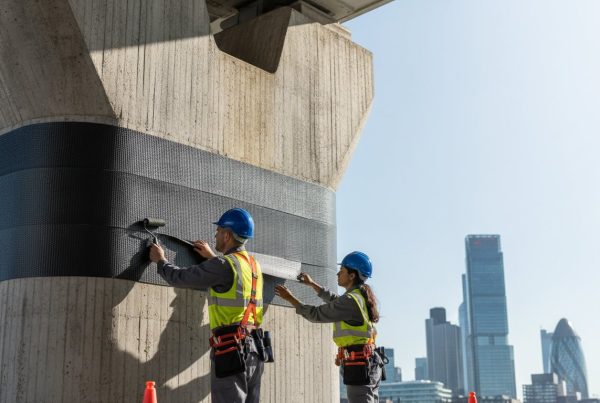


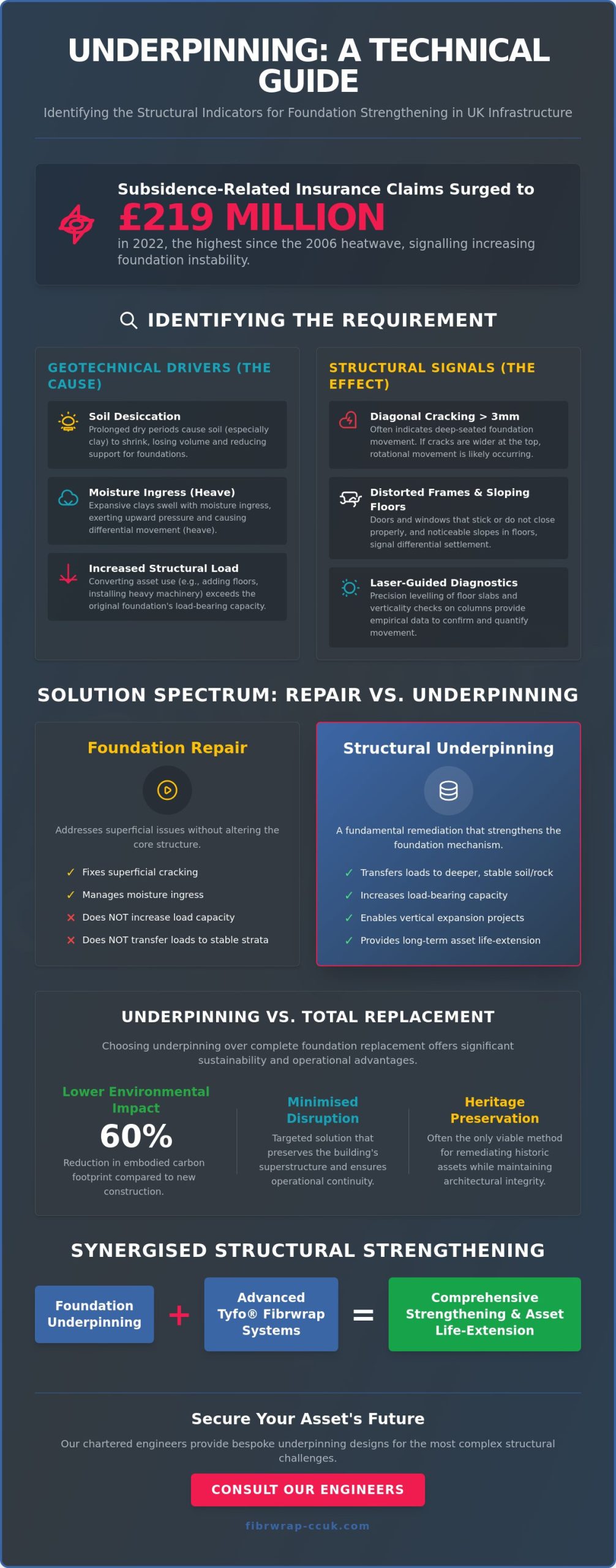
In 2022, the Association of British Insurers reported that subsidence-related claims surged to £219 million, marking the most significant spike in foundation instability costs since the 2006 heatwave. For asset managers and structural engineers, identifying the precise moment when a structure’s load-bearing capacity is compromised remains a critical challenge. You’re likely aware that traditional remediation often disrupts operational continuity, whilst the complexity of UK Building Regulations can delay essential interventions. This technical guide provides a comprehensive engineering perspective on the methodologies and indicators involved in professional underpinning for UK infrastructure.
In cases where diagnostic analysis identifies lateral wall movement or bowing, specific mechanical reinforcements are often integrated into the repair strategy; you can discover more about I-Beam Wall Braces as a specialised solution for managing structural instability.
We’ll examine the specific criteria for structural remediation, evaluate the efficacy of diverse engineering methods, and demonstrate how foundation strengthening integrates into broader asset life-extension strategies. By the conclusion, you’ll possess the empirical framework necessary to select the most technically robust and cost-effective solution for your specific site requirements.
Key Takeaways
- Understand the technical distinction between general foundation repair and structural underpinning, focusing on the methodologies required to increase load-bearing capacity through mass concrete or beam and base techniques.
- Recognise the critical physical manifestations of foundation failure and the geotechnical drivers, such as soil desiccation and groundwater fluctuations, that necessitate professional remediation.
- Gain insight into the engineering lifecycle, including the requirement for bespoke design features and the calculation of soil-structure interactions to ensure asset integrity during the implementation phase.
- Discover how foundation stabilisation is synergised with advanced Tyfo® Fibrwrap systems to achieve comprehensive structural strengthening and significant asset life-extension for UK infrastructure.
What is Underpinning? Defining Foundation Remediation for Infrastructure
Underpinning describes the sophisticated engineering process of strengthening an existing structure’s foundation by increasing its depth or breadth to reach more competent soil or rock strata. While basic foundation repair might address superficial cracking or moisture ingress, underpinning is a fundamental structural remediation technique that alters the load-bearing mechanism of the asset. This technical intervention becomes necessary when the original foundation design no longer supports the current or proposed loading requirements, often due to changes in soil composition or the intended use of the structure.
The practice has deep roots in UK civil engineering. Many Victorian-era masonry assets require these interventions to remain viable under modern traffic or occupancy loads. Modern safety protocols, including those outlined in the Building Regulations 2010 and Eurocode 7, ensure that today’s underpinning projects are guided by rigorous geotechnical analysis and empirical evidence. Understanding What is Underpinning requires a recognition of its role in asset life-extension, where the focus shifts from reactive maintenance to proactive structural strengthening.
The Primary Objectives of Foundation Strengthening
The central goal of underpinning is the transfer of structural loads from unstable or shallow soil to deeper, more resilient strata such as bedrock or stiff clay. This is particularly vital in regions like South East England, where shrink-swell behaviour in clay soils frequently causes subsidence. Beyond stabilisation, underpinning is employed to increase the load-bearing capacity of an asset. This allows for vertical expansion or the installation of heavy industrial machinery that the original footings weren’t designed to support. The process ensures that the structural integrity of the asset is maintained throughout its extended service life.
Underpinning vs. Foundation Replacement
Choosing between underpinning and total foundation replacement involves a complex cost-benefit analysis. Total reconstruction often proves prohibitively expensive and disruptive, whereas underpinning provides a targeted solution that preserves the building’s superstructure. For heritage assets, where architectural integrity is non-negotiable, underpinning is the only viable method for structural remediation. From a sustainability perspective, extending the life of an existing asset through repair is significantly more carbon-efficient than demolition. Industry data suggests that structural strengthening can reduce the embodied carbon footprint of a project by as much as 60% compared to new construction, aligning technical requirements with modern environmental mandates. A thorough understanding of underpinning cost variables, including soil morphology and material selection, is essential when conducting this cost-benefit analysis for any remediation project.
Identifying the Requirement: Structural Indicators for Foundation Strengthening
Foundation failure in commercial assets often presents initially through subtle deviations that escalate into critical structural compromises if left unaddressed. The requirement for underpinning is frequently driven by geotechnical shifts, specifically soil desiccation during prolonged dry periods or heave resulting from moisture ingress in expansive clays. These changes alter the bearing capacity of the sub-strata, leading to differential settlement that threatens the building’s equilibrium.
Load-path analysis is essential when an asset’s utility evolves. For instance, converting a light-industrial warehouse into a facility for heavy manufacturing increases the vertical load beyond the original design parameters. It’s a matter of engineering precision to determine whether the existing foundations can accommodate these new stresses. Distinguishing between aesthetic shrinkage and structural defects is vital. While hairline cracks might be non-structural, diagonal fractures exceeding 3mm in width often indicate a deeper problem with the sub-strata. Our engineers focus on identifying these signals early to prevent catastrophic failure.
Visual and Technical Diagnostic Signals
Monitoring diagonal cracking in masonry and concrete elements is a primary diagnostic step. If cracks are wider at the top than the bottom, rotational movement is likely occurring. Precision levelling of floor slabs and laser-guided verticality checks on load-bearing columns provide empirical data on settlement rates. These indicators often necessitate professional subsidence repair to restore the asset’s equilibrium. When structural integrity is compromised, a methodical approach to data collection ensures the chosen remediation strategy is grounded in evidence.
The Impact of External Environmental Factors
External influences, such as the construction of major urban infrastructure upgrades, can alter the stress distribution in the surrounding soil. Groundwater fluctuations, often exacerbated by the 14% increase in winter rainfall observed in the UK over the last century, lead to unpredictable soil behaviour. A comprehensive structural survey establishes a baseline, allowing specialists to determine if underpinning is the most viable path for asset life-extension. For complex projects requiring a technical evaluation of load redistribution, engaging in a bespoke design feature analysis can provide the necessary clarity for long-term stability.
Primary Methodologies of Underpinning in UK Civil Engineering
The selection of an underpinning strategy is dictated by the specific load requirements of the superstructure and the prevailing geotechnical profile. Engineering precision is paramount when addressing foundation failure, as the chosen methodology must ensure the long-term structural integrity of the asset whilst accounting for site-specific constraints such as restricted access or soil contamination. It’s a process that demands rigorous site investigation to determine the exact cause of settlement before any remedial works commence.
Traditional Mass Pour Techniques
Mass concrete underpinning remains a primary solution for shallow foundation strengthening, particularly in the remediation of domestic and light commercial structures. The process involves the sequential excavation of sections, or “pins”, beneath the existing footing. These voids are typically limited to lengths of 1.0m to 1.5m to maintain the stability of the unsupported structure during the works. Once excavated, each section is cast with high-strength concrete, effectively extending the foundation to a deeper, more competent soil stratum.
Structural stability is maintained through a rigorous “hit-and-miss” sequence, ensuring that no two adjacent sections are excavated simultaneously. Whilst traditional methods are effective, they’re often limited to depths of 3.0m due to the exponential increase in hydrostatic pressure and the complexity of manual spoil removal at greater depths. Safety protocols are stringently enforced; the Health and Safety at Work etc. Act 1974 and the Confined Spaces Regulations 1997 provide the regulatory framework for these manual operations, where the risk of trench collapse is a critical consideration for the site team.
Advanced Piling and Grouting Solutions
Advanced methodologies are required when traditional excavation is rendered impractical by high water tables or excessive load demands. Mini-piled underpinning utilises small-diameter piles, often ranging from 100mm to 300mm, to transfer structural loads through unstable upper soil layers to deeper, end-bearing strata or through skin friction. This approach is particularly advantageous in urban environments where heavy machinery access is restricted. The integration of reinforced concrete needle beams allows for the effective distribution of these loads across the new pile groups.
- Resin Injection: A non-invasive technique involving the high-pressure delivery of expansive polymers to consolidate loose soils and, in specific cases, provide controlled lift to settled foundations.
- Jet Grouting: This involves the high-velocity injection of cementitious grout to create “soil-crete” columns, offering a robust solution for soil stabilisation without the need for extensive excavation.
- Beam and Base: A hybrid method where a reinforced concrete beam is installed to support the existing wall, transferring the load to strategic mass concrete bases.
Choosing between invasive and non-invasive methods requires a bespoke design feature analysis that weighs asset sensitivity against the required increase in bearing capacity. For critical infrastructure, the prioritisation of low-vibration techniques like chemical grouting often supersedes traditional methods to prevent further settlement. This focus on asset life-extension ensures that the structural remediation provides a permanent, rather than a temporary, resolution to subsidence or increased loading requirements. Understanding how each methodology influences the overall underpinning cost is a critical component of the feasibility study, as the selection of piling over mass concrete can significantly alter the project’s financial and programme requirements.
The Engineering Lifecycle: Design, Temporary Works, and Implementation
The execution of underpinning requires a rigorous adherence to the engineering lifecycle, beginning long before any soil is displaced. Every project necessitates a bespoke design feature to address the unique geological and structural variables present at the site. Technical success is predicated on the precise calculation of load transfers and the complex interaction between the existing masonry and the underlying strata during the remediation phase. It’s a process where empirical data must guide every physical action to ensure the asset’s structural strengthening is achieved without compromising its current state.
Feasibility and Structural Design
Geotechnical investigations are the foundation of any remediation strategy, involving borehole sampling and trial pits to establish the precise bearing capacity of the subsoil. These findings inform engineering calculations that must comply with Eurocode 7 for geotechnical design and Eurocode 2 for concrete elements. Structural engineers develop these plans by integrating underpinning requirements with the broader objectives of the asset’s life-extension. Key considerations during this phase include:
- Soil-Structure Interaction: Assessing how the redistribution of weight will affect both the new and existing foundation elements.
- Load Path Analysis: Determining the vertical and lateral forces that must be diverted during the excavation process.
- Material Specification: Selecting high-performance concrete mixes or composite materials that meet the durability requirements of the specific environment.
Managing Risk During Execution
Risk mitigation is prioritised through a disciplined, phased approach, typically involving the excavation of sequential bays no wider than 1.0 to 1.5 metres. This method prevents localised collapse by ensuring the majority of the structure remains supported by original ground whilst specific sections are reinforced. Real-time monitoring of structural movement is conducted using digital tiltmeters and precision levelling; if any deviation exceeding 2mm is detected, works are immediately paused for assessment.
Temporary works, including hydraulic propping and lateral shoring, are installed in strict accordance with BS 5975:2019 standards. These systems provide the necessary stability for the structure whilst operatives work within the excavations. Safety protocols are maintained amongst active construction sites to protect both the workforce and the public, ensuring that the integrity of the asset is never in doubt. This methodical rhythm of excavation, reinforcement, and monitoring is what defines a successful engineering intervention.
For a technical assessment of your infrastructure requirements, contact our specialist team to discuss a tailored remediation strategy.
Beyond Traditional Methods: Integrating Underpinning with Advanced Structural Strengthening
Foundation remediation shouldn’t be viewed as an isolated repair. Whilst underpinning addresses the transfer of loads to deeper, more competent strata, the holistic integrity of a structure often requires a multi-faceted approach. Integrating Tyfo Fibrwrap installation with traditional foundation works ensures that every element, from the footing to the roofline, meets modern performance standards. This combined strategy is particularly vital for ageing infrastructure where the original design parameters no longer align with current usage demands or environmental stressors.
The synergy between foundation stability and Carbon Fibre Reinforced Polymer (CFRP) reinforcement creates a robust structural ecosystem. Once the ground is stabilised, the focus shifts to the superstructure. CFRP systems provide a technical solution where the foundation provides vertical support, whilst the composite wrap enhances the ductility and load-bearing capacity of columns and beams. This dual-layered approach is essential for future-proofing assets against increased seismic or blast requirements. Asset managers often specify a 25-year design life extension, a target that’s consistently achievable through these integrated methodologies. It’s a process that moves beyond simple repair, focusing instead on long-term asset life-extension and durability.
Composite Synergy in Foundation Repair
The interface between new concrete underpinning and existing masonry is a common point of vulnerability. Using CFRP to strengthen this transition zone effectively mitigates the risk of differential movement and stress concentrations. Combining masonry reinforcement with deep foundation techniques allows for the restoration of shear and flexural capacity in the original elements. These technical interventions are particularly effective in heritage structures where maintaining the architectural fabric is as critical as ensuring structural safety. By reinforcing the existing masonry, engineers can ensure the building behaves as a monolithic unit, distributing loads more evenly across the new foundation system.
The Economic Case for Advanced Remediation
The financial justification for integrated structural strengthening rests on long-term ROI. Isolated repairs often fail to address the root cause of systemic degradation, leading to recurring maintenance costs over a 10-year cycle. By contrast, a comprehensive remediation strategy can reduce operational downtime by 30% or more compared to traditional demolition and replacement. This methodical approach preserves the asset’s value whilst ensuring compliance with UK Building Regulations and Eurocode standards. It’s a sustainable choice that prioritises the preservation of existing carbon-intensive materials. You should discuss your structural requirements with our technical team to determine the most cost-effective path for your specific infrastructure project.
Securing Long-Term Asset Integrity through Engineered Foundation Remediation
Effective structural remediation requires a precise alignment between geotechnical assessment and engineering implementation. Whilst traditional underpinning remains a fundamental requirement for stabilising compromised foundations, the integration of advanced composite technologies ensures that asset life-extension is achieved with minimal operational disruption. It’s essential that these interventions are grounded in empirical evidence and rigorous design standards. Fibrwrap Construction UK operates as the exclusive UK licensee for the Tyfo® Fibrwrap® system, providing a technical advantage in complex structural strengthening projects across the United Kingdom. With over a decade of expertise in the civil engineering sector, the methodology focuses on delivering data-driven solutions that adhere to the standards of the Building Research Establishment (BRE) and relevant Eurocodes.
The transition from identifying structural indicators to executing a bespoke remediation strategy demands a comprehensive approach. This includes the full lifecycle of design, supply, and installation. By prioritising evidence-based engineering over reactive repairs, asset managers can secure the long-term viability of critical infrastructure and ensure safety for decades to come. Consult with our specialist engineering team for a bespoke structural design and installation solution.
Frequently Asked Questions
What is the primary difference between underpinning and a standard foundation?
Underpinning is a remedial engineering process designed to strengthen or deepen an existing foundation that has become unstable, whereas a standard foundation is the initial structural base installed during original construction. Whilst a standard foundation is designed for initial site conditions, underpinning extends the load-bearing depth to a more stable soil stratum, often reaching depths of 3 metres or more to bypass reactive clay layers. This process is essential when the original design no longer supports the building’s structural integrity.
How do I know if my commercial property requires underpinning rather than simple repair?
Structural intervention is necessary when cracks exceed 5mm in width or when BRE Digest 251 classifications reach Category 3 or higher, indicating more than mere cosmetic damage. If doors fail to close or floors show a gradient of more than 1 in 50, simple masonry repairs won’t suffice. Professional engineers must assess whether the subsoil is failing, as traditional patching cannot resolve the underlying geotechnical instability that threatens the asset’s long-term security.
Is underpinning a permanent solution for structural subsidence?
Underpinning provides a permanent resolution by transferring the building’s weight to stable ground or bedrock, effectively halting the movement caused by subsidence. Most UK structural engineering firms provide a 10-year or 12-year insurance-backed guarantee for these works, though the physical life-extension of the asset often exceeds 50 years. It’s a definitive method for structural strengthening that ensures the foundation’s performance remains consistent regardless of seasonal moisture changes in the upper soil levels.
Can underpinning be carried out whilst the building is still in use?
Contemporary engineering techniques allow approximately 80% of underpinning projects to proceed while the building remains occupied and functional. Methods such as mini-piling or the application of the Tyfo® system for structural strengthening involve minimal internal disruption and smaller plant equipment. Engineers typically schedule the works in phases to maintain safe egress and ingress, ensuring that commercial operations or essential infrastructure services don’t face total closure during the remediation period.
What are the most common methods of underpinning used for UK infrastructure?
The UK infrastructure sector primarily utilises mass concrete pour, beam and base, and screw piling to stabilise ageing assets. Mass concrete is a traditional approach where sections are excavated in a strategic sequence, whereas piling is preferred for depths exceeding 5 metres in complex geologies like London Clay. These methods are often combined with advanced composite materials to ensure the bespoke requirements of the specific site are met with engineering rigour.
How long does a typical underpinning project take to complete?
A standard remediation project for a commercial unit usually requires a timeline of 4 to 10 weeks, depending on the linear meterage of the foundation being treated. For instance, a 20-metre section of traditional mass concrete underpinning typically takes 5 weeks to complete, including the curing time for the concrete. Complex infrastructure projects involving deep piles or bespoke structural strengthening might extend this duration to accommodate more rigorous safety protocols and material testing.
Does underpinning increase the load-bearing capacity of an existing structure?
Underpinning is frequently specified during asset repurposing to increase the load-bearing capacity, allowing for the addition of extra storeys or heavy industrial machinery. By reinforcing the base, the structure’s capacity can be increased by 100% or more, depending on the piles’ depth and the materials used. This is a core component of asset life-extension, where the original design is upgraded to meet modern operational demands through precise engineering intervention.
Are there non-invasive alternatives to traditional concrete underpinning?
Resin injection and Carbon Fibre Reinforced Polymers (CFRP) offer non-invasive alternatives that require 70% less excavation than traditional mass concrete methods. The Tyfo® system is a primary example of how advanced materials provide structural strengthening without the need for extensive groundworks or heavy machinery. These solutions are particularly effective for heritage assets or sensitive infrastructure where maintaining the original fabric of the building is a critical requirement.