
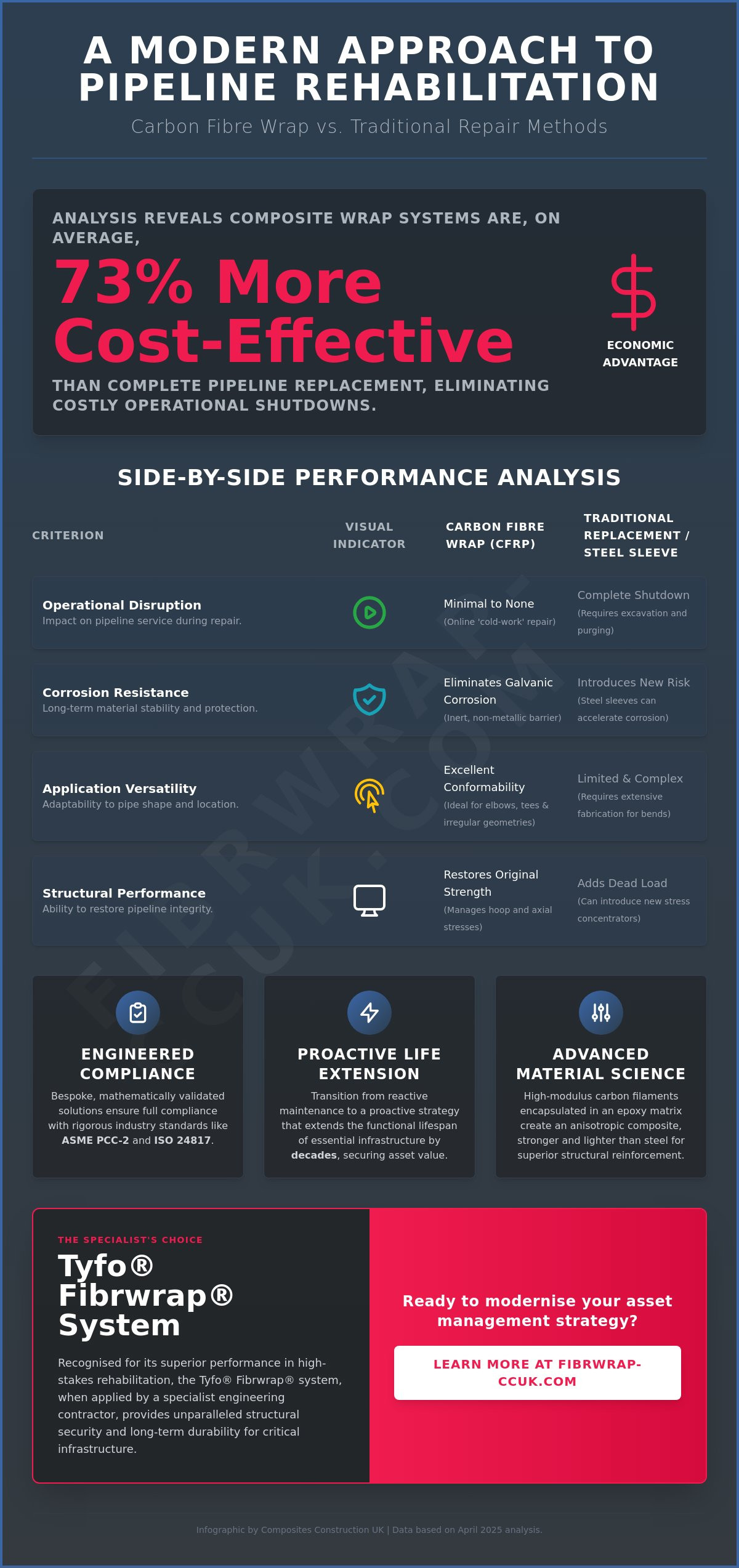
An April 2025 analysis indicates that composite wrap systems are, on average, 73% more cost-effective than complete pipeline replacement; however, many asset controllers still default to the disruptive cycle of excavation and renewal. It’s understandable that the preservation of high-pressure infrastructure requires absolute certainty, particularly when faced with the accelerated corrosion common in traditional metallic repair systems. You’ve likely managed the operational strain caused by unscheduled shutdowns or the engineering complexity of reinforcing irregular geometries like elbows and tees.
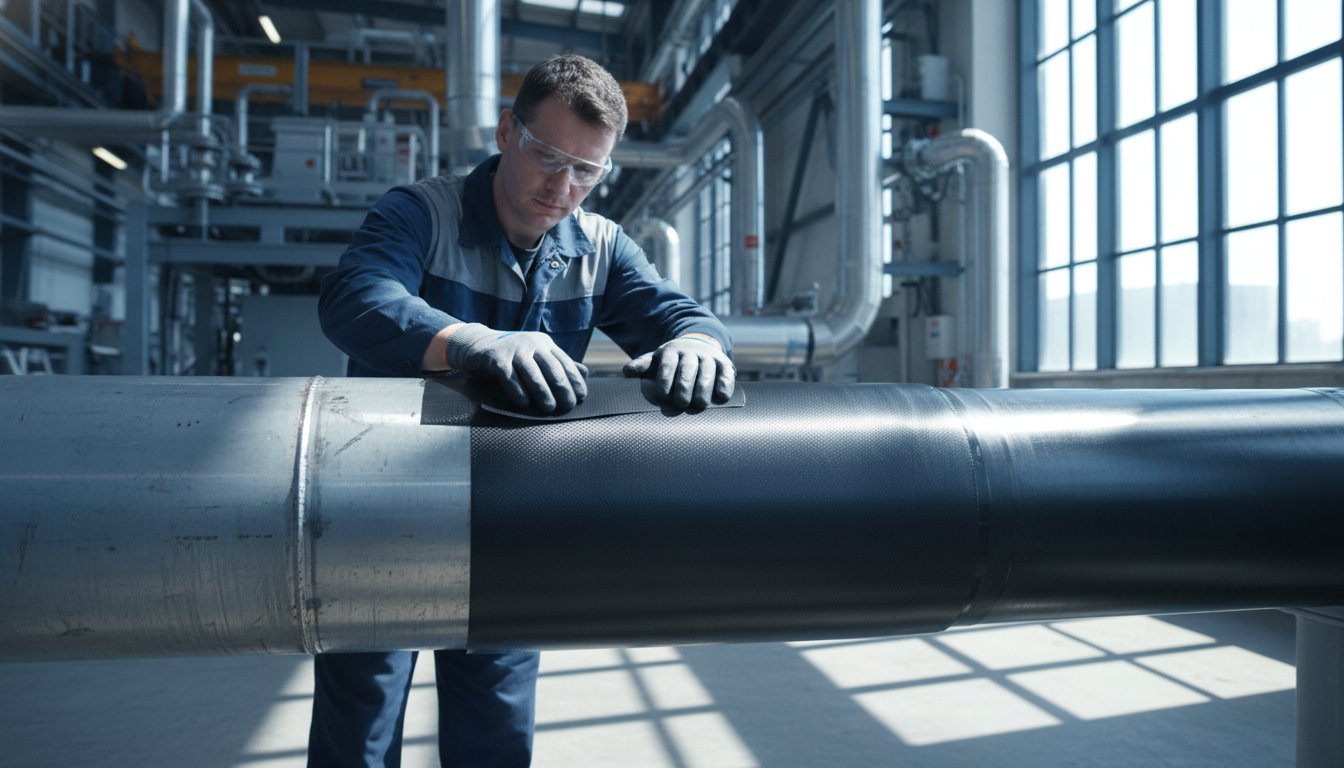
This article demonstrates how a sophisticated carbon fibre pipe wrap repair provides a permanent, non-disruptive alternative to conventional steel sleeving. By utilising advanced carbon fibre reinforced polymer (CFRP) systems, such as Tyfo® Fibrwrap®, original hoop and axial strength can be restored whilst ensuring full compliance with ASME PCC-2 and ISO 24817 standards. We’ll examine the technical methodologies used to extend asset functional lifespan and the material science that allows these bespoke, engineered solutions to outperform traditional interventions in both durability and long-term structural security.
Key Takeaways
- Understand the technical synergy between high-modulus carbon filaments and epoxy matrices used to manage hoop and axial stresses in high-pressure environments.
- Evaluate how a carbon fibre pipe wrap repair eliminates the risk of galvanic corrosion whilst offering a lightweight alternative to traditional steel sleeving.
- Learn the essential design standards and bespoke engineering calculations required to ensure compliance with ISO/TS 24817 and ASME PCC-2 protocols.
- Discover why it’s more effective to transition from reactive maintenance to proactive asset life-extension strategies that bypass the disruption of total pipeline replacement.
- Recognise the performance advantages of the Tyfo® Fibrwrap® system when applied by a specialist engineering contractor for high-stakes rehabilitation.
The Shift Toward Engineered Carbon Fibre Pipe Wrap Repair
The technical definition of Carbon-fiber reinforced polymer (CFRP) describes a high-modulus composite material where high-strength carbon filaments are encapsulated within a high-performance epoxy resin matrix. In modern infrastructure management, a carbon fibre pipe wrap repair is recognised as a sophisticated structural reinforcement system rather than a temporary containment measure. This engineered approach allows for the restoration of an asset’s original design pressure by transferring hoop and axial stresses from the compromised pipe wall to the composite laminate. The industry has seen a decisive transition from reactive, emergency maintenance toward proactive asset life-extension programmes that prioritise long-term structural security.
Traditional “dig and replace” methodologies are increasingly regarded as unviable for the UK’s complex infrastructure networks. The sheer scale of disruption, coupled with the environmental burden of material disposal and the logistical challenges of excavation in congested urban or industrial corridors, necessitates a more refined alternative. Specialist contractors are essential in this landscape, as they provide the design-led rehabilitation required to ensure that repairs aren’t merely applied, but are mathematically validated to withstand specific operational loads and environmental conditions.
Addressing Critical Pipeline Anomalies
Structural integrity is frequently compromised by external corrosion and subsequent wall thinning, which reduces the safe operating pressure of the system. Beyond corrosion, pipelines may suffer from mechanical damage, including dents, gouges, or scratches caused by third-party interference. These anomalies act as stress concentrators that can lead to fatigue failure. A carbon fibre pipe wrap repair effectively bridges these defects, providing the necessary confinement to stabilise the damaged area. It’s equally effective for mitigating risks associated with historical manufacturing flaws or weld defects, ensuring the pipeline remains compliant with modern safety regulations without requiring a full section replacement.
The Economic Case for Composite Rehabilitation
The most compelling economic argument for composite systems is the total avoidance of operational shutdowns. Because these systems are applied using cold-work techniques, they don’t require the pipeline to be decommissioned or purged, which eliminates the astronomical costs of lost productivity. When asset managers evaluate structural repair company cost, the focus shifts to the total lifecycle value and the significant reduction in site logistics. Composite repairs require minimal plant and labour compared to heavy steel interventions, offering a superior return on investment whilst extending the functional lifespan of essential infrastructure by decades.
The Engineering Science of Carbon Fibre Strengthening
The efficacy of a carbon fibre pipe wrap repair is predicated on the mechanical synergy between high-tensile carbon filaments and specialised epoxy resin matrices. Unlike isotropic materials such as steel, carbon fibre reinforced polymers (CFRP) are anisotropic, allowing engineering teams to orient the primary fibres to align with the specific stress vectors of the pipeline. In high-pressure systems, this typically involves addressing hoop stress, the circumferential force that threatens to rupture the pipe wall, whilst also providing resistance against axial loads that occur due to thermal expansion or ground movement. The application of these advanced composites is governed by rigorous CFRP structural strengthening UK standards, which dictate the material properties and safety factors required for critical infrastructure.
Thermal stability is a defining characteristic of these systems, as the resin matrices are engineered to maintain their glass transition temperature (Tg) well above the operational threshold of the pipeline. This ensures that the structural integrity of the repair remains uncompromised even under fluctuating thermal cycles. The inherent chemical resistance of carbon fibre protects the underlying substrate from further degradation, effectively sealing the anomaly from the external environment. This creates a barrier that is impervious to the traditional mechanisms of atmospheric and galvanic corrosion.
Load Transfer Mechanisms in Composite Wraps
Structural equilibrium is restored through a process where internal pressure is transferred from the weakened or thinned pipe wall to the high-stiffness composite laminate. This transfer is facilitated by the resin matrix, which acts as a shear medium. To ensure uniform load distribution and eliminate the risk of point-loading, high-modulus fillers or load-transfer putties are utilised to fill surface irregularities and pits. This ensures that the carbon fibre pipe wrap repair functions as a monolithic extension of the original structure, whether it’s an aging metallic main or a prestressed concrete cylinder pipe (PCCP).
Durability in Aggressive Industrial Environments
Advanced composites are specifically selected for their resilience amongst aggressive chemical effluents and biological threats. These systems exhibit exceptional resistance to sulphate-reducing bacteria (SRB), which are often responsible for accelerated microbiologically influenced corrosion (MIC) in buried assets. Performance characteristics are maintained even whilst submerged or in conditions of constant high humidity, as modern epoxies are formulated to prevent moisture ingress. For further technical insights into material compatibility with industrial fluids, the chemical resistance information from Abbey Extrusions serves as a valuable industry reference. Long-term creep and fatigue resistance are also superior to traditional metallic patches, as carbon fibre doesn’t suffer from the same work-hardening or stress-corrosion cracking vulnerabilities found in steel.
For assets requiring specialised assessment, engineers can review specific design features to determine the optimal laminate thickness and resin formulation for their unique environmental challenges.
Carbon Fibre Wrap vs. Traditional Steel Sleeving: A Comparison
When evaluating the structural reinforcement of critical pipelines, the distinction between traditional steel sleeving and a modern carbon fibre pipe wrap repair is defined by material physics and logistical efficiency. Steel sleeves impose a significant dead-load on the structure, often necessitating heavy lifting plant and extensive site preparation. In contrast, low-mass carbon fibre composites provide a high strength-to-weight ratio that minimises the additional load on sensitive or aging infrastructure. This is particularly relevant in elevated pipe racks or bridge-attached crossings where the structural capacity of the supports must be preserved.
Steel interventions are inherently susceptible to galvanic corrosion, often requiring the integration of sacrificial anodes or complex coating systems to prevent the repair from becoming a new site of degradation. Carbon fibre reinforced polymers are electrochemically inert, eliminating the risk of metallic interaction and ensuring the repair doesn’t accelerate the decay of the host pipe. The rigid nature of steel also requires bespoke, off-site fabrication to accommodate elbows, tees, or reducers. CFRP systems offer unparalleled geometry flexibility, as the flexible fabric conforms to any irregular surface before the resin matrix cures into a rigid structural shell, significantly reducing the lead times associated with bespoke fabrication.
Operational Impact and Shutdown Requirements
Hot-work welding presents significant ignition risks in many industrial environments, particularly within the petrochemical sector. Cold-work application of carbon fibre eliminates these hazards, allowing for the execution of repairs whilst the system remains under full operational pressure. This avoids the logistical burden of purging and decommissioning, which is often a prerequisite for welded steel patches. The compact nature of composite materials also facilitates trenchless applications in restricted access areas where the installation of heavy steel components would be physically impossible. Because the curing process is predictable and often faster than complex welding and bolting sequences, the overall time on site is reduced.
Technical Performance and Life Expectancy
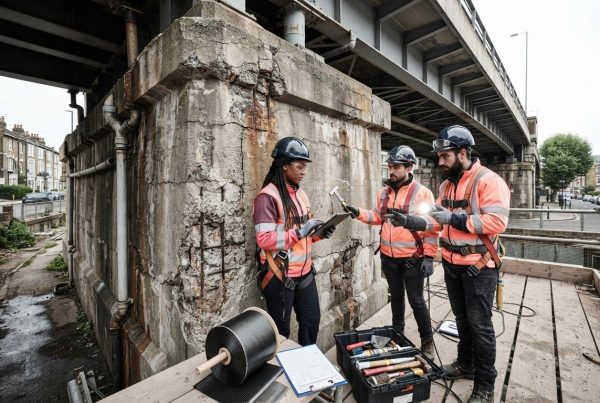
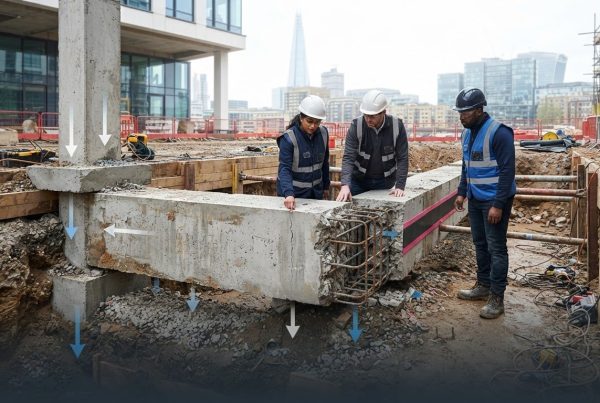
Whilst traditional metallic patches are often viewed as medium-term fixes, a properly engineered CFRP system is designed for a functional lifespan of 20 to 50 years. These systems require virtually no ongoing maintenance, contrasting sharply with the periodic inspection and replacement cycles associated with cathodic protection systems. The versatility of these materials extends beyond pipeline rehabilitation; the same engineering principles are applied to the strengthening of concrete beams and columns that may be adjacent to the pipework, providing a holistic approach to infrastructure life-extension. This ensures that the entire asset remains structurally sound without the need for disparate repair methodologies.
Design Standards and Installation Protocols for Pipe Repair
The structural efficacy of a carbon fibre pipe wrap repair is predicated on its status as a fully engineered system rather than a generic commodity. It’s essential that every intervention is preceded by a comprehensive feasibility study and design phase to ensure the composite laminate can safely assume the loads from the compromised substrate. Compliance with international standards, specifically ISO/TS 24817 and ASME PCC-2, provides the regulatory framework necessary for high-stakes infrastructure. These codes dictate the safety factors, material testing requirements, and design methodologies that must be followed to guarantee a permanent repair. Failure to adhere to these protocols can result in a system that lacks the requisite stiffness or strength to manage internal pressures over the asset’s intended lifespan.
Surface preparation represents the most critical phase of the physical installation. To facilitate a robust mechanical bond between the pipe and the composite, the substrate must be prepared to achieve a specific anchor profile, typically through abrasive blasting to a near-white metal finish (ISO 8501-1 Sa 2.5). Any residual contaminants or oxidation will compromise the interlaminar shear strength of the system. Once the application is complete, quality assurance protocols are strictly enforced. This includes pull-off testing to verify adhesion to the host pipe and Shore hardness verification to ensure the resin matrix has achieved the specified degree of polymerisation.
The Role of Bespoke Engineering Design
Engineering calculations determine the precise wrap thickness and fibre orientation required based on current operating pressures, maximum allowable operating pressure (MAOP), and the specific dimensions of the defect. By utilising specialised design features, engineers can tailor the reinforcement to accommodate complex asset geometries such as reducers or valves. In instances of irregular stress concentrations, such as pipeline junctions or bifurcations, Finite Element Analysis (FEA) is employed to model load distribution and ensure the CFRP system provides adequate confinement across all planes.
Professional Installation and Site Management
Environmental controls are meticulously managed during the resin curing phase to prevent moisture ingress or temperature fluctuations that could inhibit the chemical reaction. The interlaminar bond strength is verified through the production of site-representative samples, which undergo rigorous laboratory testing. Upon completion, a comprehensive handover pack is provided, containing all material batch records, environmental logs, and QA test results. This documentation forms the basis for long-term monitoring strategies, ensuring the asset controller has a definitive record of the structural upgrade. For technical consultation on specific pipeline challenges, asset managers are encouraged to contact our engineering team to discuss bespoke rehabilitation requirements.
Tyfo® Fibrwrap®: The Specialist Choice for Pipeline Rehabilitation
The selection of a structural reinforcement system for high-pressure assets requires a departure from generic composite solutions. Tyfo® Fibrwrap® represents the global benchmark for a carbon fibre pipe wrap repair, distinguished by its extensive testing pedigree and history of performance in high-consequence environments. Unlike standard wraps, the Tyfo® system is a proprietary range of carbon and glass fibre reinforced polymers, combined with specialised epoxies that have been rigorously evaluated for long-term durability. In the United Kingdom, the application of these systems is governed by exclusive licensing, ensuring that every project is managed by a specialist engineering contractor with the technical depth required for critical infrastructure safety.
Successful pipeline rehabilitation across the UK has demonstrated the system’s ability to restore asset integrity whilst bypassing the logistical constraints of replacement. By integrating a professional Tyfo Fibrwrap installation into a broader asset management strategy, controllers can achieve a level of structural security that is mathematically validated and empirically proven. This holistic approach ensures that every carbon fibre pipe wrap repair is not merely a localised fix but a significant contribution to the asset’s total functional lifespan.
Proven Performance in Critical Infrastructure
The Tyfo® Fibrwrap® system has established a documented history of success across the water, gas, and petrochemical sectors. Its technical capabilities extend beyond simple pressure containment; the system is frequently specified for its seismic retrofitting and blast mitigation properties. These attributes are essential for assets located in geologically unstable regions or high-risk industrial zones where structural resilience is paramount. Third-party certifications and decades of long-term performance data confirm that these composites maintain their mechanical properties even under the most demanding environmental stressors.
Engaging a Specialist for Your Pipeline Project
The complexity of engineered composites necessitates an end-to-end service model that encompasses design, supply, and installation. This ensures that the bespoke engineering calculations discussed in previous sections are translated accurately into the physical repair. Safety and reliability are further reinforced through the use of certified technicians who are specifically trained in the nuances of resin chemistry and fibre orientation. For asset managers seeking to evaluate the viability of composite reinforcement for their infrastructure, the first step is to contact CCUK for a comprehensive feasibility study. This engagement provides the empirical data required to make informed decisions regarding structural life-extension and long-term asset security.
Securing the Future of High-Pressure Pipeline Infrastructure
The transition from traditional, disruptive replacement to bespoke carbon fibre pipe wrap repair marks a significant advancement in structural engineering. It’s clear that the application of high-modulus CFRP systems, when governed by ISO/TS 24817 and ASME PCC-2 standards, provides a level of structural security that matches or exceeds original design specifications. By prioritising engineered life-extension over reactive patches, asset managers can preserve the utility of critical infrastructure whilst eliminating the logistical burdens of operational downtime. The technical evidence supports the use of proprietary systems like Tyfo® Fibrwrap® to manage complex stress vectors in high-pressure environments.
As the exclusive UK licensee for Tyfo® Fibrwrap® systems, we provide a comprehensive design-to-installation service backed by decades of experience in UK critical infrastructure. Our engineering team ensures that every rehabilitation project is mathematically validated and professionally executed. We invite you to consult with our specialist engineers on your pipeline rehabilitation project to explore how these advanced materials can safeguard your essential assets. It’s an investment in the long-term resilience and safety of your network.
Frequently Asked Questions
Is carbon fibre pipe wrap a permanent repair according to UK standards?
Yes, a carbon fibre pipe wrap repair is classified as a permanent structural reinforcement when it is designed and installed in accordance with ISO/TS 24817 or ASME PCC-2. These international standards provide the rigorous mathematical framework required to ensure the composite system restores the original design factor of the asset. Unlike temporary containment clamps, an engineered CFRP system provides a functional life expectancy of 20 to 50 years, effectively matching the remaining lifespan of the host pipeline.
What is the maximum pressure a carbon fibre pipe wrap can withstand?
The maximum pressure capacity is not a fixed value but is determined by the bespoke engineering design and the number of laminate layers applied. Advanced CFRP systems are capable of reinforcing pipelines operating at high pressures, often exceeding 100 bar, by transferring the hoop stress to the high-modulus carbon filaments. The specific pressure rating is validated through calculations that account for the pipe diameter, wall thinning, and the mechanical properties of the resin matrix.
Can carbon fibre wraps be applied to a live pipeline whilst it is operational?
Yes, carbon fibre wraps are specifically designed for application on live, operational pipelines without the need for a system shutdown. Because the process involves cold-work techniques, there is no risk of ignition or thermal stress to the pressurised substrate. This allows asset controllers to maintain productivity whilst the repair is executed, provided the surface temperature remains within the specified limits for the epoxy resin matrix to achieve its glass transition temperature.
How does the cost of CFRP pipe wrap compare to traditional replacement?
Composite rehabilitation is significantly more cost-effective than traditional replacement, with an April 2025 analysis indicating that wraps are approximately 73% cheaper than full section renewal. This economic advantage is primarily driven by the elimination of heavy excavation, lost production during shutdowns, and the logistical costs of disposing of contaminated infrastructure. The total lifecycle value is further enhanced by the system’s immunity to future corrosion, reducing long-term maintenance requirements.
Which industrial standards govern the design of composite pipe repairs?
The design and application of composite pipe repairs are governed by ISO/TS 24817 and ASME PCC-2 (Post Construction Code). These standards define the requirements for material qualification, design methodologies, and quality assurance testing. Compliance ensures that the reinforcement is capable of withstanding the specified operational loads, including internal pressure, thermal expansion, and external environmental forces, for the duration of its intended design life.
What surface preparation is required for a successful carbon fibre wrap?
Successful installation requires the substrate to be prepared to a near-white metal finish, typically achieving an anchor profile of 60 to 100 microns. This is usually accomplished through abrasive blasting to ISO 8501-1 Sa 2.5 standards to ensure maximum mechanical adhesion. Any residual oxidation, moisture, or chemical contaminants must be removed, as the interlaminar shear strength of the system is entirely dependent on the quality of the bond between the pipe and the resin.
Can carbon fibre be used to repair irregular pipe geometries like elbows?
Yes, carbon fibre is exceptionally well-suited for reinforcing irregular geometries such as elbows, tees, reducers, and flanges. The dry carbon fabric is highly conformable, allowing it to be wrapped around complex curves and junctions that would be impossible to reinforce with rigid steel sleeves. Once the fabric is saturated with the epoxy resin, it cures into a high-strength structural shell that provides uniform confinement across the entire surface of the fitting.
How long does it take for the composite resin to fully cure?
The composite resin typically achieves an initial set within 2 to 6 hours, although the full chemical cure required for maximum mechanical properties usually takes between 24 and 72 hours. This duration is heavily influenced by ambient environmental conditions and the specific resin formulation used. In some instances, accelerated curing can be achieved through controlled heating, ensuring the system reaches its design strength as quickly as possible to restore full operational capacity.