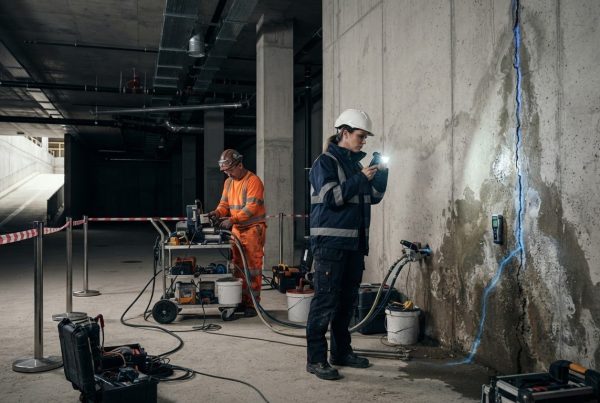

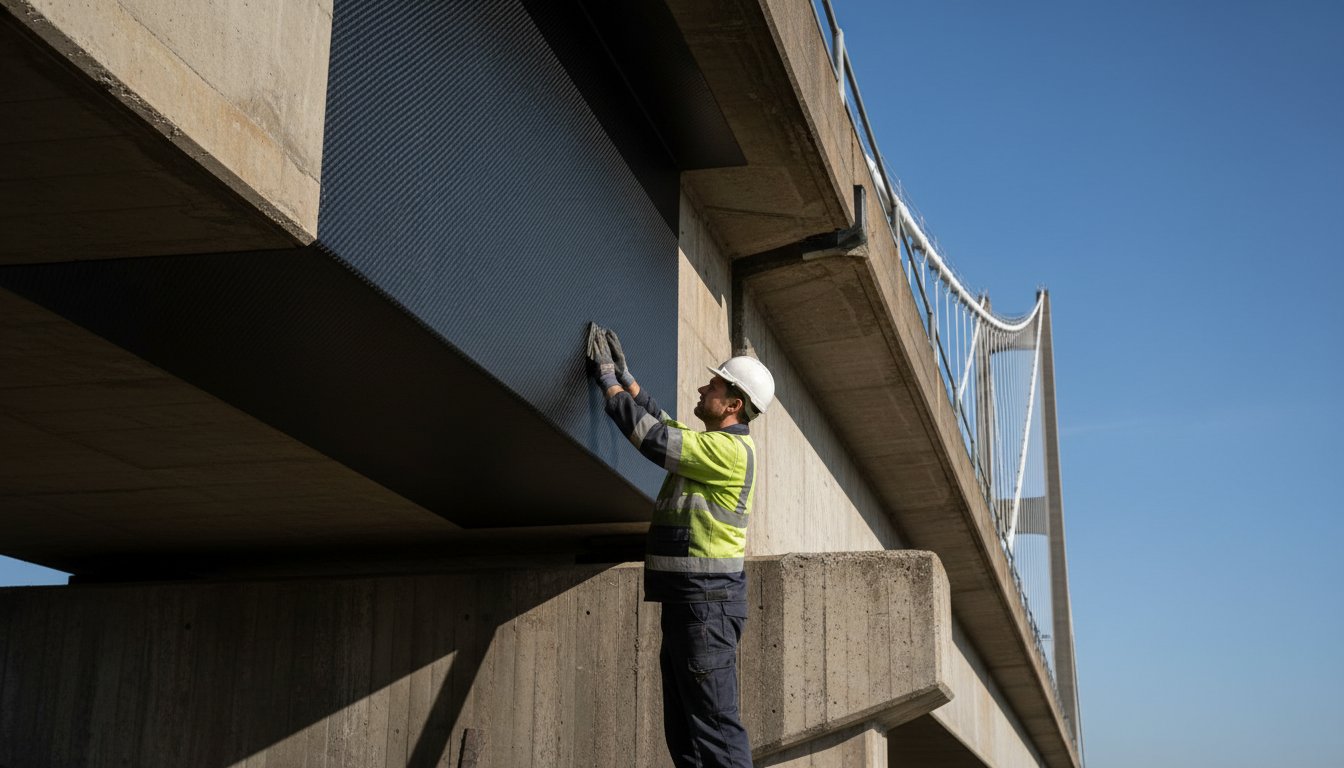
According to the RAC Foundation’s 2023 annual report, over 3,000 bridges across Great Britain are currently classified as substandard, highlighting a critical deficit in structural integrity that can’t be addressed through traditional demolition and replacement alone. You’re likely familiar with the mounting pressure of maintaining serviceability whilst contending with reinforcement corrosion or the demand for increased live loads in repurposed urban structures. The strengthening of concrete beams using Carbon Fibre Reinforced Polymers (CFRP) has transitioned from a niche application to a primary methodology for ensuring long-term structural resilience without the disruption of conventional methods.
This guide provides a rigorous technical analysis of modern reinforcement methodologies, focusing on the application of the Tyfo® system to meet the stringent requirements of BS EN 1504 and CS 455 standards. We’ll examine the specific mechanics of flexural and shear enhancement, providing a framework for non-disruptive asset life-extension within the constraints of UK heritage sites and complex infrastructure environments. By the end of this analysis, the criteria for selecting bespoke composite solutions over traditional steel plating will be clearly defined.
Key Takeaways
- Analyse the primary environmental drivers necessitating structural remediation within UK infrastructure, specifically addressing carbonation and reinforcement corrosion.
- Compare the technical performance of CFRP systems against traditional steel plate bonding to optimise the strengthening of concrete beams without significant dead load increases.
- Master the engineering principles governing flexural reinforcement on the tension face and the strategic deployment of U-wraps for critical shear confinement.
- Identify the mandatory protocols for substrate verification, including pull-off testing and precision grit blasting, to ensure the long-term bond strength of the Tyfo® system.
- Explore the economic case for asset life-extension, aligning advanced structural repair methodologies with 2026 sustainability targets and UK carbon reduction goals.
Structural Integrity and the Necessity for Beam Reinforcement in UK Infrastructure
Structural strengthening of concrete beams involves the precise application of advanced materials to restore or augment the load-carrying capacity of reinforced concrete (RC) elements. Within the United Kingdom, a significant portion of the primary building stock was constructed between 1950 and 1980. These assets are now reaching a critical point in their design life. The strengthening of concrete beams is frequently necessitated by the progressive degradation of the internal steel reinforcement. Carbonation remains a primary driver of this decay. It occurs when atmospheric carbon dioxide reacts with the calcium hydroxide in the concrete, lowering the pH level and stripping away the protective passive layer of the steel. This often results in expansive rust, which generates internal pressures exceeding the tensile strength of the concrete cover.
Chloride attack represents another significant threat, particularly for infrastructure located in coastal environments or bridges subjected to seasonal de-icing salts. This chemical ingress triggers localised pitting corrosion, which can rapidly reduce the cross-sectional area of the reinforcement without visible surface warning. For asset managers in commercial urban centres like London or Manchester, the pressure to repurpose existing structures is immense. Change-of-use projects often demand a 25% to 40% increase in live load capacity to accommodate modern high-density office equipment or rooftop plant installations. Utilizing Carbon-fibre reinforced polymer (CFRP) systems allows for these upgrades without the weight penalties associated with traditional steel plate bonding.
Rigorous adherence to the regulatory landscape is non-negotiable for any structural remediation project. In the UK, BS EN 1504 provides the overarching framework for the protection and repair of concrete structures. For transport infrastructure, National Highways CS 455 sets the benchmark for the design and installation of composite strengthening. These standards ensure that every intervention is underpinned by empirical data and engineering rigour. It’s essential that the materials used, such as the Tyfo® system, are subject to comprehensive testing to guarantee long-term performance and durability in varied climatic conditions.
Identifying Failure Mechanisms in Concrete Beams
Engineers must accurately differentiate between various failure modes to prescribe the correct remediation. Flexural cracking usually appears as vertical fissures in the tension zone at mid-span, indicating that the beam’s bending capacity is overstretched. Shear failure is far more critical; it presents as diagonal cracks near the supports and can lead to sudden, brittle collapse. Carbonation-induced corrosion further complicates these issues by reducing the structural capacity of the RC section over time. Early detection and intervention are vital. Proactive strengthening of concrete beams prevents the need for total asset replacement, which typically costs 3 to 4 times more than a targeted CFRP application. It’s a strategic approach to asset life-extension that prioritises safety and economic efficiency.
UK Regulatory Standards for Structural Remediation
The design of strengthening measures must align with Eurocode 2 (EC2) requirements for existing structures. This ensures that the interaction between the original concrete and the new composite material is mathematically sound. Technical Approval and specialist contractor accreditation are mandatory. They provide the necessary assurance that the installation team understands the nuances of resin polymerisation and surface preparation. In constrained environments, such as London basements or subterranean vaults, compliance with health and safety protocols is paramount. These projects require bespoke logistics to manage dust, fumes, and restricted access. Every step of the process is documented to provide a permanent record of structural enhancement, reflecting a commitment to absolute reliability and professional sobriety.
Comparative Analysis: CFRP vs Traditional Strengthening Methodologies
Structural engineers historically relied on steel plate bonding for the strengthening of concrete beams, yet the logistical constraints of this methodology often compromise project timelines. While steel offers a predictable modulus of elasticity, its density of 7,850 kg/m³ introduces a significant dead load that the original foundation may not have been designed to accommodate. In contrast, Carbon Fibre Reinforced Polymer (CFRP) provides a tensile strength that often exceeds 3,500 MPa, delivering a strength-to-weight ratio approximately 10 to 15 times greater than that of conventional S355 structural steel. This mass reduction is critical when working on multi-storey car parks or ageing bridge decks where additional weight is prohibited.
The performance of composites in aggressive environments provides a distinct advantage over metallic solutions. In UK coastal regions like Dover or industrial hubs such as Teesside, airborne chlorides and sulphates rapidly accelerate the galvanic corrosion of steel reinforcements. Recent research on CFRP orientation demonstrates that the precision of fibre alignment directly influences the shear and flexural capacity of the host structure, allowing for high-performance remediation that’s entirely immune to electrochemical oxidation. Because CFRP doesn’t corrode, the life-cycle costs are significantly lower, as the requirement for periodic grit-blasting and protective coating reapplication is eliminated.
Installation efficiency remains a primary driver for asset managers. Applying steel plates requires heavy lifting equipment, bespoke temporary propping, and extensive drilling for mechanical anchors, all of which extend site-wide operational downtime. CFRP systems are applied using wet-lay or pre-cured methods that require only manual handling. Experience on UK infrastructure projects suggests that composite application can reduce project durations by up to 60% compared to traditional steel bolting, allowing facilities to remain partially operational during the works. For a thorough understanding of the technical standards and composite material performance benchmarks underpinning these applications, our comprehensive guide to CFRP structural strengthening UK systems provides an expert-led analysis aligned with CD 371 and Concrete Society Technical Report 55.
The Limitations of Traditional Steel Jacketing
Steel jacketing often imposes a 5% to 10% increase in the dead load of a primary member, which can trigger the need for secondary strengthening of concrete beams or columns elsewhere in the load path. The requirement for heavy plant and lifting frames makes steel difficult to deploy in restricted-access sites like basement utility rooms or narrow service tunnels. Beyond the initial installation, the vulnerability of steel to hidden interface corrosion poses a long-term risk; moisture can become trapped between the steel and concrete, leading to section loss that’s difficult to monitor without destructive testing. Asset managers weighing these factors against budget constraints will find a detailed breakdown of structural repair company cost variables for infrastructure strengthening in 2026 an essential reference when evaluating the true whole-life economics of each approach.
The Tyfo® Fibrwrap® Advantage
The Tyfo® system offers a bespoke range of solutions, including wraps, strips, and Near-Surface Mounted (NSM) systems, which are tailored to the specific stress profiles of a structure. Because the finished composite profile is typically less than 5mm thick, it’s possible to maintain essential headroom in height-restricted environments like underground warehouses. This minimal footprint is achieved without sacrificing structural integrity. Consulting with a specialist for structural remediation planning ensures these material benefits are fully realised. From a sustainability perspective, repairing an existing beam with Tyfo® composites can result in an 80% lower embodied carbon footprint than the alternative of demolition and concrete replacement, directly supporting the UK’s 2050 net-zero targets by extending the service life of existing assets.
Engineering Design Considerations for Flexural and Shear Reinforcement
The engineering process for the structural strengthening of concrete beams requires a rigorous adherence to limit state design principles to ensure the composite material functions in unison with the existing reinforced concrete. Designers must account for the initial strain present in the beam before the application of the Tyfo® system, as the existing dead loads influence the final strain distribution. The primary objective is usually to increase the ultimate moment capacity by bonding high-modulus carbon fibre reinforced polymers (CFRP) to the tension face of the member. This technical approach relies on the efficient transfer of stresses across the bond line, making the interface between the concrete and the composite the most critical point of potential failure.
Flexural Strengthening Strategies
Bonding CFRP laminates or fabrics to the beam soffit directly addresses deficiencies in tensile reinforcement. In a typical 12-metre span, the application of a single layer of Tyfo® SCH-41 can increase the flexural capacity by as much as 35% without adding significant dead weight. Engineers must carefully evaluate end-anchorage requirements to mitigate the risk of premature peeling or cover delamination at the plate ends. This is often managed through the installation of transverse U-wraps or mechanical anchors. Deflection control is equally vital; the added stiffness from the CFRP helps maintain serviceability limits in long-span members where traditional steel reinforcement has reached its yield point.
The calculation of the effective strain in the CFRP is perhaps the most critical design step. It’s limited by the debonding strain of the composite, which is frequently lower than its ultimate rupture strain. A comprehensive NIST study on carbon FRP demonstrated that the bond-critical nature of these applications means the substrate’s tensile strength must exceed 1.5 MPa to ensure structural integrity. Without a sound substrate, the system can’t transfer the required shear stresses between the concrete and the carbon fibres. Therefore, any carbonation or chloride-induced degradation must be remediated before the application of the epoxy resin to avoid bond failure.
Shear Strengthening and Confinement
When a beam lacks sufficient stirrup capacity to resist diagonal tension, CFRP U-wraps are employed as external shear reinforcement. These wraps are typically oriented at 90 degrees to the longitudinal axis of the beam to intercept potential shear cracks. In T-beam configurations where full wrapping isn’t feasible due to the presence of an integrated floor slab, U-wraps are bonded to the three accessible faces. This configuration effectively bridges diagonal cracks and provides a necessary increase in shear resistance. The design must ensure that:
- The effective depth of the CFRP matches the internal steel stirrup height.
- The wrap width and spacing are optimised to prevent localised concrete crushing.
- The corners of the beam are rounded to a minimum 20mm radius to prevent stress concentrations in the fibres.
A recent project on a UK highway bridge over the M4 motorway required a 25% increase in shear capacity to accommodate a transition to 44-tonne axle loads. The bridge deck, originally designed in 1968, required an upgrade to meet current Eurocode standards for heavy goods vehicles. The design utilised Tyfo® wraps spaced at 250mm centres, providing a bespoke solution that avoided the need for intrusive steel plate bonding. This method extended the asset’s life by an estimated 25 years while keeping the bridge operational during the remediation process. This case illustrates how the strengthening of concrete beams through advanced composites provides a sustainable alternative to total reconstruction, saving approximately £1.2 million in capital expenditure for the local authority.
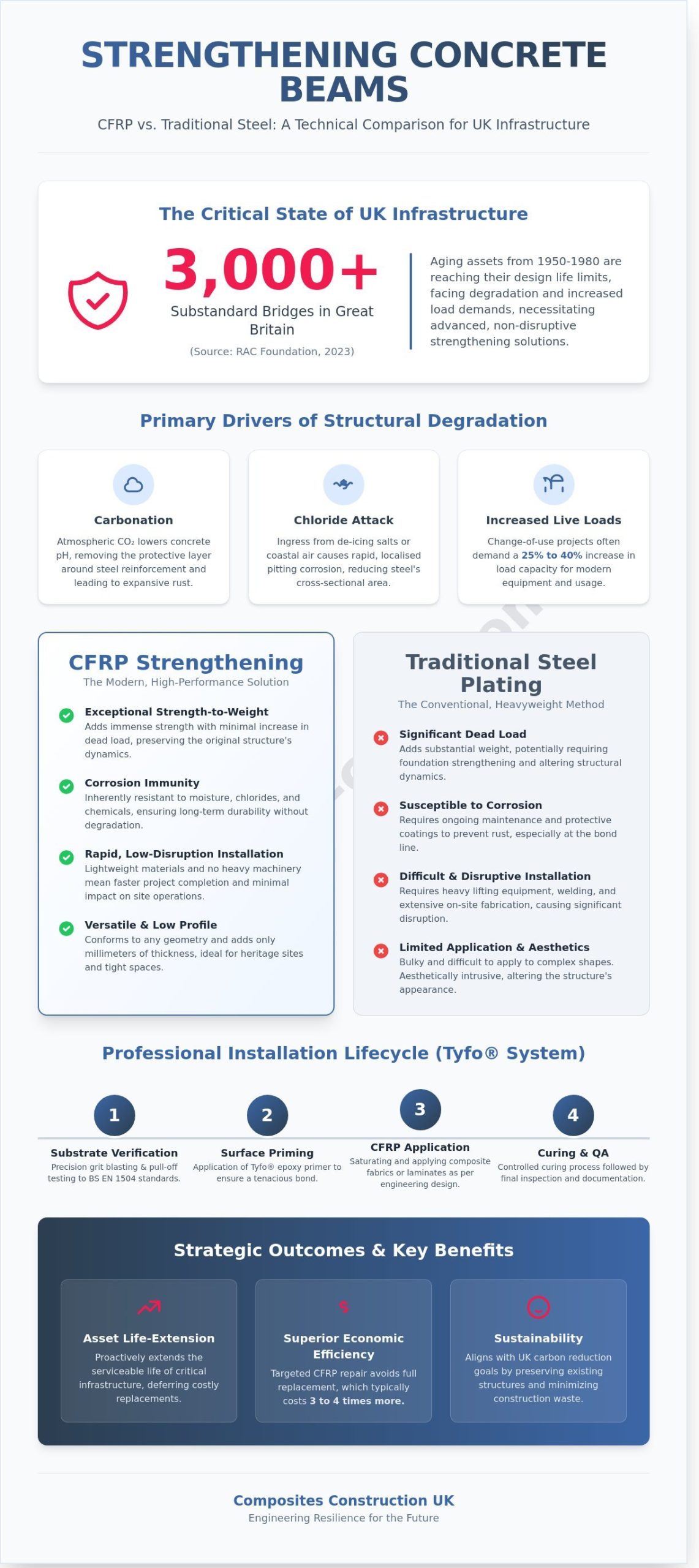
The Professional Installation Lifecycle of Composite Strengthening Systems
The successful execution of strengthening of concrete beams and columns relies on a rigorous, multi-stage technical lifecycle that prioritises substrate integrity and material performance. It’s not a simple matter of adhering fabric to a surface; rather, it’s a disciplined engineering process where every variable, from ambient humidity to fibre alignment, is controlled. Composites Construction UK utilises the Tyfo® system within a framework of strict quality assurance to ensure that the theoretical design intent is fully realised in the physical structure. This methodical approach guarantees that the structural remediation provides the necessary load-bearing capacity and long-term security required for critical infrastructure.
Substrate Preparation and Testing
The bond between the Carbon Fibre Reinforced Polymer (CFRP) and the host concrete is the most critical factor in the system’s efficacy. Engineers perform pull-off tests in accordance with BS EN 1542 to empirically verify that the concrete’s tensile strength meets the minimum requirement, typically 1.5 N/mm². If the substrate fails to meet this threshold, the structural integrity of the entire system is compromised. Surface preparation involves grit blasting or mechanical grinding to achieve a CSP 3 or CSP 4 profile, effectively removing laitance and contaminants. Moisture levels are monitored using calibrated hygrometers; epoxy resins generally require a substrate moisture content below 4% to ensure optimal adhesion. Any spalled areas or voids are reinstated using high-strength, shrinkage-compensated repair mortars to create a flush, level surface for the composite wrap.
Precision Application and Curing
The wet-lay application process demands absolute precision to prevent the formation of air pockets or “voids” that could lead to delamination. Technicians saturate the Tyfo® carbon fibre fabrics using specialised saturator machines or manual rollers, ensuring the resin-to-fibre ratio is maintained within design tolerances. Correct fibre orientation is paramount; a deviation of just 5 degrees from the specified axis can result in a 10% to 15% reduction in the effective strength of the strengthening of concrete beams. This level of precision is a standard shared across many high-performance engineering sectors, where specialist manufacturers like Fat Boy Design USA develop custom mechanical components to exact specifications. Once the fabric is placed, it’s consolidated with ribbed rollers to expel entrapped air. Environmental conditions are managed throughout, with application typically restricted to temperatures between 10°C and 32°C. For commercial assets, the lifecycle concludes with the application of protective coatings, such as intumescent paints, to achieve a Class 0 fire rating and ensure compliance with UK Building Regulations.
Quality assurance is maintained through the creation of on-site witness panels. These samples are cured under the same conditions as the main installation and subsequently tested in a laboratory to verify the physical properties of the installed composite. This data-driven approach provides asset managers with a transparent record of the project’s technical success and the extended design life of the structure. If you require a detailed technical assessment for your next project, you can consult our engineering team at Composites Construction UK for a bespoke structural strengthening solution.
- Mandatory pull-off testing (BS EN 1542) to confirm 1.5 N/mm² tensile strength.
- Grit blasting to CSP 3/4 profile for maximum mechanical interlock.
- Continuous monitoring of ambient temperature and substrate moisture (max 4%).
- Rigid adherence to fibre orientation as specified in the structural design.
- Laboratory verification of witness panels to ensure material compliance.
Strategic Asset Management: Life-Extension and Sustainability in 2026
Asset management strategies in 2026 are increasingly defined by the imperative of life-extension. The economic rationale for the strengthening of concrete beams and columns using Carbon Fibre Reinforced Polymers (CFRP) is substantiated by significant cost differentials. Demolition and subsequent reconstruction of a typical multi-storey car park or industrial facility in the UK often costs 60% to 75% more than a targeted structural remediation programme. By deploying composite systems, asset managers bypass the extensive capital expenditure associated with new foundations and temporary works. This approach preserves the financial value of the existing structure while modernising its load-bearing capacity to meet contemporary usage requirements. For a comprehensive breakdown of how these figures translate into project budgets, our guide to structural repair company cost and infrastructure strengthening pricing in 2026 provides the empirical framework asset managers need to make informed capital investment decisions.
Infrastructure in the UK faces heightened risks from increased moisture levels and thermal cycling. CFRP systems provide an impermeable barrier against chloride ingress and carbonation; two primary drivers of steel reinforcement corrosion. Advanced monitoring involves embedding fibre-optic sensors within the composite laminate during the strengthening of concrete beams. This allows for real-time data acquisition regarding strain and deflection. The long-term integrity of the asset is verified through empirical evidence rather than periodic visual inspection alone, providing a proactive framework for risk mitigation. Engineers seeking to align these monitoring methodologies with current compliance requirements will find that the evolving standards governing CFRP structural strengthening UK practice, including BS EN 1504-4:2004 and the forthcoming Annex J provisions, are addressed in detail within our technical guidance resources.
Sustainability and Carbon Reduction
The construction sector contributes approximately 40% of the UK’s total carbon footprint. Structural strengthening projects using CFRP can reduce embodied carbon by up to 80% compared to traditional reinforced concrete replacement. These interventions are critical for assets aiming for BREEAM “Outstanding” or LEED “Platinum” ratings during refurbishment. Extending the operational life of an existing structure by 35 to 50 years aligns directly with the UK Government’s Net Zero 2050 mandate; which prioritises the retention of existing carbon sinks over new, carbon-intensive construction. Carbon savings are quantified through life-cycle assessments that account for the minimal material volume required by high-performance composites. The same composite technology that delivers these results for structural beams is equally effective across broader infrastructure assets; asset managers responsible for utilities and process pipework will find that carbon fibre pipe wrap repair using Tyfo® Fibrwrap® systems provides a comparably non-disruptive and cost-effective alternative to pipeline replacement, compliant with ASME PCC-2 and ISO 24817 standards.
Working with Composites Construction UK
Composites Construction UK (CCUK) provides a comprehensive design-and-install service that manages every phase from initial feasibility studies to final commissioning. As the exclusive UK licensee for the Tyfo® Fibrwrap® system, CCUK offers access to a material technology that has undergone rigorous testing by international bodies including ICC-ES. This partnership ensures that bespoke engineering solutions are delivered with the precision required for complex infrastructure. Clients benefit from a single point of responsibility; ensuring that the technical performance of the installed system meets the exact specifications defined during the design phase. Our team handles the complexities of site-specific constraints, ensuring that structural integrity is restored without disrupting ongoing operations.
If you’re managing an asset that requires structural intervention, our technical team provides the expertise needed to ensure long-term stability and compliance. Enquire about your structural strengthening project today to discuss a tailored solution for your infrastructure.
Securing the Future of UK Infrastructure through Advanced Remediation
The transition toward Carbon Fibre Reinforced Polymers (CFRP) is a fundamental requirement for meeting the 2026 sustainability and asset management benchmarks established for UK infrastructure. By prioritising advanced composites over traditional steel reinforcement, engineers mitigate the risks of galvanic corrosion and excessive dead loads, ensuring the long-term integrity of critical spans. The strengthening of concrete beams through the application of Tyfo® Fibrwrap® systems provides a validated solution for both flexural and shear deficiencies, substantiated by its successful implementation across the National Highways network and major London transport hubs. These bespoke interventions are designed to provide a 50-year design life extension, reflecting a commitment to empirical performance and engineering rigour.
Fibrwrap Construction UK serves as the exclusive UK licensee for Tyfo® systems, offering a comprehensive design-and-build capability that manages the entire project lifecycle from initial assessment to final commissioning. Our specialist engineering team has delivered structural remediation on over 500 significant UK assets; it’s a record that provides the technical assurance required by asset managers and structural consultants alike. We invite you to Consult with our Specialist Engineering Team to discuss the specific requirements of your structural strengthening project. Achieving structural permanence through sophisticated science is the most reliable path to safeguarding our nation’s essential transport and utility networks.
Frequently Asked Questions
How much does the strengthening of concrete beams cost per linear metre in the UK?
The cost for the strengthening of concrete beams using CFRP in the UK typically ranges from £250 to £650 per linear metre. This estimate includes surface preparation, materials, and specialist application, though final pricing depends on site access and the specific number of carbon fibre layers required. For a 2024 project, these rates reflect the technical expertise and high-performance resins necessary to ensure long-term structural integrity.
Can CFRP be used to strengthen beams in heritage or listed buildings?
CFRP is frequently specified for heritage and listed buildings because its low-profile nature preserves the original architectural aesthetic. Since the Tyfo® system adds less than 5mm to the structural depth, it complies with the stringent conservation requirements of Historic England. This methodology allows for essential structural remediation without the invasive alterations associated with traditional steel section enlargement or heavy concrete jackets.
How long does a carbon fibre strengthening system last?
A professionally installed carbon fibre strengthening system is designed to exceed a 50-year service life when maintained according to manufacturer specifications. Laboratory data from accelerated aging tests indicate that the composite materials maintain over 90% of their mechanical properties even after decades of environmental exposure. This longevity makes the technology a primary choice for asset life-extension in critical UK infrastructure projects.
Is fire protection required for CFRP strengthened beams?
Fire protection is mandatory for CFRP strengthened beams if the structural integrity relies on the composite during a fire event. Because epoxy resins typically reach their glass transition temperature between 60°C and 80°C, a fire-rated insulation layer is applied to meet BS EN 13381-10 standards. This often involves cementitious sprays or intumescent coatings that provide 120 minutes of protection, ensuring the safety of the building’s occupants.
What is the difference between flexural and shear strengthening for beams?
Flexural strengthening involves applying CFRP to the tension face of a beam to increase its load-bearing capacity, whereas shear strengthening utilises U-wraps or vertical strips to prevent diagonal tension failure. For the strengthening of concrete beams, engineers often combine both methods to address specific deficiencies. While flexural reinforcement targets the mid-span, shear reinforcement focuses on the supports where internal stresses are most concentrated.
Can strengthening work be carried out while the building is still in use?
Strengthening work can be executed while a building remains fully operational due to the low-noise and vibration-free nature of the installation process. Compared to traditional demolition or steel fabrication, CFRP application reduces site occupancy time by approximately 40%. This efficiency ensures that essential services in hospitals or commercial offices continue without the disruption or dust typically generated by heavy structural modifications.
What are the main causes of concrete beam failure in UK infrastructure?
The primary causes of concrete beam failure in the UK include chloride-induced corrosion from de-icing salts and the natural carbonation of structures built during the 1960s and 1970s. Approximately 35% of bridge decks show signs of reinforcement oxidation that necessitates structural intervention. Additionally, many older structures require retrofitting to accommodate the increased axle loads of modern heavy goods vehicles that exceed original design parameters.
How do you verify the bond strength of the CFRP to the concrete?
Bond strength is verified through pull-off testing in accordance with BS EN 1542, which measures the adhesion between the CFRP and the concrete substrate. A successful test typically achieves a tensile strength exceeding 1.5 MPa, or results in a failure within the concrete itself rather than at the bond line. This empirical data provides the necessary assurance that the composite system’ll effectively transfer loads during its service life.