
The assumption that structural degradation or a change in occupancy necessitates the wholesale demolition of a concrete slab is an engineering fallacy that ignores the sophisticated capabilities of modern composite science. It’s understandable why asset controllers often feel trapped between the escalating risks of reinforcement corrosion and the requirement for significantly higher load capacities, particularly when project timelines are too compressed to permit extensive reconstruction work.
The application of Carbon Fibre Reinforced Polymer (CFRP) has redefined the parameters of structural life-extension, offering a sophisticated alternative to traditional mechanical interventions. While internal solutions like Macrotwist Fiber Donatı are incorporated into the concrete mix to enhance durability and control shrinkage, CFRP is an externally bonded system designed to function as primary tensile reinforcement. This methodology allows engineers to address the question of how to strengthen a concrete slab by effectively creating a composite section where the carbon fibres absorb the tensile stresses that the existing internal steel or concrete can no longer manage. These systems are particularly effective when the structural integrity of an asset is compromised by environmental degradation or when a change of use necessitates a substantial increase in load capacity.
This technical guide provides a rigorous engineering overview of how to strengthen a concrete slab using advanced methodologies that align with the latest regulatory frameworks, including the recently published EN 1994-1-1:2026 standards for composite structures. By prioritising the sustainability of repair over replacement, we can extend the functional lifespan of essential infrastructure through empirical evidence and material rigour. We’ll examine the deployment of Carbon Fibre Reinforced Polymer (CFRP) and Tyfo® Fibrwrap® systems, demonstrating how these proprietary solutions deliver validated structural integrity and long-term durability whilst maintaining a minimal physical profile.
Key Takeaways
- Identify the specific structural deficiencies, such as carbonation or reinforcement corrosion, that necessitate intervention to prevent long-term asset failure.
- Evaluate technical methodologies for how to strengthen a concrete slab, comparing traditional section enlargement with advanced, low-profile composite solutions.
- Understand the performance characteristics of Carbon Fibre Reinforced Polymer (CFRP) and proprietary Tyfo® Fibrwrap® systems in enhancing tensile capacity without adding dead weight.
- Recognise the critical role of comprehensive structural surveys and bespoke engineering design in ensuring compliance with modern standards like EN 1994-1-1:2026.
- Appreciate the necessity of engaging accredited specialist contractors for the precise application of proprietary structural strengthening and repair systems.
Understanding Slab Mechanics: Why Structural Strengthening is Required
Concrete remains the foundational material of modern infrastructure, yet its mechanical behaviour is defined by a stark disparity between compressive resilience and tensile vulnerability. Whilst a standard slab may possess significant capacity to withstand downward pressure, its ability to resist the internal pulling forces generated by bending is fundamentally limited. Engineers traditionally rely on Reinforced Concrete Principles to bridge this gap, utilising embedded steel to absorb tensile stresses. However, when the original design parameters are exceeded or the material integrity is compromised by age, the question of how to strengthen a concrete slab becomes a critical operational priority for asset controllers.
The internal mechanics of a slab are governed by a complex interplay of bending moments and shear forces. In suspended slabs, these forces are most acute at the mid-span and over support points, where the concrete’s inherent weakness in tension can lead to brittle failure if the reinforcement is insufficient. Ground-bearing slabs, though supported by the subgrade, still face significant stress from point loads and thermal expansion. Strengthening is not merely about adding mass; it’s a precise exercise in restoring or enhancing the load-transfer mechanism within the structural element to ensure long-term stability and safety.
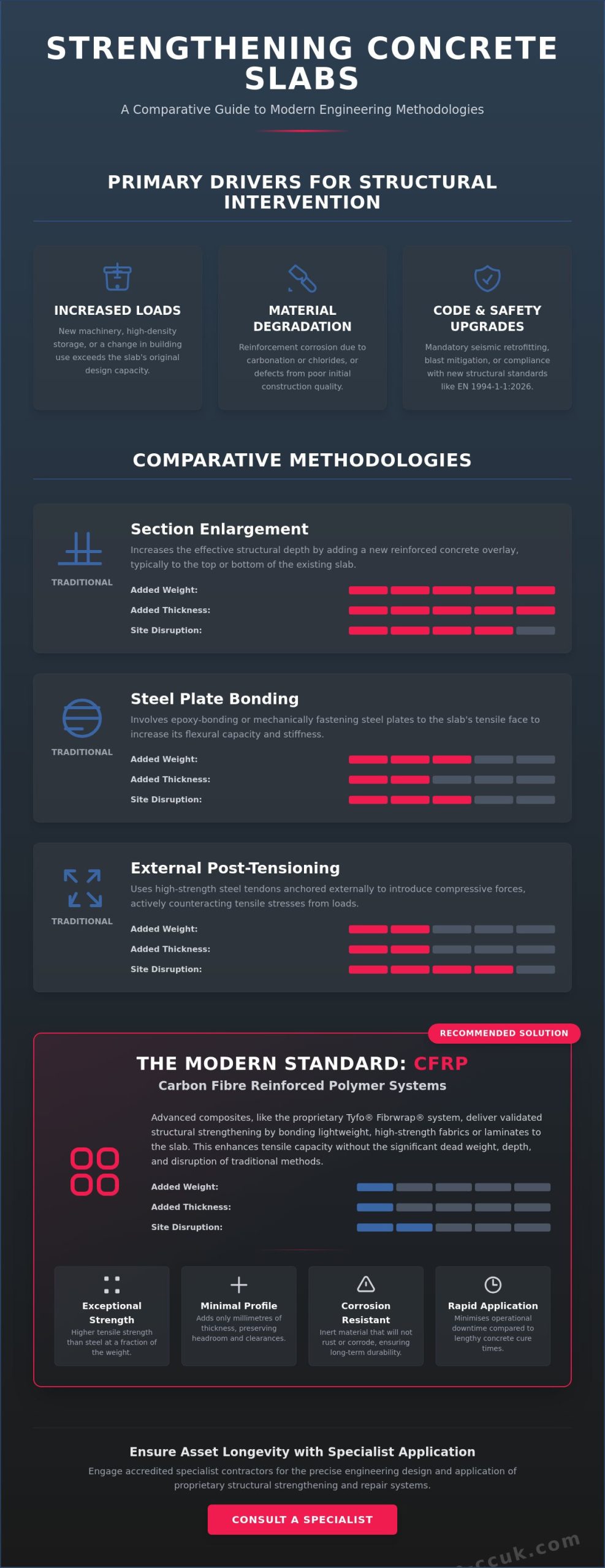
Primary Drivers for Structural Intervention
The requirement for structural life-extension often arises from a fundamental shift in an asset’s functional purpose. Industrial facilities frequently undergo warehouse reorganisation where new, high-density racking systems or heavy machinery exceed the original design live loads. Remediation is also frequently necessitated by defects caused by carbonation-induced reinforcement corrosion or poor initial construction quality. In more specialised contexts, seismic retrofitting or blast mitigation requirements may be mandated to protect critical infrastructure against external shocks that the original structure wasn’t designed to withstand. These factors demand a validated approach to how to strengthen a concrete slab that minimises operational downtime whilst maximising performance.
Identifying Failure Modes in Existing Slabs
Failure in existing slabs typically manifests through distinct physical markers that indicate a breach of serviceability or ultimate limit states. Flexural cracking at the mid-span or over supporting columns serves as a primary indicator of tensile stress exceeding the capacity of the internal reinforcement. In flat-slab constructions, the risk of punching shear at column-slab junctions is a particularly grave concern, as it can lead to progressive collapse without prior warning. Monitoring deflection limits is equally vital. Excessive sagging indicates that the structural profile is no longer performing within its intended elastic range, necessitating immediate engineering assessment and intervention to prevent catastrophic failure.
Comparative Methodologies for Strengthening Concrete Slabs
Selecting the optimal methodology for how to strengthen a concrete slab is a decision predicated upon a rigorous analysis of structural requirements, site accessibility, and the intended future use of the asset. Whilst historical approaches focused on the addition of mass to compensate for tensile deficiencies, contemporary engineering prioritises solutions that enhance performance without compromising the existing foundation’s capacity. It’s a process where the choice between traditional mechanical interventions and advanced material science is dictated by the delicate balance between structural necessity and logistical feasibility.
Four primary methodologies dominate the current engineering landscape. Section enlargement increases the effective structural depth through the addition of a new reinforced concrete overlay. External post-tensioning utilises high-strength tendons to introduce active compressive stresses, effectively counteracting existing loads. Steel plate bonding involves the attachment of steel sections to the tensile face to restore flexural capacity. Finally, advanced composite systems, specifically Carbon Fibre Reinforced Polymer (CFRP), provide high-performance reinforcement through externally bonded fabrics or laminates.
Traditional Methods: Benefits and Limitations
Concrete jacketing and section enlargement are well-understood techniques that provide a significant increase in both stiffness and load capacity. However, these methods are often hampered by the substantial dead weight they add to the structure, which frequently necessitates the strengthening of columns and foundations to manage the increased gravity loads. Steel plate bonding, whilst reliable in its strength delivery, presents significant long-term maintenance challenges. These plates remain susceptible to atmospheric corrosion and require intensive surface preparation and heavy lifting equipment for installation. In operational environments or confined spaces, the logistical complexity of manoeuvring large steel sections or managing extensive formwork often proves prohibitive to the project programme.
The Shift Towards Composite Technology
The transition toward Carbon Fibre Reinforced Polymer (CFRP) systems represents a significant advancement in structural life-extension. These materials possess a high strength-to-weight ratio, allowing for the delivery of immense tensile reinforcement with a profile thickness of only a few millimetres. Because these systems are non-metallic, they eliminate the risk of galvanic corrosion, which is a critical factor in ensuring the durability of structural repairs. The speed of installation is another decisive factor; composite systems can often be applied without the need for heavy plant, reducing site disruption and allowing for a faster return to service. For projects requiring precision in material selection, utilising bespoke engineering calculations ensures that the composite layers are perfectly calibrated to the specific structural demands of the slab.
CFRP Strengthening: The Modern Standard for Slab Rehabilitation
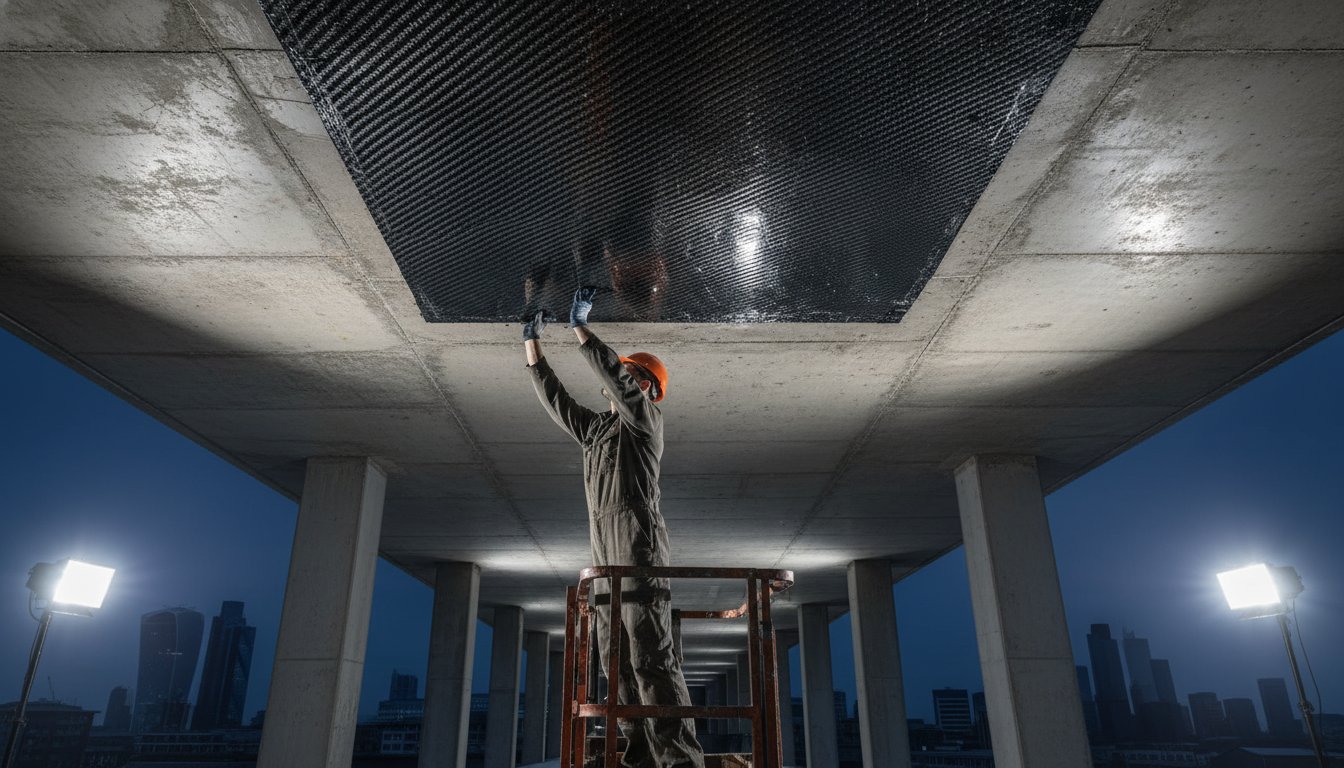
The application of Carbon Fibre Reinforced Polymer (CFRP) has redefined the parameters of structural life-extension, offering a sophisticated alternative to traditional mechanical interventions. Unlike secondary micro-fibre additives which are incorporated into the concrete mix primarily for shrinkage control, CFRP is an externally bonded system designed to function as primary tensile reinforcement. This methodology allows engineers to address the question of how to strengthen a concrete slab by effectively creating a composite section where the carbon fibres absorb the tensile stresses that the existing internal steel or concrete can no longer manage. These systems are particularly effective when the structural integrity of an asset is compromised by environmental degradation or when a change of use necessitates a substantial increase in load capacity.
The Tyfo® Fibrwrap® system represents the pinnacle of this technology, providing a bespoke approach that can be tailored to the unique stress profiles of any given structure. It’s highly versatile, allowing for application in both positive moment regions at the mid-span and negative moment regions over supporting columns or beams. This adaptability ensures that the tensile capacity is enhanced precisely where the bending moments are most acute. Because the material properties of carbon fibre are characterised by high tensile strength and a low modulus of elasticity, the system performs exceptionally well under extreme loading conditions and sustained environmental stress.
Advantages of the Tyfo® Fibrwrap® System
One of the primary benefits of this proprietary system is its ultra-low profile, which typically adds less than 5mm to the structural depth. This is a critical advantage in basement car parks or multi-storey facilities where maintaining existing head height is an operational necessity. Beyond its physical dimensions, the system offers exceptional durability in aggressive environments, such as chemical processing plants or marine structures, where traditional steel reinforcement would be susceptible to rapid corrosion. Every application is supported by bespoke engineering calculations, ensuring that the reinforcement is targeted to resolve specific structural weaknesses without unnecessary material expenditure.
Installation Dynamics and Curing
The efficacy of CFRP strengthening is fundamentally dependent upon the quality of the bond between the composite and the concrete substrate. The wet-layup process is employed to ensure that the carbon fabric is fully saturated with high-performance epoxy resin before being applied to the prepared surface. This ensures a uniform distribution of load across the entire bonded area. Adhesion mechanics are verified through rigorous quality control measures, including pull-off testing, which confirms that the bond strength exceeds the internal tensile strength of the concrete itself. This methodical approach guarantees that the strengthening system becomes an integral part of the structural element, providing long-term security and asset stability.
The Engineering Process: Design, Testing, and Preparation
The successful execution of structural life-extension is contingent upon a methodical engineering workflow that precedes any material application. Strengthening is not a generic commodity; it’s a precision-engineered solution that must be tailored to the specific eccentricities of the existing asset. Determining how to strengthen a concrete slab requires a comprehensive understanding of the structure’s current state, which is only achievable through rigorous diagnostic testing and bespoke engineering calculations. This data-driven approach ensures that the reinforcement layers are perfectly calibrated to meet the required load-bearing capacity whilst adhering to the stringent requirements of Eurocode 2 and relevant UK structural standards.
Engineering rigour dictates that every project begins with a validation of the substrate’s integrity. It’s impossible to guarantee the performance of an externally bonded system if the underlying concrete is compromised by internal chemical reactions or physical degradation. Consequently, the design phase must integrate the findings of a detailed structural survey to ensure that the proposed intervention is both feasible and durable. This process transforms a deteriorating asset into a high-performance structural element through a sequence of logical, evidence-based steps.
Structural Diagnostics and Site Testing
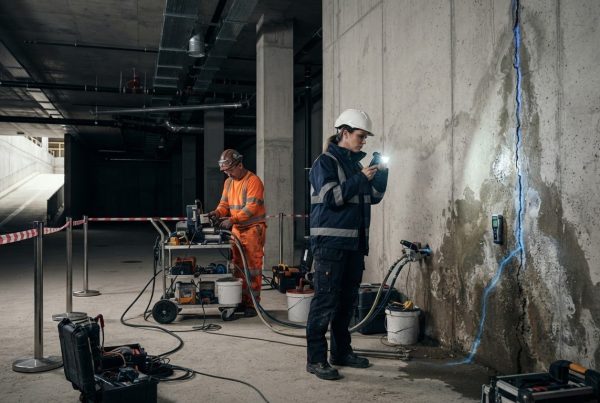
The determination of the existing structural capacity is achieved through a combination of non-destructive testing and physical sampling. Carbonation testing and chloride analysis are conducted to assess the risk of ongoing reinforcement corrosion, which could undermine the bond of the strengthening system. Ferroscan surveys are utilised to accurately map the location and depth of the original steel rebar, providing essential data for flexural and shear capacity assessments. To establish a reliable baseline for the design, the compressive strength of the concrete is verified through core sampling or the use of Schmidt hammer tests, ensuring the substrate can support the transferred stresses.
Substrate Preparation Requirements
Adhesion is the critical failure point in any composite strengthening project. To achieve a maximum bond, the concrete surface must be mechanically prepared to a specific Concrete Surface Profile (CSP) of 3 to 5, typically through grit blasting or precision grinding. This process removes laitance and contaminants, exposing a clean, sound aggregate. Any existing spalls or voids must be repaired using high-strength cementitious mortars that are compatible with the subsequent resin application. Moisture management is equally vital; the slab’s internal humidity must be within the resin manufacturer’s specified limits to prevent delamination. For professional assistance with these critical diagnostic phases, asset owners should arrange for comprehensive structural surveys and testing to validate their remediation strategy.
Selecting a Specialist Engineering Contractor for Asset Life-Extension
The selection of a delivery partner is perhaps the most critical variable in the success of a structural remediation project. Whilst general contractors possess the broad capabilities required for new-build construction, they’re often ill-equipped to manage the nuances of advanced structural strengthening and repair systems. Remedial engineering is a highly specialised field that requires a deep understanding of how to strengthen a concrete slab through the precise integration of composite materials with existing, often degraded, substrates. This process demands a level of precision and material expertise that typically resides only within specialist organisations that prioritise engineering rigour over bulk volume.
Accreditation and training are non-negotiable benchmarks when evaluating a potential contractor. Proprietary systems, such as Tyfo® Fibrwrap®, require installers who’ve been specifically trained and certified by the manufacturer to ensure that the material performance matches the design intent. A contractor’s history in delivering complex infrastructure projects serves as a primary indicator of their ability to manage the technical and logistical challenges inherent in asset life-extension. By choosing a partner with a proven project history, asset controllers can ensure that the intervention is not only technically sound but also integrated seamlessly into the broader facility operations.
Technical Competence and Safety Standards
Asset owners must verify a contractor’s specific experience in structural repairs across diverse and challenging sectors, from industrial processing to marine environments. During the strengthening phase, the requirement for robust temporary works design and propping is paramount; the structure must remain stable whilst the load-transfer mechanisms are being enhanced. A design-and-build approach often provides the most efficient trajectory, as it consolidates accountability and allows for the real-time adjustment of engineering solutions based on site-specific findings, ultimately reducing project risk and total expenditure.
Long-term Maintenance and Inspection
The completion of strengthening works marks the beginning of a new phase in the asset’s life cycle. Establishing a regular inspection regime for externally bonded composites is essential to monitor the long-term performance of the bond and the overall health of the slab. In many instances, the integration of cathodic protection is recommended to prevent further corrosion of the original steel reinforcement, addressing the root cause of degradation whilst the CFRP manages the structural deficit. This holistic approach ensures the structural integrity of the asset is maintained for its remaining functional lifespan, aligning technical capabilities with the economic goal of prolonging essential infrastructure.
Securing Infrastructure Longevity through Advanced Engineering
The decision to rehabilitate rather than replace essential infrastructure is a commitment to both economic efficiency and structural sustainability. By utilising advanced Carbon Fibre Reinforced Polymer (CFRP) systems, engineers can restore tensile capacity whilst maintaining the original structural profile. It’s clear that the successful application of these technologies depends upon a methodical diagnostic process and the selection of an accredited delivery partner. Determining how to strengthen a concrete slab effectively requires a transition from reactive maintenance toward proactive, data-led asset management.
With over 10 years of specialist contracting experience and our status as the exclusive UK licensee for Tyfo® Fibrwrap® systems, we provide a comprehensive design and installation service that prioritises long-term security. Our approach is grounded in empirical evidence and engineering rigour; this ensures that every intervention is tailored to the specific demands of the project. Contact our specialist engineering team for a bespoke strengthening design to ensure your assets remain safe and operational for their intended lifespan. Investing in validated engineering solutions remains the most reliable path to infrastructure resilience.
Frequently Asked Questions
Can you strengthen a concrete slab after it has been poured?
Yes, structural strengthening is a standard remedial procedure conducted through the application of externally bonded reinforcement. This is typically achieved using Carbon Fibre Reinforced Polymer (CFRP) or steel plate bonding to restore or enhance structural capacity without the need for demolition. These interventions are specifically designed to address deficiencies identified during structural surveys, ensuring the asset complies with contemporary safety standards.
How much extra load can carbon fibre strengthening add to a slab?
The increase in load capacity is dictated by the existing concrete’s compressive strength and the volume of composite material applied. Whilst results vary based on engineering design, it’s common for a professionally applied CFRP system to increase the flexural or shear capacity of a slab by 30% to 50%. This allows for significant changes in occupancy or the introduction of heavier industrial machinery without compromising structural integrity.
Is CFRP strengthening fire resistant for commercial buildings?
CFRP systems require secondary fire protection to meet UK building regulations for commercial structures. Because the epoxy resins used in these systems lose their structural properties at the glass transition temperature, typically between 60°C and 80°C, fire-resistant coatings must be applied. These specialised intumescent paints or cementitious sprays are used to ensure the strengthening system maintains its performance during a fire event.
How long does the installation of a Fibrwrap system typically take?
Installation of the Tyfo® Fibrwrap® system is generally completed in a fraction of the time required for traditional concrete jacketing. Whilst surface preparation remains the most labour-intensive phase, the actual composite application is rapid. Most projects allow for a return to full service within 48 to 72 hours following the final resin cure, depending on ambient temperatures and site conditions.
What is the difference between CFRP and steel plate bonding for slabs?
The primary distinction lies in the material’s weight-to-strength ratio and long-term durability. CFRP is approximately one-fifth the weight of steel whilst offering significantly higher tensile strength. Unlike steel plates, which require heavy mechanical fixings and remain susceptible to atmospheric corrosion, carbon fibre is non-metallic and bonded directly to the substrate, eliminating the risk of galvanic corrosion and reducing foundation load.
Do I need to vacate the building whilst the slab is being strengthened?
Total evacuation is rarely required when determining how to strengthen a concrete slab using composite technologies. The low-profile nature of the equipment and the absence of heavy demolition work often permit the building to remain partially operational. Temporary cordons are established around the immediate work area to manage dust and chemical safety during the resin application and curing phases.
How do you fix a concrete slab that is sagging or deflecting?
Addressing a sagging slab begins with temporary propping to relieve existing stresses and, where possible, return the element to its intended level. Once the slab is stabilised, high-strength resin injection is used to seal flexural cracks before CFRP laminates are bonded to the tensile face. This restores the required stiffness and prevents further deflection, effectively resetting the structural performance of the asset.
What UK regulations govern the strengthening of existing concrete structures?
Structural remediation in the UK is governed by the principles outlined in BS EN 1992 (Eurocode 2) and the newly published EN 1994-1-1:2026 for composite steel and concrete structures. Additionally, Concrete Society Technical Report 55 (TR55) provides the industry-standard guidance for the design and application of externally bonded fibre-reinforced polymers, ensuring all strengthening works meet rigorous safety and performance criteria.