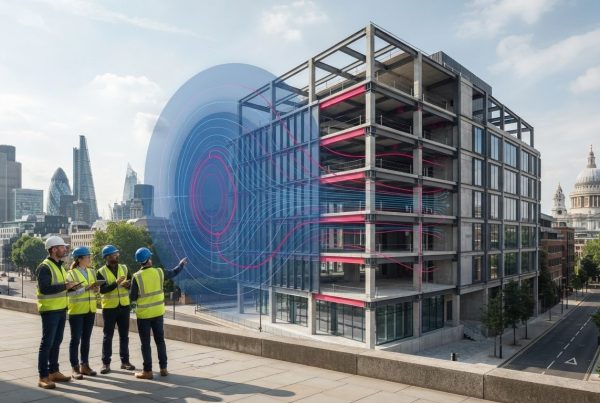

The traditional reliance on heavy steel jacketing and concrete encasement for structural remediation is increasingly viewed as a liability rather than a solution for critical infrastructure. For many asset managers, the necessity of meeting stringent Eurocode 8 standards often conflicts with the practical limitations of existing load-bearing capacities and the prohibitive costs of operational downtime. It’s widely recognised that the added mass of traditional materials can inadvertently alter the dynamic response of a building, potentially compromising the very integrity it’s intended to protect. This technical exploration demonstrates how seismic retrofitting through advanced carbon fibre reinforced polymers (CFRP) offers a sophisticated alternative that prioritises precision and material efficiency.
This guide provides a rigorous engineering analysis into the application of the Tyfo® system for the resilient life-extension of essential structures. By utilising high-performance composite materials, bespoke structural strengthening solutions are achieved that meet modern safety standards without the weight penalties of conventional methods. You’ll gain a comprehensive understanding of how these low-disruption techniques provide a validated pathway for remediation, ensuring long-term security for high-value assets across the United Kingdom.
Key Takeaways
- Understand the structural vulnerabilities of ageing UK reinforced concrete and unreinforced masonry, and how seismic retrofitting provides a sophisticated solution for lateral load resistance.
- Evaluate the superior mechanical properties of Carbon Fibre Reinforced Polymers (CFRP), specifically focusing on high strength-to-weight ratios and inherent corrosion resistance for critical infrastructure.
- Analyse the technical advantages of composite strengthening over traditional steel jacketing and section enlargement, particularly in environments where spatial constraints and cured weight are primary considerations.
- Discover the necessity of non-destructive testing (NDT) and comprehensive structural surveys in developing bespoke engineering designs that ensure regulatory compliance and long-term asset life-extension.
- Recognise the critical importance of specialist installation and precise surface preparation in ensuring the maximum bond strength and performance of Tyfo® Fibrwrap® systems.
The Fundamentals of Seismic Retrofitting for UK Infrastructure
Seismic retrofitting is defined as the strategic structural modification of existing assets to enhance their inherent resistance to seismic activity and unforeseen lateral loads. Within the United Kingdom, this process is frequently applied to mitigate risks associated with induced seismicity or to ensure the continued stability of critical infrastructure under extreme loading conditions. The Fundamentals of Seismic Retrofitting involve the integration of advanced materials to rectify deficiencies in original design or to compensate for material degradation over time. By focusing on the structural strengthening of load-bearing elements, engineers can ensure that legacy assets remain resilient against modern safety requirements. This technical approach is essential for maintaining the integrity of the built environment in a region where ageing assets were often designed without consideration for contemporary lateral force standards.
UK infrastructure presents unique challenges, particularly regarding ageing reinforced concrete structures and unreinforced masonry buildings. Many of these assets, constructed between 1950 and 1980, don’t possess the ductility required to absorb energy during a seismic event. Structural remediation is now shifting away from rigid, prescriptive code compliance toward performance-based engineering. This methodology focuses on how a structure actually behaves during an event, allowing for bespoke interventions that prioritise public safety and the protection of essential services. It’s a transition that allows engineers to define specific performance objectives, such as “life safety” or “immediate occupancy,” ensuring that critical facilities like hospitals and power stations remain functional after a disturbance.
The Economic Case for Asset Life-Extension
The financial implications of maintaining UK infrastructure are substantial. Full demolition and reconstruction can cost up to 65% more than a targeted seismic retrofitting programme. By opting for structural strengthening, asset managers can avoid the significant capital expenditure associated with new builds. The environmental impact is also greatly reduced; rehabilitating existing structures can lower the embodied carbon footprint by approximately 120kg of CO2 per square metre compared to using new concrete. Specialist engineering using the Tyfo® system allows for the operational life of bridges and industrial facilities to be extended by 25 years or more. This approach aligns technical performance with commercial viability, providing a sustainable pathway for infrastructure management.
Regulatory Frameworks and British Standards
Compliance with modern safety standards is a critical driver for structural surveys in London and other major UK urban centres. The primary standard governing these interventions is Eurocode 8 (BS EN 1998), which outlines the requirements for seismic design and seismic retrofitting. Modern safety regulations require a rigorous assessment of legacy buildings, where carbonation testing and chloride ion analysis are used to determine the extent of reinforcement corrosion. These data points inform the necessity of a comprehensive retrofit programme. When structural surveys reveal that the integrity of a building is compromised, the application of carbon fibre reinforced polymers provides a non-invasive solution that meets both British Standards and the rigorous demands of performance-based engineering. The use of these advanced materials ensures that the asset meets current safety thresholds without the need for extensive structural alteration.
Advanced Material Science: The Role of Carbon Fibre Reinforced Polymers (CFRP)
The mitigation of seismic risk in existing masonry and reinforced concrete structures requires materials that offer exceptional tensile performance without adding substantial dead load to the foundation. Carbon Fibre Reinforced Polymers (CFRP) have emerged as the primary solution for this requirement, possessing a strength-to-weight ratio that is approximately 10 times that of traditional structural steel. These advanced composites consist of high-strength carbon filaments embedded in a polymer resin matrix, creating a material that is both lightweight and exceptionally durable. Beyond their raw strength, these polymers exhibit total immunity to electrochemical corrosion, a factor that ensures the long-term durability of the reinforcement in the UK’s damp maritime climate. The integrity of the system is fundamentally dependent upon the selection of the resin matrix; this epoxy component must be engineered to facilitate efficient load transfer between the parent substrate and the carbon fibres, maintaining bond stability under cyclic loading conditions. Every application of seismic retrofitting is governed by a bespoke design methodology. Engineers identify specific structural deficiencies, such as inadequate lap splices or insufficient shear capacity, then calculate the precise number of composite layers and fibre orientations needed to restore or enhance the building’s performance.
Tyfo® Fibrwrap®: The Industry Standard for Seismic Resilience
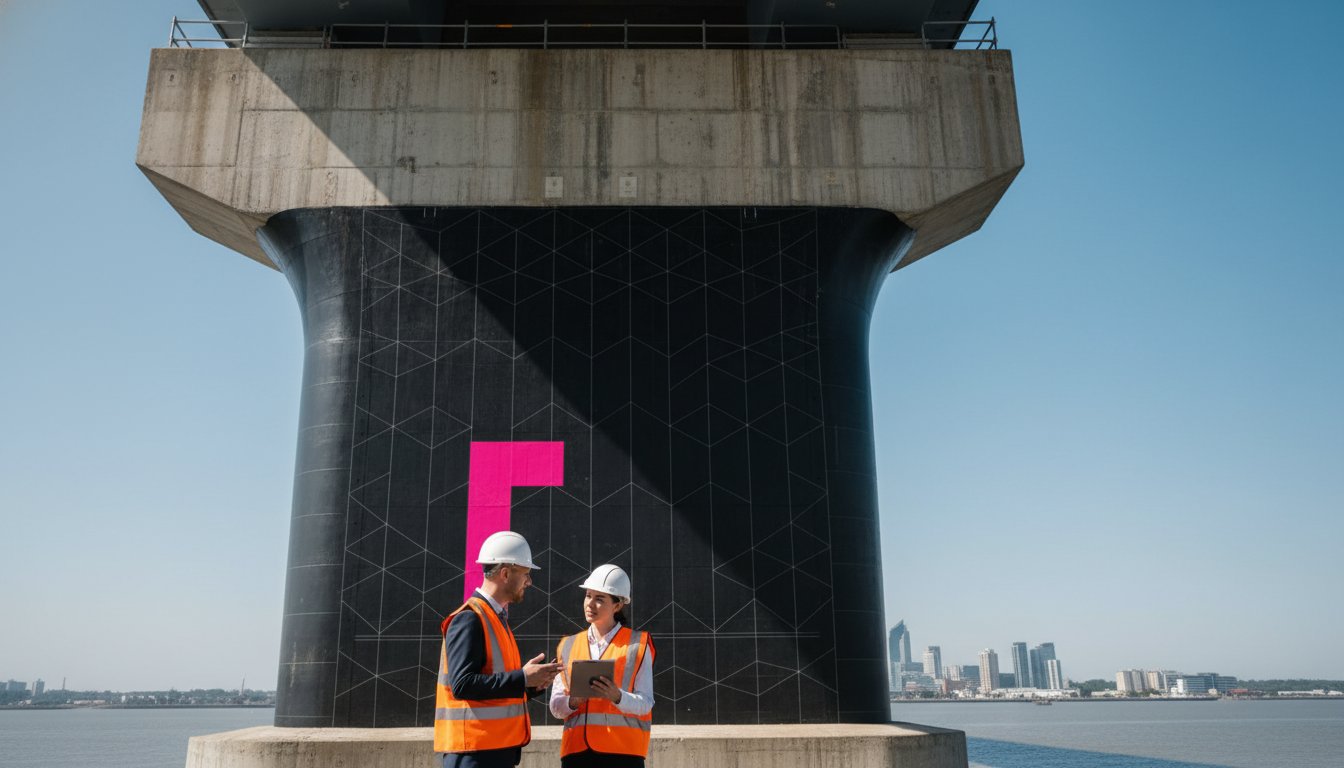
The Tyfo® system represents the culmination of over 30 years of technical development, originating from rigorous testing at the University of California, San Diego, during the late 1980s. It’s applied using a sophisticated “wet-lay” technique, where the dry carbon fabric is saturated with resin on-site before being hand-laminated onto the structural element. This methodology allows the material to conform to complex geometries, including circular columns and flared pier caps, which would be impossible to reinforce with rigid steel jackets. In the UK, access to these proprietary systems is restricted to licensed specialist contractors to ensure that installation quality matches the rigorous design intent. Detailed information on these specialized applications can be found through our structural strengthening services.
Ductility and Energy Dissipation in Composite Systems
A primary goal of seismic retrofitting is the transformation of brittle structural members into ductile ones, ensuring they can undergo significant deformation without total collapse. CFRP wrapping provides external confinement to concrete columns, which effectively restrains the lateral expansion of the core concrete under vertical pressure. This confinement increases the axial load capacity and prevents the longitudinal reinforcement bars from buckling during a tremor. Confinement is the process of encasing a structural member in a high-strength composite jacket to restrict transverse expansion, thereby significantly increasing the compressive strength and ultimate strain capacity of the concrete core. By enhancing the energy dissipation capacity of beam-column joints, the Tyfo® system ensures that the building remains stable even when subjected to the intense lateral forces of an earthquake. This approach prioritises the life-extension of essential assets while avoiding the carbon-intensive process of complete demolition and reconstruction.
Comparative Analysis: Composite Strengthening vs Conventional Structural Remediation
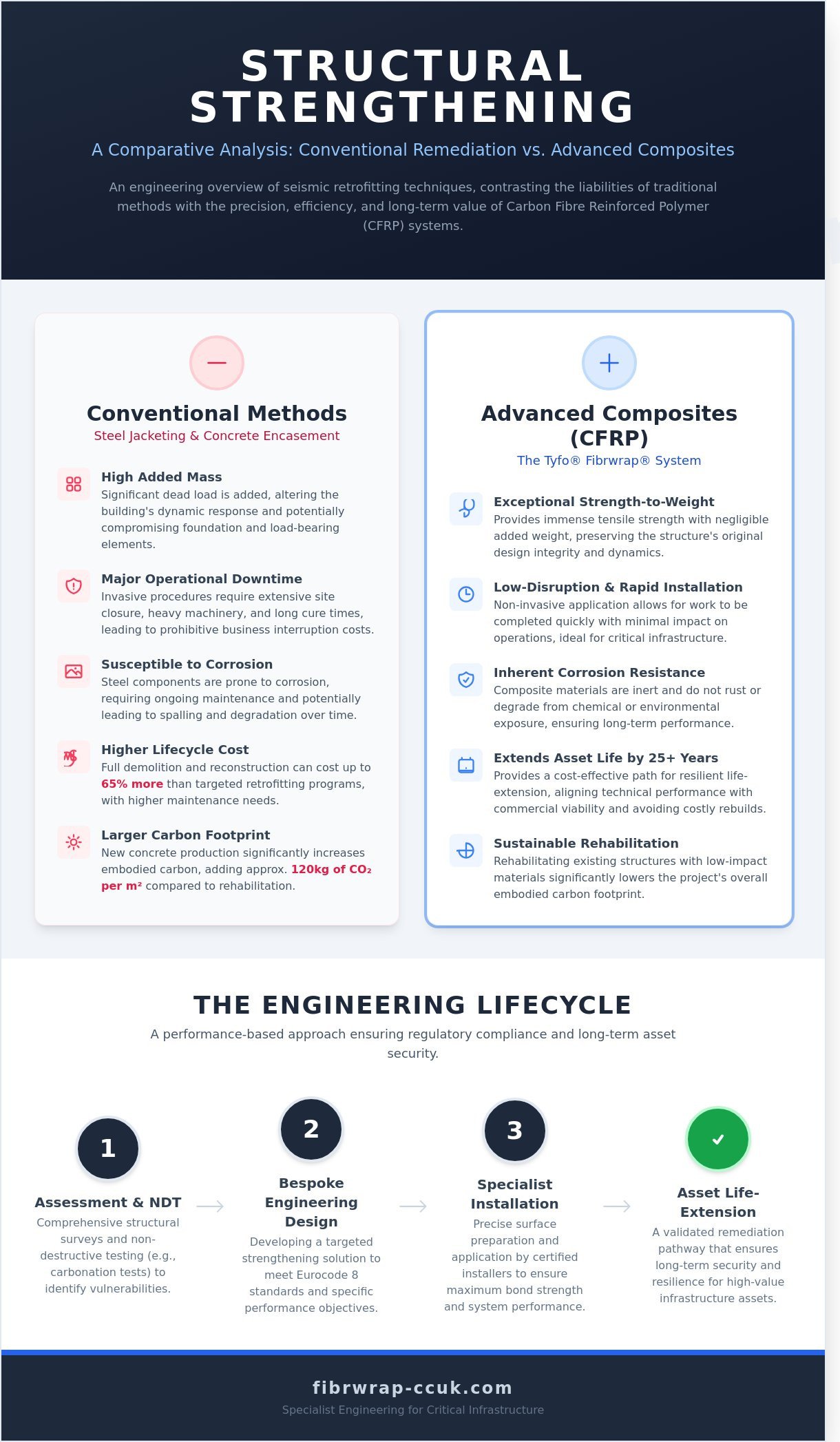
Traditional methodologies for seismic retrofitting often rely on the addition of mass to enhance structural capacity, a strategy that frequently introduces secondary engineering challenges. Steel jacketing, while a long-established technique, imposes a significant weight penalty that can exceed 200kg per linear metre on vertical members. This added dead load often necessitates expensive foundation upgrades. The susceptibility of steel to atmospheric corrosion in the United Kingdom, where relative humidity often exceeds 80%, requires rigorous maintenance cycles, including abrasive blasting and protective coatings every 10 to 15 years. These recurring interventions increase the total cost of ownership significantly over the asset’s lifecycle.
Conventional concrete section enlargement presents similar logistical hurdles. Increasing a column’s cross-section by 100mm to 150mm on all faces doesn’t just consume valuable internal floor space; it alters the dynamic response of the building in ways that may inadvertently attract higher seismic forces. The cured weight of new concrete, combined with the requirement for complex formwork and reinforcement cage assembly, typically extends project programmes by 40% compared to composite alternatives. It’s a heavy-handed approach that often conflicts with the modern requirement for lean, efficient structural strengthening. The same composite principles that govern building remediation are equally applicable to pipeline strengthening using structural composite rehabilitation, where corrosion-induced wall thinning presents analogous challenges to those found in deteriorating concrete members.
Weight and Spatial Efficiency
Carbon Fibre Reinforced Polymer (CFRP) systems provide a high-performance alternative with a nominal thickness typically ranging from 1.3mm to 5mm. This ultra-low profile is vital for maintaining overhead clearance in UK rail tunnels and highway bridges where statutory minimums are strictly enforced. By utilising materials that are approximately 70% lighter than steel for the same tensile strength, the requirement for foundation underpinning is almost entirely eliminated. This saves asset managers an average of £15,000 to £30,000 in preliminary groundworks for medium-scale commercial structures. The lightweight nature of the Tyfo® system ensures that the building’s original seismic mass remains largely unchanged, preventing the unintended redistribution of loads to adjacent members.
Durability and Maintenance Requirements
The lifecycle cost-benefit of the Tyfo® system is most evident when examining long-term integrity. Unlike steel, CFRP is inherently non-corrosive and resists chemical attack in aggressive industrial environments or salt-saturated coastal locations like Aberdeen or Portsmouth. Traditional steel remediation requires cathodic protection or recurring painting to prevent section loss. In contrast, composite repairs are designed for a 50-year service life with minimal intervention. This durability directly enhances asset valuation, as the risk of latent structural defects is significantly mitigated.
Installation timelines also highlight the disparity between methods. A CFRP wrap can be applied and reach design strength within 24 hours, whereas traditional concrete requires a 28-day curing period to reach full capacity. The “hidden costs” of traditional methods are often the most punitive, particularly regarding business interruption. For a typical central London office block, avoiding a total shutdown or the installation of extensive temporary propping can save an estimated £45,000 per day in operational revenue. By choosing advanced composites, engineers ensure the structural strengthening process remains a surgical intervention rather than a disruptive overhaul. These same principles of minimal-disruption rehabilitation extend to utility networks, where structural trenchless pipeline repair using carbon fibre composites eliminates the need for costly open-cut excavation across ageing UK water and wastewater infrastructure.
The Engineering Lifecycle: Assessment, Bespoke Design, and Compliance
The successful execution of seismic retrofitting is predicated upon a rigorous engineering lifecycle that begins with a comprehensive structural survey. This initial phase is non-negotiable; it establishes the empirical baseline required to justify any subsequent strengthening intervention. Specialist engineering contractors work in close alignment with asset owners to define the performance objectives of the building, whether the goal is simple life safety or the more stringent requirement of immediate occupancy following a seismic event. This collaboration ensures that the proposed technical specifications align with both the financial constraints of the project and the long-term operational requirements of the asset.
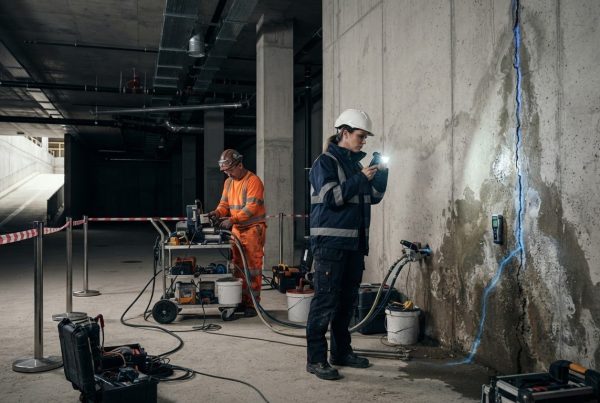
Non-destructive testing (NDT) serves as the foundation of this assessment phase. Methodologies such as ultrasonic pulse velocity, ground-penetrating radar, and covermeter surveys are utilised to map internal reinforcement patterns and identify concealed voids within concrete or masonry elements. These techniques allow for a granular understanding of the building’s current state without compromising its structural integrity. The transition from initial feasibility studies to final engineering calculations is a methodical process. It involves the translation of site-specific data into a robust technical specification that details the exact material properties and application protocols required for the project.
Structural Diagnosis and Risk Mitigation
Identifying common defects is a critical component of the diagnostic phase. Structural engineers focus on detecting chloride ingress, reinforcement corrosion, and masonry cracking, which can significantly undermine the efficacy of a seismic retrofitting strategy. Quantitative data from carbonation depth analysis and pull-off tests are used to verify the tensile strength of the substrate. These metrics are vital; they ensure the Tyfo® Fibrwrap® system achieves the bond strength necessary to facilitate effective load transfer. This evidence-based approach informs the bespoke design, ensuring that the composite materials are applied only where the data indicates a clear structural deficit.
Bespoke Design and Engineering Rigour
The engineering phase involves precise calculations to determine the required number of ply layers and the specific fibre orientation needed to manage anticipated load paths. This is not a one-size-fits-all application. Each design is tailored to the unique geometric and material constraints of the building. Temporary works design is prioritised during the remediation phase to ensure site safety, particularly when primary load-bearing elements are being modified. All designs must adhere to the stringent requirements of UK building regulations, specifically BS EN 1998 (Eurocode 8), which governs the design of structures for earthquake resistance. This ensures that the structural strengthening measures provide a verifiable increase in ductility and shear capacity. The same composite engineering principles that underpin seismic resilience are equally applicable to the hardening of critical assets against explosive threats, where blast mitigation systems using advanced composites address the risk of progressive collapse and catastrophic spalling without compromising the original architectural footprint.
For detailed technical consultations on asset life-extension and infrastructure safety, please contact our team to discuss your structural strengthening requirements.
The final engineering output includes detailed CAD drawings and rigorous calculation packs that are often subjected to third-party peer reviews. This level of oversight is standard for high-consequence infrastructure projects in the UK. By maintaining a disciplined adherence to these engineering protocols, asset managers can ensure that their seismic retrofitting programme delivers a documented improvement in structural resilience. The focus remains on extending the service life of the building by at least 30 to 50 years, providing a sustainable alternative to demolition and reconstruction while meeting modern safety standards.
Specialist Installation: Integrating Tyfo® Fibrwrap® Systems for Seismic Resilience
The efficacy of seismic retrofitting is fundamentally contingent upon the precision of the installation process. Even the most sophisticated engineering designs remain theoretical if the application of Carbon Fibre Reinforced Polymer (CFRP) systems fails to achieve a monolithic bond with the existing substrate. For concrete and masonry structures, surface preparation is the most critical phase. Substrates are prepared to International Concrete Repair Institute (ICRI) Concrete Surface Profile (CSP) standards, typically ranging from CSP 3 to 5, through mechanical abrasion or grit-blasting. This process removes laitance and contaminants, ensuring the Tyfo® Fibrwrap® system achieves the requisite interfacial shear strength to resist lateral forces during a seismic event.
Quality assurance remains at the forefront of every CCUK project. During application, witness panels are fabricated on-site under identical environmental conditions to the primary installation. These samples undergo independent laboratory testing to verify tensile strength and modulus. On-site adhesion testing, often requiring a minimum pull-off strength of 1.5 N/mm² or cohesive failure within the substrate, is conducted to validate the integrity of the bond. These protocols ensure that the structural strengthening measures meet the rigorous safety requirements demanded by modern building codes.
Precision Application and Site Management
The “wet-lay” technique requires rigorous site management to ensure resin saturants are uniformly applied and fibre alignment is maintained within a 5-degree tolerance of the design specification. This process is exacting. In congested urban environments like London, where site footprints are often restricted, the logistical profile of CFRP provides a distinct advantage over traditional steel jacketing. Materials are lightweight and easily transported through standard access points without the need for heavy lifting machinery. Operating from strategic centres in London and Hull, Composites Construction UK provides comprehensive national coverage. Our teams manage complex projects within live operational environments, ensuring minimal disruption to building occupants while delivering critical infrastructure upgrades.
Post-Installation Verification and Asset Care
Final verification involves a methodical inspection of the cured laminate to identify any voids or delaminations. Acoustic sounding and thermography are utilised where necessary to ensure 100% bond coverage across the treated area. Once the installation is validated, the asset manager is provided with a comprehensive digital record of the structural remediation. This dossier includes material batch numbers, environmental logs, and pull-off test results, forming a permanent record for the building’s health and safety file. This data-driven approach facilitates long-term asset life-extension and simplifies future safety audits. It’s a commitment to transparency that reinforces the reliability of the Tyfo® system.
Contact Composites Construction UK for a bespoke seismic retrofitting consultation to discuss your project requirements with our technical team.
Securing Long-Term Structural Integrity through Composite Innovation
The transition from traditional remediation to advanced composite solutions represents a critical shift in how UK infrastructure is maintained. Integrating Carbon Fibre Reinforced Polymers (CFRP) provides a lightweight yet high-strength alternative to steel jacketing; it’s a method that significantly reduces dead load while enhancing ductility. This technical evolution ensures that seismic retrofitting remains a viable strategy for extending the operational life of bridges and critical assets by up to 50 years without the need for total reconstruction.
Composites Construction UK operates as the exclusive UK licensee for Tyfo® Fibrwrap® systems, delivering bespoke designs from our dedicated engineering hubs in London and Hull. Our teams have successfully implemented these solutions across numerous critical infrastructure projects, ensuring compliance with rigorous UK structural standards and safety regulations. By prioritising structural strengthening over full asset replacement, stakeholders achieve substantial carbon savings and enhanced financial efficiency across the engineering lifecycle. It’s a methodical, evidence-based approach that safeguards the nation’s essential transport and utility networks. Consult our specialist engineers for your seismic retrofitting requirements to ensure your structural assets remain resilient against future challenges.
Frequently Asked Questions
Is seismic retrofitting necessary for buildings in the United Kingdom?
Seismic retrofitting is essential for critical infrastructure and high-consequence assets within the UK to ensure long-term resilience. While the British Geological Survey records approximately 200 to 300 seismic events annually, most are minor; however, structures such as nuclear facilities, data centres, and heritage assets must meet Eurocode 8 standards. Enhancing these buildings prevents catastrophic failure during infrequent but high-impact tectonic movements.
What is the most effective material for seismic strengthening?
Carbon Fibre Reinforced Polymer (CFRP) composites represent the most effective solution for seismic strengthening due to their exceptional tensile strength and low density. The Tyfo® Fibrwrap® system is frequently specified because it adds negligible mass to a structure. This is vital because increasing a building’s weight through traditional concrete jacketing often increases the inertial forces the asset attracts during a seismic event.
How long does a typical seismic retrofit project take to complete?
A typical seismic retrofitting project using advanced composite materials usually spans between 4 and 12 weeks depending on the asset’s scale. This timeframe is approximately 50% faster than traditional steel or concrete methods which require heavy plant and extended curing periods. For instance, the structural strengthening of a standard reinforced concrete column can often be achieved in fewer than 5 working days.
Can seismic retrofitting be performed while a building is occupied?
Yes, seismic retrofitting with composite systems is designed to be performed while a building remains fully operational. Because the Tyfo® system involves no heavy demolition and produces minimal noise or vibration, it’s ideal for sensitive environments like hospitals or occupied commercial offices. This methodology avoids the total site closures and associated revenue losses that traditional structural remediation typically demands.
What is the difference between seismic retrofitting and general structural repair?
Seismic retrofitting focuses specifically on increasing a structure’s ductility and energy dissipation capacity to withstand lateral seismic loads. General structural repair is usually reactive, addressing existing defects like reinforcement corrosion or concrete spalling. While repairs restore an asset to its original design state, a retrofit upgrades the structure to meet modern safety requirements that didn’t exist during its initial construction.
How much does seismic retrofitting cost for commercial assets in the UK?
Costs for seismic retrofitting in the UK market typically range from £45 to £150 per square metre of treated area. This investment generally represents 15% to 25% of the total cost of asset replacement. By choosing composite structural strengthening over demolition, asset managers can extend the life of a building while significantly reducing the capital expenditure required for modern building code compliance.
Does seismic retrofitting improve the fire resistance of a structure?
Seismic retrofitting doesn’t provide inherent fire protection, but the integration of specialized intumescent coatings can achieve significant fire ratings. When the Tyfo® Fibrwrap® system is paired with a Tyfo® AFP fire protection layer, it can provide up to a 4-hour fire rating according to BS 476 standards. This comprehensive approach ensures the structural integrity is maintained during both seismic activity and subsequent thermal events.
What are the primary benefits of using the Tyfo® Fibrwrap® system over traditional steel?
The Tyfo® Fibrwrap® system provides superior corrosion resistance and a strength-to-weight ratio that far exceeds traditional steel. It’s roughly 80% lighter than steel equivalents, which prevents the need for additional foundation reinforcement. Furthermore, the system’s thin profile ensures that structural strengthening doesn’t reduce usable floor space or alter the architectural aesthetics of the building’s exterior.