
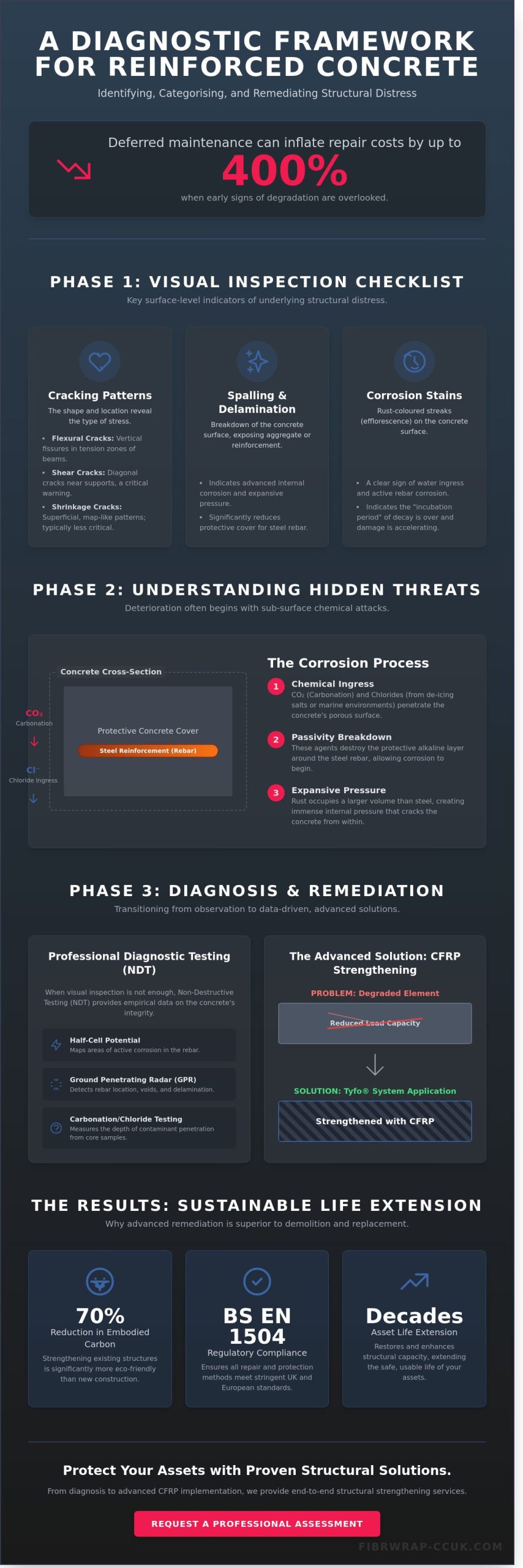
Data from the Standing Committee on Structural Safety (SCOSS) indicates that deferred maintenance can inflate eventual repair costs by as much as 400% when initial degradation is overlooked. Identifying the early signs of structural distress in concrete buildings isn’t just a routine maintenance task; it’s a fundamental requirement for ensuring regulatory compliance and achieving meaningful asset life-extension. You’re likely already aware that the transition from minor aesthetic cracking to significant structural compromise happens silently, often shielded by the very materials meant to protect the reinforcement.
This guide provides a rigorous diagnostic framework designed to help you accurately categorise the severity of deterioration within your reinforced concrete assets. It’s intended to move beyond surface-level observations, offering the technical clarity needed to manage rising maintenance costs and safety liabilities effectively. We’ll examine a clear hierarchy of structural warning signs, define the precise thresholds where professional diagnostic testing is mandatory, and introduce advanced remediation solutions like carbon fibre reinforced polymers (CFRP) and the proprietary Tyfo® system for structural strengthening.
Key Takeaways
- Differentiate between superficial aesthetic defects and integrity-threatening failures to establish a rigorous baseline for professional structural assessment.
- Master a systematic visual inspection framework to identify and categorise the specific signs of structural distress in concrete buildings across primary and secondary elements.
- Understand the “incubation period” of reinforced concrete to detect sub-surface chemical and environmental deterioration before surface symptoms manifest.
- Select appropriate Non-Destructive Testing (NDT) methods to transition from visual observation to empirical data collection for informed decision-making.
- Evaluate advanced remediation strategies, including Carbon Fibre Reinforced Polymers (CFRP) and the Tyfo® system, to achieve sustainable structural strengthening and asset life-extension.
Understanding Structural Distress in Reinforced Concrete
Structural distress occurs at the specific point where a reinforced concrete asset no longer meets its original design performance criteria. It’s vital for asset managers to distinguish between superficial aesthetic defects, such as minor surface crazing, and integrity-threatening failures that compromise the safety of the entire frame. In heavy commercial and industrial environments, a reduction in load-bearing capacity often manifests through subtle shifts in the building’s response to dynamic or static loads. Structural distress is the measurable degradation of a concrete member’s load-path integrity.
Identifying the signs of structural distress in concrete buildings requires a technical understanding of how materials behave under stress. While concrete possesses high compressive strength, it’s inherently weak in tension, necessitating the inclusion of steel reinforcement to manage tensile forces. When the synergy between these materials is disrupted, the asset’s ability to transfer loads safely is diminished, leading to potential instability.
The Mechanics of Concrete Deterioration
Reinforced concrete functions as a composite material where tension and compression forces interact through a precise mechanical bond. The integrity of this bond between the steel reinforcement and the surrounding concrete matrix is the foundation of structural stability. When environmental factors or mechanical stresses interfere with this bond, the structural integrity and failure threshold is often reached. Primary drivers of this degradation include:
- Environmental Exposure: Carbonation and chloride ingress lead to the oxidation of internal steel, causing expansive pressure that fractures the concrete cover.
- Overloading: Changes in building usage or the installation of heavier plant machinery can exceed the original design limits of the concrete frame.
- Design Life Expiration: Many UK assets built in the mid-20th century are reaching the end of their intended service life, requiring comprehensive structural remediation.
Why Early Detection is Critical for Asset Life Extension
The financial logic for early intervention is undeniable. Industry data suggests that the cost of structural repair increases exponentially as damage progresses; waiting until a failure is critical can increase remediation expenses by over 400% compared to early-stage preventative measures. Prompt identification of the signs of structural distress in concrete buildings ensures that safety risks are mitigated before they necessitate emergency closure or partial demolition.
Compliance with UK building standards, including BS EN 1504, demands a rigorous approach to maintenance and repair. Beyond regulatory obligations, there’s a significant sustainability benefit to extending the life of existing structures. Repairing and strengthening a concrete frame using advanced systems like Tyfo® carbon fibre reinforced polymers is far more carbon-efficient than demolition. Choosing asset life-extension over replacement can reduce the total embodied carbon of a project by up to 70%, aligning technical engineering requirements with modern environmental targets.
This commitment to sustainability often extends to the entire building envelope. For example, Cape Coral Insulation provides specialized thermal efficiency services that work in tandem with structural remediation to improve the overall longevity and performance of residential and commercial assets.
Comprehensive facility management also encompasses physical security; for expert advice on securing your property’s access points, check out London Locks.
Visual Inspection Checklist: Surface-Level Indicators
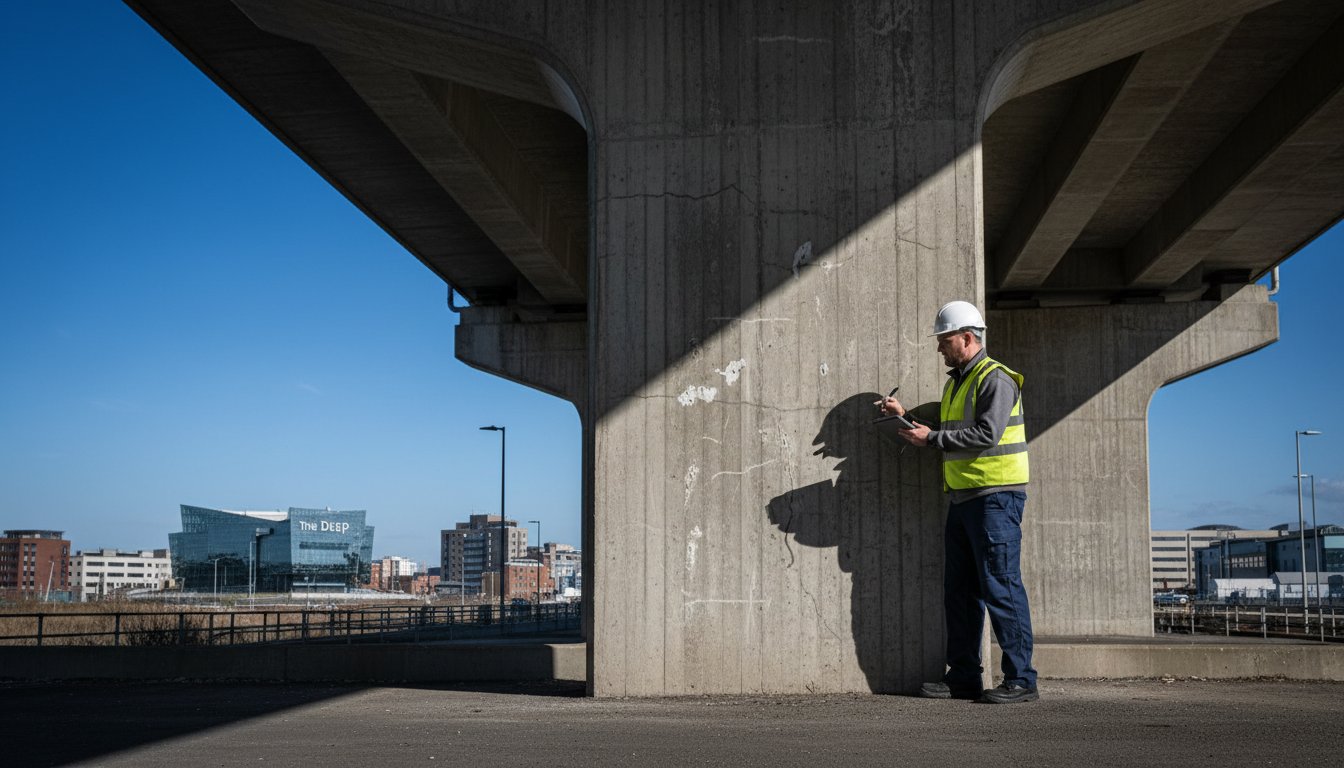
A systematic approach to visual surveys is essential to establish the baseline health of any reinforced concrete asset. This process begins with a meticulous examination of primary structural elements, such as load-bearing columns and transfer beams, before progressing to secondary components like floor slabs and infill panels. Identifying signs of structural distress in concrete buildings involves a rigorous differentiation between superficial shrinkage cracks, which are typically static, and active, progressive movement that threatens the load path. It’s vital that these surveys are conducted under consistent lighting conditions to ensure that subtle deformations aren’t overlooked.
Cracking Patterns and Their Engineering Significance
The morphology of a crack often dictates the urgency of the structural remediation required. Flexural cracking typically manifests in the tension zones of beams, appearing as vertical fissures that originate from the bottom edge and taper upwards. Conversely, diagonal shear cracking near supports is a critical indicator of shear capacity exhaustion. These 45-degree fissures are particularly hazardous as they suggest a potential for brittle failure without prior warning. Crack Pattern Analysis in Concrete offers a scientific framework for interpreting these fissures, where crack widths exceeding 0.3mm are generally classified as significant under BS 8110 standards. Compression failure is also identified through the presence of vertical splitting or crushing in columns, which signals that the axial load has exceeded the material’s compressive strength.
Spalling and Exposed Reinforcement
Concrete spalling occurs when internal expansive pressures, which can exceed 20 MPa, force the surface material to delaminate and flake away. This process is frequently preceded by rust staining, which serves as one of the primary signs of structural distress in concrete buildings. As the steel oxidizes, it expands to several times its original volume, exerting the pressure that causes the concrete cover to fail. The resulting section loss in the reinforcement directly reduces the load-bearing capacity of the structural member. If this cycle of degradation isn’t arrested, the long-term security of the asset is compromised. For such cases, a bespoke structural strengthening approach using the Tyfo® system is often implemented to restore integrity and provide asset life-extension.
Deflection and Visible Deformation
Visible sagging in horizontal spans or the presence of misaligned joints suggests that a member’s serviceability limit state has been breached. Engineers utilize digital monitoring systems or mechanical tell-tale gauges to track movement over fixed 90-day intervals. Any recorded deviation from the original design geometry or the appearance of gaps in structural connections requires a comprehensive review of the current load paths. This methodical monitoring ensures that the transition from elastic to plastic deformation is detected before a catastrophic failure occurs. When deflection exceeds span/250, the structural integrity is typically considered compromised, requiring immediate intervention through advanced composite materials.
Sub-Surface Deterioration: Chemical and Environmental Distress
While surface-level cracks provide immediate indicators, the most insidious signs of structural distress in concrete buildings often remain hidden within the substrate during the early stages of decay. This “incubation period” represents a critical phase where chemical alterations compromise the internal reinforcement long before visual symptoms like spalling become apparent. Relying solely on visual surveys is insufficient for a comprehensive health assessment because the internal degradation of the cementitious matrix usually precedes physical failure by several years. In the UK, this process is frequently accelerated by high relative humidity and the frequent application of de-icing salts across the national road network, which creates a volatile environment for ageing infrastructure.
Engineers must recognise that by the time a crack is visible, the internal integrity has likely been compromised for a significant duration. It’s essential to implement non-destructive testing and chemical analysis to identify these hidden threats. Without these data-driven insights, asset managers risk overlooking the early signs of structural distress in concrete buildings, leading to more costly structural remediation later in the asset’s lifecycle.
Carbonation and PH Neutralisation
Carbonation occurs when atmospheric carbon dioxide reacts with calcium hydroxide in the concrete to form calcium carbonate. This chemical reaction progressively reduces the alkalinity of the material, which normally maintains a pH between 12.5 and 13.5. Carbonation lowers the pH of concrete, stripping the steel of its passive protection layer. Carbonation depth testing, typically conducted via phenolphthalein indicator spray on freshly fractured surfaces, allows engineers to calculate the remaining service life of the protection layer. If the concrete cover depth is insufficient, this neutralisation reaches the steel rapidly, initiating uniform corrosion across the reinforcement bars.
Chloride Ingress and Pitting Corrosion
Chloride-induced distress represents a more aggressive threat, particularly for UK assets located in marine environments or adjacent to major arterial routes where salt spray is prevalent. Unlike carbonation, chloride ions penetrate the porous concrete structure to initiate pitting corrosion. This mechanism is characterised by localised, intense electrochemical attacks that can significantly reduce the cross-sectional area of the steel without causing immediate surface cracking. It’s a dangerous form of decay because the lack of external warning signs can lead to sudden, brittle failures. Because the volumetric expansion of rust is concentrated, the structural remediation required for chloride-damaged assets is often more complex and urgent than carbonation-induced decay.
Professional Diagnostic Methods and Structural Surveys
The identification of visual signs of structural distress in concrete buildings serves as the catalyst for a formal engineering investigation. It’s the transition from qualitative observation to quantitative empirical analysis that defines a professional approach to asset management. A specialist engineering contractor plays a vital role here; they possess the expertise to interpret complex data sets and translate them into actionable remediation plans. This evidence-based methodology ensures that structural strengthening interventions are precisely targeted, maximizing the efficacy of the investment. Rigorous diagnostic surveys provide the necessary justification for high-performance solutions like Carbon Fibre Reinforced Polymers (CFRP), transforming speculative repairs into engineered life-extension strategies.
Non-Destructive Testing (NDT) Techniques
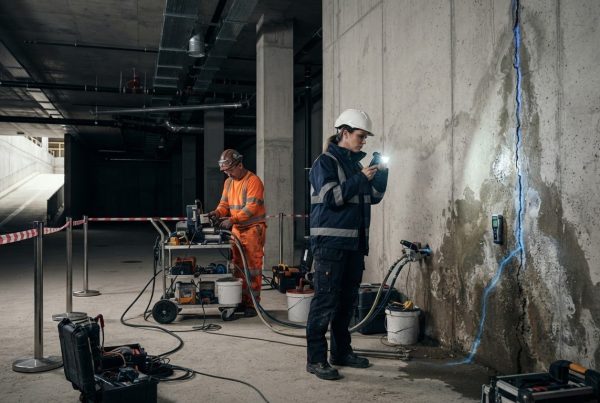
Non-Destructive Testing (NDT) techniques are selected based on the specific asset type and the suspected degradation mechanism. These methods allow for a comprehensive assessment without compromising the current integrity of the structure:
- Cover meter surveys: These are essential for verifying the location and depth of reinforcement, which is often found to be non-compliant with original design drawings or current safety standards.
- Half-cell potential mapping: This technique provides a heatmap of active corrosion zones by measuring the electrical potential of the steel. It allows for the identification of risk areas before physical spalling occurs.
- Ultrasonic Pulse Velocity (UPV): UPV is utilized to assess the uniformity of the concrete and detect internal honeycomb defects or deep-seated cracks that remain invisible to the naked eye.
Intrusive Testing and Laboratory Analysis
Where NDT provides a broad overview, intrusive testing and laboratory analysis offer the granular detail required for bespoke design. Dust sampling is performed to create chloride ion concentration profiles, a process vital for UK structures exposed to marine environments or highway de-icing salts. Core sampling involves the extraction of physical specimens, typically 50mm to 100mm in diameter, for the direct measurement of compressive strength and petrographic analysis. This laboratory work identifies microscopic signs of chemical degradation such as alkali-silica reaction or carbonation depth.
Pull-off testing is another critical step, specifically used to evaluate the tensile strength of the concrete surface. This ensures the substrate is capable of transferring loads to advanced composite systems like the Tyfo® range. A minimum tensile strength of 1.5 N/mm² is generally required to ensure the long-term security of the bond between the original concrete and the strengthening material.
Reliable data forms the foundation of any successful remediation strategy. You can arrange a professional structural assessment with our technical team to secure the future of your infrastructure assets.
From Diagnosis to Remediation: Asset Life Extension
Once the signs of structural distress in concrete buildings have been definitively identified through rigorous diagnostic protocols such as ultrasonic pulse velocity testing or core sampling, a bespoke structural repair and strengthening strategy is developed. This remediation plan is grounded in empirical data to ensure that the underlying cause of failure is addressed rather than merely the symptoms. The engineering community in the United Kingdom has largely transitioned from traditional steel plate bonding to advanced Carbon Fibre Reinforced Polymers (CFRP). This shift is necessitated by the requirement for high-performance materials that provide long-term durability without the heavy dead weight or the susceptibility to oxidation found in metallic alternatives.
The Tyfo® Fibrwrap® Solution for Structural Distress
The Tyfo® Fibrwrap® system serves as a premier solution for restoring and enhancing the structural integrity of distressed members. It’s a composite technology that offers a strength-to-weight ratio significantly higher than that of conventional construction materials. Because CFRP is inherently corrosion-resistant, it provides a permanent barrier against the ingress of chlorides and carbonation, which are common drivers of signs of structural distress in concrete buildings. The system’s application versatility is a key asset; it’s used for wrapping columns to provide confinement, strengthening beams for increased shear capacity, and reinforcing floor slabs to accommodate higher live loads.
Composite systems are preferred in operational commercial environments because they require minimal clearance and cause negligible disruption to the building’s daily functions. The installation process is methodical and clean, allowing for the rapid structural strengthening of an asset without the need for heavy machinery or extensive downtime. This level of efficiency is vital for maintaining the economic viability of high-occupancy urban structures.
Selecting a Specialist Engineering Partner
Effective asset life extension relies on the selection of a specialist engineering partner who offers comprehensive, end-to-end services. This expertise must span from the initial bespoke design phase to the professional installation of the composite system. It’s essential to verify contractor credentials and their specific experience with the Tyfo® system to ensure compliance with the Concrete Society’s Technical Report 55 (TR55) standards. Adhering to these rigorous benchmarks ensures that the structural remediation is both safe and durable.
Opting for structural strengthening is a superior alternative to total asset replacement. Industry analyses suggest that remediation can save up to 60% of the costs associated with demolition and reconstruction, while also significantly lowering the project’s total carbon footprint. For asset managers, the immediate next steps involve scheduling a comprehensive structural survey and feasibility study. This proactive approach allows for the development of a tailored solution that secures the long-term integrity of the infrastructure portfolio.
Securing the Longevity of Concrete Infrastructure
Identifying the early signs of structural distress in concrete buildings is the critical first step toward preventing accelerated degradation and ensuring public safety. It’s essential that visual indicators such as spalling or reinforcement corrosion are met with rigorous diagnostic surveys rather than superficial repairs. By leveraging advanced materials science, asset managers can shift from reactive maintenance to a strategic model of asset life-extension. This approach reduces long-term capital expenditure while maintaining the structural integrity required by UK building regulations and safety standards.
As the exclusive UK licensee for the Tyfo® Fibrwrap® system, Composites Construction UK provides over a decade of specialist engineering experience across the nation’s critical infrastructure. Our engineers develop bespoke design-and-install solutions for the most complex structural challenges, utilizing high-performance carbon fibre reinforced polymers to restore and enhance load-bearing capacity. Request a professional structural survey and assessment from our engineering team to initiate a comprehensive remediation strategy for your facility. Taking decisive, expert-led action now protects the value and safety of your built environment for decades to come.
Frequently Asked Questions
What are the first visible signs of structural distress in a concrete building?
The initial visible indicators typically manifest as hairline cracks exceeding 0.3mm in width or localized surface spalling where concrete fragments detach from the substrate. These symptoms often signify underlying reinforcement corrosion or load-induced stress. Observation of reddish-brown rust staining along crack lines suggests that the internal steel reinforcement’s passivation layer has been compromised, necessitating immediate technical assessment to identify signs of structural distress in concrete buildings and ensure continued asset integrity.
Is all concrete cracking a sign of structural failure?
Not all cracking indicates an imminent loss of load-bearing capacity; however, every fissure requires professional classification to rule out signs of structural distress in concrete buildings. Non-structural cracks, such as those caused by plastic shrinkage or thermal expansion, often measure less than 0.2mm and remain static over time. Conversely, cracks that are progressive, diagonal, or wider than 0.4mm are frequently symptomatic of more serious issues and require comprehensive structural remediation to prevent further degradation.
How much does a professional structural survey cost in the UK?
According to industry benchmarks from RICS and published data from 2024, a basic structural engineer’s report for a commercial asset in the UK typically starts at £400, while a comprehensive intrusive survey for larger infrastructure projects can exceed £2,000. These costs fluctuate based on the building’s total square footage and the complexity of the required diagnostic testing, such as core sampling or ultrasonic pulse velocity measurements. It’s essential to obtain a bespoke quote that accounts for the specific access requirements of the site.
What is the difference between carbonation and chloride-induced corrosion?
Carbonation occurs when atmospheric carbon dioxide penetrates the concrete, lowering its alkalinity from a pH of approximately 13 to below 9, which destabilizes the protective oxide film on the steel. Chloride-induced corrosion is more aggressive, often resulting from de-icing salts or marine environments where chloride ions exceed a threshold of 0.4% by cement weight. While carbonation causes uniform metal loss, chloride contamination typically leads to localized pitting, which is significantly more detrimental to the structural strengthening requirements of the affected member.
Can a concrete building with structural distress be fully restored?
Full restoration is achievable through advanced engineering interventions that restore the original design safety factors and extend the asset’s service life by several decades. By utilizing the Tyfo® system, engineers can enhance the flexural and shear capacity of compromised elements without the weight penalties of traditional steel jacketing. Asset life-extension strategies focus on stabilizing the root cause of degradation before applying composite materials to ensure the long-term security of the reinforced concrete framework.
What is the fastest method for strengthening a distressed concrete column?
The application of Carbon Fibre Reinforced Polymers (CFRP) represents the most efficient methodology for rapid column confinement and load-capacity enhancement. Unlike traditional concrete jacketing, which requires extensive formwork and curing periods of up to 28 days, a CFRP wrap can be installed and reach full design strength within 24 to 48 hours. This bespoke approach minimizes operational downtime, allowing for the immediate reinstatement of structural integrity in high-traffic commercial or industrial environments.
How long does CFRP structural strengthening last compared to traditional repairs?
CFRP systems are engineered for extreme durability, with laboratory accelerated aging tests indicating a design life exceeding 50 years in most internal environments. Traditional cementitious patch repairs often exhibit a service life of only 10 to 15 years before the electrochemical incompatibility between old and new materials triggers further spalling. The corrosion-resistant properties of carbon fibre ensure that the structural strengthening remains effective without the frequent maintenance cycles associated with conventional steel-based remediation.
Is concrete spalling always a structural emergency?
While localized spalling might not indicate immediate collapse, it constitutes a critical safety hazard due to the risk of falling debris and the exposure of reinforcement to further oxidation. If the spalling affects more than 25% of a column’s cross-sectional area or occurs at critical beam-column junctions, it’s classified as a high-priority structural emergency. Professional assessment is vital to determine if the loss of section property has compromised the building’s overall stability or if the issue remains localized to the concrete cover.