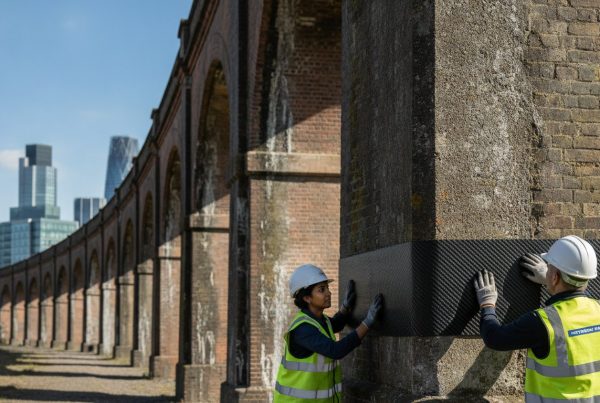


The decision to decommission a critical asset often stems from a lack of empirical data rather than a genuine terminal failure of the material itself. For technical professionals managing ageing infrastructure, the uncertainty surrounding hidden carbonation or reinforcement corrosion in concrete creates a significant risk profile that is difficult to quantify. You’re likely familiar with the mounting pressure to ensure absolute safety whilst adhering to the stringent requirements of the Building Safety Regulator and CDM 2015 regulations. It’s a complex balancing act where the cost of unplanned downtime must be weighed against the escalating prices of fabricated structural steel, which rose by 8.2% in the year preceding March 2026.
This technical guide illustrates how a comprehensive structural condition assessment UK wide serves as the essential diagnostic foundation for asset life-extension. By transitioning from visual inspections to rigorous, data-driven evaluations, asset controllers can secure the empirical evidence needed to justify maintenance budgets and ensure long-term structural integrity. We’ll explore the methodologies used to uncover latent defects and provide a clear roadmap for the sustainable reinforcement of essential assets, ensuring that safety and operational continuity are maintained through precise engineering interventions rather than costly total replacements.
Key Takeaways
- Establish the empirical foundation of a structural condition assessment UK to move beyond subjective visual inspections and secure a precise understanding of load-bearing capacities.
- Evaluate the economic and environmental benefits of structural life-extension, utilising a diagnostic approach that prioritises targeted remediation over premature asset replacement.
- Explore the application of advanced materials such as Carbon Fibre Reinforced Polymer (CFRP) and Tyfo® Fibrwrap® systems for the non-intrusive strengthening of complex infrastructure.
- Recognise why it’s vital to engage an end-to-end specialist engineering partner who can translate diagnostic science into compliant, high-performance reinforcement strategies.
Defining the Peace of Mind Structural Integrity Assessment for UK Infrastructure
A structural condition assessment UK asset managers commission is far more than a cursory visual inspection; it is a rigorous, data-driven diagnostic process designed to quantify the residual load-bearing capacity of a structure with mathematical precision. In the context of critical infrastructure, peace of mind isn’t a vague sentiment but a state of operational certainty achieved through the accumulation of empirical evidence. Whilst traditional surveys might rely on the subjective observations of an inspector, a technical assessment utilises sophisticated diagnostic science to look beneath the surface of the concrete. By understanding the fundamental principles of structural integrity and failure, engineers can provide a definitive account of an asset’s current health and its projected performance over time.
This level of detail is particularly vital for the maintenance of national bridges and pipelines, where the structural margin for error is non-existent. We’re currently witnessing a decisive shift across the British engineering landscape; the era of reactive maintenance is being superseded by proactive asset life-extension strategies. Rather than waiting for visible signs of distress, which often signal that degradation is already advanced, asset controllers are using high-fidelity data to intervene early. This transition ensures that essential services remain uninterrupted and that the functional lifespan of the structure is prolonged through calculated, scientific methodology rather than speculative repair.
The Objectives of a Structural Condition Survey
The primary objective of a comprehensive survey is the early identification of latent defects, such as reinforcement corrosion, carbonation, and concrete spalling, whilst ensuring that operational disruption is kept to an absolute minimum. A structural condition assessment UK specialists conduct serves to verify strict compliance with current building regulations and specific engineering annexes. This process establishes a technical baseline that is essential for bespoke engineering design, allowing for remedial works that are tailored to the specific material properties and geometry of the asset. Without this baseline, any subsequent strengthening efforts lack the necessary empirical foundation to guarantee long-term performance.
Regulatory and Safety Compliance Across the UK
Adherence to Eurocodes and UK-specific standards is a non-negotiable requirement for ensuring the safety of national infrastructure. Since the Building Safety Regulator (BSR) became a standalone body on 27 January 2026, the expectations for accountability and documented safety management have reached unprecedented levels. For asset managers, expert-led inspections are a critical mechanism for mitigating professional indemnity risks, providing a clear audit trail of structural health. Documented compliance ensures the long-term safety of the public and operational personnel amongst ageing assets, fulfilling the legal and ethical obligations set out by the Building Safety Act 2022 and the CDM 2015 regulations. It’s through this disciplined approach that technical authority is maintained and infrastructure is secured for future generations.
Core Methodologies: Technical Testing Protocols and Diagnostic Science
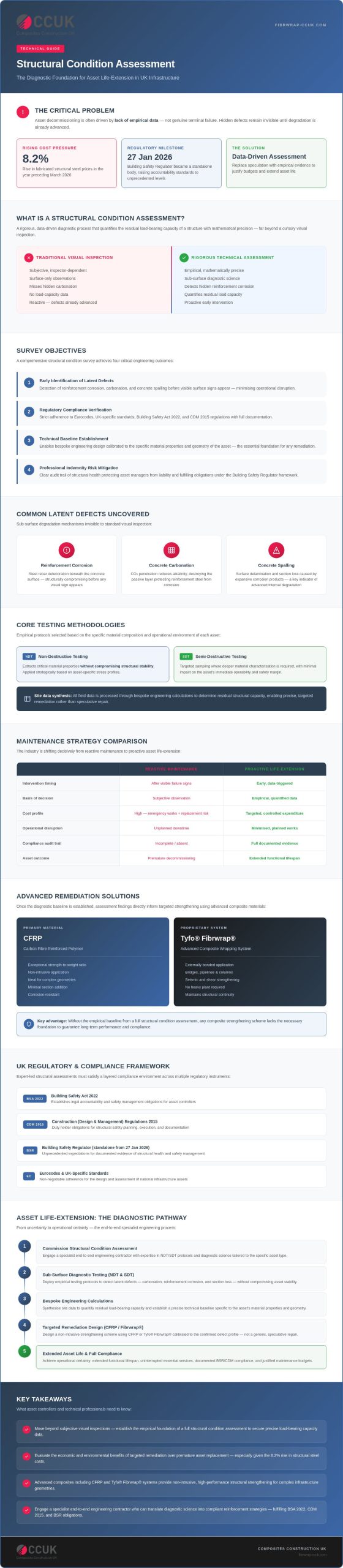
The accuracy of a structural condition assessment UK asset controllers demand relies on the rigorous application of empirical testing protocols that bypass the inherent limitations of visual observation. Non-destructive testing (NDT) and semi-destructive testing (SDT) are deployed strategically to extract critical material properties without compromising the asset’s immediate stability. These protocols aren’t applied generically; they’re selected based on the specific material composition and the operational environment of the asset, ensuring that the diagnostic strategy aligns with the unique stress profiles of the structure. Site data is then synthesised through bespoke engineering calculations to determine residual capacity, providing a mathematical basis for all subsequent safety decisions.
Executing a structural condition assessment UK wide requires a nuanced understanding of how different materials degrade over decades of service. Raw data from the field, such as crack widths or spalling patterns, must be integrated with sophisticated laboratory analysis to evaluate chemical threats. This scientific approach allows engineers to distinguish between superficial cosmetic issues and deep-seated structural vulnerabilities. Technical professionals seeking to move from data collection to active remediation can explore bespoke engineering design options tailored to these precise diagnostic findings, ensuring that any intervention is grounded in material reality.
Concrete Testing: Carbonation and Pull-Off Tests
Carbonation testing is fundamental for determining the depth of pH neutralisation within the concrete matrix, which directly impacts the passivation of embedded steel reinforcement. This is often supplemented by pull-off testing to measure the tensile strength of the concrete substrate, a critical metric when considering the application of advanced composites for structural reinforcement. Additionally, the analysis of chloride ion ingress provides a predictive timeline for corrosion, allowing asset managers to understand the long-term durability of their reinforced concrete structures before failure occurs.
Advanced Diagnostic Techniques for Masonry and Steel
For large-scale masonry and steel assets, internal defect detection is achieved through ultrasonic testing and ground-penetrating radar, which reveal voids or discontinuities not visible to the naked eye. In historic or complex masonry structures, assessing the bond strength and the condition of existing lateral restraints is essential for maintaining stability. When evaluating steel, engineers focus on corrosion rates and the resulting loss of cross-sectional area. These metrics are vital for informing load-bearing calculations and determining if the existing steel can support modern operational requirements or if strengthening is required to extend the asset’s functional life.
The Engineering Decision Matrix: Strategic Remediation versus Asset Replacement
Decisions regarding the future of a compromised asset are frequently reduced to a binary choice between demolition and retention. However, the application of a structural condition assessment UK asset managers trust provides a more nuanced engineering matrix. The economic benefits of extending an existing structure’s functional lifespan are significant, particularly when contrasted with the capital expenditure required for new construction. With the price index for fabricated structural steel having risen by 8.2% in the 12 months leading up to March 2026, the financial argument for retention is compelling. By following the UK Government guidance on structural assessments, a methodical framework is established to determine if an asset’s utility can be safely prolonged.
The carbon footprint associated with new-build projects is substantial, involving energy-intensive raw material production and the logistical burden of waste management. In contrast, targeted remediation focuses on the precise application of advanced materials only where structural deficiencies have been empirically identified. This shift from blanket repairs to data-driven interventions ensures that maintenance budgets are allocated with maximum efficiency. Modern engineering capabilities now allow for the restoration of full design capacity in assets that might previously have been deemed beyond saving, directly challenging the assumption that found defects necessitate demolition.
Determining the Viability of Structural Strengthening
Feasibility studies are essential for assessing whether a structure can accommodate modern load requirements or revised safety factors. Engineering rigour is applied to evaluate the significance of identified cracks, spalling, or deflection, distinguishing between non-structural surface degradation and genuine threats to stability. To see how these assessments translate into practical solutions, technical professionals can explore our bespoke design features for complex assets, where diagnostic data is used to engineer specific strengthening interventions.
Asset Life-Extension as a Sustainable National Strategy
Remediation is no longer merely a technical choice; it’s a core component of ESG (Environmental, Social, and Governance) goals for asset controllers. Specialist engineering plays a pivotal role in prolonging the utility of critical infrastructure across the UK, aligning with national targets for Net Zero 2050. By linking assessment findings to long-term maintenance cycles, strategic budget planning becomes more predictable. This methodical approach ensures that critical assets remain operational, safe, and compliant without the disruption of total replacement.
Integrating Advanced Composites: CFRP and Tyfo® Fibrwrap® for Structural Reinforcement
Once the engineering decision matrix identifies an asset as a candidate for life-extension, the focus shifts to the selection of high-performance materials. Carbon Fibre Reinforced Polymer (CFRP) has established itself as the modern standard for structural strengthening across the United Kingdom. This preference is driven by the material’s exceptional strength-to-weight ratio, which allows for significant load-bearing enhancements without the addition of substantial dead weight to the existing structure. Unlike traditional steel plate bonding, CFRP systems are entirely non-corrosive, making them an ideal solution for assets exposed to aggressive environmental conditions or chemical ingress.
The efficacy of these interventions depends entirely on the precision of the initial structural condition assessment UK specialists have provided. Data regarding concrete strength and substrate integrity dictates the specific design of the composite wrap. A thorough structural condition assessment UK ensures that the reinforcement strategy targets the exact failure modes identified during the diagnostic phase. The application process is methodical, beginning with rigorous substrate preparation to ensure a mechanical bond. This involves removing laitance and contaminants through grinding or grit blasting before applying a primer. The carbon fibre fabric is then saturated with a high-performance resin and applied to the structure, where it undergoes a controlled curing process to form a rigid, high-strength reinforcement layer.
Tyfo® Fibrwrap®: Exclusive Engineering Solutions
The Tyfo® Fibrwrap® system represents a pinnacle of composite technology, offering tailored solutions for complex structural geometries that traditional materials cannot accommodate. These proprietary systems are particularly effective in high-stakes environments, such as seismic retrofitting and blast mitigation, where energy dissipation and ductility are critical. In the UK, the performance of these materials is guaranteed only when applied by a certified installer possessing the necessary technical authority. For a deeper understanding of the execution phase, asset managers should consult our Technical guide to Tyfo® Fibrwrap® installation.
Strengthening Concrete Beams, Columns, and Pipelines
CFRP wraps are utilised to increase the flexural and shear capacity of reinforced concrete elements, effectively restoring or exceeding the original design specifications. This technology is equally transformative in pipeline rehabilitation, where composites are applied to restore internal pressure ratings without the need for extensive excavation. This non-intrusive approach is a hallmark of modern asset management, allowing for significant life-extension with minimal operational downtime. Technical professionals can find further details in our Guide to structural repairs and asset remediation. To discuss the specific strengthening requirements of your infrastructure, contact our engineering team for a detailed technical consultation.
Strategic Asset Management: The Role of the Specialist Engineering Contractor
The management of high-stakes infrastructure necessitates a departure from fragmented procurement models where assessment and remediation are handled by disconnected entities. Engaging an end-to-end partner who possesses the technical authority to both conduct a structural condition assessment UK wide and execute the subsequent engineering design ensures a seamless transition from diagnostic science to physical reinforcement. This continuity is essential for maintaining the integrity of the original design intent and ensuring that the specific material properties identified during testing are addressed with precision. Specialist contractors reduce project risk by providing bespoke, site-specific solutions that generalist consultants often cannot deliver, thereby providing the absolute reliability required in sophisticated B2B environments.
Engineering rigour is maintained throughout the project lifecycle, ensuring that every intervention is grounded in the empirical data gathered during the initial survey. By consolidating the assessment and strengthening phases, asset controllers benefit from a unified technical strategy that prioritises safety and proven results. This methodical approach is particularly vital when dealing with ageing concrete or complex masonry, where the margin for error is non-existent and the consequences of unplanned downtime are severe. Ultimately, the value of a specialist contractor lies in their ability to translate complex material science into a clear, actionable roadmap for structural life-extension.
Bridging the Gap Between Analysis and Site Application
Quality control is maintained through expert-led installation and rigorous material testing protocols that verify the performance of applied systems, such as Tyfo® Fibrwrap®, in real-time. This process often includes the detailed design and implementation of temporary works, which are critical during both the assessment and strengthening phases to ensure the stability of the asset whilst interventions are performed. For a more comprehensive analysis of these responsibilities, technical professionals may review the role of a specialist engineering contractor in the context of infrastructure longevity and professional accountability.
Securing Your Asset’s Future
The journey from an initial structural condition assessment UK based to a successfully reinforced asset represents a strategic shift towards sustainable asset management. By prioritising empirical data and advanced composites over premature demolition, asset managers can secure the future of their infrastructure whilst meeting strict regulatory safety compliance and ESG goals. Structural integrity is defined as the capacity of an asset to perform its intended function safely throughout its design life. To discuss a tailored diagnostic and remediation strategy for your portfolio, contact our engineering team for a national structural integrity assessment and take the first step towards securing long-term asset security and peace of mind.
Securing Infrastructure Longevity through Empirical Diagnostic Science
The transition from reactive maintenance to strategic life-extension is facilitated by the move from visual inspection to empirical diagnostic science. By conducting a comprehensive structural condition assessment UK wide, asset controllers gain the technical clarity required to navigate complex regulatory landscapes whilst avoiding the prohibitive costs and environmental impact of premature replacement. The integration of advanced materials, such as Carbon Fibre Reinforced Polymer, ensures that structural integrity is restored with minimal operational disruption and maximum precision.
As the exclusive UK licensee for Tyfo® Fibrwrap® systems, we provide specialist engineering design and installation across the nation’s infrastructure. Our end-to-end approach ensures that diagnostic data is translated directly into high-performance reinforcement solutions that meet the most demanding safety standards. You’re invited to contact CCUK for a professional structural integrity assessment to secure the long-term safety and utility of your essential assets. It’s a methodical path toward absolute operational certainty and the sustainable preservation of critical infrastructure.
Frequently Asked Questions
What is included in a structural condition assessment UK?
A structural condition assessment UK asset managers commission includes a comprehensive suite of diagnostic protocols such as visual inspections, non-destructive testing, and chemical analysis. This process evaluates material properties like carbonation depth and chloride ingress to determine the residual load-bearing capacity of the structure. The resulting data provides a technical baseline for either continued operation or engineered remediation, ensuring that all safety decisions are grounded in empirical evidence.
How often should critical infrastructure undergo a structural survey?
Critical infrastructure typically undergoes a detailed structural survey every five years, although high-risk assets or those in aggressive environments may require more frequent biennial inspections. These intervals are often dictated by specific UK regulatory frameworks and the asset’s bespoke risk profile. Adhering to these disciplined schedules ensures that latent defects are identified before they compromise the safety of the public or operational personnel amongst ageing assets.
Can a structural assessment be conducted without disrupting site operations?
Yes, structural assessments are frequently conducted without disrupting site operations by utilising non-destructive testing methodologies such as ground-penetrating radar and ultrasonic pulse velocity. These techniques allow engineers to gather critical data on internal reinforcement and concrete density whilst the asset remains fully functional. Strategic planning ensures that any minor intrusive sampling is scheduled during low-activity periods to maintain operational continuity and minimise the risk of unplanned downtime.
What are the most common signs that a structure requires an integrity assessment?
Common indicators include visible concrete spalling, expansive cracking, rust staining from corroding reinforcement, and measurable deflection in load-bearing elements. Any significant change in the asset’s intended use or a substantial increase in applied loads should also trigger a formal integrity assessment. Identifying these signs early allows for the implementation of targeted remediation strategies that prevent the need for total asset replacement and ensure long-term structural security.
How does CFRP strengthening differ from traditional steel plate reinforcement?
Carbon Fibre Reinforced Polymer (CFRP) strengthening differs from traditional steel plate reinforcement by offering a significantly higher strength-to-weight ratio and total resistance to corrosion. Systems such as Tyfo® Fibrwrap® are lightweight and flexible, allowing them to be applied to complex geometries without the heavy lifting equipment required for steel. This non-intrusive application process reduces dead weight on the structure whilst providing superior long-term durability in harsh environments.
What is the typical duration of a structural condition survey for infrastructure?
The duration of a structural condition survey depends on the complexity and scale of the infrastructure, with site work typically ranging from three days to several weeks. Following data collection, laboratory analysis and engineering calculations are performed to synthesise the findings into a technical report. This methodical timeline ensures that the final assessment is grounded in empirical evidence and provides a reliable roadmap for strategic asset management and budget planning.
Are structural integrity assessments mandatory for UK industrial assets?
Yes, conducting a structural condition assessment UK wide is mandatory for various industrial assets under the Building Safety Act 2022 and the CDM 2015 regulations. The Building Safety Regulator, which became a standalone body on 27 January 2026, now enforces strict accountability for high-risk structures, requiring documented evidence of safety management. Failure to conduct these assessments can lead to significant regulatory penalties and increased professional indemnity risks for asset managers.
What happens if an assessment identifies significant structural defects?
If significant structural defects are identified, a specialist engineering contractor will utilise a decision matrix to determine the most viable path between strategic remediation and asset replacement. Modern strengthening techniques, such as resin injection or CFRP application, often allow for the restoration of full design capacity without the need for demolition. This proactive approach ensures that the structure remains safe and compliant whilst extending its functional lifespan through calculated engineering interventions.