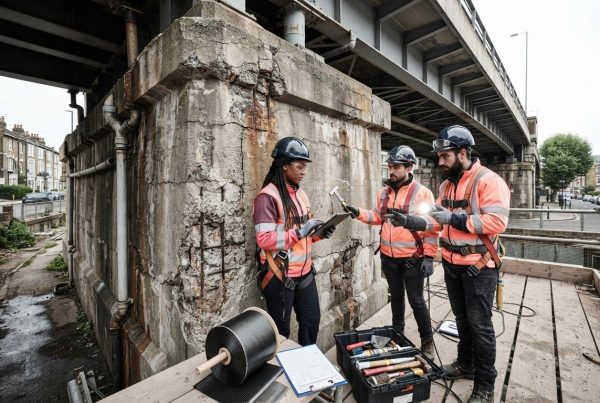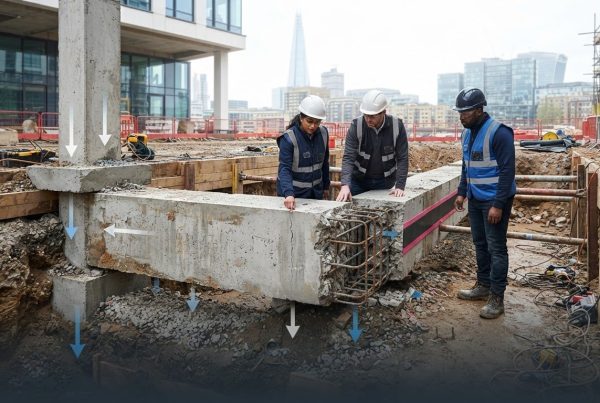


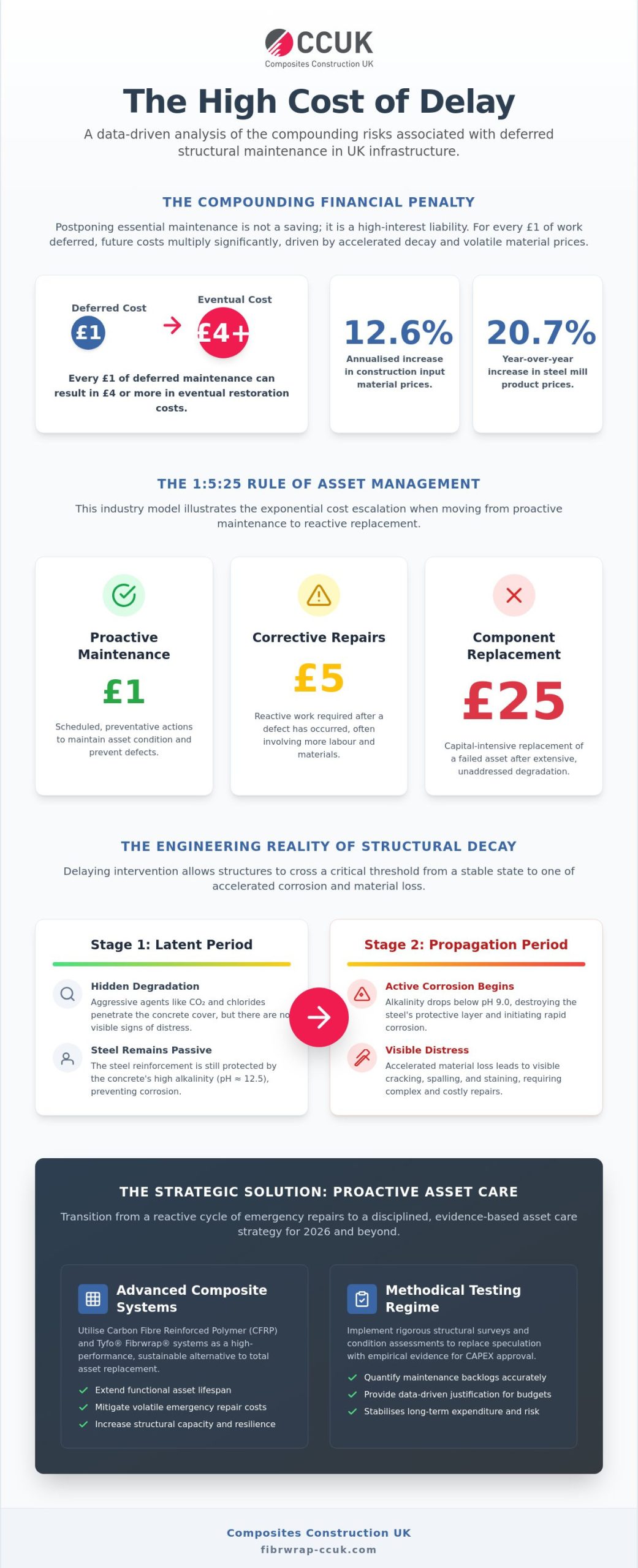
Research indicates that for every £1 of deferred maintenance, an asset owner may face a compounding penalty of £4 or more in eventual restoration costs. This fiscal reality is exacerbated by the 12.6% annualised increase in construction input material prices observed during the first two months of 2026. Most asset controllers recognise the difficulty of balancing the pressure to reduce CAPEX with the non-negotiable requirement for infrastructure safety. It’s often understood that the cost of delayed structural maintenance represents a form of high-interest fiscal debt, yet the precise rate of material decay remains a source of significant technical uncertainty.
This analysis provides an expert-led examination of the compounding financial and structural risks associated with deferred interventions in UK infrastructure. You’ll gain a data-driven justification for maintenance expenditure and an understanding of how to extend the functional lifespan of assets through specialised engineering solutions. We’ll also preview how the strategic application of Carbon Fibre Reinforced Polymer (CFRP) systems and other advanced reinforcement techniques can mitigate the volatility of emergency repair costs, particularly as steel mill product prices have risen by 20.7% year-over-year.
Key Takeaways
- Quantify the compounding fiscal liability by applying the “1:5:25 Rule” to calculate the actual cost of delayed structural maintenance compared to proactive intervention.
- Identify the critical technical transition from the latent period to the propagation period to mitigate the risk of accelerated concrete decay and reinforcement corrosion.
- Evaluate the indirect operational risks and insurance implications that arise when structural neglect threatens professional indemnity or property cover.
- Explore the application of Carbon Fibre Reinforced Polymer (CFRP) and Tyfo® Fibrwrap® systems as high-performance, sustainable alternatives to total asset replacement.
- Adopt a methodical structural testing regime to transition from reactive interventions to a disciplined, evidence-based asset care strategy for 2026.
Quantifying the Financial Burden of Deferred Structural Maintenance
The strategic deferral of essential repairs is often mischaracterised as a fiscal saving, yet in technical reality, it functions as a high-interest liability that compounds over time. Deferred maintenance represents the systematic accumulation of structural debt that eventually requires capital-intensive remediation rather than routine operational expenditure. The construction industry currently operates within a volatile economic environment where input costs have risen by over 43% since early 2020, and consequently, the cost of delayed structural maintenance is no longer a linear projection but an exponential trajectory driven by material inflation and a skilled labour shortage of approximately 500,000 workers in 2026.
Asset controllers frequently utilise the “1:5:25 Rule” to model these financial outcomes with engineering precision. This heuristic suggests that every £1 spent on preventative maintenance avoids £5 in corrective repairs and £25 in total component replacement. When structural interventions are postponed, the primary mechanism of depreciation shifts from predictable wear to accelerated degradation. The current 12.6% annualised increase in material costs ensures that the financial penalty for a 12-month delay often exceeds the initial budget allocation for the works, particularly as steel mill product prices increased by 20.7% year-over-year through January 2026.
The Compounding Nature of Structural Debt
Minor defects, such as hairline fractures or localised spalling, can evolve into systemic failures within a 24-month window if moisture ingress is left unaddressed. Proactive remediation by specialists like Floodsafe Restoration LLC for 24/7 emergency water damage restoration and mould remediation can prevent the accumulation of structural debt, which is the cost of necessary repairs that have been postponed. As carbonation depth increases and the alkalinity of the protective concrete cover is reduced, the remediation strategy must transition from revenue-funded maintenance to capital-intensive emergency works. This shift is necessitated by the loss of structural integrity, which demands more invasive strengthening protocols and specialized materials that are subject to current supply chain volatility.
Maintenance Backlogs in the UK Context
In the UK, the maintenance backlog across commercial and industrial portfolios has reached critical levels, directly impacting asset valuations and national productivity. Rigorous structural surveys are essential to quantify these backlogs and provide the empirical evidence required for CAPEX approval in an era of increased fiscal scrutiny. Without detailed testing and condition assessments, the rate of structural decay remains speculative, leading to heightened insurance scrutiny and potential reductions in property cover values. Proactive asset management is the only reliable method to stabilise long-term expenditure whilst ensuring the continued safety of essential infrastructure.
The Engineering Reality: How Delay Accelerates Structural Decay
Understanding the degradation of reinforced concrete requires a rigorous distinction between the latent period and the propagation period. During the latent period, aggressive agents such as carbon dioxide and chloride ions penetrate the concrete cover, yet the reinforcing steel remains protected by a highly alkaline environment. The true cost of delayed structural maintenance is often obscured during this phase, as chemical changes occur without visible surface distress. Once these contaminants reach the reinforcement, the propagation period begins, characterised by active corrosion and a rapid acceleration of material loss that necessitates far more complex engineering interventions.
The mechanics of carbonation involve atmospheric carbon dioxide reacting with calcium hydroxide in the concrete pore solution. This reaction results in a significant reduction of alkalinity, dropping the pH from approximately 12.5 to below 9.0. At this lower threshold, the microscopic passive layer of ferric oxide that protects the steel is destroyed. A recent GAO report on deferred maintenance highlights how external factors, including supply chain volatility and inflation, compound the risks of ignoring these chemical triggers. In marine environments or on highway infrastructure, chloride ingress from de-icing salts further accelerates rebar oxidation, creating expansive corrosion products that exert internal pressure on the surrounding concrete matrix.
This internal pressure leads to a physical transition from micro-cracking to macro-spalling. As the corrosion products expand to several times the volume of the original steel, the concrete cover is forced away from the reinforcement, leading to a significant loss of section. What begins as a microscopic chemical imbalance eventually manifests as a systemic threat to the load-bearing capacity of the asset.
From Carbonation to Active Corrosion
The destruction of the passive layer marks the onset of active corrosion, a process that is often invisible to the naked eye. Visual inspections frequently fail to detect early-stage internal degradation because the concrete surface may appear intact whilst the electrochemical process is already well-advanced. The implementation of specialised concrete repairs at this stage is critical to arresting the pH drop and preventing the spread of corrosion to adjacent, uncontaminated zones.
The Escalation of Repair Complexity
Delaying repairs fundamentally alters the required engineering methodology. A minor defect in Year 1 might be resolved through simple resin injection or localised patch repairs. By Year 5, the same defect may have progressed to a point where full-scale Carbon Fibre Reinforced Polymer (CFRP) strengthening or extensive masonry reinforcement is required. Once rebar loses 10% of its diameter, structural capacity is compromised exponentially. These delayed works often necessitate invasive temporary works and propping, significantly increasing the project’s complexity and duration. To ensure the long-term security of your infrastructure, it’s advisable to consult with a technical specialist before minor decay necessitates a major capital intervention.
Beyond Capital Expenditure: Indirect Costs and Operational Risk
The fiscal impact of structural neglect extends far beyond the immediate procurement of materials and labour. Whilst the direct cost of delayed structural maintenance is quantified through material degradation and labour inflation, the indirect consequences often present a more severe threat to an organisation’s solvency. In the UK, the legal framework, primarily the Health and Safety at Work Act 1974, places an absolute duty on asset owners to ensure the integrity of their structures. This responsibility often encompasses broader safety protocols, where specialists such as UK Fire Risk Assessments assist in maintaining regulatory compliance. Failure to demonstrate a proactive maintenance regime doesn’t just invite material decay; it creates a significant exposure to litigation, regulatory intervention, and reputational damage amongst stakeholders who prioritise safety and reliability.
Operational Downtime and Unplanned Closures
Calculating the true cost of a facility closure requires an analysis of lost revenue, supply chain disruption, and the premium associated with emergency mobilisation. Emergency repairs are characterised by high volatility; data from 2026 suggests only 31% of construction projects are completed within 10% of their original budget. This lack of predictability is often avoided through the surgical precision of planned composite interventions. Engaging a specialist engineering contractor allows for the implementation of strengthening systems whilst the asset remains operational. In contrast, emergency demolition or heavy-duty propping often necessitates total site closure, leading to irreparable revenue loss and stakeholder friction.
Regulatory Compliance and Liability
The Building Safety Act 2022 has fundamentally reshaped maintenance obligations for 2026, introducing more rigorous requirements for the “Golden Thread” of asset information. Asset controllers must now provide empirical evidence of structural safety to satisfy both regulators and insurers. We’re seeing increased insurance scrutiny, where providers are becoming more stringent with coverage for properties showing signs of neglect. In some instances, insurers are shifting from “replacement cost value” to “actual cash value” for older assets, which significantly reduces potential payouts in the event of a failure.
Detailed structural surveys and testing regimes provide the necessary documentation to mitigate these legal risks and assist in negotiating more favourable insurance premiums. A documented history of proactive care, using high-performance materials like Carbon Fibre Reinforced Polymer (CFRP), serves as a robust defence against claims of professional negligence. By maintaining a clear record of structural health, organisations can avoid the voiding of professional indemnity or property cover that often follows a visible structural failure.
Strategic Life-Extension: Advanced Composites as a Cost-Mitigation Tool
The transition from reactive repair to strategic life-extension is facilitated by the adoption of Carbon Fibre Reinforced Polymer (CFRP) technologies. Whilst the cost of delayed structural maintenance often forces asset owners toward total replacement, advanced composites offer a high-performance alternative that preserves the existing fabric of the structure. These systems are designed to provide a functional extension of 30 years or more to the life of an asset, effectively deferring the requirement for capital-intensive demolition. By arresting the propagation of decay and restoring structural capacity, CFRP allows for the continued utility of infrastructure that would otherwise be deemed beyond its functional lifespan.
One of the primary engineering advantages of composite strengthening is the ability to upgrade structural performance without increasing the dead load of the building. Traditional methods, such as the addition of steel beams or concrete jackets, introduce significant mass that can necessitate secondary foundation reinforcement. CFRP is exceptionally lightweight, possessing a strength-to-weight ratio that far exceeds conventional materials. This characteristic is particularly valuable in the sustainability argument; strengthening an existing structure is carbon-superior to demolition and rebuild, as it preserves the embodied carbon within the original concrete and masonry.
The Versatility of Tyfo® Fibrwrap® Systems
The application of a Tyfo Fibrwrap installation provides a tailored solution for complex structural challenges, including seismic retrofitting and blast mitigation. These proprietary systems are characterised by their high tensile strength and inherent corrosion resistance, making them ideal for use in aggressive environments where traditional materials would fail. Because the material is flexible prior to curing, it’s easily applied to confined spaces or complex geometries, such as circular columns or arched masonry, without the requirement for heavy lifting equipment or extensive site preparation.
Comparing CFRP to Traditional Steel Strengthening
When evaluating the total project expenditure, the installation speed and reduced labour requirements of carbon fibre provide a clear advantage over steel plates. Steel strengthening requires heavy machinery, welding, and mechanical anchoring, all of which increase the duration of site works and the potential for operational disruption. CFRP is applied using high-performance resins in a streamlined process that significantly reduces the project timeline. Furthermore, the long-term maintenance requirements of CFRP are minimal; unlike steel, which requires ongoing corrosion protection and recoating, carbon fibre is chemically inert and doesn’t degrade when exposed to moisture or chlorides. For a broader context on these methodologies, it’s useful to review current standards for structural repairs. To determine the most effective strengthening protocol for your asset, you should request a detailed structural design assessment from our engineering team.
Implementing a Proactive Asset Care Strategy for 2026
The transition from reactive “fire-fighting” to a disciplined, evidence-based asset management framework is essential for stabilising long-term maintenance budgets. In an economic climate where input costs for construction have risen by over 43% since early 2020, the traditional approach of postponing repairs until failure is no longer fiscally viable. By acknowledging that the cost of delayed structural maintenance is a compounding liability, asset controllers can justify the move toward a 10-year structural investment plan. This strategic roadmap allows for the prioritisation of interventions based on structural criticality and risk-to-life, ensuring that limited CAPEX is allocated where it provides the maximum benefit to safety and asset longevity.
The Role of Diagnostic Testing
A rigorous inspection regime is the foundation of any proactive strategy. To catch early-stage decay before it enters the propagation phase, engineers utilise a suite of specialised diagnostic tools, including:
- Carbonation Testing: Determining the depth of pH neutralisation to predict the onset of rebar corrosion.
- Chloride Analysis: Quantifying ion concentration to assess the risk of pitting corrosion in marine or de-iced environments.
- Half-Cell Potential Mapping: Identifying active corrosion zones within reinforced concrete before surface cracking appears.
- Ultrasonic Pulse Velocity: Evaluating the uniformity and integrity of the concrete matrix.
These data-driven insights are critical for developing bespoke design solutions that target the root cause of degradation. Diagnostic testing typically costs less than 1% of the eventual repair value but can save 40% in scope. This technical rigour aligns with the updated ASTM E2018-24 standards, which advocate for more consistent and thorough property condition assessments to mitigate long-term risk.
Partnering with a Specialist Engineering Contractor
Early contractor involvement (ECI) during the design phase is a proven method for reducing the risk of “over-engineering” and unnecessary expenditure. When specialist expertise is integrated into the initial assessment, the repair methodology can be refined to utilise high-performance materials like Carbon Fibre Reinforced Polymer (CFRP) rather than more invasive traditional methods. This collaborative approach ensures that the chosen solution is technically robust whilst remaining sensitive to the operational requirements of the asset.
Specialist contractors bring a deep understanding of proprietary systems and material science, which is vital for navigating the current volatility in the labour and material markets. As the construction industry faces a shortage of approximately 500,000 workers in 2026, the efficiency and speed of specialised composite installations provide a significant advantage. To protect the integrity of your infrastructure and stabilise your maintenance expenditure, it’s advisable to contact CCUK for a structural assessment and begin the transition to a proactive asset care strategy.
Securing Infrastructure Longevity through Proactive Engineering
The evidence-led analysis presented confirms that the cost of delayed structural maintenance represents a compounding fiscal liability where the interest is paid through accelerated material degradation and exponential repair complexity. By adopting a methodical asset care strategy, technical professionals can successfully navigate the transition from the latent period of decay to active propagation, thereby avoiding the volatility of unplanned closures. The strategic application of Carbon Fibre Reinforced Polymer (CFRP) technologies allows for the restoration of structural capacity without the requirement for invasive demolition or increased dead loads.
As the exclusive UK licensee for Tyfo® Fibrwrap® systems, we specialise in the delivery of bespoke engineering designs and professional installations for high-consequence infrastructure. Our project history in structural remediation provides the necessary validation for asset controllers seeking long-term security and reliable results. We encourage you to consult our specialist engineers for a technical asset assessment to quantify your maintenance backlog and implement a proactive strengthening regime. A disciplined approach to asset stewardship ensures that essential infrastructure remains safe, functional, and economically viable for decades to come.
Frequently Asked Questions
What is the most common cause of structural maintenance cost escalation?
The primary driver of escalation is the transition from the latent period to the propagation period of material decay, where aggressive agents like chlorides or carbon dioxide reach the reinforcement. Once active corrosion commences, the volume of corrosion products expands, leading to macro-spalling and loss of section. This physical change necessitates more invasive and complex remediation strategies, significantly increasing the financial burden compared to early-stage preventative interventions.
How long can a structural repair safely be delayed?
The duration for which a repair can be safely postponed is entirely dependent on the specific material properties and environmental exposure of the asset. However, once diagnostic testing confirms that carbonation or chloride levels have breached the depth of the reinforcement, further delay is technically inadvisable. Postponing action beyond this threshold risks exponential increases in the cost of delayed structural maintenance as the structure moves toward a state of systemic failure.
Does insurance cover damage caused by deferred maintenance?
Most commercial insurance policies specifically exclude coverage for damage arising from a lack of reasonable maintenance or gradual material degradation. If a structural failure is attributed to documented neglect, it’s common for insurers to void property cover or professional indemnity, shifting the total financial liability to the asset owner. Maintaining a rigorous inspection regime and evidence-based asset management strategy is essential to satisfy the stringent requirements of modern insurance providers.
Why is CFRP strengthening considered more cost-effective than traditional methods?
Carbon Fibre Reinforced Polymer (CFRP) systems offer superior cost-efficiency by minimising site duration and eliminating the requirement for heavy machinery or invasive temporary works. Unlike traditional steel strengthening, CFRP is chemically inert and doesn’t require ongoing corrosion protection. Its high strength-to-weight ratio allows for significant capacity upgrades without increasing the dead load of the structure, thereby avoiding the secondary costs associated with foundation reinforcement.
What are the legal implications of structural neglect in the UK?
Under the Health and Safety at Work Act 1974, asset owners possess an absolute duty to ensure the safety of their structures for both employees and the public. The Building Safety Act 2022 also mandates a “Golden Thread” of information, requiring documented evidence of structural integrity. Failure to address known defects doesn’t just invite decay; it can lead to criminal prosecution, substantial fines, and the issuance of improvement or prohibition notices.
How does a structural survey help in budget planning?
A comprehensive structural survey facilitates accurate budget planning by replacing speculative assumptions with empirical data derived from diagnostic testing. By quantifying the current state of carbonation or chloride ingress, asset controllers can develop a prioritised 10-year investment plan. This evidence-based approach allows for the allocation of funds toward critical interventions, preventing the unexpected fiscal shocks associated with emergency structural failures and unplanned facility closures.
Can advanced composites like Tyfo® Fibrwrap® be used on heritage buildings?
Advanced composite systems are frequently utilised on heritage and listed structures where the preservation of the original aesthetic and fabric is paramount. Tyfo® Fibrwrap® provides a low-profile strengthening solution that can be applied with minimal impact on the building’s geometry. Because the application process is less invasive than traditional mechanical anchoring, it’s often preferred by conservation officers seeking to extend the functional lifespan of historically significant infrastructure.
What is the difference between preventative and corrective structural maintenance?
Preventative maintenance involves interventions, such as resin injection or cathodic protection, designed to arrest the ingress of contaminants whilst the structure is still in the latent phase of decay. Corrective maintenance is necessitated once active corrosion or macro-spalling has occurred, requiring more invasive remediation to restore lost structural capacity. The cost of delayed structural maintenance typically arises when the window for preventative care is missed, forcing a transition to more expensive corrective works.