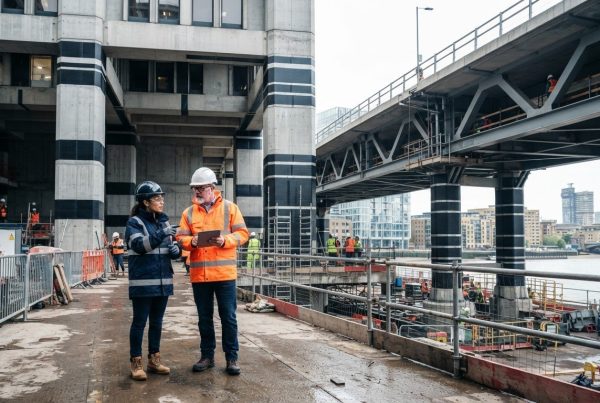

Whilst the immediate impulse to address structural degradation often leans towards demolition, the most commercially and environmentally sound strategy is almost invariably the extension of the asset’s functional lifespan through advanced engineering. Asset managers and structural engineers are currently navigating a complex landscape defined by accelerated carbonation, reinforcement corrosion, and the stringent requirements of updated building codes; this includes the implementation of the 2025 California Building Standards Code and updated Eurocode benchmarks. You likely recognise that the primary challenge lies in determining how to strengthen an existing concrete structure without incurring the prohibitive operational downtime or significant weight increases associated with traditional methods.
This article provides a comprehensive engineering analysis of both modern and traditional methodologies designed to enhance the load-bearing capacity and durability of concrete assets. By examining advanced material science, including the application of Carbon Fibre Reinforced Polymer (CFRP) and the Tyfo® Fibrwrap® system, a clear trajectory from rigorous diagnostic testing to successful structural intervention is established. Readers will gain technical insights into achieving compliance with regional regulations whilst ensuring the long-term security and performance of critical infrastructure through proven, empirical solutions.
Key Takeaways
- Understand the environmental and economic imperatives for asset life-extension through targeted structural strengthening rather than carbon-intensive demolition and reconstruction.
- Discover the technical criteria for determining how to strengthen an existing concrete structure by evaluating the performance trade-offs between conventional section enlargement and advanced composite systems.
- Evaluate the engineering advantages of Carbon Fibre Reinforced Polymer (CFRP) and Tyfo® Fibrwrap® systems in providing high-tensile reinforcement with minimal impact on the building footprint.
- Learn the critical diagnostic workflow required for successful refurbishment, including the necessity of carbonation testing and chloride analysis to ensure long-term bond integrity.
- Identify the importance of an integrated approach to project delivery, where specialist design and professional installation are combined to meet stringent Eurocode and regional building standards.
Structural Assessment and the Case for Asset Life-Extension
Structural strengthening is defined as the engineered enhancement of an existing member’s load-bearing capacity, a process that has become essential as global infrastructure ages and building codes evolve. This intervention is often necessitated when the original design parameters no longer align with contemporary safety standards or operational demands. When determining how to strengthen an existing concrete structure, engineers must first establish a baseline through empirical data, ensuring that any proposed modification preserves the integrity of the original Reinforced concrete framework. This approach prioritises the extension of an asset’s functional lifespan. It effectively bridges the gap between historical design and modern requirements. It’s not just repair; it’s a performance upgrade.
Triggers for Structural Reinforcement
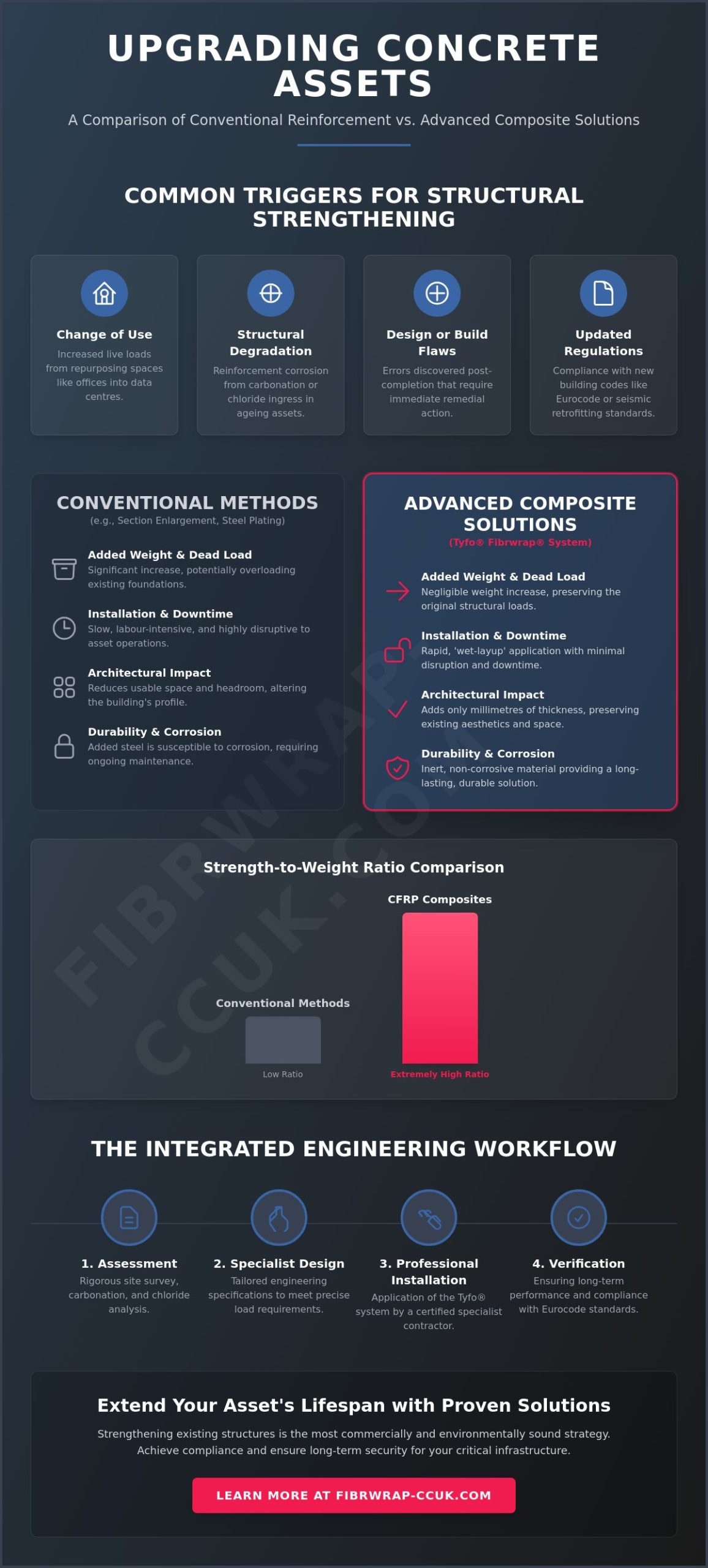
Several factors necessitate immediate structural intervention. A primary driver is the change of occupancy, where a building’s use is repurposed, leading to significantly increased live loads. For instance, converting office space into high-density residential units or data centres requires a re-evaluation of floor slab capacities. Additionally, compliance with updated regulatory frameworks, such as the 2025 California Building Standards Code or the adoption of ASCE 7-22 standards, often demands seismic retrofitting for non-ductile concrete buildings. Amongst ageing UK infrastructure, the degradation of reinforcement due to chloride ingress or carbonation creates a critical need for strengthening to restore original design margins. Construction deficiencies or design errors discovered post-completion also serve as triggers for these remedial actions.
The Sustainability of Repair over Replacement
The environmental imperative to avoid demolition is increasingly influential in structural engineering decisions. Demolition and new construction contribute heavily to the global carbon footprint; therefore, preserving existing assets is a key sustainability strategy. Strengthening existing structures significantly reduces the resource burden by minimising the consumption of new cement and aggregates. It’s a method that also preserves the cultural and historical value of the building stock, which is often lost during complete redevelopment. Specialist structural surveys play a vital role here. They provide the necessary justification for refurbishment feasibility by quantifying the remaining service life of the asset. The integration of these assessments into a tailored design feature allows for precise interventions. By opting for sophisticated strengthening systems, asset owners can achieve compliance with Eurocode standards whilst maintaining operational continuity, avoiding the prohibitive costs and environmental impact of a total rebuild.
Conventional Methodologies for Concrete Reinforcement
Traditional methodologies for structural remediation typically involve the mechanical addition of material to enhance the capacity of existing members. When asset managers evaluate how to strengthen an existing concrete structure using conventional means, the choice often fluctuates between section enlargement and the application of external reinforcement. Whilst these techniques are grounded in established engineering principles, they require a rigorous analysis of the global structure to ensure that the increased dead load does not exceed the capacity of the existing foundations. Comprehensive guidance on selecting appropriate strengthening systems for concrete highlights the necessity of matching the intervention to the specific deficiency identified during the survey phase. For projects where weight constraints are critical, evaluating a specialist design feature can reveal whether conventional methods remain the most viable path.
Section Enlargement and Concrete Overlays
Section enlargement involves the addition of new concrete to the perimeter of existing beams, columns, or slabs to increase their cross-sectional area. This process effectively enhances both stiffness and load-bearing capacity by increasing the moment of inertia. Success depends heavily on achieving a monolithic bond between the substrate and the new overlay. This necessitates aggressive surface preparation, often via grit-blasting or high-pressure water jetting, alongside the installation of mechanical dowels to ensure composite action. However, the additional dead weight introduced by thickened sections can be substantial. In multi-storey assets, the cumulative load on vertical elements and foundations must be carefully managed to avoid secondary settlement or structural overstress.
Steel Plate Bonding and External Reinforcement
Steel plate bonding is a frequent choice for enhancing flexural and shear capacity in reinforced concrete members. High-strength epoxy resins are utilised to bond steel plates to the tension face or the webs of beams. This method provides an immediate increase in capacity with relatively thin profiles compared to concrete overlays. Despite its effectiveness, the risk of corrosion at the steel-concrete interface remains a significant concern, particularly in aggressive environments. Debonding at the plate ends due to high peeling stresses also requires careful detailing. Unlike modern composites, metallic systems demand ongoing maintenance and protective coatings to prevent oxidation. Furthermore, the labour-intensive nature of handling and supporting heavy steel plates during installation often leads to extended operational downtime when compared to lightweight alternatives.
External post-tensioning represents another conventional approach, particularly suited for long-span beams and bridges. By applying active stress through high-strength steel tendons anchored externally to the concrete, the member is placed under compression, effectively counteracting applied loads. This technique is highly efficient for deflection control but requires specialised anchorage hardware and precise tensioning protocols. The complexity of the installation and the potential for tendon corrosion mean that this method is typically reserved for major infrastructure projects where traditional passive reinforcement is insufficient.
Advanced Composite Solutions: The Tyfo® Fibrwrap® Advantage
The methodology of how to strengthen an existing concrete structure has been revolutionised by Carbon Fibre Reinforced Polymer (CFRP), which serves as the definitive high-performance alternative to traditional metallic or concrete-based interventions. The primary advantage of CFRP lies in its exceptional strength-to-weight ratio, allowing for substantial capacity increases without the dead-load penalties associated with section enlargement. The Tyfo® Fibrwrap® system is a primary example of this technology, comprising an engineered combination of high-strength fibres and specialised epoxy resins. This system is particularly effective for seismic retrofitting and blast mitigation, where energy dissipation and ductility are paramount. Whilst concerns regarding fire performance are often raised, it’s a challenge that is effectively addressed through several protection strategies:
- Application of intumescent coatings that expand to provide a thermal barrier
- Installation of cementitious fireproofing mortars
- Integration of fire-rated board systems
These measures ensure that composite interventions maintain their structural integrity during thermal events, ensuring compliance with stringent safety regulations and Eurocode standards.
CFRP Column Wrapping and Confinement
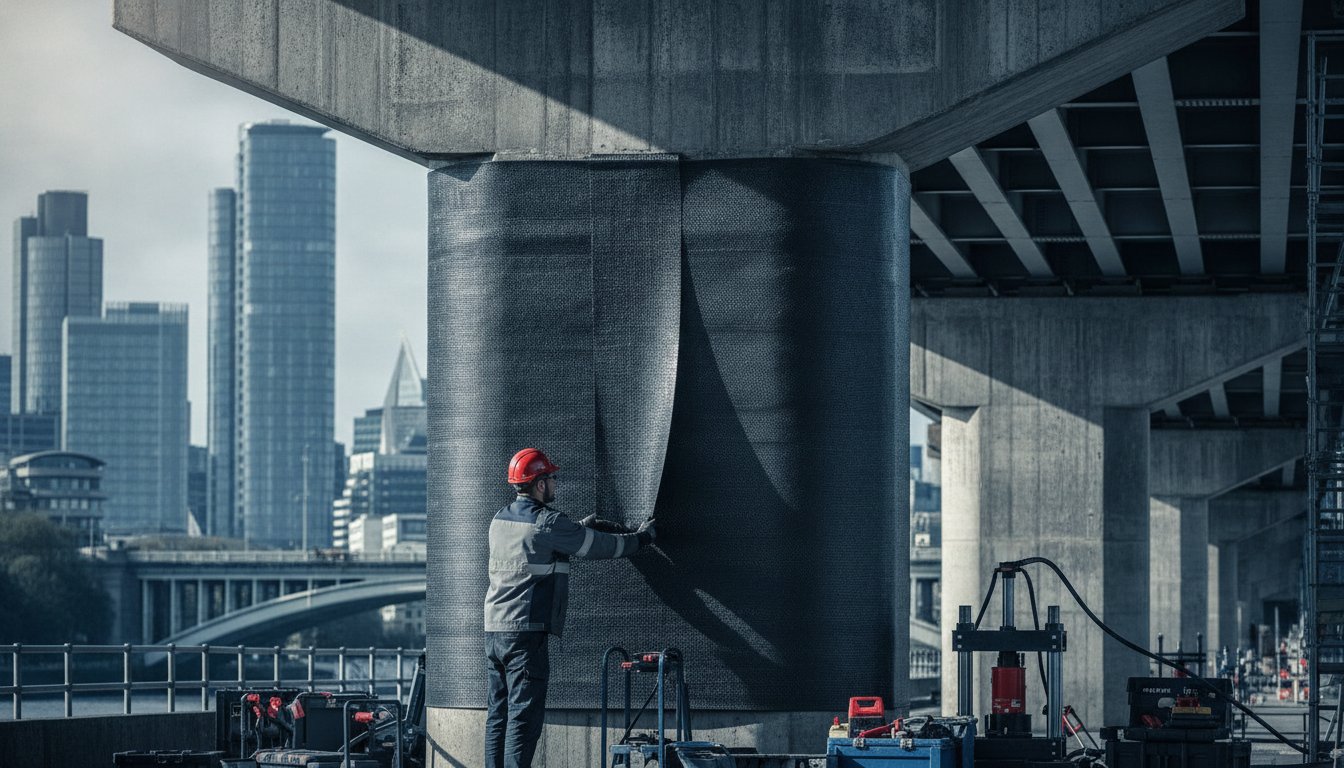
CFRP column wrapping provides intense hoop restraint, which significantly enhances the compressive strength and ductility of reinforced concrete members. This confinement effect is particularly beneficial for circular and rectangular columns in dense urban centres, where maintaining the original building footprint is essential for both aesthetic and functional reasons. By utilising the Tyfo® system, engineers can achieve the necessary confinement to meet updated seismic standards, such as those detailed in the ASCE 41-23 procedures for non-ductile concrete buildings, without the intrusive nature of steel jacketing. It’s a precise application that transforms the structural behaviour of the column without altering its architectural profile.
Flexural and Shear Strengthening of Beams
For horizontal members, CFRP fabrics are applied longitudinally to the tension face to increase flexural capacity. Shear strengthening is achieved through the use of U-wraps or near-surface mounted (NSM) reinforcement, where CFRP rods or strips are embedded into pre-cut grooves in the concrete surface. The rapid installation cycle of these lightweight composite materials ensures minimal operational downtime. This efficiency makes them an ideal choice for asset owners determining how to strengthen an existing concrete structure within tight operational windows. Integrating such solutions into a bespoke design feature ensures that each intervention is tailored to the specific structural demands and material properties of the asset, providing a long-term, reliable reinforcement solution.
The Engineering Workflow: From Survey to Specification
The efficacy of any structural intervention is fundamentally dependent on the accuracy of the preceding diagnostic phase. Determining how to strengthen an existing concrete structure requires more than a visual inspection; it demands a rigorous empirical assessment of the current state of the material. This workflow ensures that bespoke design solutions are grounded in the actual, rather than assumed, properties of the asset. By identifying underlying defects such as carbonation or chloride-induced corrosion early, engineers develop a specification that addresses both load-bearing capacity and long-term durability simultaneously. It’s a process where material science meets structural rigour.
Diagnostic Testing and Asset Inspection
A successful strengthening project starts with verifying the integrity of the concrete substrate. Pull-off tests are conducted to measure the near-surface tensile strength, which is a critical parameter for ensuring the bond of externally bonded composites like CFRP. Simultaneously, non-destructive testing (NDT), such as Ground Penetrating Radar (GPR), is utilised to locate existing reinforcement and determine the concrete cover depth. It’s imperative to address any existing degradation before reinforcement begins; therefore, the integration of comprehensive concrete repairs is a non-negotiable prerequisite. This synergy between remediation and strengthening prevents the entrapment of corrosive elements beneath new reinforcement layers, which could otherwise lead to premature failure of the bond interface. If you’re managing an ageing asset, arranging a professional structural survey and testing is the first step towards a compliant and secure solution.
Technical Specification and Design
Once the diagnostic data is collated, the technical specification is developed in accordance with established standards such as Eurocode 2 and the Concrete Society Technical Report 55 (TR55). These frameworks provide the necessary guidelines for calculating material safety factors and ensuring that the strengthened member meets the required limit states. The design process must account for the specific material properties of the composite system, including its modulus of elasticity and ultimate tensile strength. Where structural members exhibit cracking, resin injection is specified for crack stabilisation to restore the monolithic behaviour of the concrete before the application of external reinforcement. This methodical approach ensures that the final specification is not merely a generic application but a tailored engineering response to the unique stresses and environmental conditions of the asset.
Strategic Implementation with a Specialist Engineering Contractor
The successful execution of a structural upgrade project depends on the seamless integration of engineering design and practical application. When considering how to strengthen an existing concrete structure, the transition from theoretical specification to physical reinforcement requires a specialist contractor capable of managing the entire project lifecycle. This end-to-end delivery model, encompassing design, material supply, and professional installation, eliminates the risks associated with fragmented procurement. It ensures that the proprietary systems specified during the design phase are applied with the precision required to meet long-term performance targets. It’s a methodical approach where the expertise of the installer is as critical as the quality of the material itself.
Quality Assurance in Composite Application
Quality control protocols for Tyfo Fibrwrap installation are stringent; they involve continuous environmental monitoring to ensure that ambient temperature and humidity levels remain within the parameters required for optimal resin curing. Specialist training is mandatory for all personnel, as the manual handling of advanced composites requires a high degree of technical proficiency to avoid air entrapment or bond discontinuities. To validate the installed system’s performance, witness panels are typically prepared under identical site conditions and subjected to standardised laboratory testing. This empirical verification provides asset owners with the assurance that the theoretical capacity increases have been achieved in practice.
Extending Asset Lifespans Nationally
Managing complex infrastructure projects across national networks necessitates a disciplined approach to asset care. The role of structural repairs is central to this, as strengthening can’t be viewed in isolation from the broader maintenance of the concrete fabric. By utilising composite reinforcement, asset controllers gain a solution that offers superior durability and corrosion resistance compared to traditional steel-based methods. These interventions not only extend the functional lifespan of the asset but also significantly reduce the long-term maintenance burden. Following the completion of the works, a regime of periodic monitoring and inspection is established to verify the ongoing integrity of the strengthened elements. To determine the most efficient path for your project, you can contact our engineering team for a detailed feasibility study and technical consultation.
In summary, the decision of how to strengthen an existing concrete structure should be guided by a commitment to engineering rigour and asset longevity. Advanced composite solutions like the Tyfo® Fibrwrap® system provide a versatile, lightweight, and non-intrusive means of meeting modern load requirements and regulatory standards. When delivered by a specialist contractor through a structured workflow of survey, design, and expert installation, these systems offer a sustainable alternative to demolition, ensuring that critical infrastructure remains safe and functional for decades to come.
Advancing Structural Longevity through Engineering Rigour
The transition from ageing infrastructure to a resilient, modernised asset requires a disciplined adherence to material science and structural engineering principles. It’s clear that the shift away from carbon-intensive demolition towards sophisticated life-extension strategies is now a commercial and environmental necessity. By prioritising empirical diagnostics and selecting high-performance composites over traditional section enlargement, asset managers can achieve significant capacity increases without compromising the building’s footprint or weight. Determining how to strengthen an existing concrete structure is a strategic decision that demands a synergy between precise design and expert application.
As the exclusive UK licensee for Tyfo® Fibrwrap® systems, our expert team provides the technical authority required for complex seismic retrofitting and blast mitigation projects. We deliver an end-to-end service, ensuring that every intervention is grounded in engineering rigour and professional sobriety. We invite you to consult with our structural experts for a bespoke strengthening solution that guarantees long-term security and compliance. Securing the future of your infrastructure is a collaborative process rooted in proven results and scientific excellence.
Frequently Asked Questions
Can you strengthen a concrete structure without increasing its weight?
Structural capacity can be significantly enhanced without substantial weight addition by utilising Carbon Fibre Reinforced Polymer (CFRP) systems. Unlike traditional section enlargement, which adds significant dead load to foundations, CFRP fabrics are exceptionally lightweight and possess a high strength-to-weight ratio. This allows engineers to determine how to strengthen an existing concrete structure whilst maintaining the original architectural profile and avoiding secondary stress on the global framework.
How long does CFRP structural strengthening typically last?
The service life of a correctly specified and installed CFRP system typically exceeds 50 years, often matching or surpassing the remaining functional lifespan of the host structure. These advanced composites are inherently resistant to environmental degradation and corrosion, which are the primary causes of failure in metallic reinforcement. Long-term durability is further ensured through the application of protective coatings that shield the resin matrix from ultraviolet radiation and mechanical damage.
Is CFRP strengthening suitable for structures in marine environments?
CFRP is highly suitable for marine and coastal environments because it’s completely immune to chloride-induced corrosion. Traditional steel reinforcement often fails in these settings due to salt spray and moisture ingress, whereas composite systems provide a durable, non-corrosive alternative. This makes advanced materials like the Tyfo® Fibrwrap® system an ideal choice for the rehabilitation of jetties, bridges, and sea defences where traditional repair methods frequently prove insufficient.
How much does it cost to strengthen a concrete building in the UK?
The total investment required for structural reinforcement is determined by the specific engineering challenges of the asset, including the degree of existing degradation and site accessibility. Factors such as the volume of required composite material, the necessity for preparatory concrete repairs, and the complexity of the design specification all influence the final project cost. A detailed feasibility study and structural survey are essential to provide an accurate technical and commercial proposal tailored to the asset’s requirements.
What is the difference between concrete repair and structural strengthening?
Concrete repair focuses on restoring the original integrity and durability of a member by addressing localised defects such as spalling or reinforcement corrosion. Conversely, structural strengthening is the process of increasing the load-bearing capacity of a member beyond its original design parameters. Whilst these processes are distinct, they’re often integrated within a comprehensive asset care strategy to ensure that the substrate is sound before additional reinforcement is applied.
Can CFRP be used for blast mitigation in existing buildings?
CFRP systems are effectively utilised for blast mitigation because they significantly enhance the ductility and energy absorption capacity of reinforced concrete members. By providing high-tensile confinement, these wraps prevent the catastrophic fragmentation of concrete during high-impact events. This specialised application is a critical component of how to strengthen an existing concrete structure in high-risk environments, ensuring that critical infrastructure remains resilient against extreme loading conditions.
What building codes govern structural strengthening in the UK?
Structural strengthening projects in the United Kingdom are primarily governed by Eurocode 2 (BS EN 1992) for concrete design and the Concrete Society Technical Report 55 (TR55). These documents provide the empirical framework for the design and application of fibre-reinforced polymers, established through rigorous testing and engineering consensus. Adherence to these standards is essential for ensuring that all interventions meet the required safety margins and regulatory compliance for public and private infrastructure.
How does temperature affect the installation of composite wraps?
Ambient and substrate temperatures significantly influence the viscosity and curing kinetics of the epoxy resins used in composite applications. Installation must typically occur within a specific temperature range, often between 10°C and 35°C, to ensure that the resin achieves its specified mechanical properties and bond strength. If temperatures fall outside these parameters, environmental controls such as hoarding and heating are implemented to maintain the integrity of the curing process amongst the structural members.