
With the Institution of Civil Engineers highlighting a “worrying deterioration” of the United Kingdom’s ageing infrastructure in March 2026, the historical reliance on reactive reconstruction is no longer a sustainable strategy for technical asset controllers. You’re likely managing the constant tension between stringent regulatory safety requirements and the fiscal realities of maintaining high-consequence concrete and masonry structures. Ensuring public safety through structural maintenance is now a primary objective that demands a shift from total replacement toward sophisticated, evidence-based remediation. This guide demonstrates how advanced composite systems, such as Carbon Fibre Reinforced Polymer (CFRP) strengthening and Tyfo® Fibrwrap® systems, protect the public whilst extending the functional lifespan of critical infrastructure assets. We’ll examine the engineering rigour behind modern life-extension programmes and the methodology for achieving compliant, long-term structural security with minimal operational downtime. By prioritising the sustainability of repair over the disruption of replacement, asset managers can meet the standards set by the new Building Safety Regulator without exceeding budgetary constraints.
Key Takeaways
- Understand the necessity of transitioning from reactive repairs to proactive safety protocols to fulfil legal obligations under UK health and safety legislation.
- Discover how advanced composite systems assist in ensuring public safety through structural maintenance by reinforcing legacy assets designed for lower historical load capacities.
- Learn why Carbon Fibre Reinforced Polymer (CFRP) and Tyfo® Fibrwrap® systems are superior to traditional steel bonding for providing non-invasive, high-performance structural strengthening.
- Identify the critical role of comprehensive structural surveys and data-driven diagnostic testing in formulating precise, cost-effective remediation strategies.
- Explore the technical requirements for safeguarding high-consequence infrastructure through specialist interventions such as blast mitigation and seismic retrofitting.
The Critical Link: Ensuring Public Safety Through Structural Maintenance
Structural maintenance is frequently mischaracterised as a series of reactive repairs, yet it’s more accurately defined as a rigorous, proactive safety protocol. Within high-traffic environments, the structural integrity of bridges, tunnels, and public buildings is the silent guarantor of citizen security. Prioritising these interventions is the primary mechanism for ensuring public safety through structural maintenance across the UK’s ageing landscape. When maintenance is deferred, the risk profile of an asset increases exponentially, often leading to sudden failures that could have been mitigated through planned, data-driven interventions. This shift from a fix-on-failure mentality to a management-by-design approach isn’t merely a technical preference; it represents a fundamental commitment to the long-term security of the built environment.
Legislative Frameworks and Compliance in the UK
The Health and Safety Executive (HSE) maintains stringent oversight of infrastructure through cost-recovery mechanisms like the Fee For Intervention (FFI), which increased to £188 per hour in April 2026. This regulatory pressure is bolstered by the Building Safety Act 2022 and the subsequent establishment of the independent Building Safety Regulator in January 2026. For asset controllers, compliance now necessitates the mandatory registration of higher-risk buildings and the maintenance of a golden thread of digital information. Documented maintenance trails are no longer optional; they’re essential for demonstrating a legal duty of care, securing insurance coverage, and protecting against the severe legal ramifications of structural negligence. Failure to adhere to these evolving standards doesn’t just invite financial penalties; it compromises the very framework of public accountability.
The Socio-Economic Impact of Structural Failure
Catastrophic failures result in more than just immediate safety hazards; they trigger profound economic disruption and a collapse in public trust. The March 2026 report from the Institution of Civil Engineers (ICE) explicitly noted a worrying deterioration in UK transport infrastructure, suggesting that investment in management is currently falling short. When a major asset is decommissioned due to neglect, the cost of emergency reconstruction and lost operational time far outweighs the investment required for a proactive maintenance programme. Specialist engineering plays a pivotal role here, utilising sophisticated materials to prevent asset loss and ensure that essential infrastructure remains a reliable pillar of the national economy. By ensuring public safety through structural maintenance, asset owners can avoid the reputational damage and legal fallout associated with avoidable structural incidents. For those managing high-consequence assets, engaging with specialist engineering services is the most effective route to long-term compliance and safety.
Identifying Vulnerabilities in Ageing UK Infrastructure
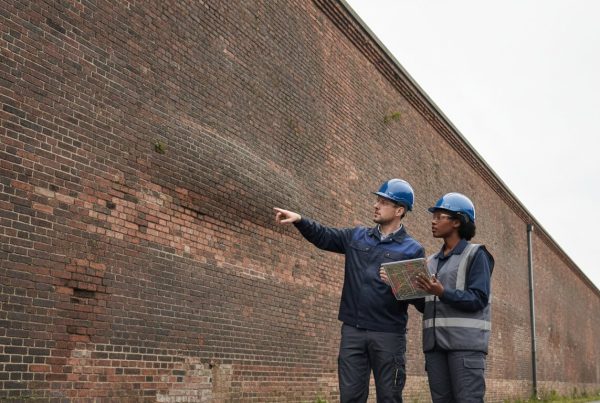
The UK’s infrastructure landscape is characterised by a high density of legacy assets, many of which were engineered to standards that didn’t anticipate contemporary traffic volumes or modern environmental stressors. Identifying vulnerabilities within these structures is a prerequisite for ensuring public safety through structural maintenance. Early detection of sub-surface defects allows for targeted interventions before the structural integrity is irrecoverably compromised. It’s a methodical process that requires a deep understanding of material science and structural mechanics to differentiate between superficial wear and systemic failure.
Chemical and Environmental Deterioration Mechanisms
Reinforced concrete assets are particularly susceptible to chemical attack. Carbonation, a process where atmospheric carbon dioxide penetrates the concrete cover to lower the pH, and chloride ingress, frequently resulting from de-icing salts, are primary drivers of reinforcement corrosion. This corrosion is often “silent”, occurring deep within the matrix without immediate surface indicators like cracking or rust staining. Once the protective passivity of the steel is lost, the resulting expansive forces lead to spalling and a critical loss of section. Professional concrete repairs are necessary to halt this decay and restore the alkaline environment required for long-term durability whilst preventing further moisture penetration.
Structural Fatigue and Capacity Deficits
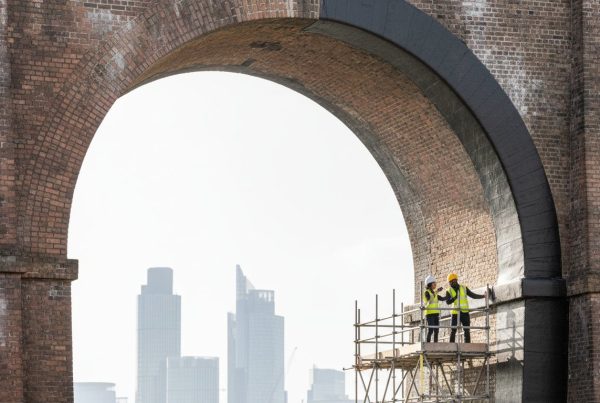
Beyond material degradation, many UK structures face significant capacity deficits. Legacy bridges and viaducts designed for 20th-century loads are now subjected to 44-tonne HGVs and increased frequency of use, leading to structural fatigue and overstressing. In masonry assets, ground movement or subtle seismic shifts can exacerbate existing weaknesses, leading to instability in arches and retaining walls. Ageing pipeline networks also present unique risks, where internal corrosion and external soil conditions can lead to catastrophic leaks or collapses. Adhering to established public safety protocols ensures that these vulnerabilities are managed through a disciplined asset management framework.
Strategic monitoring and remediation are essential for ensuring public safety through structural maintenance, particularly when legacy designs are pushed beyond their original parameters. Identifying these risks early is vital for maintaining the security of public spaces and avoiding the high costs associated with emergency closures. For asset owners, understanding the precise state of their infrastructure is the first step toward a cost-effective life-extension strategy. You might consider a bespoke design assessment to determine the most appropriate strengthening solution for your specific asset.
Composite Remediation: A Safety-First Approach to Strengthening
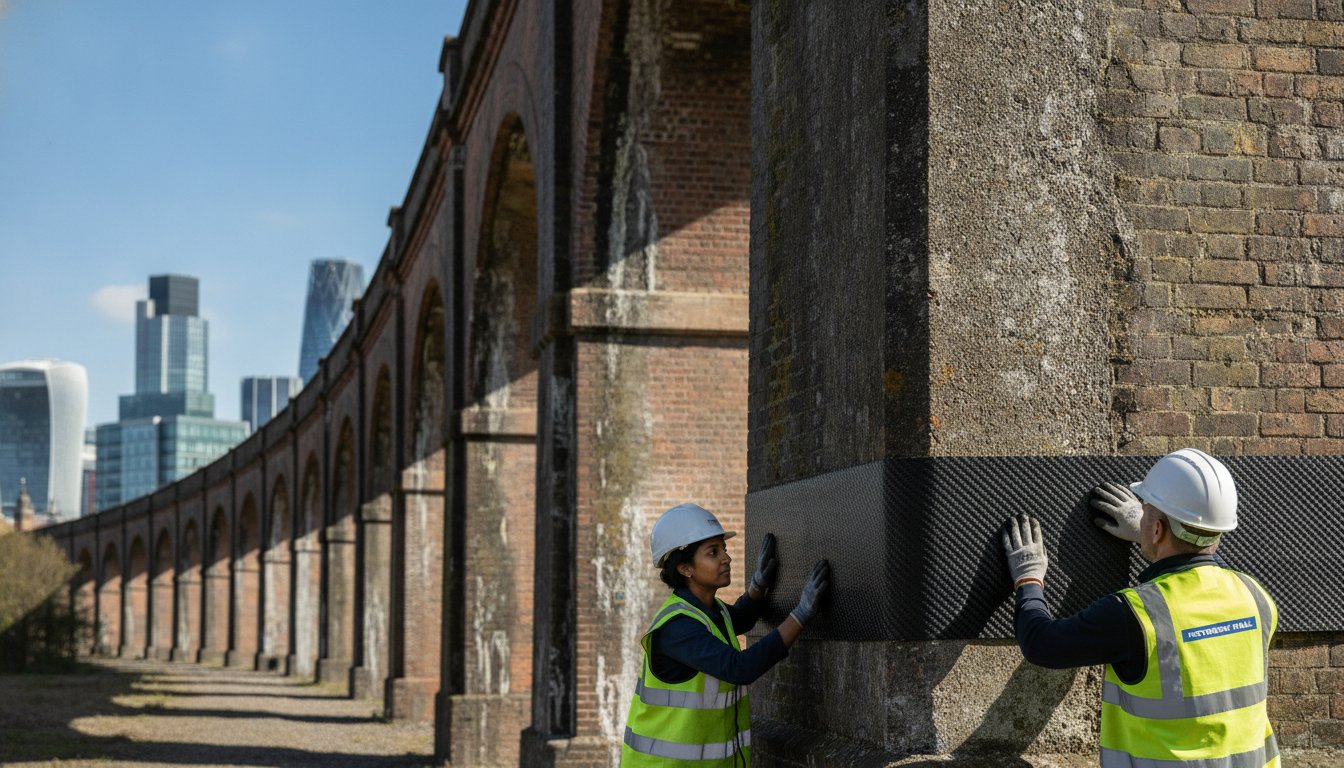
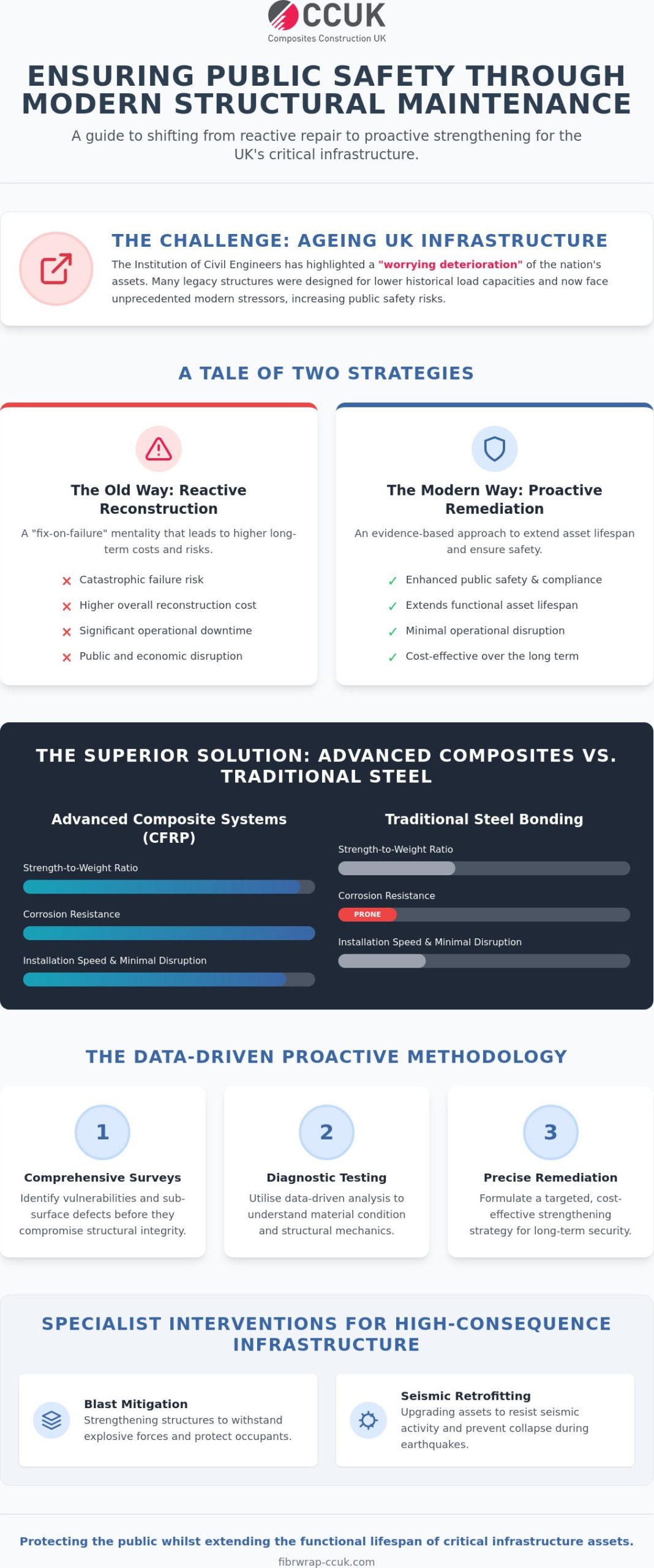
As the Royal Academy of Engineering recently emphasised, the UK government must prioritise sophisticated maintenance strategies to safeguard ageing UK infrastructure against systemic failure. In this context, Carbon Fibre Reinforced Polymer (CFRP) has emerged as the vanguard of structural strengthening, offering a high-performance alternative to traditional, invasive methods. Unlike conventional steel plate bonding, which requires heavy lifting equipment and introduces significant parasitic dead load to the structure, advanced composite systems provide a high-tensile reinforcement that integrates seamlessly with the existing substrate. The strength-to-weight ratio of CFRP is vastly superior to metallic alternatives, allowing for substantial capacity upgrades without compromising the structural stability of the asset. This technical efficiency is fundamental to ensuring public safety through structural maintenance, as it enables the restoration of load-bearing integrity with minimal disruption to the surrounding environment.
The Tyfo® Fibrwrap® System Advantage
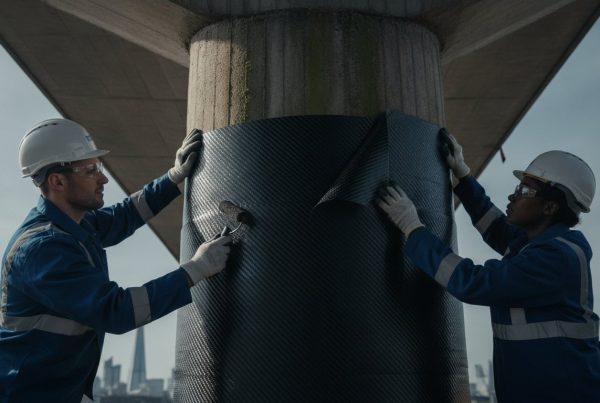
The Tyfo® Fibrwrap® system represents a significant advancement in composite technology, providing a tailored reinforcement solution for high-consequence infrastructure. This proprietary system utilises specialised carbon and glass fibres saturated with high-modulus resins to create a bespoke wrap that conforms to complex geometries. Its application is diverse, ranging from the seismic retrofitting of bridge decks to the structural stabilisation of industrial chimneys and cooling towers. The system’s lightweight nature ensures that the installation process is inherently safer for technicians and the public alike, as it eliminates the need for the extensive temporary works often required for steel-based interventions. By adopting such sophisticated materials, asset controllers can achieve a level of structural security that matches or exceeds modern design codes.
Sustainability and Life-Extension: Repair vs. Replacement
The strategic shift toward “repair over replace” is not merely an economic decision but a critical component of the UK’s net-zero infrastructure goals. The carbon footprint associated with the production and installation of composite repair systems is a fraction of that required for full structural reconstruction. Ensuring public safety through structural maintenance via composite remediation prolongs the functional lifespan of an asset, thereby deferring the massive environmental and financial costs of demolition and rebuilding. This approach aligns economic safety with engineering rigour, providing a sustainable pathway for managing legacy assets. It’s a methodical strategy that prioritises the preservation of existing utility through targeted, evidence-based intervention. For those overseeing complex portfolios, a bespoke design assessment is the first step in identifying how these advanced materials can best extend the service life of critical assets.
Strategic Asset Management: Surveys and Proactive Protocols
Strategic asset management is predicated on the transition from subjective visual inspections to rigorous, data-driven diagnostic testing. For technical professionals, the objective of ensuring public safety through structural maintenance is achieved by identifying latent defects before they manifest as critical failures. A comprehensive survey acts as the foundation of any life-extension programme, providing the necessary metrics to quantify current capacity and predict future degradation rates. This proactive stance allows asset controllers to prioritise interventions based on a matrix of risk and structural consequence, ensuring that capital expenditure is directed where it provides the greatest safety return. It’s a methodical process that replaces guesswork with engineering certainty.
Advanced Diagnostic and Testing Techniques
Non-destructive testing (NDT) provides a granular understanding of material health without compromising the asset’s utility. Carbonation depth testing and pull-off tests are frequently utilised to assess the chemical stability and bond strength of concrete substrates. When these are supplemented by core sampling and chemical analysis, a precise profile of chloride ingress or loss of alkalinity is established. Such accurate data is indispensable. It justifies the engineering design for structural repairs and ensures that remediation strategies are grounded in physical reality rather than theoretical assumptions. By quantifying the extent of internal decay, engineers can develop interventions that stop deterioration at its source.
Bespoke Engineering and Design Features
Generic, off-the-shelf solutions are rarely sufficient for high-consequence infrastructure where complex stress distributions and legacy design constraints must be reconciled. The integration of a design feature into the remediation workflow allows for the creation of tailored plans that address specific load-bearing requirements. Specialist engineering ensures that every strengthening intervention is optimised for the unique geometry and operational demands of the asset. This bespoke approach is vital for ensuring public safety through structural maintenance whilst avoiding the over-engineering that leads to unnecessary costs. Tailored designs allow for the precise placement of reinforcement, maximising performance without adding excessive weight. To initiate a data-led assessment of your infrastructure portfolio, you can arrange a structural survey and testing programme with our technical team.
Specialist Interventions for High-Consequence Infrastructure
Managing high-consequence infrastructure necessitates the involvement of a specialist engineering contractor capable of executing safety-critical interventions that exceed the scope of standard civil repairs. Ensuring public safety through structural maintenance in these complex environments involves managing extreme dynamic loads, such as those encountered during seismic events or accidental explosions. These applications require a profound understanding of material behaviour under high-strain conditions to ensure that the reinforcement provides the necessary redundancy. By employing a disciplined approach to these high-stakes projects, asset controllers can guarantee that critical utilities and public spaces remain resilient against both predictable decay and unforeseen external threats.
Blast Mitigation and Public Security
Blast mitigation systems are designed to absorb and dissipate the kinetic energy from explosive events, protecting the primary load-bearing elements of a structure. By applying high-tensile composite wraps to columns and transfer beams, the risk of progressive collapse is significantly reduced. These systems ensure that if a localised failure occurs, the global stability of the building is maintained through enhanced ductility. In transport hubs and essential utilities, the application of blast-resistant coatings and wraps provides a critical layer of security. This methodology focuses on the containment of debris and the preservation of structural integrity, which are the most vital factors in preventing mass casualties during a security incident.
Seismic Retrofitting and Masonry Stabilisation
Seismic retrofitting of unreinforced masonry structures presents unique challenges, especially regarding the preservation of historical integrity whilst achieving modern safety standards. The lack of inherent ductility in masonry makes these assets vulnerable to lateral forces. Techniques such as bed joint reinforcement and the installation of lateral restraints are used to increase out-of-plane stability and tie structural elements together. For reinforced concrete elements, composite wraps provide the confinement needed to prevent the brittle failure of columns during ground movement. This technical intervention is essential for ensuring that legacy buildings can withstand seismic forces that exceed their original design parameters.
Securing the Future of UK Infrastructure
The safety implications of pipeline rehabilitation in the water and gas sectors are equally significant, where internal composite liners allow for the restoration of pressure capacity in ageing networks without the need for extensive excavation. This non-invasive approach mitigates the risk of catastrophic leaks in urban centres whilst avoiding the socio-economic disruption of traditional replacement. Ultimately, ensuring public safety through structural maintenance is an ongoing commitment that requires the integration of advanced materials and specialist engineering rigour. Asset managers seeking to validate the integrity of their structures should contact Composites Construction UK to arrange a specialist feasibility study and explore bespoke life-extension strategies tailored to their specific operational requirements.
Securing the Future of UK Infrastructure Through Engineering Rigour
Transitioning from reactive reconstruction to proactive life-extension is the only viable path for managing the United Kingdom’s ageing asset portfolio. By integrating advanced diagnostic testing with high-performance composite remediation, asset controllers can reconcile strict regulatory safety requirements with current budget constraints. Ensuring public safety through structural maintenance requires a methodical commitment to engineering precision and sophisticated material science. This strategy doesn’t just address immediate defects; it provides a sustainable framework for the long-term resilience of the built environment.
As the exclusive UK licensee for Tyfo® Fibrwrap® systems, Composites Construction UK provides a unique combination of in-house bespoke engineering design and UK-wide specialist contracting. This end-to-end capability ensures that every intervention is tailored to the specific load-bearing requirements of the structure, whether you’re addressing concrete repairs or complex blast mitigation for high-consequence utilities. We invite you to consult with our specialist engineering team to safeguard your structural assets and explore how we can extend the functional lifespan of your critical infrastructure. Proactive maintenance remains the most effective investment in the security and utility of our national assets.
Frequently Asked Questions
How does structural maintenance contribute to public safety in the UK?
Structural maintenance contributes to public safety by establishing a proactive regime that identifies and remediates material degradation before it compromises the global stability of an asset. Within the UK, this is particularly critical for legacy infrastructure that faces increased environmental stressors and loading. Ensuring public safety through structural maintenance allows asset owners to manage risk profiles systematically, preventing the sudden failures that could lead to injury or significant socio-economic disruption in high-traffic areas.
What are the main signs that a structure requires urgent maintenance?
Visible indicators of structural distress include longitudinal cracking, concrete spalling, and rust staining, which often suggest advanced reinforcement corrosion. Significant deflection or uncharacteristic vibration under load also necessitates immediate investigation by a specialist engineer. Water ingress or damp patches on concrete surfaces can indicate chloride penetration or carbonation, both of which require urgent diagnostic testing to determine the extent of internal decay and the required remediation strategy.
Is CFRP strengthening as durable as traditional concrete repair methods?
Carbon Fibre Reinforced Polymer (CFRP) strengthening is exceptionally durable, offering a service life that often exceeds traditional steel-based repairs. Unlike steel plates, CFRP is inherently resistant to corrosion and chemical attack, making it ideal for harsh UK environments. The material’s high strength-to-weight ratio allows for significant capacity upgrades without adding dead load, ensuring that the reinforcement remains effective for the remaining functional lifespan of the structure.
How often should structural surveys be conducted for public assets?
The frequency of structural surveys is typically governed by the asset type and its risk classification, often following the established cycle of biennial general inspections and sexennial principal inspections. However, structures identified as high-consequence or those showing signs of accelerated deterioration may require more frequent, data-led diagnostic testing. Regular monitoring is a cornerstone of ensuring public safety through structural maintenance, as it provides the empirical evidence needed to justify timely interventions.
Can composite repairs be applied to operational infrastructure without closure?
Composite repairs are specifically designed for application on operational infrastructure with minimal disruption. Because Carbon Fibre Reinforced Polymer (CFRP) systems are lightweight and require no heavy plant or extensive temporary works, they can often be installed during off-peak hours or whilst the asset remains in use. This capability is a significant advantage for transport networks and utilities where full closures would result in prohibitive operational costs and public inconvenience.
What are the legal implications of failing to maintain structural integrity?
Failing to maintain structural integrity can result in severe legal consequences, including criminal prosecution under the Building Safety Act 2022 or the Health and Safety at Work etc. Act 1974. Asset owners may be subject to the Health and Safety Executive’s Fee For Intervention (FFI), which increased to £188 per hour in April 2026. Beyond financial penalties, negligence that leads to structural failure can result in significant liability claims and irreparable reputational damage.
How does blast mitigation technology protect public spaces?
Blast mitigation technology protects public spaces by enhancing the ductility and energy-absorption capacity of primary structural elements. Proprietary systems like Tyfo® Fibrwrap® are engineered to contain debris and prevent the progressive collapse of a building following an explosive event. By reinforcing columns and transfer beams, these systems ensure that the structure can redistribute loads, which is the most critical factor in safeguarding occupants and maintaining the stability of the surrounding environment.
Why is specialist engineering design necessary for structural life-extension?
Specialist engineering design is necessary to reconcile complex load paths with the unique material properties of legacy assets. Generic solutions often fail to account for the specific stress distributions or environmental constraints of a particular structure. A bespoke design-and-build approach ensures that strengthening interventions are mathematically validated and optimised for performance, providing a level of structural security that off-the-shelf repairs cannot replicate in high-consequence environments.