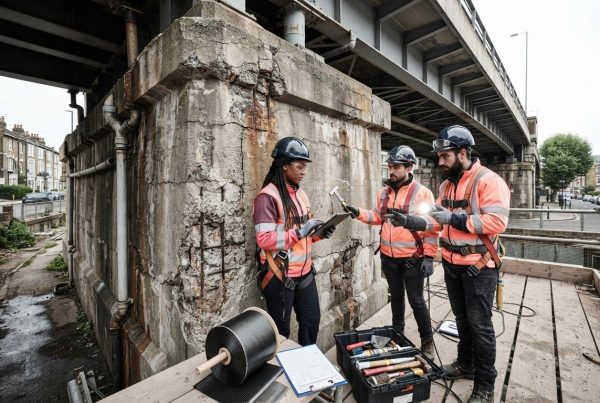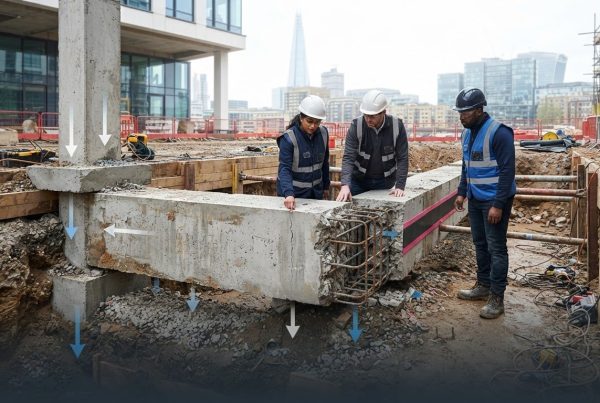

The structural integrity of a masonry façade is often compromised not by the visible fracture itself, but by the systemic failure to address the underlying tensile stresses that precipitated the breach. For technical professionals managing critical UK infrastructure, the presence of uncontrolled fractures in industrial masonry represents a significant risk to asset longevity and operational safety. It’s understood that addressing crack stitching in brickwork is no longer a matter of aesthetic repair; it’s a precise engineering intervention necessitated by evolving safety mandates and the persistent threat of secondary asset degradation through water ingress.
This technical guide provides a definitive framework for masonry remediation, promising to restore structural stability and extend the functional lifespan of essential assets. You’ll gain a comprehensive understanding of the interaction between high-tensile helical bars and advanced Carbon Fibre Reinforced Polymer (CFRP) systems, ensuring full compliance with Eurocode 6 and the updated 2026 building safety standards. We begin by analysing the material properties of thixotropic grouts before moving into the specific methodologies required to mitigate structural movement and ensure long-term security whilst maintaining regulatory alignment with PD 6697.
Key Takeaways
- Identify the mechanics behind masonry failure, focusing on how thermal expansion cycles and tensile stress necessitate robust reinforcement to prevent progressive asset degradation.
- Ensure rigorous compliance with the latest UK building safety standards, including the updated PD 6697:2026 and BS EN 1996 (Eurocode 6) for structural remediation.
- Evaluate the technical specifications of crack stitching in brickwork, specifically the selection between Grade 304 and 316 stainless steel helical bars for varying environmental exposures.
- Discover advanced remedial methodologies that integrate Carbon Fibre Reinforced Polymer (CFRP) and “Stitch and Cut” techniques to introduce necessary flexibility into rigid structural façades.
- Leverage bespoke engineering calculations to implement life-extension strategies that reduce the Total Cost of Ownership (TCO) for national infrastructure and commercial assets.
Mechanics of Masonry Failure: Why Brickwork Cracks
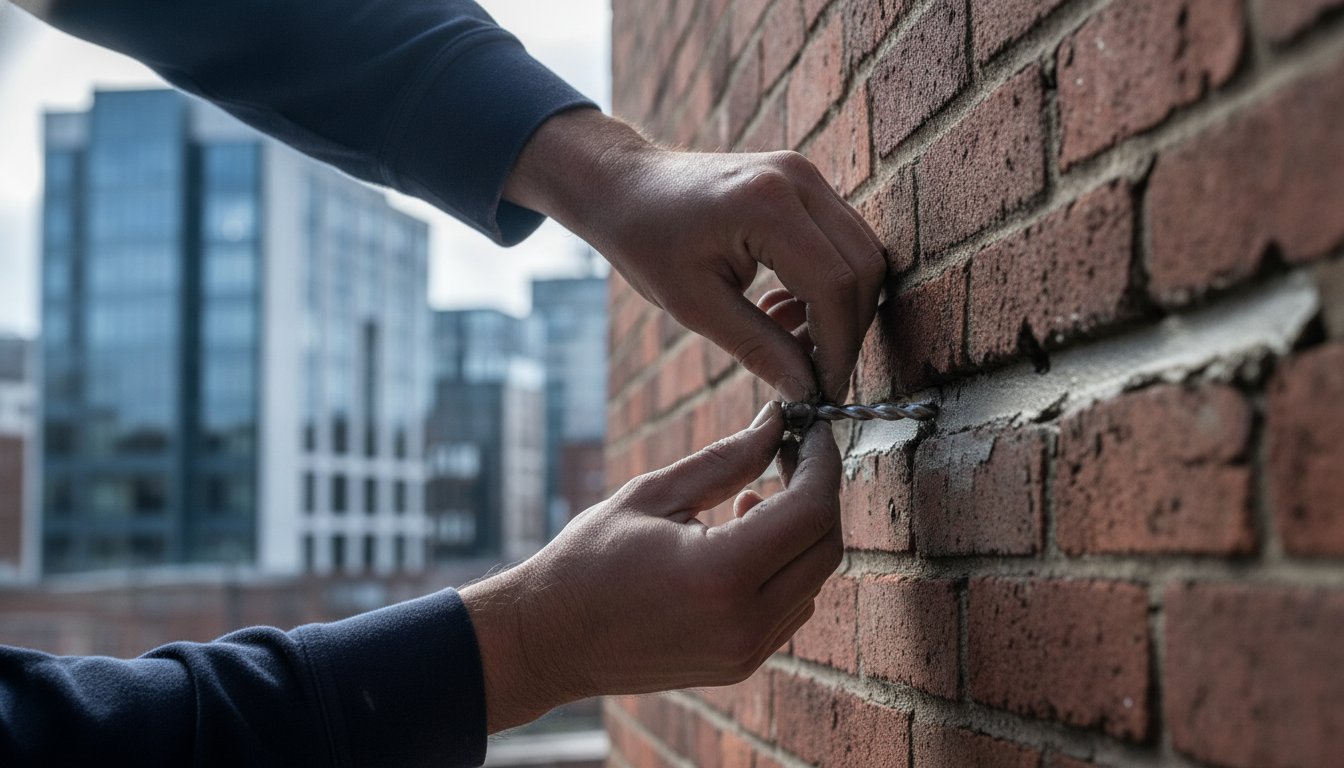
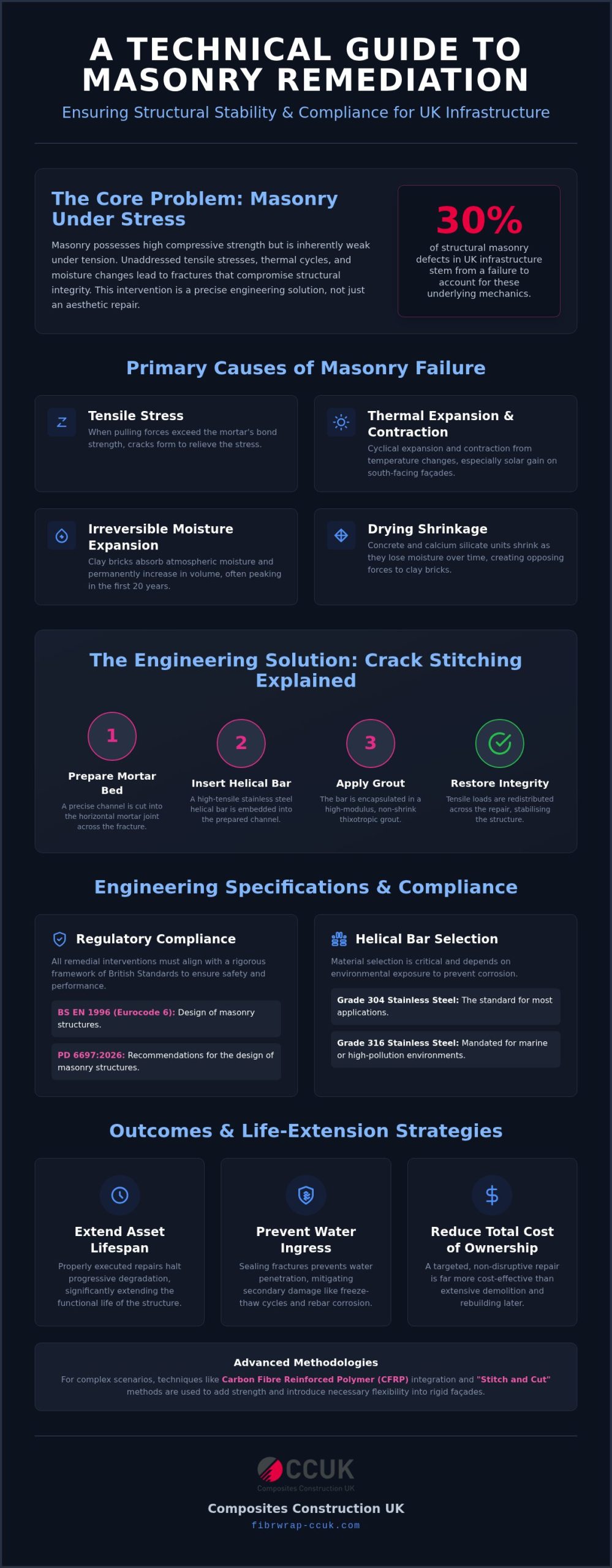
Crack stitching in brickwork is defined as a non-disruptive, retrofit reinforcement methodology designed to restore the tensile strength of masonry units that have been compromised by structural fractures. Whilst masonry possesses high compressive strength, it’s inherently weak in tension; crack stitching addresses this deficit by embedding high-tensile stainless steel helical bars into the mortar bed. This intervention effectively redistributes structural loads across the fracture, stabilising the asset without the need for extensive demolition. It’s estimated that failure to account for these underlying mechanics is responsible for approximately 30% of structural masonry defects observed across UK infrastructure, particularly in ageing commercial stock where original movement provisions were insufficient.
Modern UK climate conditions in 2026 have exacerbated the impact of thermal expansion and contraction cycles on large-scale masonry, leading to an increased frequency of reversible movement. It’s vital to distinguish this cyclical thermal behaviour from irreversible moisture expansion, as the remedial strategy must accommodate the specific nature of the displacement. If these forces are ignored, the resultant stress exceeds the bond strength of the mortar, leading to the characteristic cracking patterns seen in industrial and infrastructure assets.
Clay vs Concrete: Divergent Material Behaviours
Clay units and concrete blocks exhibit divergent material behaviours that frequently lead to differential movement. Clay bricks undergo a process of irreversible moisture expansion, a phenomenon where the material absorbs atmospheric moisture and increases in volume over a multi-decade cycle, often peaking within the first 20 years of an asset’s life. Conversely, concrete and calcium silicate units are prone to drying shrinkage as they lose moisture over time. When these materials are combined within a single industrial façade amongst mixed-material assets, the conflicting stresses inevitably manifest as structural cracking. The remedial process often involves Repointing Masonry Joints to ensure the new mortar bed provides a stable, compatible medium for the reinforcement system.
Thermal Dynamics and Solar Gain
Solar orientation plays a critical role in the expansion rates of large-scale masonry; south-facing elevations experience significantly higher rates of expansion due to intense solar gain throughout the day. The rate of heat absorption is dictated by both brick density and colour, with darker, denser units reaching higher peak temperatures and undergoing greater volumetric change than lighter alternatives. The coefficient of thermal expansion for standard UK clay brickwork is typically estimated at 5 to 8 x 10⁻⁶ per degree Celsius. For complex infrastructure, bespoke engineering calculations are essential to determine the precise placement of reinforcement to accommodate these dynamic loads effectively.
Engineering Specifications for Crack Stitching in Brickwork
The engineering specifications for crack stitching in brickwork are governed by a rigorous framework of British Standards, primarily BS EN 1996 (Eurocode 6) and the comprehensive recommendations found in PD 6697:2026. These documents dictate the minimum performance requirements for masonry reinforcement, ensuring that any remedial intervention provides the necessary lateral stability and load distribution. It’s essential to distinguish between load-bearing and non-load-bearing elements during the design phase, as the stress profiles of commercial infrastructure often require more intensive reinforcement patterns than standard façades. Precise design ensures the structural remediation is not merely a surface-level fix but a permanent enhancement of the building’s tensile capacity.
Material selection is predicated on environmental exposure and the chemical compatibility of the bonding agents. Grade 304 austenitic stainless steel is typically utilised for standard applications, but Grade 316 is mandated for assets situated in aggressive marine or high-pollution environments to prevent long-term corrosion. These bars are encapsulated within high-modulus, non-shrink thixotropic grouts that offer superior bond strength whilst allowing for slight natural movement. Technical insights from resources such as the NPS Preservation Brief on Repointing underscore the necessity of using materials that match the physical properties of the existing substrate to avoid inducing secondary stresses during the curing process.
Helical Bar Specification and Placement
The selection of bar diameter, typically 6mm or 8mm, is determined by the masonry density and the available slot width within the mortar bed. For most UK masonry, vertical spacing is calculated to occur every 4 to 6 courses, equating to a distance of 300mm to 450mm, which ensures the tensile loads are effectively bridged. A critical parameter is the minimum embedment length; each helical bar must extend at least 500mm on either side of the fracture to guarantee that the bond stress is distributed into sound masonry. This ensures the reinforcement operates within its designed elastic limit during thermal cycles.
PD 6697 and Building Regulation Compliance
Adherence to the Building Safety Act and PD 6697:2026 ensures that remedial works meet the stringent safety requirements expected of modern UK infrastructure. Implementing crack stitching in brickwork according to these precise standards ensures that the asset remains resilient against the dynamic forces described in previous sections. Bespoke engineering calculations are required for non-standard wall thicknesses or complex geometries where standard reinforcement patterns may prove insufficient. To address identified gaps in standard remedial practices, designers must also account for horizontal movement accommodation; strategic bar placement can prevent future cracking by allowing the façade to breathe without losing structural integrity. Precision in layout is required to avoid existing service penetrations and wall ties, maintaining the continuity of the reinforcement system throughout the asset’s functional lifespan.
Diagnosing Structural Defects: Patterns, Causes, and Risks
The diagnosis of structural defects in masonry requires a forensic approach to distinguish between superficial fissures and systemic failure. Vertical expansion cracks typically indicate reversible thermal movement, whereas diagonal step-cracking often signals foundation settlement or local subsidence. These distinct patterns are documented in technical resources concerning Common Problems with Brick Masonry, which highlight how misdiagnosis leads to ineffective remediation. If left unaddressed, excessive compressive stress can manifest as masonry bowing or spalling, where the outer face of the brick shears away from the core. This breach compromises the building envelope, creating pathways for water ingress and significant heat loss, which ultimately undermines the thermal efficiency of the asset.
Secondary effects of ignored fractures include the accelerated corrosion of internal wall ties and bed joint reinforcement. Once moisture penetrates the masonry leaf, the metallic components undergo oxidation, expanding in volume and exerting further internal pressure on the brickwork. This cycle of degradation necessitates a prompt application of crack stitching in brickwork to arrest movement and seal the structure against environmental stressors.
Identifying Failure Patterns in Industrial Assets
Distinguishing between settlement-induced cracking and movement-induced expansion is critical for determining the appropriate specification for remedial works. Settlement fractures usually extend through the entire wall thickness and may originate at ground level, while expansion cracks are often concentrated near the corners of large-scale elevations. Asset controllers should employ structural surveys and testing to monitor crack width and progression over a full seasonal cycle. This data-driven approach allows for the assessment of existing lateral restraints, ensuring that the remedial design addresses the root cause of the displacement rather than just the visible symptom.
Asset Degradation and Long-Term Liability
The presence of open fractures exposes the internal leaf of the masonry to freeze-thaw cycles, where moisture expands within the crack and accelerates material failure. This environment facilitates the rapid fatigue of original reinforcement, which can lead to façade detachment if the structural bond is lost. Under the updated 2026 safety standards, asset controllers face increased regulatory liability for failing to maintain structural integrity. In high-exposure UK environments, the typical timeframe between the appearance of initial tensile cracking and the onset of secondary structural failure, such as significant spalling or wall tie fatigue, is often as little as three to five years. Proactive crack stitching in brickwork serves as a critical preventative measure, mitigating these risks before they necessitate more invasive and costly interventions.
Remedial Methodologies: Integrating CFRP and Stitching
Modern remedial strategies for industrial façades often necessitate a hybrid approach that combines traditional mechanical reinforcement with advanced composite technologies. Whilst crack stitching in brickwork is highly effective for restoring tensile continuity across localised fractures, it can occasionally lead to the creation of an overly rigid masonry panel if the underlying cause of movement hasn’t been addressed through the provision of movement joints. Integrating masonry reinforcement allows for the effective redistribution of lateral stresses, ensuring the remediated structure can accommodate the dynamic loads typical of UK infrastructure without suffering secondary failure. This holistic methodology balances the need for structural rigidity with the requirement for controlled flexibility.
The Stitch and Cut Technique for Rigid Façades
When a masonry façade lacks sufficient movement joints, the “Stitch and Cut” technique is employed to retrofit flexibility into the system whilst maintaining lateral stability. This process involves a disciplined sequence of engineering interventions:
- Precise vertical cutting of the masonry leaf is performed using dust-controlled equipment to create a clean expansion gap.
- Stainless steel slip ties are installed across the new joint, ensuring the two panels remain laterally stable whilst allowing for independent horizontal movement.
- Closed-cell backing rods, typically made from cellular polyethylene, are inserted into the joint to provide a secondary moisture barrier.
- Mineral wool fillers are prioritised in scenarios where enhanced fire resistance is mandated by 2026 building safety regulations.
- Specialist engineering sealants are applied to the joint face, followed by a final structural validation of the remediated panel to ensure it meets design specifications.
Advanced Composite Strengthening for Masonry
In high-load scenarios or where masonry panels exhibit significant bowing, traditional crack stitching in brickwork is often augmented by advanced composite systems. Tyfo® Fibrwrap® systems are utilised to stabilise masonry panels by bonding Carbon Fibre Reinforced Polymer (CFRP) to the internal or external faces of the structure. These composite systems offer a remarkably high strength-to-weight ratio, enhancing lateral load capacity without adding significant mass to the existing foundation. CFRP provides a non-corrosive, long-term alternative to traditional steel, making it ideal for aggressive environments amongst UK industrial assets. By distributing loads over a wider surface area, these proprietary systems prevent the concentration of stress that leads to localised cracking, thereby extending the functional lifespan of the asset through sophisticated material science.
For bespoke guidance on integrating advanced composites into your structural remediation programme, contact our specialist engineering team to discuss your specific requirements.
Holistic Asset Management and Structural Life-Extension
The transition from reactive maintenance to a holistic asset management strategy is essential for preserving the functional utility of UK infrastructure. Crack stitching in brickwork represents a critical component of this transition, offering a methodology to arrest structural deterioration before it necessitates capital-intensive replacement. By implementing proactive remedial measures, asset controllers can significantly reduce the Total Cost of Ownership (TCO) associated with masonry façades, as the expense of early-stage reinforcement is substantially lower than that of large-scale reconstruction. The sustainability benefits are equally significant; extending the functional lifespan of existing structures through engineered reinforcement reduces the embodied carbon footprint of an asset, aligning technical outcomes with broader environmental goals.
The role of a specialist engineering contractor is to ensure that these interventions are executed with the precision required to meet the demands of modern safety standards. This involves moving beyond surface-level repairs to address the fundamental mechanics of the structure, ensuring that the interaction between new reinforcement and existing masonry is scientifically validated. This disciplined approach provides the absolute reliability required by technical professionals and asset controllers responsible for high-value infrastructure.
Bespoke Design and Engineering Consultancy
For non-standard infrastructure or assets with complex load paths, the application of generic repair templates is often insufficient. Collaborating with CCUK for bespoke design solutions at the feasibility stage allows for the development of tailored reinforcement patterns that account for specific structural anomalies. This ensures all remedial works meet the stringent 2026 UK Building Regulations and satisfy insurance requirements for documented, permanent repairs. A recent life-extension project involving a large-scale industrial asset illustrates the efficacy of this approach; by integrating retrofitted movement joints and precision crack stitching in brickwork, a failing elevation was stabilised, successfully extending its operational life by several decades whilst avoiding the disruption of a full rebuild.
Selecting a Specialist Engineering Contractor
The selection of a remedial partner must be predicated on their technical proficiency with advanced materials and their ability to deliver end-to-end service. Criteria for choosing a contractor should include proven experience in the application of proprietary systems, such as Tyfo® Fibrwrap®, which provide high-tensile strengthening without adding significant mass. A specialist provider offers a seamless workflow from initial structural surveys and bespoke design to professional installation and final validation. This integrated model ensures that the performance of specialized materials is maximised, providing long-term security for critical assets. Contact Composites Construction UK for a comprehensive technical assessment of your masonry assets and to discuss engineered reinforcement strategies.
Securing the Future of UK Masonry Infrastructure
The successful remediation of industrial masonry is predicated on a deep understanding of material science and the application of rigorous engineering standards. It’s clear that addressing crack stitching in brickwork is a sophisticated intervention that requires more than just filling a void; it demands a forensic analysis of movement patterns and the implementation of systems that can withstand the thermal dynamics of the modern UK climate. By adhering to the updated PD 6697:2026 standards and leveraging advanced composite technologies, asset controllers can transform a structural liability into a resilient, long-term asset. This disciplined approach ensures that repairs are not merely temporary fixes but permanent enhancements to structural integrity.
As the exclusive UK licensee for Tyfo® Fibrwrap® systems, Composites Construction UK provides the bespoke engineering design and calculation services necessary for major infrastructure projects nationwide. This expert-led approach prioritises the sustainability of repair over the waste of demolition, ensuring your assets remain safe and compliant for decades to come. Our national coverage ensures that specialized technical support is available for even the most complex structural challenges.
Frequently Asked Questions
How often should crack stitching in brickwork be inspected?
Post-installation, a primary inspection is recommended after 12 months to monitor seasonal thermal performance and verify the stability of the remedial intervention. Following this initial check, professional structural assessments should be integrated into the asset’s quinquennial maintenance cycle. For critical infrastructure or high-exposure sites, more frequent visual monitoring may be required to ensure the thixotropic grout and helical bars continue to accommodate dynamic loads without signs of secondary stress.
Can I retrofit movement joints into an existing building without compromising stability?
Movement joints can be safely retrofitted using the specialised “Stitch and Cut” technique, provided the process is guided by bespoke engineering calculations. This methodology involves creating a vertical separation whilst simultaneously installing stainless steel slip ties to maintain lateral stability between the newly independent panels. This intervention effectively relieves the internal tensile stresses that lead to uncontrolled fractures, restoring the façade’s ability to breathe without undermining the structural integrity of the asset.
What is the difference between an expansion joint and a contraction joint?
Expansion joints are designed to accommodate the volumetric increase in materials, such as the irreversible moisture expansion common in clay brickwork, and are typically filled with highly compressible materials. Contraction joints, often referred to as control joints, are positioned to manage the drying shrinkage prevalent in concrete and calcium silicate units. Whilst both facilitate movement, their placement and filler specifications differ based on whether the primary structural force is expansive or contractive.
Do all types of brick require the same helical bar spacing?
Helical bar spacing must be tailored to the specific material properties and density of the masonry unit rather than following a generic template. Whilst standard clay brickwork often requires spacing every 4 to 6 courses, denser engineering bricks or lightweight concrete blocks may necessitate different intervals to ensure effective load distribution. Crack stitching in brickwork must always be specified following a structural survey that accounts for the compressive strength of the substrate.
What happens if a crack is stitched without addressing the underlying cause?
Stitching a crack without addressing the root cause, such as foundation settlement or thermal expansion, will likely result in secondary cracking elsewhere in the façade. The installed reinforcement creates a rigid zone; if the structural movement continues, the stress will find the next weakest point in the masonry. This highlights the importance of diagnosing the failure pattern before implementation to ensure the remedial strategy provides a permanent solution.
Is it possible to use CFRP to strengthen masonry that has already cracked due to movement?
It is possible to use Carbon Fibre Reinforced Polymer (CFRP), specifically Tyfo® Fibrwrap® systems, to stabilise masonry panels that have suffered structural fractures. CFRP is particularly effective for enhancing lateral load capacity and preventing further bowing in compromised walls. When integrated with traditional crack stitching in brickwork, advanced composites provide a non-corrosive reinforcement layer that significantly extends the functional lifespan of assets situated in aggressive UK environments.
How do horizontal movement joints differ from vertical ones in design?
Vertical movement joints manage the horizontal expansion and contraction of long masonry elevations, whereas horizontal joints are designed to accommodate vertical displacement, such as the compression of floor slabs. Horizontal joints are typically positioned beneath shelf angles or support brackets and require specific compressible fillers and fire-stop materials to maintain the building’s fire-rating. These joints are critical in multi-storey structures where vertical expansion in the clay leaf can cause significant stress.
What is the best grout for crack stitching in high-exposure UK environments?
High-exposure UK environments require thixotropic, cementitious grouts that are specifically formulated to be non-shrink and high-modulus. These grouts must provide a superior bond between the stainless steel helical bar and the masonry whilst remaining resistant to freeze-thaw cycles and chemical aggression. Selecting a grout with matched physical properties to the existing mortar ensures that the reinforcement system operates harmoniously with the substrate, preventing the induction of secondary stresses.