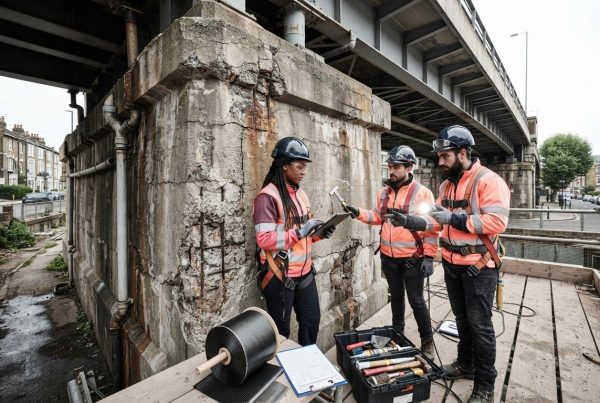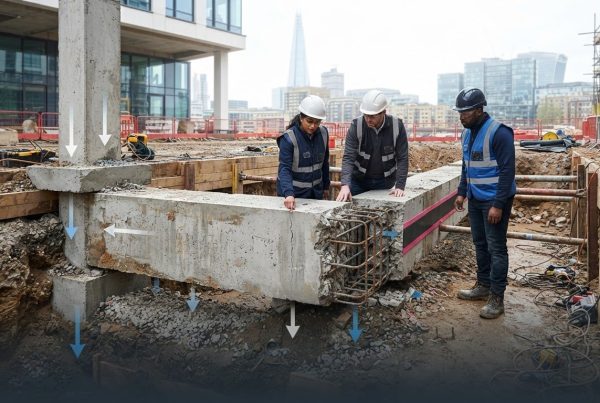

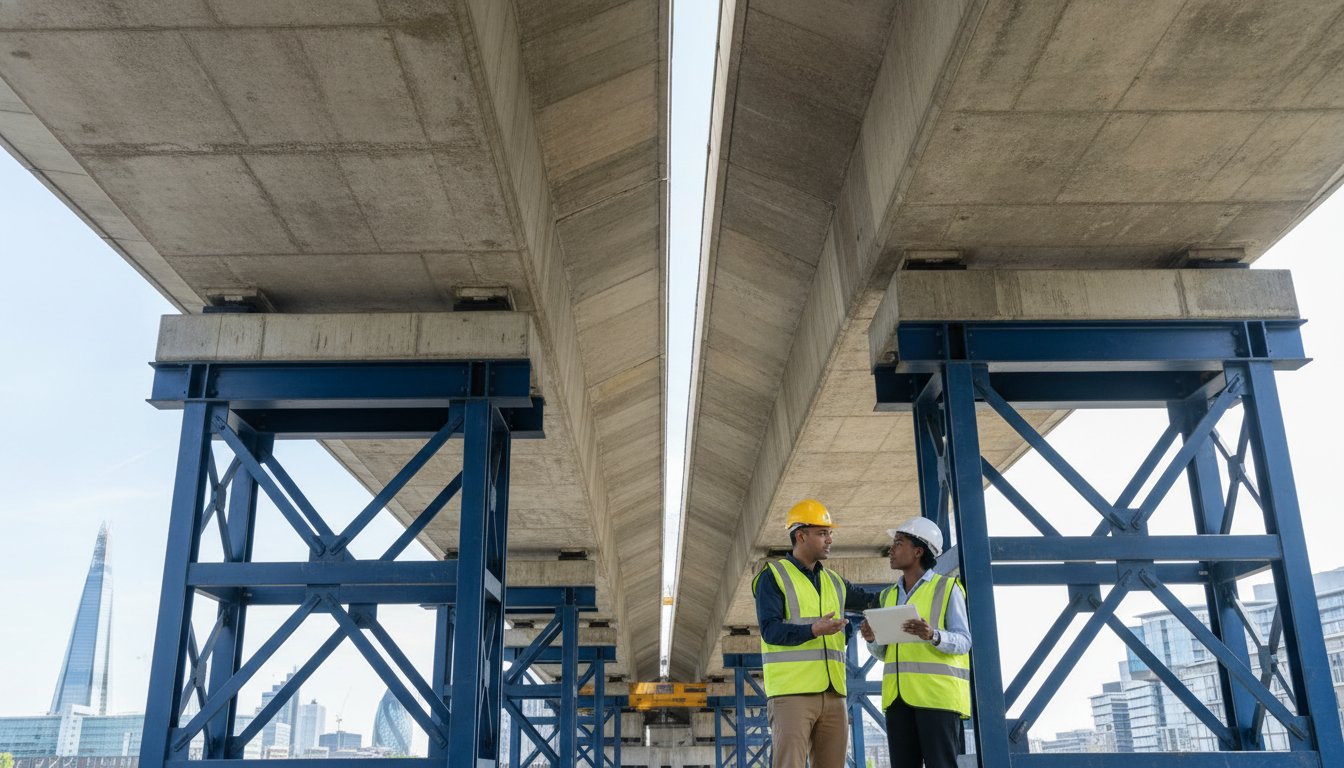
The structural integrity of a compromised asset is never more precarious than during the precise window when its load-bearing capacity is being manipulated for remediation. For technical professionals, the challenge of maintaining absolute stability whilst managing complex load-transfer requirements in ageing infrastructure remains a high-stakes engineering priority. It’s often found that the success of a project depends less on the final reinforcement and more on the precision of the temporary works designed to protect the structure during its most vulnerable state.
This guide provides an expert engineering review of the shoring methodologies required to stabilise assets during complex remediation and the application of CFRP for concrete slab strengthening. By adhering to the rigorous standards of BS 5975:2019, asset controllers can ensure a safe, stabilised environment ready for advanced composite intervention. We will examine the methodical transition from temporary support to permanent structural life-extension, focusing on the technical rigour required to achieve compliance and long-term security for essential concrete assets through sophisticated science and engineering.
Key Takeaways
- Understand why specialised shoring is the essential precursor to any structural remediation, ensuring asset stability whilst compromised concrete is repaired or reinforced.
- Differentiate between standard propping and engineered shoring to ensure compliance with BS 5975:2019 and the delivery of a robust Temporary Works Design.
- Evaluate the three primary shoring classifications, including dead, raking, and flying shoring, to determine the optimal methodology for managing complex load-transfer requirements.
- Discover how precision temporary works create the necessary environment for the successful application of CFRP for concrete slab strengthening and other advanced composite interventions.
- Master the methodology for transitioning from temporary stabilisation to permanent structural life-extension through the application of proprietary systems such as Tyfo® Fibrwrap®.
The Critical Role of Shoring in Concrete Remediation
Shoring in the context of structural remediation is the provision of a temporary support system designed to sustain loads whilst the primary structure is modified, repaired, or reinforced. Whilst shoring in new construction primarily supports formwork and wet concrete until it reaches its design strength, shoring for repair focuses on the redirection of existing load paths. It’s a precision engineering phase that addresses the inherent instabilities of ageing infrastructure, ensuring that structural equilibrium is maintained throughout the remediation process. Without this temporary intervention, the integrity of the entire asset remains at risk during the sensitive transition to permanent life-extension.
Deteriorated concrete assets present a volatile environment for engineering contractors. When a structure has suffered from significant section loss or chemical degradation, its ability to distribute loads as originally designed is compromised. The primary risk associated with inadequate shoring is the sudden shift of loads, which can lead to localised failure or, in extreme cases, progressive collapse. By implementing a robust temporary works strategy that adheres to the principles of BS 5975:2019, engineers can safely manage these forces, preparing the structure for advanced interventions such as CFRP for concrete slab strengthening.
Stabilising Compromised Concrete Assets
The presence of spalled concrete and heavily corroded reinforcement significantly alters the structural behaviour of a slab. During the shoring phase, engineers must account for the loss of bond between steel and concrete, which often leads to increased deflection and crack propagation. A correctly designed shoring system arrests this movement, providing a static environment that is essential for the successful application of composite materials. This stability is critical when using Tyfo® Fibrwrap® systems, as the bond between the substrate and the polymer must be established whilst the structure is in a controlled state of stress. It’s not merely about support; it’s about preserving the remaining structural utility of the asset through disciplined engineering.
When is Shoring Mandatory for Repair?
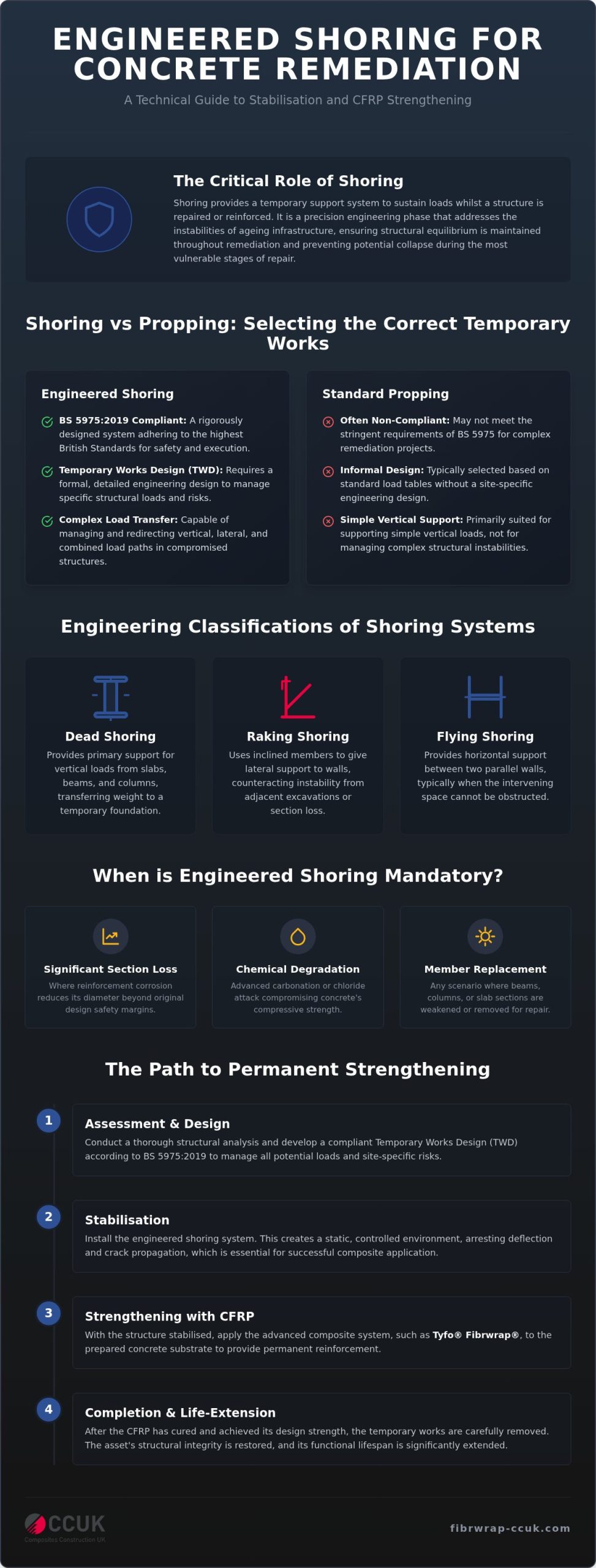
The requirement for engineered shoring is triggered by specific structural conditions that threaten the safety of the remediation phase. These triggers typically include:
- Significant section loss: Where reinforcement diameter has been reduced by corrosion to a point that exceeds the original design’s safety margins.
- Chemical degradation: Advanced carbonation or chloride attack that has reached the depth of the primary reinforcement, compromising the concrete’s compressive strength.
- Member replacement: Any scenario where beams, columns, or slab sections are being temporarily weakened or removed for repair.
In projects involving seismic retrofitting or blast mitigation, shoring provides the necessary foundation for structural modification. It ensures that the load-bearing capacity of the asset is maintained whilst it is being prepared for CFRP for concrete slab strengthening. This methodical approach to temporary works is a prerequisite for any project aiming to extend the functional lifespan of essential infrastructure whilst ensuring absolute site safety. For those looking to apply high engineering standards to residential property improvements, you can find out more about expert home remodelling and general contracting.
Engineering Classifications of Shoring Systems
Engineering shoring isn’t a singular hardware solution but a categorised discipline tailored to the specific load-transfer requirements of a compromised asset. Structural engineers typically classify these systems into three primary methodologies: dead, raking, and flying shoring. Each system is selected based on whether the primary threat to the structure is vertical instability, lateral displacement, or a combination of both during the remediation programme. It’s the precision of this classification that ensures the safety of technical personnel whilst permanent structural modifications are underway.
Dead Shoring for Vertical Load Transfer
Dead shoring is the primary methodology used to support vertical loads from floor slabs, beams, and columns whilst repairs are executed. It typically involves the installation of vertical props and the strategic placement of needle beams. These beams are passed through openings in walls or slabs to transfer the structural weight to a temporary support system, allowing for the removal and replacement of deteriorated concrete sections. For multi-storey assets, the load-bearing requirements must be meticulously calculated through each floor level to ensure the forces are safely dispersed to the foundations. This controlled environment is essential when preparing for CFRP for concrete slab strengthening, as it allows the composite to be applied to a structure that is in a neutral, non-deflected state. By utilising this approach, engineers can successfully implement an innovative method to strengthen concrete structures without risking sudden load shifts.
Raking and Flying Shoring for Lateral Stability
Raking shoring is deployed to provide lateral support to unstable walls or facades that have been weakened by chemical degradation or structural movement. It consists of inclined members, or rakers, that transmit lateral forces from the structure to the ground. The engineering of the angle of inclination is critical; it’s designed to provide maximum resistance against overturning whilst remaining within the site’s footprint. In contrast, flying shoring provides horizontal support between two parallel structures, often used when one building is being demolished or repaired whilst the other must remain stable. These systems are vital in dense urban environments where space is restricted and the proximity of assets necessitates a high degree of precision. Maintaining the integrity of these urban assets requires a deep understanding of how lateral forces interact with compromised concrete elements.
Selecting between these classifications depends on a rigorous analysis of the asset’s current state and the intended remediation outcome. Whether the project requires lateral stabilisation or a stable platform for CFRP for concrete slab strengthening, the choice of system must be grounded in empirical evidence and engineering rigour. For asset controllers, integrating these bespoke design features into the early stages of a project ensures a seamless transition from temporary support to permanent structural life-extension.
Shoring vs Propping: Selecting the Correct Temporary Works
Distinguishing between standard propping and engineered shoring isn’t merely a matter of hardware selection; it’s a fundamental difference in how structural risk is managed during a remediation programme. Whilst propping typically refers to the provision of vertical support using standard components, shoring involves a bespoke engineering design capable of managing multi-directional forces. In the context of structural repair, the choice between these two methodologies is dictated by the complexity of the load-transfer requirements and the current state of the compromised asset.
Limitations of Standard Propping
Standard propping, often facilitated by the ubiquitous Acrow prop, is frequently inadequate for high-load structural repair scenarios. These props are designed for axial compression; however, in ageing assets, the risk of eccentric loading is high due to uneven concrete surfaces or structural deflections. They lack lateral restraint. This absence of horizontal stability is particularly hazardous during the removal of deteriorated concrete. When preparing a structure for CFRP for concrete slab strengthening, the reliance on unbraced vertical props can lead to instability if the load path isn’t strictly controlled. For projects involving significant section loss, a transition to heavy-duty shoring towers is mandatory to maintain structural equilibrium.
The Engineered Shoring Advantage
By developing a comprehensive Temporary Works Design (TWD), engineered shoring systems provide a level of precision that standard propping can’t match. These systems are designed to integrate data from structural surveys and material testing, ensuring that the temporary support is perfectly matched to the specific structural defect being addressed. During intensive preparation phases, such as hydro-demolition or the removal of corroded reinforcement, engineered shoring offers superior safety for technical personnel by providing a rigid, redundant support structure.
The application of FRP strengthening systems for concrete is highly sensitive to the condition of the substrate. If the slab’s allowed to deflect or shift during the remediation phase, the bond and performance of the composite system may be compromised. By utilising engineered shoring, the asset is held in a precise, neutral state, ensuring that the CFRP for concrete slab strengthening achieves its full design capacity. For asset controllers managing complex infrastructure, selecting the correct temporary works is a critical decision that bridges the gap between initial stabilisation and permanent life-extension. For further technical guidance on selecting the appropriate system for your asset, you may wish to consult with our engineering team.
Designing a Shoring Strategy for Compromised Assets
Designing a shoring strategy for a compromised asset requires a methodical approach that prioritises structural stability over site convenience. In the United Kingdom, this process is strictly governed by BS 5975:2019, which provides the code of practice for temporary works procedures. A central requirement of this standard is the formal appointment of a Temporary Works Coordinator (TWC) and a Temporary Works Supervisor (TWS). The TWC manages the design brief and ensures all checks are completed, whilst the TWS monitors the site to ensure the physical installation matches the engineered drawings. This disciplined hierarchy is essential for maintaining safety during the sensitive phases of structural modification.
Temporary Works Design (TWD) and Compliance
A robust Temporary Works Design (TWD) begins with a detailed structural survey to identify the extent of concrete degradation and the current load-bearing capacity of the asset. Composites Construction UK (CCUK) integrates TWD into its role as a specialist engineering contractor, ensuring that the shoring system is a fundamental component of the overall remediation strategy. Every design must be verified against site-specific environmental loads, including wind forces and potential impact loads. This verification prevents unforeseen failures during the application of CFRP for concrete slab strengthening. Compliance isn’t optional. It’s the foundation of structural reliability.
Safe Installation and Removal Sequences
The physical implementation of shoring must follow a strict sequence to avoid introducing secondary stresses into the ageing concrete. Pre-loading of shores is often required to ensure immediate load transfer, effectively catching the structure before any remedial removal of concrete begins. This prevents structural settlement that could otherwise compromise the bond of the Tyfo® Fibrwrap® system. Monitoring must be continuous throughout the curing of repair mortars and the subsequent installation of CFRP for concrete slab strengthening. Structural equilibrium must be preserved at all times.
The removal of shoring, known as de-propping, is the most critical phase. It must be executed in a controlled, reverse sequence to the installation. This allows the structure to gradually assume its new load path through the reinforced sections. Sudden de-propping can cause structural shocks. These shocks lead to micro-cracking in the newly applied composite or the surrounding substrate, potentially undermining the life-extension goals of the project. For assets requiring complex structural intervention, consult with CCUK to develop a bespoke Temporary Works Design that ensures regulatory compliance and long-term asset security.
Integrating Shoring with CFRP for Concrete Slab Strengthening
The integration of shoring with advanced composite application represents the final, critical phase of the remediation lifecycle. Whilst previous sections detailed the engineering rigour required to stabilise an asset, the ultimate objective remains the successful installation of CFRP for concrete slab strengthening. Shoring serves as the enabler for this technology, providing the controlled, vibration-free environment necessary for the chemical bonding process of the polymer resin to reach its design potential. It’s through this synergy of temporary works and material science that ageing infrastructure is transitioned from a state of compromise to one of long-term security.
Preparing the Substrate for Tyfo® Fibrwrap®
For CFRP for concrete slab strengthening to be effective, the concrete member must often be returned to its dead load state. If a slab is reinforced whilst in a deflected or stressed condition, the composite system will only resist additional live loads rather than sharing the existing dead load of the structure. Engineered shoring allows the contractor to relieve these internal stresses, effectively catching the structure and, where necessary, jacking it back to its original profile before the Tyfo® Fibrwrap® system is applied. This ensures that when the temporary supports are eventually removed, the load is transferred seamlessly into the high-strength carbon fibres, maximising the flexural or shear capacity of the member as originally intended by the design engineer.
The Long-Term Solution: CFRP for Concrete Slab Strengthening
The primary advantage of transitioning from temporary shoring to a permanent Tyfo® Fibrwrap® solution is the preservation of the asset’s functional footprint. Traditional methods often rely on permanent steel shoring or section enlargement, which can significantly reduce headroom and add substantial weight to the structure. In contrast, CFRP provides a low-profile, high-strength alternative that extends the structural lifespan without the need for bulky permanent supports. CCUK has utilised this methodology across a diverse range of bridge and building rehabilitations, where the minimal thickness of the composite allows for a structural upgrade that’s almost invisible to the end user.
By managing the entire lifecycle from initial structural survey and Temporary Works Design to the final installation of proprietary composite systems, CCUK provides a unified engineering approach. This end-to-end oversight eliminates the risks associated with fragmented contracting, ensuring that the transition from temporary stabilisation to permanent life-extension is both safe and methodologically sound. To discuss your project requirements, contact Composites Construction UK for a bespoke shoring and strengthening design tailored to your asset’s specific structural challenges.
Securing the Future of Essential Infrastructure
The successful remediation of compromised concrete assets is fundamentally dependent on the precision of the temporary works phase. It’s clear that generic propping cannot replace a bespoke, engineered shoring strategy that adheres to BS 5975:2019 standards. Safety remains the priority. By maintaining structural equilibrium during the repair window, technical teams ensure that CFRP for concrete slab strengthening is applied to a stable and neutral substrate. This methodical approach guarantees site safety whilst facilitating the seamless transition from temporary support to permanent structural life-extension.
As the exclusive UK licensee for Tyfo® Fibrwrap® systems, Composites Construction UK provides national coverage for the most complex infrastructure challenges. Our expertise in specialist engineering ensures that every intervention is grounded in empirical evidence and regulatory compliance. We view ourselves as guardians of infrastructure. Consult our engineering team for bespoke shoring and strengthening solutions to ensure your asset remains secure and functional for its intended lifespan.
Frequently Asked Questions
What is the primary difference between shoring and scaffolding in concrete repair?
The primary difference lies in the functional intent; shoring is an engineered system designed to support structural loads, whilst scaffolding is strictly for providing safe access for personnel and materials. In concrete repair, shoring must be capable of transferring the structural weight of the asset to a secondary foundation or support. Scaffolding doesn’t possess the structural capacity to prevent collapse or manage load paths during the removal of compromised concrete sections.
How is shoring designed for structures with significant concrete carbonation?
Shoring for carbonated structures is designed based on the measured depth of carbonation and the resulting loss of reinforcement section. Engineers must calculate the current residual strength of the concrete members to determine the specific load-transfer requirements. This often involves the use of heavy-duty shoring towers to compensate for the reduction in compressive strength, ensuring the structure remains stable whilst remedial mortars are applied and cured.
Does shoring for concrete repair require a specific Temporary Works Design (TWD)?
Yes, all shoring for structural repair requires a formal Temporary Works Design (TWD) as mandated by BS 5975:2019. This design must be produced by a qualified engineer and checked by an independent party to ensure it meets the specific load requirements of the site. The TWD outlines the installation sequence, load capacities, and the necessary monitoring procedures to maintain structural equilibrium throughout the remediation project.
Can shoring systems be integrated with CFRP for concrete slab strengthening applications?
Shoring systems are frequently integrated with CFRP for concrete slab strengthening to ensure the composite is applied whilst the structure is in a neutral state. By using shoring to relieve the dead load of the slab, the carbon fibre system can participate in the full load-sharing capacity once the temporary supports are removed. This synergy is critical for achieving the high-strength, low-profile performance required in modern infrastructure rehabilitation.
What UK regulations govern the use of shoring systems on construction sites?
The use of shoring systems in the United Kingdom is primarily governed by the Construction (Design and Management) Regulations 2015 (CDM) and BS 5975:2019. These regulations dictate the procedural requirements for managing temporary works, including the appointment of a Temporary Works Coordinator. Compliance ensures that all structural risks are identified and managed through a rigorous design and checking process, protecting both the asset and the site personnel.
How long does a temporary shoring system typically remain in place during remediation?
The duration of a shoring installation is dictated by the curing time of the repair materials and the specific requirements of the strengthening system. Typically, shoring remains in place until the concrete repair mortars have achieved their specified compressive strength and the composite has fully bonded to the substrate. This period can range from a few days to several weeks, depending on environmental conditions and the complexity of the structural upgrade.
What is dead shoring, and when is it used in bridge repair?
Dead shoring is a vertical support system used to sustain the weight of a structure whilst the primary vertical members, such as bridge piers or abutments, are repaired. In bridge engineering, it often involves the use of needle beams to transfer the deck loads to temporary foundations. This allows for the safe removal of deteriorated concrete or the replacement of bearings without compromising the integrity of the bridge’s superstructure.
How do engineers calculate the load requirements for shoring systems in aged buildings?
Engineers calculate load requirements by combining original design data with modern structural surveys and testing results. They use finite element analysis or methodical manual calculations to account for the current state of degradation and any changes in intended usage. These calculations must include a factor of safety that accounts for the uncertainties inherent in aged buildings, ensuring the shoring system can safely manage all potential load combinations during repair.