

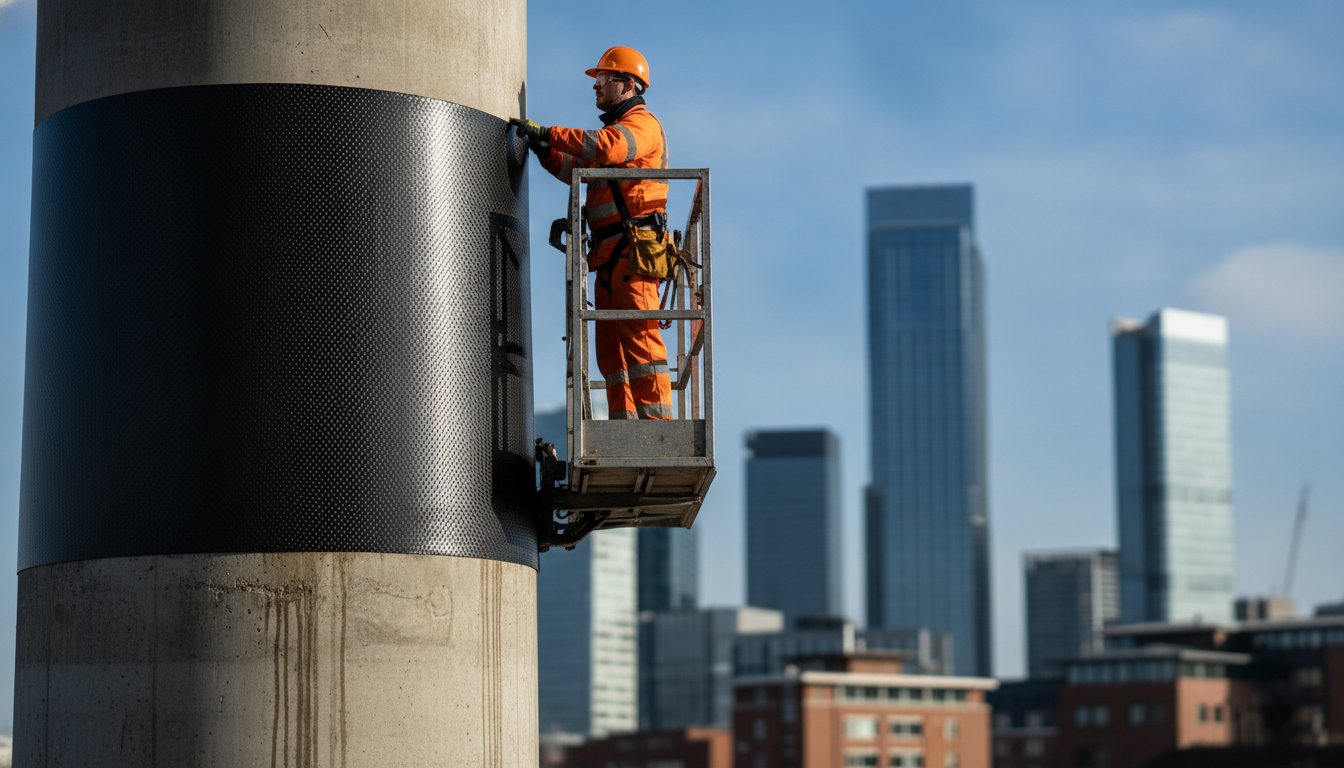
Could a material with a 10:1 strength-to-weight ratio over steel be the key to breaking the costly cycle of repetitive infrastructure maintenance? Asset managers frequently grapple with the limitations of section enlargement, where the additional mass of new concrete often necessitates expensive foundation upgrades. When evaluating CFRP strengthening vs traditional concrete repair, it’s clear that the choice isn’t merely about fixing a crack. It’s about fundamentally re-engineering the asset’s performance.
You likely recognise that high operational downtime and the recurring corrosion cycle of traditional repairs are no longer sustainable, particularly whilst the UK construction sector faces ongoing economic pressures. This article provides a comprehensive engineering analysis of how advanced composites, such as Tyfo® Fibrwrap® systems, offer a rapid return to service whilst extending operational lifespans by up to 50 years. We’ll examine how these materials achieve full design strength within seven days and add less than 1% to the structure’s dead load. The following comparison illustrates why sophisticated structural life-extension is now the preferred strategy for maintaining critical infrastructure assets under BS EN 1504 standards.
Key Takeaways
- Analyse the “dead load” dilemma to understand why traditional section enlargement may inadvertently reduce a structure’s net load-bearing capacity.
- Compare the technical performance of CFRP strengthening vs traditional concrete repair with a focus on strength-to-weight ratios and rapid installation cycles.
- Determine the essential engineering prerequisites for composite application, including substrate integrity and the role of initial concrete remediation.
- Assess how advanced carbon fibre systems mitigate spatial constraints in restricted environments such as tunnels or basements where traditional jacketing is unfeasible.
- Explore the bespoke design methodology of the Tyfo® Fibrwrap® system for optimising the functional lifespan of critical infrastructure assets.
Structural Rehabilitation in the UK: The Limitations of Traditional Concrete Repair
Traditional structural remediation in the UK has long relied on a established suite of methods, primarily involving the removal of compromised material followed by the application of cementitious or epoxy mortars. In more severe cases of structural deficiency, engineers often specify jacketing or section enlargement. Whilst these techniques are grounded in familiar civil engineering principles, they frequently introduce secondary challenges that can complicate the long-term management of an asset. When assessing CFRP strengthening vs traditional concrete repair, it’s vital to recognise that traditional methods are often restorative rather than transformative. They aim to return a structure to its original design state, but they rarely account for the increased load demands of modern infrastructure.
The “Dead Load” dilemma represents one of the most significant technical hurdles in traditional remediation. Adding substantial volumes of new concrete to a structural member naturally increases its mass. For ageing bridges or floor slabs already operating near their design limits, this additional weight can be counterproductive. In some instances, the increase in dead load required to achieve a specific strength gain inadvertently reduces the net live load capacity of the structure. This paradox often necessitates further, costly interventions such as foundation strengthening, which may have been avoided with a more weight-efficient material choice.
Beyond weight, the “corrosion cycle” remains a persistent issue with standard patch repairs. If the underlying cause of reinforcement oxidation, such as chloride ingress or carbonation, isn’t fully mitigated, the repair often fails prematurely. This leads to the “incipient anode effect”, where corrosion is accelerated in the areas immediately adjacent to the new repair patch. The integration of Carbon-fiber reinforced polymer (CFRP) into structural designs offers a way to bypass these electrochemical complications, but understanding the legacy constraints remains the first step in effective asset management.
The Engineering Impact of Section Enlargement
Section enlargement is defined as the process of increasing the physical dimensions of a structural element to enhance its load-bearing capacity or stiffness. Whilst effective for increasing moment resistance, it often compromises essential clearances in tunnels or car parks. Achieving a truly monolithic bond between the existing substrate and the new concrete overlay is technically demanding, often requiring intensive surface preparation and complex shear dowel installation to ensure load transfer is maintained across the interface.
Curing Times and Project Sequestration
Operational downtime is a critical metric for asset controllers, particularly within the UK’s transport and energy sectors. Traditional concrete typically requires a 28-day curing period to reach its full design strength, during which time the structure may require extensive propping and shoring. These hidden costs of sequestration often exceed the direct material costs of the repair. Rapid return to service is rarely achievable with cementitious methods, making them less viable for high-traffic infrastructure where every hour of closure carries a heavy economic penalty.
Carbon Fibre Reinforced Polymer (CFRP): The Mechanics of Composite Strengthening
At its core, Carbon Fibre Reinforced Polymer is a sophisticated composite material where high-strength carbon filaments are embedded in a polymer matrix, typically an epoxy resin. This synergy between the load-bearing fibres and the protective matrix allows for the creation of a material that is both exceptionally strong and remarkably lightweight. Whilst traditional steel reinforcement relies on its isotropic nature to provide uniform strength in all directions, CFRP is inherently anisotropic. This means the mechanical properties are highly directional, requiring the orientation of fibres to be meticulously aligned with the primary stress paths identified during the structural analysis phase.
When evaluating CFRP strengthening vs traditional concrete repair, the disparity in tensile performance is significant. Carbon fibre composites can offer a tensile strength that is several times greater than that of conventional structural steel, often exceeding 3,000 MPa depending on the grade of the filament used. This high performance-to-mass ratio is a primary driver for its adoption in critical infrastructure. Technical validation for these properties is extensively documented in literature, including the DTIC report on CFRP for concrete rehabilitation, which underscores the material’s efficacy in restoring and enhancing the integrity of ageing reinforced concrete members.
The application of the Tyfo® Fibrwrap® system represents the pinnacle of this technology, providing a seamless, high-performance structural wrap that conforms to the geometry of the existing asset. Unlike rigid steel plates or bulky concrete jackets, this system maintains the original architectural profile whilst providing substantial increases in flexural, shear, and axial capacity. For those managing complex infrastructure portfolios, reaching out for a technical consultation ensures that the specified composite system aligns with specific load requirements and safety standards.
The Role of Epoxy Resins in Load Transfer
The bond between the CFRP and the concrete substrate is entirely dependent on the performance of the epoxy resin. These specialised resins facilitate the transfer of stresses from the concrete into the high-modulus carbon fibres, ensuring composite action is achieved. Substrate preparation is prioritised to remove laitance and contaminants, as the bond strength must exceed the tensile capacity of the concrete itself. CCUK provides bespoke design and engineering consultancy to specify resin formulations that account for ambient environmental conditions and specific chemical exposure risks.
Ductility and Dynamic Load Performance
CFRP systems excel in environments subject to dynamic or extreme loading, such as seismic events or blast mitigation. In circular columns, the application of carbon fibre wrapping provides a “confinement” effect, which significantly enhances the compressive strength and ductility of the concrete core by preventing lateral expansion under axial load. The modulus of elasticity in CFRP composites is a fundamental parameter that defines the material’s stiffness and its ability to distribute stress within the reinforced structural system. This allows for a more resilient response to energy dissipation compared to the rigid and often brittle failure modes associated with traditional jacketing methods.

CFRP Strengthening vs Traditional Concrete Repair: A Comparative Analysis
The technical divergence between CFRP strengthening vs traditional concrete repair is most apparent when examining the physical impact on the existing structure. Whilst traditional section enlargement relies on the addition of mass to achieve structural stability, CFRP utilises a 10:1 strength-to-weight ratio compared to steel. This allows for significant capacity increases without the associated dead load penalties that often compromise ageing bridges or floor slabs. In restricted access environments, such as service tunnels or deep basements, the footprint of the repair becomes a decisive factor. Traditional methods require substantial spatial allowances for formwork and propping, whereas composite systems are hand-applied and maintain the original structural dimensions within a few millimetres.
Installation logistics further differentiate these methodologies. Traditional remediation often necessitates heavy machinery and extensive site sequestration to manage the volume of materials and the required curing periods. In contrast, the installation of carbon fibre systems is typically 60-70% faster than traditional structural repair methods. This rapid deployment is facilitated by the material’s lightweight nature and the absence of heavy-duty plant requirements, allowing for a more streamlined workflow on-site. Furthermore, the non-metallic nature of the reinforcement provides inherent corrosion resistance, effectively halting the degradation cycle that frequently plagues reinforced concrete in harsh UK environments.
Total Project Lifecycle Costing
Asset managers often evaluate the initial material price of CFRP against the lower cost of cementitious mortars; however, a comprehensive lifecycle analysis reveals a different economic reality. The lifecycle cost of CFRP is 40-60% lower than traditional methods over a 50-year period. This efficiency is driven by reduced labour requirements, minimal maintenance, and the avoidance of extended operational downtime. For a deeper understanding of these economic drivers, refer to Structural Repairs: A Technical Guide to Asset Remediation. Prolonging the functional life of an existing asset through sophisticated engineering is consistently more sustainable than full-scale replacement or repetitive patch repairs.
Aesthetic and Clearance Considerations
Maintaining the original profile of a structure is often a regulatory or functional requirement. In underpasses and bridges, ensuring that minimum clearance heights are not compromised is essential for safety and compliance. Traditional jacketing can reduce these clearances by 100mm or more, potentially restricting vehicle access. CFRP strengthening is virtually invisible once finished with protective or fire-resistant coatings, preserving both the aesthetic integrity and the functional clearances of the asset. This “low-profile” advantage makes it the preferred choice for architecturally significant structures and historic infrastructure where visual impact must be minimised.
Engineering Criteria: When to Specify CFRP Over Traditional Methods
Selecting between CFRP strengthening vs traditional concrete repair isn’t a binary decision. It’s a sequenced engineering process. A common misconception amongst asset managers is that composite wraps can be applied to deteriorating concrete to halt structural decay. In reality, CFRP requires a sound substrate to facilitate effective load transfer. The parent concrete must possess sufficient internal cohesive strength, typically verified through pull-off testing, to ensure the epoxy bond doesn’t fail within the concrete surface layer itself. This bond is the critical link that allows the high-tensile carbon fibres to take up the structural load.
Before any composite application, the underlying structural defects must be addressed. This makes concrete repairs a mandatory prerequisite. If the reinforcement is actively corroding or the concrete is spalling, these areas must be reinstated to a sound profile using compatible cementitious or epoxy systems. CFRP is then utilised to provide the additional load capacity that standard mortars cannot offer. However, if the required strength gain is exceptionally high or the member’s geometry is fundamentally compromised, traditional section enlargement may become unavoidable to provide the necessary cross-sectional area and stiffness.
Environmental conditions during the installation phase are equally critical. Composite resins are sensitive to temperature and moisture during the curing process. The substrate temperature must typically remain at least 3°C above the dew point to prevent condensation at the bond line, which would otherwise compromise the integrity of the system. For projects with strict environmental or access constraints, consulting with our engineering team allows for the development of site-specific application protocols that mitigate these risks and ensure a compliant installation.
Structural Integrity and Carbonation Testing
A robust structural survey forms the foundation of any life-extension project. Carbonation depth and chloride contamination levels must be quantified through laboratory analysis of dust samples or core samples. If these issues are ignored, reinforcement oxidation can continue beneath the composite wrap, leading to delamination over time. CCUK integrates comprehensive testing into the design-and-build process, ensuring that the structural wrap is applied to a chemically stable environment. This methodical approach ensures the long-term security of the intervention and the safety of the asset.
Regulatory Compliance and Design Standards
All composite strengthening works in the UK must adhere to rigorous design standards, such as the Concrete Society’s Technical Report 55 (TR55). These guidelines provide the framework for calculating limit states and ensuring safety factors are maintained. Engaging a specialist engineering contractor is essential for navigating these complexities and ensuring compliance with the latest industry codes, including PAS 2000:2026. For indoor applications, specific fire protection measures, including the application of intumescent coatings, are integrated into the design to meet building regulations and safety requirements.
Implementing Advanced Composites with the Tyfo® Fibrwrap® System
The implementation of advanced composites requires a shift from the standardised approach of traditional remediation to a bespoke, engineering-led methodology. In the UK, the Tyfo® Fibrwrap® system is delivered exclusively through CCUK, ensuring that every application is underpinned by the original manufacturer’s technical rigour and project-specific design. When asset controllers weigh CFRP strengthening vs traditional concrete repair, the decision often hinges on the reliability of the installation process. Unlike cementitious mortars that allow for broader tolerances, composite performance is contingent upon precise resin mixing ratios and strict temperature control. It’s this level of precision that ensures the material’s high-tensile filaments behave as intended within the structural system.
Quality assurance protocols are integrated into every stage of the CCUK delivery model. This includes real-time monitoring of ambient conditions to ensure the epoxy matrix cures within specified parameters, achieving the high-modulus properties required for load transfer. The end-to-end approach moves seamlessly from initial structural inspection to the application of final protective coatings, which may include UV-resistant or fire-retardant layers depending on the asset’s environment. This holistic management ensures that the structural upgrade isn’t just a temporary fix; it’s a permanent life-extension solution that doesn’t compromise the original design intent.
Case Studies in Infrastructure Life-Extension
UK infrastructure, from ageing motorway bridges to critical utility pipelines, has seen significant benefit from composite interventions. Detailed Tyfo Fibrwrap installation projects have consistently demonstrated that structural capacity can be restored without the disruption of full replacement. This strategy aligns with modern sustainability goals; by prolonging the functional life of existing concrete, the carbon footprint associated with demolition and new construction is substantially mitigated. These projects serve as empirical evidence that the debate of CFRP strengthening vs traditional concrete repair is increasingly being won by the efficiency and longevity of composite science.
Consultation and Technical Support
Engaging with CCUK at the early stages of project design allows for a more integrated feasibility study. Professional structural surveys and testing during the pre-construction phase are vital to identify the chemical and mechanical state of the substrate. This data allows our engineers to tailor the composite design to the specific stress demands of the structure, ensuring that the chosen solution is both technically sound and economically viable. Secure the future of your essential assets by choosing a partner that prioritises empirical evidence and engineering excellence to deliver long-term structural security.
Optimising Structural Resilience and Asset Longevity
The technical distinction between CFRP strengthening vs traditional concrete repair lies in the transition from restorative maintenance to active structural enhancement. By leveraging the high tensile strength of composite materials, asset managers can bypass the dead load penalties and prolonged curing cycles inherent in traditional section enlargement. These advanced systems don’t just fix existing defects; they fundamentally upgrade the performance profile of the structure whilst ensuring a rapid return to service and minimal spatial impact.
As the exclusive UK licensee for Tyfo® Fibrwrap® systems, CCUK provides over 10 years of specialist engineering expertise. Our operations are ISO 9001 and 14001 certified, ensuring that every structural intervention meets the highest standards for quality and environmental management. To determine the most effective life-extension strategy for your infrastructure, contact our engineering team for a structural strengthening feasibility study.
Sophisticated engineering remains the most reliable safeguard for the UK’s essential infrastructure, providing the scientific rigour necessary to secure critical assets for decades to come.
Frequently Asked Questions
Is CFRP strengthening more expensive than traditional concrete repair?
Whilst the initial material expenditure for carbon fibre is typically higher than cementitious mortars, the total project lifecycle cost is significantly lower. When evaluating CFRP strengthening vs traditional concrete repair, asset managers must account for the 60-70% reduction in installation time and the avoidance of heavy plant requirements. Over a 50-year period, these efficiencies contribute to a lifecycle cost that is 40-60% lower than traditional remediation methods.
How long does a CFRP structural strengthening system last?
A correctly specified and installed CFRP system can extend the operational lifespan of critical infrastructure by 30 to 50 years. Unlike steel reinforcement, carbon fibre is inherently resistant to electrochemical corrosion and chemical attack. This durability ensures that the structural upgrade remains effective in harsh environments without the need for the repetitive maintenance cycles associated with traditional reinforced concrete remediation.
Can carbon fibre be used to fix concrete that is already spalling?
Carbon fibre cannot be applied directly to spalling concrete; the substrate must be reinstated to a sound condition first. The strengthening system relies on a high-integrity bond to transfer loads effectively from the concrete core into the composite. Therefore, effective CFRP strengthening vs traditional concrete repair strategies often involve using both: cementitious repairs to restore the section, followed by composite wraps to provide the necessary load-bearing enhancement.
What are the main advantages of CFRP over steel plate bonding?
The primary advantages over steel plate bonding include a superior strength-to-weight ratio and total immunity to corrosion. CFRP is approximately one-fifth the weight of steel whilst providing significantly higher tensile strength. Its flexibility allows it to be wrapped around circular columns or irregular geometries, which would be technically challenging or impossible to achieve with rigid and heavy steel plates.
Does CFRP require specialist contractors for installation in the UK?
Installation in the UK must be carried out by trained specialist contractors to ensure compliance with engineering standards such as Concrete Society TR55. The performance of the system is entirely dependent on meticulous resin mixing and substrate preparation. CCUK operates as the exclusive UK licensee for Tyfo® Fibrwrap® systems, providing the technical authority required for high-consequence infrastructure projects.
Can CFRP be applied to damp or underwater concrete structures?
Specialised moisture-tolerant resins allow for the application of composite systems to damp or even submerged concrete structures. Whilst standard epoxies require dry conditions, these bespoke formulations are engineered to displace water and form a high-strength bond underwater. This capability is particularly vital for the rehabilitation of bridge piers, quay walls, and pipeline infrastructure where complete dewatering is unfeasible.
How does CFRP affect the fire rating of a concrete building?
CFRP systems require specific fire protection measures because the polymer matrix begins to lose structural stiffness at relatively low temperatures. To maintain the building’s fire rating, intumescent coatings or cementitious fire-barriers are applied over the composite wrap. These protective layers ensure that the strengthening system remains functional for the duration required by UK building regulations and safety standards.
What is the maximum strength increase achievable with the Tyfo® Fibrwrap® system?
The Tyfo® Fibrwrap® system can achieve substantial increases in flexural, shear, and axial capacity, though the exact limit is determined by the substrate’s internal strength. Bespoke engineering designs often allow for load capacity increases that exceed the original design specifications by significant margins. The maximum achievable enhancement is always balanced against the minimum pull-off strength requirements of the parent concrete to ensure a safe failure mode.


