

The distinction between a general building contractor and a specialist engineering firm is not merely a matter of scale; it’s a fundamental divergence in technical accountability that determines the long-term viability of critical infrastructure. For asset managers responsible for high-risk buildings under the Building Safety Act 2022, the challenge of how to vet a specialist structural contractor involves more than a cursory review of past projects. It requires a methodical interrogation of technical competence and material-specific expertise to mitigate the risk of structural failure resulting from substandard installation.
We understand that navigating complex procurement processes for non-standard repairs often feels like a choice between high-cost uncertainty and compromised safety. This guide establishes a clear framework for technical due diligence, allowing you to master the accreditation standards and licensing requirements essential for complex strengthening and life-extension works. By examining core standards such as BS EN 1090 and the specific application of Eurocodes, we provide the tools to confirm contractor suitability whilst ensuring the long-term integrity of your essential assets through disciplined engineering rigour.
Key Takeaways
- Learn why general construction experience is insufficient for high-stakes structural strengthening and how to identify the specific engineering competencies required for asset life-extension.
- Understand the critical role of professional memberships and proprietary system licensing, such as Tyfo® Fibrwrap®, in ensuring the technical integrity of specialised repairs.
- Discover how to vet a specialist structural contractor by evaluating their end-to-end design-supply-install capabilities to establish a single point of technical accountability.
- Master the transition from anecdotal testimonials to evidence-based vetting through the analysis of technical case studies and verifiable safety performance data.
- Implement a structured two-phase checklist for final contractor selection, spanning initial technical screening to comprehensive site-specific feasibility assessments.
Defining the Specialist Engineering Contractor vs. Generalist
The distinction between a general building contractor and a specialist engineering firm is rooted in the divergent goals of aesthetics and structural physics. Whilst a generalist manages the visible fabric of a building, a specialist contractor operates within the discipline of structural engineering, applying advanced material science to ensure the load-bearing integrity of an asset. Understanding this fundamental difference is the first step in learning how to vet a specialist structural contractor, as general construction experience rarely encompasses the technical nuance required for complex strengthening or concrete repair.
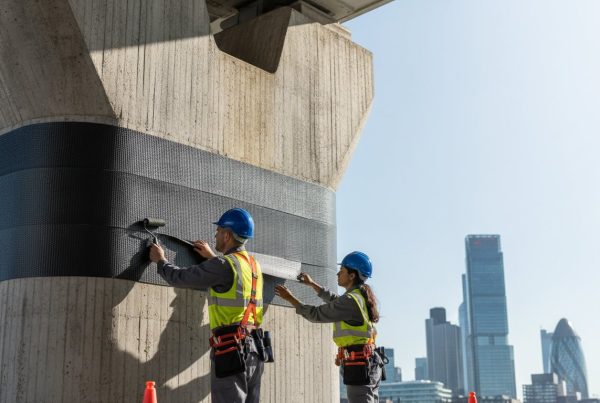
Specialists act as guardians of infrastructure. Their focus remains fixed on extending the functional lifespan of existing assets through sophisticated interventions like Carbon Fibre Reinforced Polymer (CFRP) strengthening or Tyfo® Fibrwrap® Systems. Where a general builder might seek to replace a degraded component, the specialist employs science to rehabilitate it. This aligns technical performance with broader economic and sustainability objectives. It’s a move from simple maintenance to a disciplined regime of asset life-extension.
The ‘Surgeon’ Analogy in Structural Remediation
A helpful way to frame this distinction is to view a building surveyor as a General Practitioner and the specialist contractor as a consultant surgeon. A surveyor may identify a symptom, such as surface spalling, yet the underlying cause requires a forensic diagnosis. Is the degradation the result of carbonation, or is it a more aggressive chloride attack? Specialist contractors bridge the gap between theoretical engineering and site reality by conducting structural surveys and testing. They don’t just patch the surface; they treat the pathology of the structure. This forensic approach ensures that the intervention addresses the root cause rather than merely masking a defect.
Recognising High-Stakes Structural Scenarios
Not every maintenance task requires a specialised engineering approach. However, when a project involves primary load-bearing elements like foundations, beams, or columns, the stakes change significantly. Critical infrastructure, including industrial pipelines and bridges, demands a level of technical due diligence that exceeds standard procurement protocols. These scenarios require contractors who provide bespoke design solutions and carry a higher tier of professional indemnity insurance. When determining how to vet a specialist structural contractor for these environments, asset managers must verify that the contractor possesses the specific material licensing and engineering rigour necessary to manage seismic retrofitting or blast mitigation. It’s a shift from general building oversight to precise, life-extending engineering.
Verifying Technical Accreditation and Material Expertise
Technical due diligence requires an objective assessment of a contractor’s professional standing and material-specific qualifications. Membership in bodies such as the Concrete Repair Association (CRA) serves as an initial filter, yet true vetting delves into the contractor’s internal engineering capacity. When considering how to vet a specialist structural contractor, asset managers must verify that the firm can deliver more than just labour; they must possess the expertise to provide bespoke design solutions that align with the specific material properties required for asset life-extension. This level of technical scrutiny is essential to prevent the appointment of generalists who lack the scientific background necessary for infrastructure rehabilitation.
CFRP and Composite Material Specialisation
The application of Carbon Fibre Reinforced Polymer (CFRP) is a highly specialised process where performance is dictated by the precision of the installation and the quality of the resin-to-substrate bond. Unlike traditional masonry, advanced composite systems require a deep understanding of load-transfer mechanisms and tensile strength properties. A specialist engineering contractor must be capable of selecting the exact fibre orientation and resin chemistry suited to the environment, whether that involves seismic retrofitting or pipeline rehabilitation. Asset managers should scrutinise the contractor’s project history specifically for these advanced materials to ensure long-term structural security, as experience with generic construction materials doesn’t translate to the rigorous standards required for composite strengthening.
Licensing and Proprietary Systems
A critical marker of technical authority is the contractor’s access to proprietary systems like Tyfo® Fibrwrap® Systems. These aren’t generic materials available for retail; they’re engineered solutions that require exclusive manufacturer licensing and rigorous training. Exclusive licensing ensures that the contractor has direct access to manufacturer-backed technical support and validated performance data. It’s advisable to Hire Smart Step-by-Step by requesting proof of system-specific training and current licensing agreements. When determining how to vet a specialist structural contractor, this level of verification distinguishes a dedicated specialist from a generalist using uncertified, off-the-shelf components.
Finally, the technical sobriety of a contractor’s documentation provides insight into their professional discipline. High-quality submissions should include detailed material safety data sheets, precise engineering drawings, and a logical problem-to-solution narrative. Vetting is about evidence. If you require assistance in reviewing these technical criteria for an upcoming project, feel free to enquire about technical specifications to ensure your asset remains secure and its functional lifespan is appropriately extended.

Evaluating the End-to-End Design-Supply-Install Model
Traditional procurement strategies often segregate the engineering consultancy from the physical execution of the works. Whilst this separation is standard in general construction, it frequently introduces a dangerous liability gap in specialized structural remediation. When determining how to vet a specialist structural contractor, asset managers must evaluate whether the firm operates under a design-supply-install model. This integrated approach ensures a single point of technical accountability, where the responsibility for both the structural calculations and the site-based application rests with a single entity. Liability is consolidated, providing a more robust security framework for the asset owner.
Integrated bespoke design solutions significantly reduce the risk of project delays and cost overruns. By conducting in-house feasibility studies and technical inspections, a specialist contractor can identify substrate anomalies or access constraints long before the commencement of works. This foresight allows for the adjustment of material quantities or resin formulations during the design phase, rather than necessitating reactive and expensive variations on-site. It’s a methodical approach that prioritises engineering rigour over procurement convenience.
The Dangers of Fragmented Procurement
Fragmented procurement, where a designer specifies a system to be installed by a third party, often leads to technical friction. Disputes between independent engineers and generalist installers are common when site conditions deviate from theoretical models. Furthermore, material compatibility becomes a significant concern; the performance of Carbon Fibre Reinforced Polymer (CFRP) relies entirely on the synergy between the fibre and the specific resin matrix. A unified design and supply chain guarantees that every component of a proprietary system, such as Tyfo® Fibrwrap®, is utilised according to its tested performance parameters. This eliminates the risk of using non-compatible materials that could compromise the long-term integrity of the structure.
Vetting the Design Capability
True specialist contractors maintain an internal engineering department capable of producing bespoke calculations rather than relying on generic manufacturer tables. Asset managers should inquire about the contractor’s experience with complex load-transfer scenarios, such as blast mitigation or seismic retrofitting, which require advanced dynamic analysis. The design-supply-install model represents the gold standard for CFRP projects because it eliminates the technical friction between theoretical engineering and site-specific material performance. By centralising these functions, the contractor provides a unified warranty that covers both the design’s accuracy and the installation’s quality. This consolidated liability structure is not a risk; it’s a strategic safeguard for the asset’s functional lifespan.
When you seek to understand how to vet a specialist structural contractor, look for evidence of their ability to translate complex structural surveys into actionable engineering designs. A contractor who cannot demonstrate this end-to-end capability may lack the technical depth required for high-stakes infrastructure projects.
Evidence-Based Vetting: Case Studies and Safety Records
Vetting a contractor based on superficial testimonials often overlooks the empirical data required to validate structural performance. When considering how to vet a specialist structural contractor, asset managers must demand technical case studies that provide a detailed problem-to-solution trajectory. These narratives should move beyond aesthetic outcomes to focus on the performance of specialised materials under load and the longevity of interventions across diverse infrastructure, from highway bridges to high-pressure industrial pipelines. A portfolio that includes structural surveys and testing results provides the necessary validation of a contractor’s technical claims.
A critical but often neglected criterion is the contractor’s commitment to the sustainability of repair over replacement. Extending the functional lifespan of an existing asset through Carbon Fibre Reinforced Polymer (CFRP) or Concrete Repair is inherently more sustainable and cost-effective than demolition. Evidence of this philosophy should be present in their project history, demonstrating a proven track record of prolonging structural utility through sophisticated engineering science. This focus aligns technical capabilities with the broader environmental goals of modern asset management.
Analysing Technical Success Stories
Technical success stories must be evaluated through a long-term perspective, ideally spanning a decade or more, to confirm the durability of the repair systems utilised. It is also essential to assess how a contractor manages latent defects discovered during the execution phase. A seasoned specialist will have established protocols for adjusting bespoke design solutions mid-project. This ensures that unexpected structural anomalies, such as hidden reinforcement corrosion or substrate degradation, are addressed without compromising the final integrity of the asset or the project timeline.
Safety, Compliance, and Rigour
In high-risk environments involving confined spaces, hazardous industrial pipelines, or working at height, safety records are non-negotiable. Vetting should include a review of ISO certifications and industry-specific safety awards, which act as benchmarks for professional discipline. The design of temporary works is another vital indicator of competence. A contractor’s ability to safely prop and support a structure during seismic retrofitting or masonry reinforcement is a hallmark of engineering rigour. This methodical approach is usually mirrored in their communication rhythm, which should be steady, logical, and transparent throughout the project lifecycle.
To evaluate the technical rigour of our past interventions and safety performance, you may request a portfolio of technical case studies tailored to your specific asset class.
Final Selection: The Checklist for Appointing Your Contractor
The final appointment of a specialised firm represents the transition from theoretical due diligence to operational execution. To ensure the long-term security of infrastructure, asset managers should follow a structured five-phase protocol. This methodical approach to how to vet a specialist structural contractor ensures that every technical and commercial risk is mitigated before the first material is applied to the substrate.
- Phase 1: Initial Technical Screening. Verify essential accreditations, such as membership in the Concrete Repair Association, and confirm the contractor holds the necessary proprietary system licences.
- Phase 2: Site Inspection and Feasibility. Facilitate a forensic site assessment where the contractor identifies substrate anomalies and environmental constraints that could affect material performance.
- Phase 3: Design and Specification Review. Scrutinise the bespoke design proposals, ensuring that the structural calculations and fibre orientations are tailored to the specific load-transfer requirements of the asset.
- Phase 4: Commercial and Indemnity Verification. Conduct a commercial evaluation whilst confirming that professional indemnity insurance limits are commensurate with the structural risks involved.
- Phase 5: Award and Mobilisation. Finalise the contract and mobilise the technical team, ensuring a clear schedule for quality control and stage-gate inspections.
The Interview: Questions for the Technical Lead
A face-to-face technical interview is essential for assessing the professional sobriety of the contractor’s leadership. You should ask the technical lead how their proposed system specifically extends the functional lifespan of the asset compared to traditional methods. It is also vital to clarify who carries the design liability for the composite reinforcement; in an integrated model, this should rest entirely with the contractor. Finally, request pull-off test data from similar recent installations. This empirical evidence confirms the contractor’s ability to achieve the necessary bond strengths between the specialised resins and the existing structure.
Making the Final Decision
When making the final selection, technical competence must be weighted more heavily than the lowest initial bid. Substandard installation of Carbon Fibre Reinforced Polymer (CFRP) or poor concrete repair can lead to premature failure, resulting in significantly higher costs over the asset’s lifecycle. There is immense value in contacting a specialist early in the asset’s lifecycle to ensure the scope of works is technically sound. The final contract should explicitly include phases for structural surveys and testing to validate the performance of the intervention. By prioritising engineering rigour, you secure the integrity of the infrastructure and ensure its continued utility for decades to come.
Securing the Long-Term Integrity of Your Infrastructure
Mastering how to vet a specialist structural contractor is a prerequisite for the successful execution of life-extension projects on high-stakes infrastructure. By shifting the focus from initial cost to technical accountability, asset managers ensure that every intervention, whether involving concrete repair or masonry reinforcement, is executed with the forensic precision required to mitigate structural risk. This methodical approach to selection safeguards the asset’s utility and supports the transition towards more sustainable, repair-led maintenance strategies that prioritise the longevity of the existing built environment.
As the exclusive UK licensee for Tyfo® Fibrwrap® systems, CCUK delivers a unified design-supply-install model that ensures technical synergy across CFRP strengthening, blast mitigation, and seismic retrofitting projects. Our engineering team is ready to assist you in navigating the complexities of structural remediation through rigorous testing and bespoke design protocols. We encourage you to discuss your structural requirements with the CCUK engineering team and secure the long-term integrity of your essential assets with absolute confidence.
Frequently Asked Questions
What is the difference between a general contractor and a specialist structural contractor?
The primary distinction lies in the technical scope of work and the level of engineering accountability. General contractors manage the aesthetic and non-structural components of a building, whilst specialist structural contractors focus on the load-bearing integrity and life-extension of an asset. This involves applying specialised engineering principles and advanced materials, such as Carbon Fibre Reinforced Polymer (CFRP), to rehabilitate degraded structures rather than merely performing cosmetic repairs.
Why should I look for a contractor that offers both design and installation?
Selecting a contractor that provides an integrated design-supply-install model eliminates the technical friction between theoretical engineering and site-based execution. This approach establishes a single point of technical accountability, ensuring that bespoke design solutions are perfectly aligned with the material properties and unique site conditions. It significantly reduces the risk of liability gaps and ensures a unified warranty for the completed works.
Is CFRP strengthening a permanent solution for structural defects?
Carbon Fibre Reinforced Polymer (CFRP) strengthening is a long-term life-extension solution that can match or exceed the remaining service life of the parent structure. When correctly designed and applied by a licensed specialist, these systems are highly resistant to corrosion and chemical attack. Its permanence is contingent upon rigorous substrate preparation and the precision of the resin-to-substrate bond during the installation phase.
How do I verify if a contractor is licensed to install proprietary systems like Tyfo® Fibrwrap®?
Asset managers should request formal documentation directly from the system manufacturer, such as an official letter of authorisation or a current training certificate. When determining how to vet a specialist structural contractor, verifying exclusive UK licensing for systems like Tyfo® Fibrwrap® ensures that the contractor has direct access to manufacturer-backed technical support and validated performance data. This prevents the use of uncertified, generic alternatives.
What professional indemnity insurance should a specialist structural contractor hold?
A specialist contractor must hold Professional Indemnity (PI) insurance that specifically covers design liability for structural interventions. This differs from standard Public Liability insurance, which only covers third-party injury or damage on site. The PI limit should be commensurate with the structural risk and the total value of the asset, providing essential security against potential errors in structural calculations or material specification.
Can a specialist contractor help with the feasibility stage of a project?
Specialist contractors are often engaged during the feasibility stage to conduct structural surveys and testing. Their involvement at this early juncture allows for the identification of substrate defects and environmental constraints before the final scope of works is defined. This forensic insight enables the development of accurate costings and identifies the most effective engineering solutions for extending the functional lifespan of the structure.
How does concrete repair differ from general building maintenance?
Concrete repair involves the structural restoration of reinforced concrete affected by carbonation or chloride-induced corrosion, whereas general building maintenance typically addresses surface-level degradation. Specialist repairs require the removal of contaminated concrete, treatment of the steel reinforcement, and the application of polymer-modified mortars. This process ensures the structural integrity and load-bearing capacity of the element are fully restored and protected.
What role does carbonation testing play in the vetting process?
Carbonation testing is a critical diagnostic tool that informs the repair strategy by identifying the depth of atmospheric degradation. A contractor’s ability to interpret pH testing results and determine the appropriate remediation indicates a disciplined, evidence-based approach to structural engineering. When learning how to vet a specialist structural contractor, you should assess whether they incorporate these diagnostic tests into their initial proposals to ensure the solution addresses the root cause of degradation.