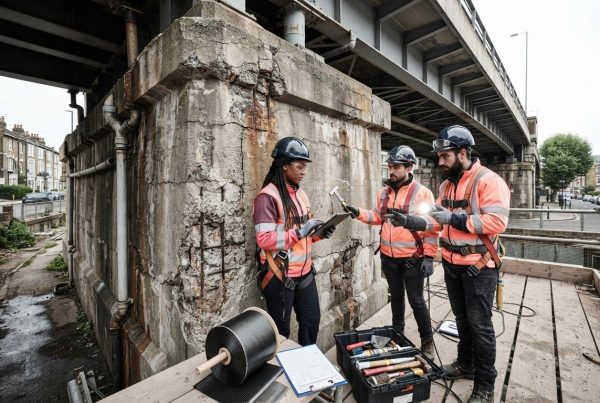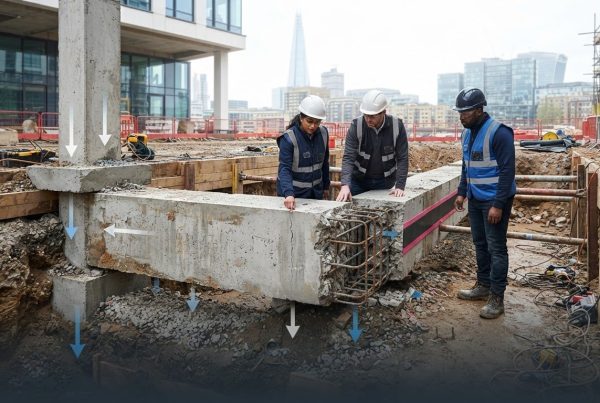

Did you know that Carbon Fibre Reinforced Polymer (CFRP) possesses a strength-to-weight ratio approximately ten times greater than structural steel? For asset managers overseeing the UK’s aging reinforced concrete infrastructure, the deterioration of traditional steel reinforcement and the onset of carbonation present significant safety and financial risks. You’re likely balancing the need for urgent CFRP bridge strengthening against the logistical nightmare of restrictive traffic management and the high costs of total replacement.
This technical guide provides an expert-led examination of these composite structural upgrades as a sophisticated, sustainable intervention designed to extend the functional lifespan of critical assets. We’ll explore how specialised systems, such as Tyfo® Fibrwrap®, deliver high tensile capacity with minimal addition of structural dead-weight. By detailing the design requirements of Technical Report 55 (TR55) and compliance with CD 371, this article previews the methodology for achieving a 30-year design life while meeting Highways England standards. You’ll gain a comprehensive understanding of how advanced materials science is currently being utilised to safeguard the structural integrity of the nation’s bridge network without the need for disruptive demolition.
Key Takeaways
- Identify the primary drivers for structural remediation in the UK, including increased vehicle load limits and the environmental degradation of aging reinforced concrete assets.
- Understand the technical mechanisms of CFRP bridge strengthening and how high-strength carbon fibres operate as externally bonded reinforcement to enhance flexural and shear capacity.
- Compare the lifecycle benefits of composite materials against traditional steel plate bonding, focusing on superior corrosion resistance and a significant reduction in structural dead-weight.
- Navigate current UK regulatory requirements, including compliance with CS 455 and the critical role of bespoke engineering in ensuring asset safety and long-term security.
- Explore the implementation of the industry-standard Tyfo® Fibrwrap® system and the operational efficiencies achieved through an integrated design-build methodology.
The Evolution of Bridge Strengthening: Addressing Infrastructure Deficit
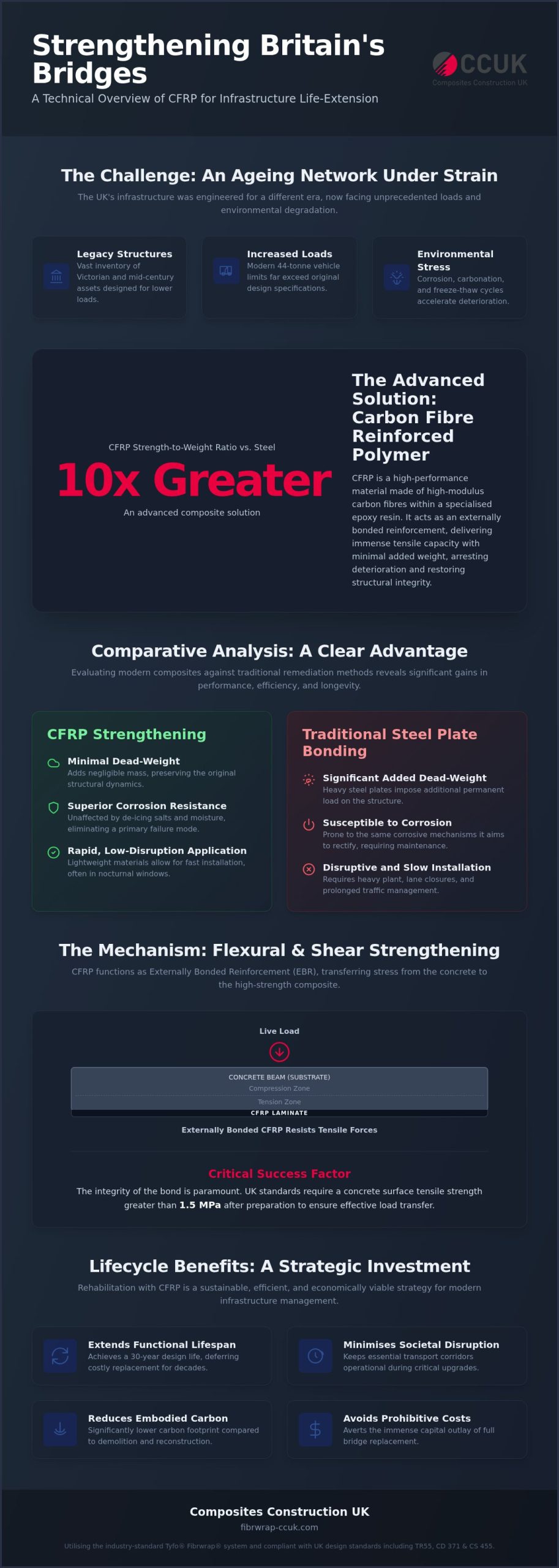
The United Kingdom’s strategic road and rail networks are underpinned by a vast inventory of Victorian masonry and mid-century reinforced concrete structures. These assets were originally engineered for significantly lower axle loads and traffic densities than those currently experienced across the national infrastructure. The transition to the modern 44-tonne vehicle limit, combined with the natural degradation of materials over decades, has created a substantial infrastructure deficit. Traditional remediation methods, such as reinforced concrete jacketing or the bonding of heavy steel plates, present inherent limitations. These legacy techniques add significant dead-weight to the primary structure and are often susceptible to the same corrosive mechanisms they aim to rectify. Consequently, there’s been a decisive shift towards advanced composites to provide high-performance reinforcement without the drawbacks of conventional materials.
Identifying Structural Vulnerabilities in Bridge Assets
Structural integrity is frequently compromised by the ingress of de-icing salts and subsequent reinforcement corrosion, which leads to delamination and concrete spalling. Shear deficiencies are particularly prevalent in older reinforced concrete beams designed under superseded engineering codes. Environmental stressors, including carbonation and freeze-thaw cycles, further accelerate the degradation of bridge decks and substructures. Effective intervention relies upon precise diagnosis. This is achieved through comprehensive structural surveys that quantify residual capacity and map specific defects. Such data-driven assessments facilitate the design of bespoke CFRP bridge strengthening solutions, utilising high-tensile Carbon Fibre Reinforced Polymer to arrest further deterioration and restore structural load paths.
The Strategic Importance of Life-Extension over Replacement
Rehabilitating an existing asset is increasingly viewed as the most viable strategy for infrastructure management. The economic burden of total bridge replacement is often prohibitive, involving not only the capital cost of construction but also the extensive costs associated with utility diversions and land acquisition. From a sustainability perspective, extending the functional lifespan of a bridge significantly reduces the embodied carbon footprint compared to demolition and reconstruction. Societal disruption is also a primary concern for local authorities. Traditional repair methods often require prolonged traffic management and lane closures. Modern CFRP bridge strengthening techniques offer a rapid-application alternative. Because the materials are lightweight and require minimal heavy plant, installations can often be completed during restricted nocturnal windows, ensuring that essential transport corridors remain operational whilst critical structural upgrades are performed.
Understanding the CFRP Mechanism: Flexural and Shear Strengthening
Carbon Fibre Reinforced Polymer (CFRP) is a high-performance composite material consisting of high-modulus carbon fibres encapsulated within a specialised epoxy resin matrix. In the context of CFRP bridge strengthening, these materials function as externally bonded reinforcement (EBR), effectively mimicking the role of internal steel bars but with significantly higher tensile capacity. The mechanism of load transfer is achieved through the bond interface, where stresses are transmitted from the concrete substrate into the composite laminate via the adhesive layer. This synergy allows the structure to carry increased live loads whilst maintaining structural equilibrium.
The efficacy of this mechanism is entirely dependent on the integrity of the bond. Surface preparation is the most critical phase of installation; the concrete must be mechanically abraded to reveal a sound, open-pored texture. Standard UK requirements dictate that the characteristic tensile strength of the surface must exceed 1.5 MPa to ensure the composite doesn’t delaminate under load. Engineers specify various application methods depending on the structural requirement:
- Strip Bonding: Prefabricated laminates are applied to flat surfaces for flexural enhancement.
- Wet Lay-up Wrapping: Flexible carbon sheets are saturated on-site and wrapped around members for shear or confinement.
- Near-Surface Mounted (NSM) Reinforcement: CFRP rods or strips are embedded into pre-cut grooves for superior anchorage and protection.
Flexural Enhancement for Bridge Decks and Beams
Flexural strengthening is typically required when bridge decks show signs of sagging or when vehicle weight increases necessitate a higher moment capacity. By bonding CFRP laminates to the tension-side soffits of reinforced concrete beams, the composite intercepts tensile stresses that the original steel reinforcement can no longer sustain alone. This intervention is particularly effective for multi-span bridges where continuous beam behaviour requires precise placement of reinforcement to manage both positive and negative moments. If your project requires detailed calculations for these load paths, our team provides bespoke design and engineering consultancy to ensure compliance with all structural safety margins.
Shear Strengthening and Column Confinement
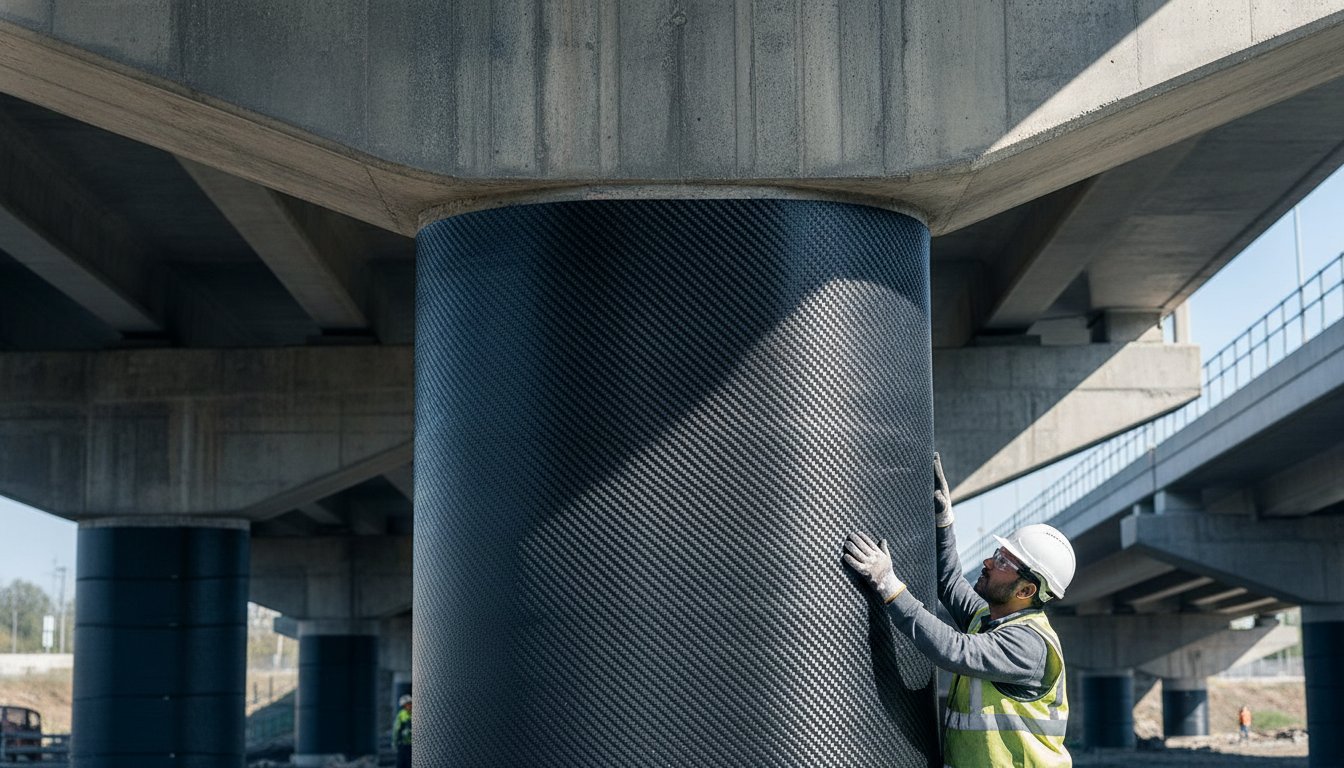
Shear failure is often brittle and catastrophic, making its prevention a priority for asset controllers. CFRP wraps are utilised to provide external stirrups, effectively “stitching” potential shear cracks in bridge piers and abutments. When applied as a full wrap around circular or rectangular columns, the composite provides passive confinement. This creates a triaxial stress state within the concrete core, significantly increasing its ultimate compressive strength and ductility. Whilst seismic retrofitting is less frequent in the UK than load-bearing upgrades, these confinement techniques are vital for protecting infrastructure against accidental impact or unexpected structural shifts.
Comparative Analysis: CFRP vs Traditional Steel Plate Bonding
For several decades, the bonding of steel plates was the conventional methodology for increasing the load-bearing capacity of reinforced concrete bridges. Whilst effective in increasing stiffness, the application of steel is inherently limited by its significant dead-weight and susceptibility to environmental degradation. In contrast, CFRP bridge strengthening utilises materials with a strength-to-weight ratio approximately ten times greater than structural steel. This allows for substantial structural enhancement without the requirement for additional foundation assessments or the risk of overloading existing substructures. The physical handling of these materials also differs significantly; steel plates require heavy lifting plant and mechanical fixings, whereas composite laminates are applied manually, reducing the logistical footprint on-site.
Long-term maintenance requirements provide perhaps the most compelling argument for the adoption of composites. Traditional steel systems are prone to interfacial corrosion, where moisture ingress at the adhesive bond line causes the steel to oxidise and eventually debond from the concrete. CFRP is electrochemically inert and impervious to the saline environments common on the UK’s salted road networks. This resistance to corrosion ensures that the structural upgrade remains effective over a 30-year design life, significantly reducing the total expenditure (TOTEX) associated with recurring protective coatings and inspections.
Installation Speed and Traffic Management
The operational advantages of composite systems are particularly evident when considering traffic management requirements. Traditional steel plate bonding often necessitates extensive propping and shoring to support the heavy plates during the adhesive curing phase, which can lead to prolonged lane closures. CFRP bridge strengthening projects typically progress 60% to 70% faster than steel-based alternatives. Because the materials are lightweight and the systems don’t require mechanical anchoring, the structural intervention can be phased to align with nocturnal maintenance windows. This rapid application capability is a critical factor for National Highways and local authorities aiming to minimise societal disruption and the economic impact of bridge closures.
Durability and Environmental Resilience
Composite systems exhibit exceptional resilience under the freeze-thaw cycles and chemical exposure typical of the UK climate. Unlike steel, which requires constant vigilance against rust, CFRP maintains its tensile properties whilst being subjected to de-icing salts and industrial pollutants. However, the performance of any composite system is predicated on the condition of the underlying substrate. It’s essential to integrate comprehensive concrete repairs and structural remediation prior to the application of the composite. This ensures that any existing carbonation or chloride contamination is managed, preventing the “incipient anode” effect and ensuring the bond interface remains secure throughout the asset’s extended functional lifespan.
Design Standards and UK Regulatory Compliance
Structural modifications to highway assets demand rigorous adherence to the Design Manual for Roads and Bridges (DMRB). The primary governing standard for CFRP bridge strengthening in the UK is CS 455, which superseded the long-standing BD 85/08. This document provides the essential framework for the design, installation, and maintenance of fibre reinforced polymer (FRP) systems. Compliance isn’t merely a regulatory hurdle; it’s a safety-critical requirement that ensures the composite intervention operates in harmony with the existing structure. Every project necessitates engineering and design solutions that are bespoke to the specific load deficiencies identified during the structural assessment.
Design calculations within this framework utilise partial safety factors to account for material variations, environmental degradation, and long-term creep. These factors are typically more conservative than those used for traditional steel or concrete because of the specialised nature of the composite-to-concrete bond. Structural engineers must also ensure that the proposed solution undergoes an Independent Technical Check (ITC). Depending on the structure’s complexity, this may range from a simple peer review to a full Category 3 check by an external body, providing an essential layer of technical assurance for asset controllers and local authorities.
Feasibility Studies and Material Testing
A compliant design cannot be produced in a vacuum. It requires empirical data from the specific asset. Pull-off testing is conducted to verify that the characteristic tensile strength of the concrete substrate meets the 1.5 MPa threshold required for a secure bond. Engineers also assess carbonation depths and chloride concentrations to ensure that the underlying reinforcement is stable. These findings dictate the optimal fibre orientation, whether unidirectional for flexural soffit strengthening or multidirectional for complex pier confinement, ensuring the composite is placed exactly where the tensile demand is highest.
Quality Assurance and On-Site Inspection
The performance of any proprietary composite system relies on precise site conditions. Monitoring ambient temperature and humidity is vital. Epoxy resins require specific windows to cure correctly; application is typically prohibited if the substrate temperature is within 3°C of the dew point. During installation, witness panels are created using the same materials and conditions as the primary repair. These panels undergo laboratory testing to confirm that the installed laminate meets the design’s physical properties. Engaging a specialist engineering contractor ensures that these QA protocols are documented, providing a transparent audit trail for the asset’s health record. If you’re managing a deteriorating bridge asset, contact our technical team today to discuss a CS 455-compliant remediation strategy.
Implementing the Tyfo® Fibrwrap® System for Bridge Infrastructure
The Tyfo® Fibrwrap® system represents the industry standard for high-performance composite structural upgrades. It isn’t merely a collection of materials; it’s a fully integrated solution where the chemical compatibility between proprietary epoxy resins and high-modulus carbon fibres is strictly controlled. This synergy is essential for maintaining the long-term load-transfer mechanisms required in CFRP bridge strengthening. Adopting a design-build approach allows for the seamless translation of structural requirements into site-specific applications. You can observe the rigour of this process in detailed accounts of Tyfo® Fibrwrap® installation across various UK infrastructure projects, where material performance is validated through empirical testing.
Material compatibility is non-negotiable when extending the lifespan of a bridge asset. Using mismatched resins and fibres can lead to premature delamination or reduced environmental resistance. The Tyfo® system ensures that the physical properties of the cured laminate align exactly with the assumptions made during the design phase. This reliability is why the system is favoured for national infrastructure projects where the cost of failure is absolute. By managing the entire supply chain from system design to installation, the risk of technical non-compliance is virtually eliminated.
Bespoke Engineering for Complex Bridge Geometries
Bridge geometries aren’t always uniform. Arched masonry bridges, culverts, and multi-girder decks require tailored layouts that off-the-shelf products cannot provide. By utilising advanced materials, engineers develop solutions that wrap around intricate profiles whilst integrating additional protection. This includes the integration of blast mitigation systems or seismic retrofitting where the risk profile of the asset demands more than just load-bearing enhancement. These specialised interventions solve unique structural constraints without altering the aesthetic or historical profile of the bridge, providing a tailored fit that traditional steel reinforcement could never achieve.
The Role of CCUK as a Specialist Engineering Partner
As the exclusive UK licensee for the Tyfo® Fibrwrap® system, CCUK operates as a specialised engineering partner rather than a general contractor. Our involvement begins with the initial structural survey and feasibility study, progressing through to bespoke design and engineering consultancy. We collaborate closely with principal contractors and local authorities to ensure every CFRP bridge strengthening project meets the highest safety standards. This end-to-end service model ensures that the transition from design to final handover is methodical and fully documented. Our primary objective remains the sustainable life-extension of the UK’s critical infrastructure, ensuring that essential assets remain functional for future generations through disciplined engineering excellence.
Securing the Future of UK Bridge Infrastructure
The transition from traditional steel-based repairs to advanced composite interventions represents a critical shift in how we manage the nation’s infrastructure. By prioritising CFRP bridge strengthening, asset managers can effectively address load-bearing deficits whilst bypassing the logistical and environmental costs of total replacement. These systems offer superior corrosion resistance and minimal dead-weight, ensuring that structures remain compliant with current UK regulatory standards such as CS 455. The integration of proprietary materials like Tyfo® Fibrwrap® provides a level of reliability that generic alternatives simply can’t match.
As the exclusive UK licensee for the Tyfo® Fibrwrap® system, our team combines specialised material knowledge with in-house design and engineering consultancy. We’re dedicated to bridge life-extension through scientifically proven methodologies that prioritise asset safety and structural integrity. Contact our specialist engineering team for a bespoke CFRP design solution to ensure the long-term security of your critical infrastructure. We look forward to assisting you with your next structural remediation project.
Frequently Asked Questions
What is the typical lifespan of a CFRP bridge strengthening intervention?
A CFRP bridge strengthening intervention is designed for a minimum service life of 30 years to comply with UK highway standards. With appropriate maintenance and protective topcoats, the actual functional lifespan can exceed 50 years. This longevity is primarily due to the material’s inherent resistance to corrosion and environmental degradation, which prevents the interfacial debonding often seen in traditional steel reinforcement systems.
How does CFRP compare to steel plate bonding in terms of cost?
Whilst the initial material cost for carbon fibre is higher than structural steel, the total project expenditure is frequently lower. CFRP projects typically achieve a 30% to 50% reduction in labour costs because of the material’s lightweight nature and the absence of heavy lifting equipment. Over a 50-year period, the total lifecycle cost of composite systems is often 40% to 60% lower than traditional steel plate bonding.
Can CFRP be applied to masonry and cast iron bridges as well as concrete?
CFRP is highly versatile and can be effectively applied to masonry arches and cast iron members as well as reinforced concrete. For masonry reinforcement, the system provides essential tensile capacity to historical structures that weren’t designed for modern axle loads. Cast iron applications require specialised epoxy formulations and rigorous bond testing to ensure compatibility with the metallic substrate and to manage differential thermal expansion.
Is it necessary to close the bridge to traffic during CFRP installation?
Total bridge closures are rarely required during installation. The rapid application of composite systems, which is 60% to 70% faster than traditional methods, allows for work to be completed during nocturnal windows or within single-lane closures. Because the system doesn’t require extensive shoring or mechanical anchoring, traffic can often continue to flow on the remaining deck, significantly reducing societal disruption and associated costs.
What UK design codes govern the use of carbon fibre in bridge strengthening?
The primary standard governing these interventions in the UK is CS 455, which forms part of the Design Manual for Roads and Bridges (DMRB). Structural engineers also refer to The Concrete Society’s Technical Report 55 (TR55) for comprehensive guidance on design and installation. For highway structures, compliance with CD 371 is mandatory to ensure that the strengthening system integrates safely with the existing structural load paths.
How does the Tyfo® Fibrwrap® system handle fire resistance requirements?
The Tyfo® Fibrwrap® system can be engineered to meet specific fire rating requirements through the application of specialised intumescent coatings or cementitious fireproofing. These additional layers protect the epoxy resin from reaching its glass transition temperature during a fire event. Designers specify these protective systems based on the structure’s risk profile and relevant British Standards to ensure structural stability is maintained under thermal stress.
What surface preparation is required before bonding CFRP to bridge concrete?
Effective bonding requires the concrete substrate to be mechanically prepared to an open-pored texture, typically through grit blasting or grinding. It’s essential that the surface is free from contaminants, laitance, and standing water. UK regulations require pull-off testing to confirm a minimum characteristic tensile strength of 1.5 MPa. This preparation ensures the resin achieves the deep penetration necessary for a robust mechanical interlock with the concrete.
Can CFRP be used to repair bridges already suffering from reinforcement corrosion?
CFRP is an excellent solution for bridges showing signs of reinforcement corrosion, provided that the underlying defects are addressed first. The process begins with comprehensive concrete repair to remove carbonated material and treat the existing steel. Once the substrate is restored and stabilised, the composite system is applied to replace the lost tensile capacity, effectively halting further structural decline and extending the asset’s functional utility.