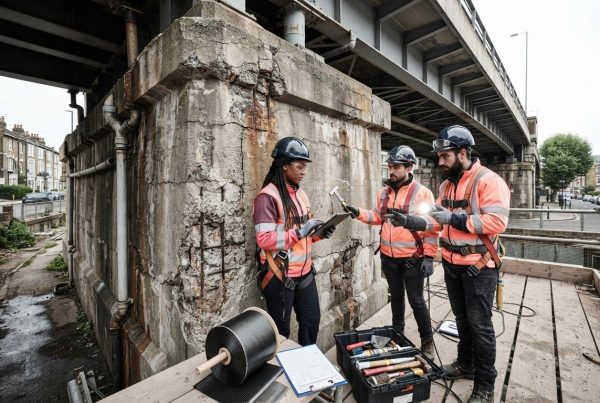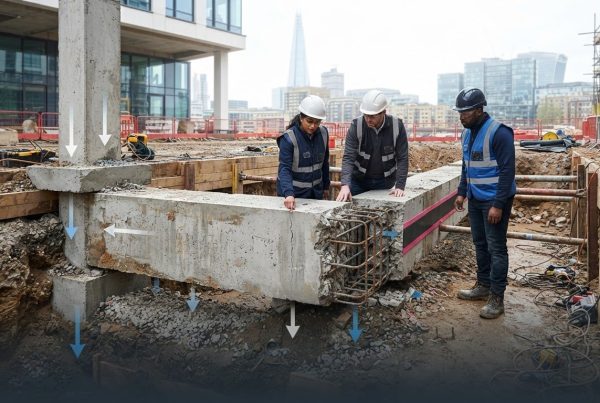

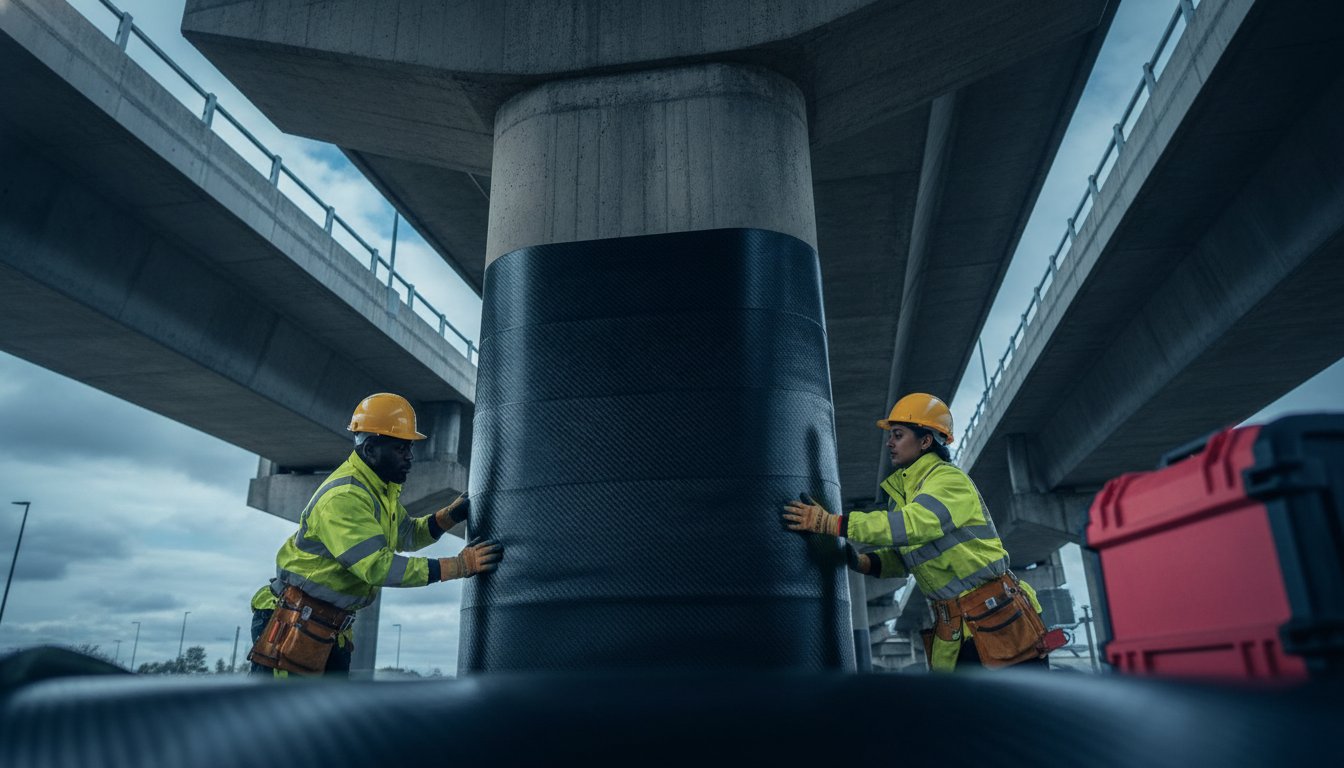
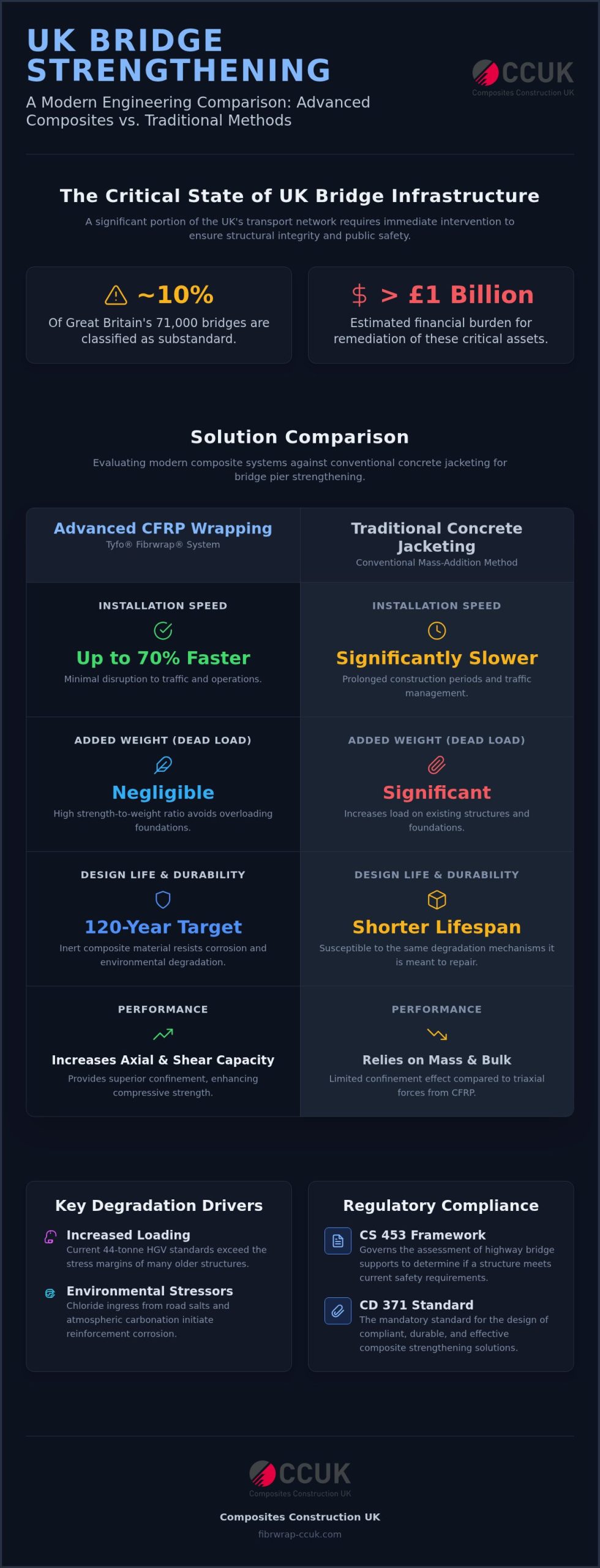
With approximately 10% of Great Britain’s 71,000 bridges currently classified as substandard, the structural integrity of the national transport network faces a critical juncture that requires immediate engineering intervention. The financial burden of remediating these assets is estimated to exceed £1 billion, placing immense pressure on asset controllers to identify solutions that balance performance with fiscal responsibility. You likely recognise that the traditional approach to bridge pier strengthening, which often relies on heavy concrete jacketing, is increasingly incompatible with the need for rapid installation and minimal traffic disruption.
This article provides an authoritative engineering analysis of advanced Carbon Fibre Reinforced Polymer (CFRP) confinement systems, specifically focusing on the Tyfo® Fibrwrap® system. We will explore how these specialised materials restore axial and shear capacity whilst addressing the pervasive issue of reinforcement corrosion. By adhering to the rigorous requirements of CS 453 and CD 371, it’s possible to achieve a 120-year design life extension without the prohibitive weight of conventional methods. This guide details the methodology for implementing high-durability solutions that ensure long-term structural security across the UK’s essential infrastructure.
Key Takeaways
- Understand the regulatory requirements of CS 453 and CD 371 compliance when addressing the structural demands of current 44-tonne HGV loading standards.
- Discover how advanced bridge pier strengthening using Tyfo® Fibrwrap® systems provides superior confinement to increase axial and shear capacity without adding significant dead load.
- Evaluate the operational advantages of CFRP wrapping, which allows for up to 70% faster installation and a minimal footprint compared to traditional concrete jacketing.
- Learn why achieving a 120-year design life extension depends on a methodical engineering approach; it’s a process that integrates precise structural testing with bespoke composite design.
- Recognise the importance of preparatory concrete repairs and specialist contractor expertise in ensuring the long-term efficacy of composite structural interventions.
Engineering Drivers for Bridge Pier Strengthening in the UK
The term bridge pier strengthening refers to specific structural interventions designed to augment the axial, shear, or flexural capacity of a primary support element. In the United Kingdom, these interventions are frequently necessitated by the disparity between the original design specifications of ageing assets and the rigorous demands of modern haulage. Whilst many structures were designed for significantly lower historic loads, the current 44-tonne HGV standard exerts stresses that exceed the safety margins of un-remediated concrete. This challenge is compounded by the national maintenance backlog, which as of 2026 remains a primary concern for National Highways and local authorities tasked with managing substandard assets.
Environmental stressors further accelerate the requirement for substructure reinforcement. The application of road salts during winter months introduces chlorides that penetrate the concrete matrix, initiating the corrosion of internal steel reinforcement. A critical, yet often overlooked, driver is the failure of bridge expansion joints; when these components perish, salt-laden water is directed onto the bridge pier cap. This moisture ingress facilitates rapid deterioration of the substructure, necessitating a proactive bridge pier strengthening strategy to prevent total asset failure and ensure the continued safety of the strategic road network.
Structural Deficiencies in Ageing Concrete Piers
The degradation of older concrete piers is typically driven by carbonation, a process where atmospheric carbon dioxide reacts with calcium hydroxide in the concrete. This reaction lowers the alkalinity of the material, stripping the protective passive layer from the steel reinforcement and allowing oxidation to occur. As the steel expands during corrosion, it exerts internal pressure that manifests as vertical cracking and spalling. In older designs, these symptoms often coincide with a critical loss of confinement; the original transverse reinforcement is often insufficient to resist the lateral expansion of the core under increased axial loads, compromising the structural integrity of the entire support system.
Regulatory Compliance: CS 453 and CD 371
Engineering decisions regarding remediation must be governed by the Design Manual for Roads and Bridges (DMRB). CS 453, specifically the assessment of highway bridge supports, provides the framework for determining whether a structure meets current safety requirements. When deficiencies are identified, CD 371 serves as the mandatory standard for the design of composite strengthening solutions. These regulations dictate that material selection in 2026 must prioritise long-term durability and resistance to environmental degradation. Adhering to these standards ensures that any bespoke design engineering provides a predictable, compliant extension to the structure’s functional life whilst meeting national safety benchmarks.
Advanced Composite Systems: The Role of CFRP Confinement
The application of advanced composites for bridge pier strengthening represents a paradigm shift from traditional mass-addition techniques. Unlike outdated methods involving steel anchors or timber shims, Carbon Fibre Reinforced Polymer (CFRP) systems utilise high-tensile fibres to provide superior confinement. This confinement is primarily passive; the wrap remains dormant until the concrete core begins to expand under axial loading. At this critical point, the CFRP exerts a triaxial compressive force that significantly enhances the ultimate compressive strength and strain capacity of the member. This mechanism is particularly effective for circular and rectangular sections where the exceptional strength-to-weight ratio of carbon fibre ensures structural capacity is increased without the detrimental addition of dead load.
The Tyfo® Fibrwrap® system is widely regarded as the industry benchmark for these interventions. It allows engineers to address complex, bespoke geometries, including tapered or sloped piers, where traditional jacketing would be technically unfeasible or architecturally intrusive. Whilst the UK focuses on regional remediation backlogs, global infrastructure initiatives like the Bridge Investment Program highlight the necessity of such technological adoption for long-term asset preservation. For projects requiring specific geometric considerations, consulting with engineers on a bespoke design feature ensures that the composite layout is optimised for the specific stress profiles of the structure.
The Tyfo® Fibrwrap® Advantage
Central to the efficacy of the Tyfo® system are the proprietary saturant resins and high-modulus carbon fabrics. These components are engineered to work in synergy, creating a monolithic reinforcement layer that is virtually impermeable to moisture and chlorides. This material synergy is fundamental to achieving a 120-year design life compatibility, a requirement that standard composite products often fail to meet. Quality assurance is maintained through the expertise of exclusive licensees, who ensure that surface preparation and resin-to-fibre ratios are strictly controlled to prevent delamination or premature failure under service loads.
Enhancing Ductility and Seismic Resilience
CFRP wrapping provides more than just a static capacity increase; it fundamentally alters the failure mode of the pier. By providing continuous confinement, the system improves the energy-absorption capacity and overall ductility of the structure. This is critical for preventing brittle shear failures, especially in rail infrastructure where dynamic impact loads and vibration are prevalent. In a seismic or high-impact scenario, the wrapped pier can undergo significant deformation without loss of load-bearing capacity, a characteristic that is essential for the protection of critical transport corridors.
CFRP Wrapping vs Traditional Concrete Jacketing
When selecting a methodology for bridge pier strengthening, engineers must weigh the physical footprint of the intervention against the required performance uplift. Traditional concrete jacketing necessitates a substantial increase in the cross-sectional area of the support, often requiring a minimum thickness of 150mm to ensure adequate cover and reinforcement placement. This adds significant dead load to the existing foundations. In contrast, advanced CFRP systems provide the necessary confinement with a profile increase of just 3mm to 5mm. For piers situated in watercourses, this minimal thickness is vital; it ensures that the hydraulic flow remains unconstricted, preventing the alteration of scour patterns that often accompanies the bulkier profile of concrete jackets.
The whole-life cost of a structural intervention is another critical metric. Concrete jackets, whilst familiar, remain susceptible to the same chloride-induced corrosion cycles that necessitated the original repair. By opting for a CFRP solution, asset managers benefit from a 120-year design life and a material that is inherently resistant to chemical degradation. This eliminates the need for future remedial cycles, ensuring that the initial investment provides long-term security for the asset.
Logistical and Programme Efficiency
Programme duration is frequently the deciding factor in UK infrastructure projects. CFRP installation is typically up to 70% faster than traditional concrete methods. This efficiency stems from the reduced requirement for heavy plant, extensive propping, and complex formwork. Because the materials are lightweight and man-portable, they’re ideal for sites with restricted access where heavy machinery can’t operate. This reduced site footprint translates directly into less intensive traffic management, minimising the duration of lane closures and the associated economic impact of driver delays.
Environmental and Sustainability Considerations
Modern engineering must align with the UK’s net-zero infrastructure goals. The carbon footprint of high-performance composites is significantly lower than that of the high-volume concrete required for jacketing. By extending the functional lifespan of an existing structure rather than opting for a carbon-intensive replacement, engineers significantly reduce the project’s total embodied energy. It’s a sustainable approach that prioritises the preservation of existing assets through scientific innovation. Those seeking to integrate these efficiencies into their asset management strategy can explore bespoke design engineering to optimise material usage for specific structural requirements.
The Engineering Process: From Survey to Commissioning
The successful execution of bridge pier strengthening depends on a methodical sequence of engineering phases that extend far beyond the mere application of composite materials. It’s not enough to simply wrap a structure; the process must begin with a rigorous assessment of the existing structural health to ensure the proposed intervention aligns with the specific deficiencies of the asset. Following a comprehensive survey, the gathered data feeds into a bespoke design engineering phase. In this stage, complex calculations determine the precise number of CFRP layers and the orientation of fibres required to meet the performance targets mandated by CS 453 and CD 371.
Once the design is finalised, mechanical substrate preparation becomes the priority. The concrete surface is typically grit-blasted or high-pressure water-jetted to remove laitance, old coatings, and contaminants. This reveals sound, open-pored concrete, which is a non-negotiable requirement for ensuring the long-term adhesion of the Tyfo® Fibrwrap® system. Any significant depressions or spalls identified during this stage are remediated with structural repair mortars to provide a uniform surface profile for the subsequent composite application.
Structural Diagnostics and Testing
Before any reinforcement occurs, the chemical and mechanical condition of the concrete substrate must be quantified. Carbonation testing is conducted to determine the depth of atmospheric neutralisation, whilst chloride ion analysis identifies the concentration of road salts within the matrix. These factors are critical in determining the extent of preparatory repairs needed. Pull-off tests are also performed to verify that the tensile strength of the substrate is sufficient to facilitate a robust substrate-to-resin bond. Non-destructive testing (NDT) methods, such as ground-penetrating radar, are often utilised to map internal reinforcement layouts without compromising the pier’s integrity.
On-Site Installation Rigour
The application phase requires strict adherence to environmental parameters. Temperature and humidity are monitored constantly; if the dew point isn’t maintained, the resin’s curing cycle and bond integrity can be compromised. Carbon fibre fabrics are saturated with proprietary resins using specialised equipment to ensure a precise fibre-to-resin ratio. Quality control measures include the creation of witness panels, which are cured on-site alongside the structure and later tested in a laboratory to confirm that the material properties match the design assumptions. Finally, UV-protective or aesthetic topcoats are applied to safeguard the resin from environmental degradation. To discuss the specific testing requirements for your infrastructure project, contact our engineering team for a technical consultation.
Strategic Asset Management with Specialist Contractors
Effective bridge pier strengthening requires a transition from reactive maintenance to strategic, long-term asset management. It’s a process that begins with the recognition that composite systems are only as resilient as the substrate they’re bonded to. Consequently, comprehensive concrete repairs must be completed before any strengthening occurs. This preparatory phase ensures that all delaminated material is removed and the alkaline environment around the steel is restored. By integrating these structural repairs with advanced Tyfo® Fibrwrap® systems, asset managers can achieve a synergistic effect that significantly extends the structure’s service life whilst maximising return on investment.
Partnering with a specialist engineering contractor provides the technical assurance required for such high-stakes infrastructure projects. General contractors often lack the specialised equipment and proprietary knowledge needed to handle advanced resins and carbon fabrics. A specialist approach ensures that every variable, from resin-to-fibre ratios to environmental curing conditions, is managed with precision. This expertise is vital for maintaining the structural safety margins required by national standards.
Integrated Infrastructure Remediation
A holistic remediation strategy often requires the integration of multiple technical disciplines. For piers situated in damp or submerged environments, resin injection and leak sealing are deployed to arrest water ingress before the CFRP application. In particularly aggressive environments, such as coastal bridges or those subject to heavy de-icing salt runoff, cathodic protection can be utilised alongside CFRP to provide a multi-layered defence against corrosion. These integrated solutions are typically backed by robust technical warranties; they provide asset controllers with the long-term security and fiscal predictability required for public and private infrastructure management.
Technical Consultation and Feasibility
The complexity of modern composite design means that feasibility must be established early in the programme. General construction firms are often ill-equipped to perform the nuanced calculations required for shear and confinement enhancement. CCUK provides end-to-end support, from initial structural diagnostics to final commissioning. This ensures that the design is not only theoretically sound but also practically executable within the constraints of the UK’s busy transport network. Asset managers are encouraged to contact CCUK to arrange a technical feasibility study, ensuring that their bridge pier strengthening project is underpinned by world-class engineering expertise.
Securing the Longevity of National Infrastructure
The ongoing requirement for bridge pier strengthening across the UK’s strategic road and rail networks demands a transition toward high-performance, low-impact materials. This guide has demonstrated that the application of Tyfo® Fibrwrap® systems offers a superior alternative to traditional mass-addition methods, providing essential structural confinement whilst mitigating the risks of chloride-induced corrosion. By adhering to the stringent requirements of CS 453 and CD 371, these composite solutions facilitate a 120-year design life extension that is both economically and environmentally sustainable.
CCUK stands as the exclusive UK Tyfo® Fibrwrap® licensee, offering the specialised expertise required to deliver MCHW-compliant remediation for complex infrastructure assets. Our commitment to engineering rigour ensures that every intervention is grounded in empirical evidence and methodical quality control. Contact our specialist engineering team for a technical consultation on bridge pier strengthening. We look forward to assisting you in securing the structural integrity and operational continuity of your essential bridge assets through sophisticated science and proven engineering results.
Frequently Asked Questions
How much additional load capacity can CFRP add to a bridge pier?
CFRP confinement can increase the axial load capacity of a reinforced concrete pier by 20% to 50% depending on the cross-sectional geometry and the number of layers applied. For circular columns, the confinement is highly efficient. In rectangular sections, the capacity uplift is slightly lower but still significant. These increases are achieved without adding dead load, ensuring that the existing foundations aren’t overloaded whilst meeting the demands of modern 44-tonne HGV traffic.
Is CFRP strengthening compliant with UK Highways standards?
Yes, CFRP systems are fully compliant with the Design Manual for Roads and Bridges (DMRB). Specifically, designs must adhere to CS 453 for the assessment of highway bridge supports and CD 371 for the design of composite strengthening. These standards ensure that bridge pier strengthening interventions meet rigorous safety and durability benchmarks. Compliance is essential for any asset managed by National Highways or local authorities to ensure long-term structural reliability.
How long does a Tyfo® Fibrwrap® installation typically take?
Installation timelines for the Tyfo® Fibrwrap® system are typically up to 70% faster than traditional concrete jacketing methods. A standard pier remediation can often be completed within a few days rather than weeks. This efficiency is due to the lightweight nature of the materials and the elimination of heavy formwork or extensive propping. Rapid curing times further reduce the duration of traffic management, minimising the economic impact of road closures.
What is the expected lifespan of a CFRP-strengthened bridge pier?
When designed and installed by specialists, a CFRP-strengthened pier can achieve a 120-year design life extension. The Tyfo® Fibrwrap® system utilises high-performance resins that are resistant to environmental degradation, UV exposure, and chloride ingress. This longevity is a primary advantage over traditional repairs, as the composite material doesn’t corrode. It provides a permanent, sustainable solution that significantly reduces the frequency and cost of future maintenance cycles for infrastructure assets.
Can CFRP be used for piers in marine or tidal environments?
CFRP is exceptionally well-suited for marine and tidal environments due to its inherent resistance to salt-water corrosion and chemical attack. Specialised resins are used to ensure a robust bond even in high-moisture conditions. The system creates an impermeable barrier that protects the internal steel reinforcement from chloride-induced oxidation. This makes it a preferred choice for coastal bridge pier strengthening where traditional concrete and steel are prone to rapid deterioration.
How does CFRP compare to steel plate bonding for pier strengthening?
CFRP offers several advantages over steel plate bonding, primarily its superior strength-to-weight ratio and corrosion resistance. Steel plates are heavy, difficult to install on curved surfaces, and require ongoing maintenance to prevent rusting at the bond line. CFRP is lightweight and flexible enough to conform to any pier geometry. It requires no future painting or protective coatings. Additionally, the installation of CFRP doesn’t require heavy lifting plant, reducing site logistical complexities.
What maintenance is required for a CFRP-wrapped pier?
Maintenance requirements for a CFRP-wrapped pier are minimal compared to traditional structures. The system is designed to be virtually maintenance-free once the protective topcoat is applied. Periodic visual inspections during standard bridge safety audits are typically sufficient to verify the integrity of the protective layer. Because the material doesn’t corrode or spall, the cycle of patch and repair associated with ageing concrete is effectively broken, resulting in lower whole-life costs.
Is CFRP strengthening suitable for historic or masonry piers?
CFRP is an effective solution for historic or masonry piers, as it provides significant structural reinforcement with a minimal change to the asset’s aesthetic appearance. The thin profile of the wrap allows the original dimensions of the pier to be maintained, which is often a requirement for heritage structures. It can be used to arrest movement, increase flexural capacity, or provide confinement to masonry cores that have begun to lose internal integrity over time.