

The traditional reliance on reactive maintenance cycles represents a systemic failure in asset management that often accelerates structural degradation whilst concealing the true fiscal impact of deferred remediation. You’ve likely experienced the professional strain of managing unpredictable costs when hidden structural defects manifest mid-project, leading to budget overruns that undermine stakeholder confidence. Navigating the complexities of budgeting for large-scale concrete repairs requires a transition from simple maintenance to engineered life-extension, especially as aggregate construction input prices have increased by 6.2% in the first four months of 2026 alone.
This technical guide provides the rigorous framework needed to master financial planning for major structural remediation, ensuring your projections account for volatile steel prices and evolving regulatory standards such as ACI 318-25. We’ll explore how to identify hidden cost drivers and provide the technical justification for choosing advanced materials, such as Carbon Fibre Reinforced Polymer (CFRP) and Tyfo® Fibrwrap® Systems, over traditional replacement. By the end of this analysis, you’ll possess a predictable financial roadmap that reduces the whole-life costs of your infrastructure whilst securing its structural integrity for the long term.
Key Takeaways
- Differentiate between routine maintenance and major structural remediation to accurately quantify the long-term economic consequences of deferred works on critical infrastructure.
- Identify the primary technical variables, including carbonation depth and chloride contamination levels, that serve as the fundamental cost drivers when budgeting for large-scale concrete repairs.
- Compare the initial capital outlay and operational downtime of traditional breakout methods against advanced Carbon Fibre Reinforced Polymer (CFRP) strengthening systems to determine the optimal ROI.
- Establish a robust, data-driven budgeting framework through a two-phase approach involving comprehensive asset inspection followed by bespoke feasibility studies.
- Leverage early engagement with specialist engineering consultancies to de-risk project expenditure and avoid the financial burden of over-engineered structural solutions.
The Financial Imperative of Structural Asset Management
Effective asset management necessitates a clear distinction between routine maintenance and large-scale structural remediation. Whilst routine works focus on aesthetic preservation and superficial protection, structural remediation addresses the fundamental causes of concrete degradation that compromise the load-bearing capacity of an asset. In the UK, where the concrete repair sector is estimated to exceed 3% of the entire construction industry, the economic consequences of deferred maintenance are profound. Failing to recognise these distinctions often leads to fiscal mismanagement. Accurate budgeting for large-scale concrete repairs requires a shift in perspective, moving away from treating these interventions as an operational burden and instead viewing them as a strategic investment in asset life-extension.
The High Cost of Reactive Repair Cycles
Asset managers often fall into the trap of reactive “patching” cycles. These haphazard repairs typically address visible spalling without neutralising the underlying electrochemical processes, such as chloride-induced corrosion or carbonation. Statistics within the sector suggest that traditional patch repairs frequently fail within a five-year window, necessitating a repeat of the entire expenditure. This isn’t just a waste of capital. The financial burden is compounded by the necessity for emergency closures and unplanned works, which disrupt operational continuity and incur secondary costs that far exceed the price of the repair itself. Engineered life-extension is defined as a methodical framework for prolonging the functional utility of a structure through the application of advanced materials science and forensic engineering principles. By adopting this approach, asset controllers can break the cycle of failure and secure a predictable financial future for their infrastructure.
Regulatory Compliance and Liability Management
Budgeting for safety is a mandatory requirement for mitigating legal and financial liability. Structural integrity is a primary driver of asset valuation; any perceived instability can lead to increased insurance premiums or the total withdrawal of cover. All remedial works must align with current UK engineering codes, such as BS EN 1504, to ensure the long-term safety of the public and the workforce. When developing a financial roadmap, incorporating a bespoke design feature ensures that the chosen solution is technically validated and legally compliant. This rigour protects the organisation from the astronomical costs associated with structural failure and the subsequent litigation. Ultimately, proactive investment in compliant, high-specification repairs preserves the balance sheet whilst fulfilling the ethical obligation to maintain safe infrastructure.
Identifying Primary Cost Drivers in Large-Scale Concrete Remediation
Accurate budgeting for large-scale concrete repairs depends on a precise understanding of the chemical and physical state of the substrate. Technical variables such as carbonation depth, chloride ion concentration, and the specific half-cell potential of reinforcement bars dictate the scope of necessary intervention. Ignoring these factors leads to substantial financial volatility. Whilst superficial spalling is easily quantified, the latent corrosion levels often remain undetected without rigorous diagnostic protocols. This protects capital. When budgeting for large-scale concrete repairs, the impact of structural access and scaffolding must also be evaluated, as these often represent a significant percentage of the total project expenditure.
Testing and Diagnostic Expenditure
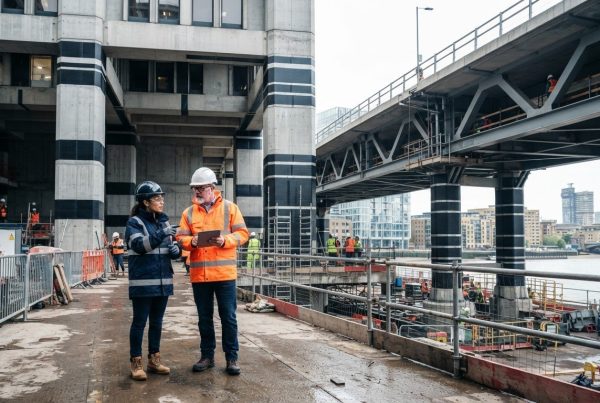
Allocating capital for pull-off tests and carbonation mapping is not merely an administrative requirement. It’s a risk mitigation strategy. Early investment in a structural survey significantly reduces the likelihood of encountering “unforeseen” defects that typically exhaust contingency budgets. These diagnostics inform the bespoke engineering calculations required to validate a project’s feasibility before any capital is committed. Without this data, budgets remain speculative and prone to escalation once works commence on-site.
Logistical and Operational Overheads
Site-specific constraints often represent the largest variable in the financial roadmap. Provision for traffic management, site security, and environmental containment systems must be integrated into the initial cost model. The financial implications of temporary works design are particularly significant for load-bearing structures requiring propping or shoring. Beyond these physical requirements, specialised material handling and waste disposal for hazardous contaminants, such as lead-based coatings or asbestos-containing materials, add layers of complexity to the operational budget.
Material selection also serves as a critical cost driver. Traditional cementitious mortars may offer lower initial unit prices, but high-performance resins and Carbon Fibre Reinforced Polymer (CFRP) systems provide superior long-term ROI through reduced application time and enhanced durability. Referencing the American Concrete Institute’s Guide to Concrete Repair provides a standard for selecting methodologies that align with global best practices. For managers overseeing complex assets, requesting a bespoke design feature can ensure that material specifications are tailored exactly to the structural requirements, preventing both under-performance and unnecessary over-engineering. This methodical approach ensures that every pound spent contributes directly to the asset’s extended functional lifespan.

Comparative Analysis: Traditional Methods vs. Composite Life-Extension
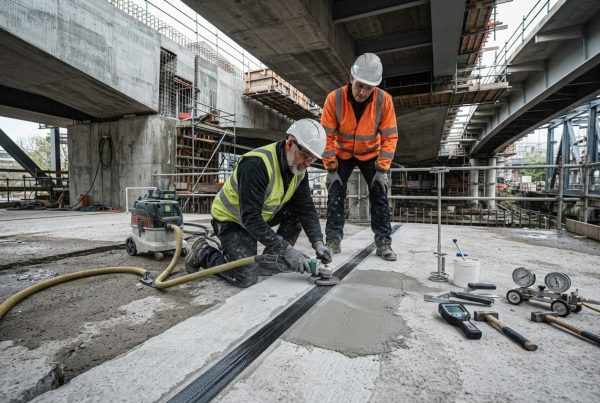
Asset managers often evaluate remedial options based on the immediate unit cost of materials, yet this narrow focus frequently obscures the true economic impact of the intervention. When budgeting for large-scale concrete repairs, a comprehensive comparison must be drawn between traditional breakout methods and advanced composite strengthening. Traditional remediation typically involves hydro-demolition, the replacement of corroded reinforcement, and the application of cementitious mortars. This process is inherently labour-intensive and requires significant curing times. Conversely, Carbon Fibre Reinforced Polymer (CFRP) systems focus on surface preparation and bonding, which drastically reduces the structural footprint of the works and the associated site time.
The ROI of Advanced Composite Systems
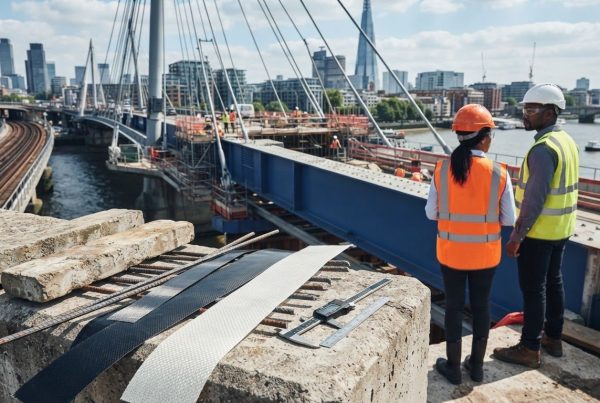
The Tyfo® Fibrwrap® system represents a low-impact, high-strength alternative that fundamentally alters the project’s financial profile. Because these materials are exceptionally lightweight, the requirement for heavy machinery and extensive temporary propping is minimised. This is a critical factor when working on bridges or multi-storey structures where access is restricted. Whilst the per-kilogramme cost of CFRP is higher than that of standard repair mortars, the total project expenditure is often lower. This is achieved through a reduction in site labour hours and a significantly accelerated completion programme, allowing the asset to return to full operational capacity sooner. These efficiencies make composite systems a superior choice for complex infrastructure where downtime represents a major secondary cost.
Maintenance-Free Longevity
Durability is the cornerstone of effective whole-life cost analysis. Traditional cementitious repairs, even when executed to high standards, remain susceptible to the same electrochemical processes that caused the original failure. Carbon fibre reinforced polymers are inherently corrosion-resistant, making them ideal for assets located in harsh marine or industrial environments. By eliminating the risk of future rebar oxidation within the repaired zone, the frequency of subsequent inspections and minor maintenance works is greatly reduced. Whilst traditional cementitious repairs typically necessitate a secondary intervention within a 10-year cycle, advanced composite systems provide a documented functional lifespan exceeding 30 years in aggressive environments. This longevity ensures that the initial investment is protected, providing a level of fiscal security that traditional “patch-and-repair” cycles cannot match.
Sustainability has also emerged as a primary driver for modern budgeting. Choosing to repair and strengthen an existing structure using CFRP, rather than opting for demolition and replacement, results in a significantly lower carbon footprint. This alignment with environmental targets isn’t just an ethical choice; it’s increasingly a regulatory requirement that influences asset valuation and access to green financing. By prolonging the functional utility of essential infrastructure through sophisticated engineering, asset managers can meet both their financial and environmental obligations simultaneously.
Developing a Robust Budgeting Framework for Infrastructure Repairs
Effective fiscal control in structural engineering is achieved through a disciplined, four-phase methodology. This structured approach ensures that budgeting for large-scale concrete repairs remains grounded in empirical data rather than speculative estimates. By following a logical trajectory from diagnosis to monitoring, asset managers can eliminate the volatility typically associated with aging infrastructure. The framework consists of:
- Phase 1: Comprehensive Asset Inspection. Forensic analysis is conducted to establish the exact extent of chemical and physical degradation, moving beyond visual assessments to data-driven condition reports.
- Phase 2: Bespoke Design and Feasibility. Engineering calculations are performed to identify the most cost-effective solution, often involving a comparative analysis between traditional breakout methods and advanced composite strengthening.
- Phase 3: Detailed Specification and Contracting. A rigorous technical specification is developed, allowing for fixed-price contracting that provides financial certainty for all stakeholders.
- Phase 4: Performance Validation and Monitoring. Post-installation testing protocols are established to ensure the remedial works meet the design requirements and to provide a baseline for long-term asset health tracking.
Calculating Contingency and Risk
Whilst forensic testing provides a high degree of clarity, large-scale projects involving reinforced concrete often necessitate a contingency allocation of 15% to 20% to account for hidden defects. These “known unknowns” typically manifest once surface layers are removed, revealing deeper reinforcement corrosion or voids that were not detectable during initial surveys. De-risking fixed-price contracts is only possible when the scope of work is underpinned by thorough structural surveys. This early investment in data prevents the sudden escalation of costs mid-project, ensuring that the final expenditure remains within the approved budgetary parameters.
Phasing Works for Cash Flow Management
Strategic phasing allows asset managers to spread significant capital expenditure over multiple fiscal years without compromising the structure’s safety. By prioritising critical structural elements based on the severity of the degradation, works can be organised into manageable packages that align with broader infrastructure upgrade programmes. Advanced composite systems are particularly suited to this approach; their low-impact application allows for modular installation whilst the asset remains operational. This flexibility ensures that budgeting for large-scale concrete repairs can be integrated into long-term financial planning, reducing the impact on annual operational budgets. For a detailed assessment of your infrastructure’s specific requirements, you may contact our specialist engineering team to initiate a forensic condition survey.
De-risking Project Expenditure with Specialist Engineering Consultancy
Early engagement with a specialist engineering contractor is the most effective method for ensuring budget accuracy before a project reaches the procurement stage. By involving specialists during the initial feasibility phase, asset managers can leverage forensic data to refine their financial models, moving away from generic industry averages towards project-specific costings. This collaboration is essential when budgeting for large-scale concrete repairs, as it allows for the early identification of structural complexities that standard consultants might overlook. Professional installation and the use of certified material systems, such as Tyfo® Fibrwrap® Systems, provide the quality control necessary to guarantee that the remediation meets its intended design life without requiring premature intervention.
Bespoke Design as a Cost Optimiser
Utilising bespoke design solutions allows engineering teams to target specific structural weaknesses rather than applying broad, inefficient remedial measures. This precision engineering reduces material waste and significantly lowers site labour requirements, as the intervention is tailored exactly to the deficit in load-bearing capacity. Proprietary systems act as a signature of quality, ensuring that the performance of the repair is backed by empirical testing and global certifications. By avoiding the common pitfall of over-engineering, which often inflates budgets without adding functional value, bespoke design serves as a primary driver for financial optimisation. This targeted approach ensures that capital is allocated only where it’s structurally necessary, preserving the project’s ROI.
Partnering for Long-Term Asset Security
CCUK provides end-to-end design, supply, and installation services, offering a streamlined approach that eliminates the fragmentation often found in large-scale infrastructure projects. This integrated model ensures that the technical intent of the design is maintained throughout the installation phase, protecting the asset manager’s investment. With a history of successful life-extension projects delivered across the UK, our team provides the national expertise required to manage diverse asset portfolios with consistent quality and engineering rigour. Ensuring that every phase of the project, from the initial structural survey to the final application of Carbon Fibre Reinforced Polymer (CFRP) Strengthening, is managed by a single specialist entity reduces the risk of miscommunication and costly delays. For those currently developing their financial roadmap, the final step in de-risking expenditure is to contact our engineering team to discuss your structural repair budget and initiate a forensic assessment of your critical assets.
Securing the Long-Term Fiscal Stability of Structural Assets
Transitioning from reactive maintenance cycles to a framework of engineered life-extension is the most effective strategy for preserving critical infrastructure. By prioritising forensic data and advanced material science, asset managers can move beyond the unpredictability of traditional patch repairs. The implementation of high-performance systems, such as Carbon Fibre Reinforced Polymer (CFRP), ensures that budgeting for large-scale concrete repairs remains a precise and manageable process rather than a series of escalating contingencies. These technical interventions don’t just restore structural integrity; they provide a documented pathway to reduced whole-life costs whilst meeting modern sustainability targets.
As the exclusive UK licensee for Tyfo® Fibrwrap® systems, CCUK provides a specialist engineering team with national coverage and a proven track record in infrastructure life-extension. Our end-to-end approach ensures that every project is underpinned by empirical evidence and engineering rigour, from the initial survey to the final application. We invite you to consult with our specialists on your structural repair budget to develop a robust, data-driven roadmap for your asset portfolio. Proactive investment today ensures the safety and functional utility of your essential structures for decades to come.
Frequently Asked Questions
How much should I budget per square metre for concrete repairs?
Budgeting on a per-square-metre basis depends heavily on the depth of the repair and the level of chloride contamination within the substrate. Whilst unit rates provide a baseline, they don’t account for structural access or the volume of breakout required. A precise budget is only achievable once forensic testing results define the specific remedial requirements and the associated logistical constraints.
What is the most cost-effective way to fix spalling concrete on a large scale?
The most cost-effective approach for large-scale spalling is to neutralise the underlying corrosion through engineered life-extension rather than repeated patching. Traditional “patch-and-repair” cycles often fail within five years, leading to a higher total expenditure over the asset’s lifespan. Investing in advanced materials, such as Tyfo® Fibrwrap® Systems, provides a more durable solution that reduces long-term maintenance costs and operational disruptions.
How do composite strengthening systems compare in price to steel plate reinforcement?
Composite systems such as CFRP are frequently more economical than steel plate reinforcement when the total project duration and site labour are considered. Steel reinforcement requires heavy lifting equipment, extensive propping, and specialised welding or bolting, which increases operational overheads. CFRP is lightweight and bonded with high-performance resins, often sourced from specialist UK suppliers like Bondrite Adhesives Ltd, significantly reducing the requirement for temporary works and heavy plant.
Can I accurately budget for concrete repairs without a structural survey?
Accurate budgeting for large-scale concrete repairs is impossible without a comprehensive structural survey. Visual assessments cannot detect carbonation depth or the half-cell potential of the reinforcement, which are the primary drivers of structural failure. A survey provides the empirical data required to establish a realistic contingency and prevent mid-project budget escalations due to hidden defects.
What are the hidden costs associated with traditional concrete breakout and repair?
Hidden costs often include the design and installation of temporary works, the management of hazardous waste from hydro-demolition, and the secondary impact of operational downtime. Traditional breakout methods are invasive and require extensive containment systems to manage noise and dust. These logistical requirements often represent a significant portion of the total expenditure that is not reflected in the material unit price.
How long does a typical CFRP strengthening project take compared to traditional methods?
CFRP strengthening projects are typically completed in a fraction of the time required for traditional methods because there is no requirement for hydro-demolition or mortar curing cycles. The bonding process is rapid, allowing structural elements to return to service within hours rather than days. This acceleration is a critical factor for infrastructure assets where downtime carries a high financial penalty.
Is budgeting for cathodic protection necessary for all reinforced concrete structures?
Cathodic protection is a necessary budgetary consideration for assets exposed to aggressive chloride ingress, such as marine structures or bridge decks. Whilst it is not required for every structure, it is the only definitive method for halting active corrosion in high-risk environments. It should be evaluated as part of a whole-life cost analysis to prevent the total loss of the structural reinforcement over time.
How does engineered life-extension impact the overall valuation of an asset?
Engineered life-extension significantly enhances asset valuation by reducing long-term liability and providing a documented history of structural integrity. Assets with a proven, maintenance-free horizon are viewed as more secure investments by technical professionals and insurers. The sustainability of repairing over replacing also aligns with modern ESG requirements, which is increasingly a factor in infrastructure finance and asset appraisal.