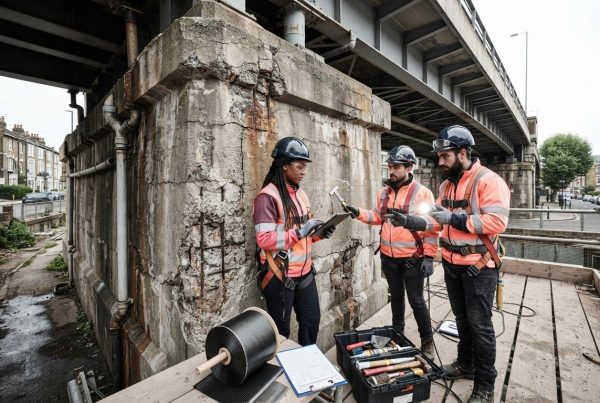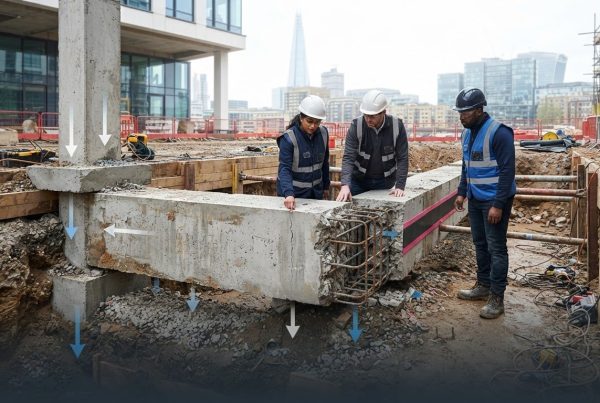

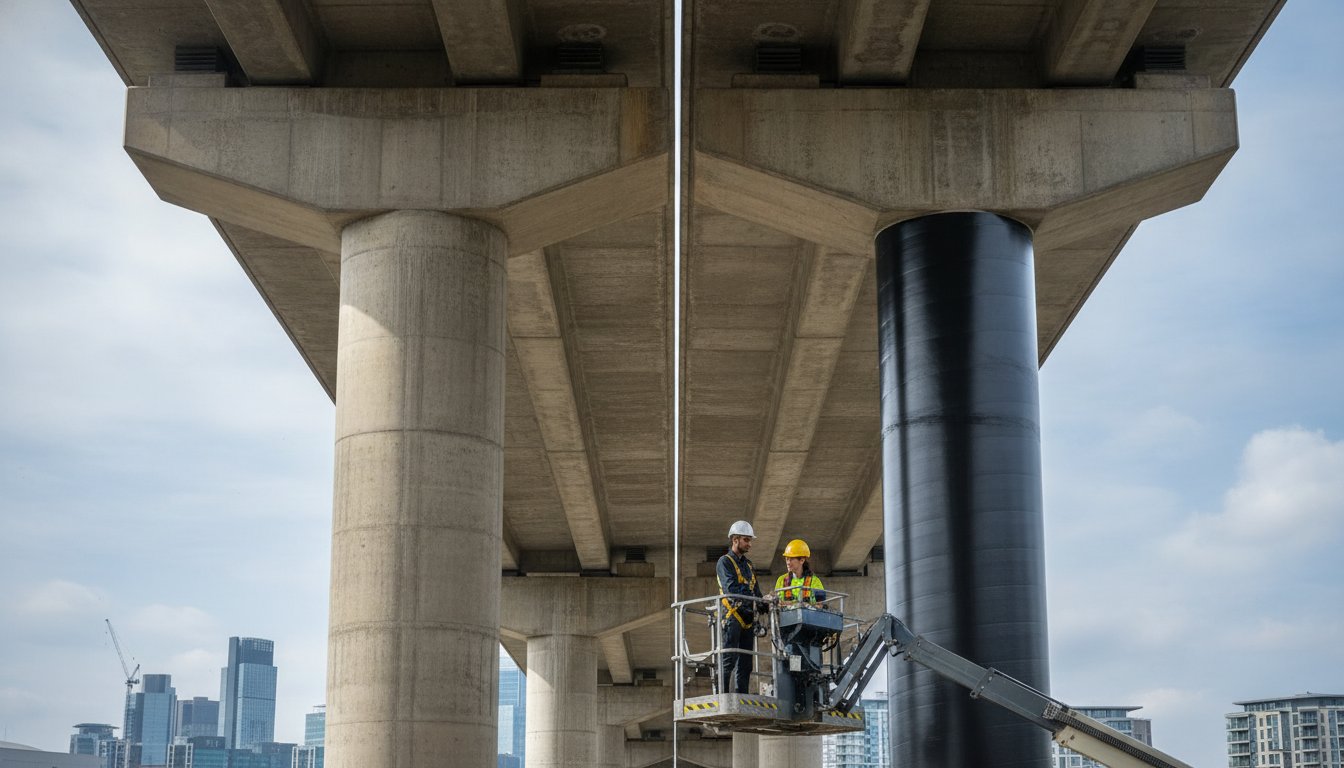
The assumption that structural obsolescence necessitates total demolition is an engineering fallacy that the United Kingdom’s stringent net-zero targets can no longer afford to support. Asset managers and technical professionals frequently find themselves confronted with the dual pressures of advancing carbonation and the requirement for increased load-bearing capacity within ageing concrete and masonry portfolios. It’s a challenging position where the safety of critical infrastructure must be balanced against the high capital expenditure of total replacement. This 2026 technical guide provides a rigorous examination of advanced structural strengthening techniques, specifically focusing on how high-performance composites and bespoke engineering calculations can extend the functional lifespan of critical infrastructure by decades. We’ll evaluate the empirical performance of Carbon Fibre Reinforced Polymer (CFRP) systems, such as the proprietary Tyfo® Fibrwrap®, whilst ensuring all proposed interventions align with IStructE and UK building standards. By shifting the focus from invasive reconstruction to sophisticated material science, asset controllers can achieve non-invasive reinforcement that guarantees long-term security and regulatory compliance.
Key Takeaways
- Understand the critical requirement for structural reinforcement in ageing UK assets to meet modern load specifications whilst avoiding the high capital expenditure of demolition.
- Evaluate the performance of various structural strengthening techniques, identifying why Carbon Fibre Reinforced Polymer (CFRP) is now the industry benchmark for non-invasive asset life-extension.
- Examine the material properties of the Tyfo® Fibrwrap® system and how its bespoke application provides superior reinforcement for concrete, masonry, and pipeline infrastructure.
- Identify the essential pre-design testing protocols, including carbonation and pull-off tests, required to ensure substrate integrity and engineering compliance with IStructE standards.
- Recognise the value of an end-to-end specialist engineering service, from initial bespoke design to professional installation, in maintaining the safety and durability of critical assets.
The Evolution of Structural Strengthening in Civil Engineering
Structural strengthening represents the engineering discipline of upgrading an existing asset to meet enhanced load-bearing requirements or to rectify structural deficiencies. Within the 2026 engineering context, the demand for these interventions has reached an unprecedented level across the United Kingdom. This surge is driven by a combination of ageing infrastructure reaching its original design limit and the widespread repurposing of commercial assets. Whilst historic methods often relied on heavy, invasive procedures like section enlargement, modern structural strengthening techniques have evolved towards sophisticated, low-impact composite technologies that prioritise the preservation of the original structure. It’s an engineering reality that the focus has shifted from mere repair to comprehensive life-extension through scientifically validated reinforcement.
Primary Drivers for Structural Intervention
The necessity for structural reinforcement is frequently dictated by the changing operational demands of the national transport network. Historical bridge structures, originally designed for significantly lighter vehicular weights, now require systematic upgrades to accommodate modern traffic loads without compromising safety. Beyond load increases, environmental degradation remains a primary catalyst for intervention. Fundamental reinforced concrete principles establish that the alkaline environment of the concrete protects the internal steel reinforcement; however, carbonation and chloride ingress often lead to corrosion and spalling. Structural defects such as alkali-silica reaction (ASR) further necessitate the application of advanced structural strengthening techniques to arrest movement and restore integrity. Additionally, seismic retrofitting has become a critical requirement for national infrastructure, ensuring that essential facilities can withstand unforeseen dynamic forces through enhanced ductility and shear capacity.
The Shift Towards Sustainable Asset Life-Extension
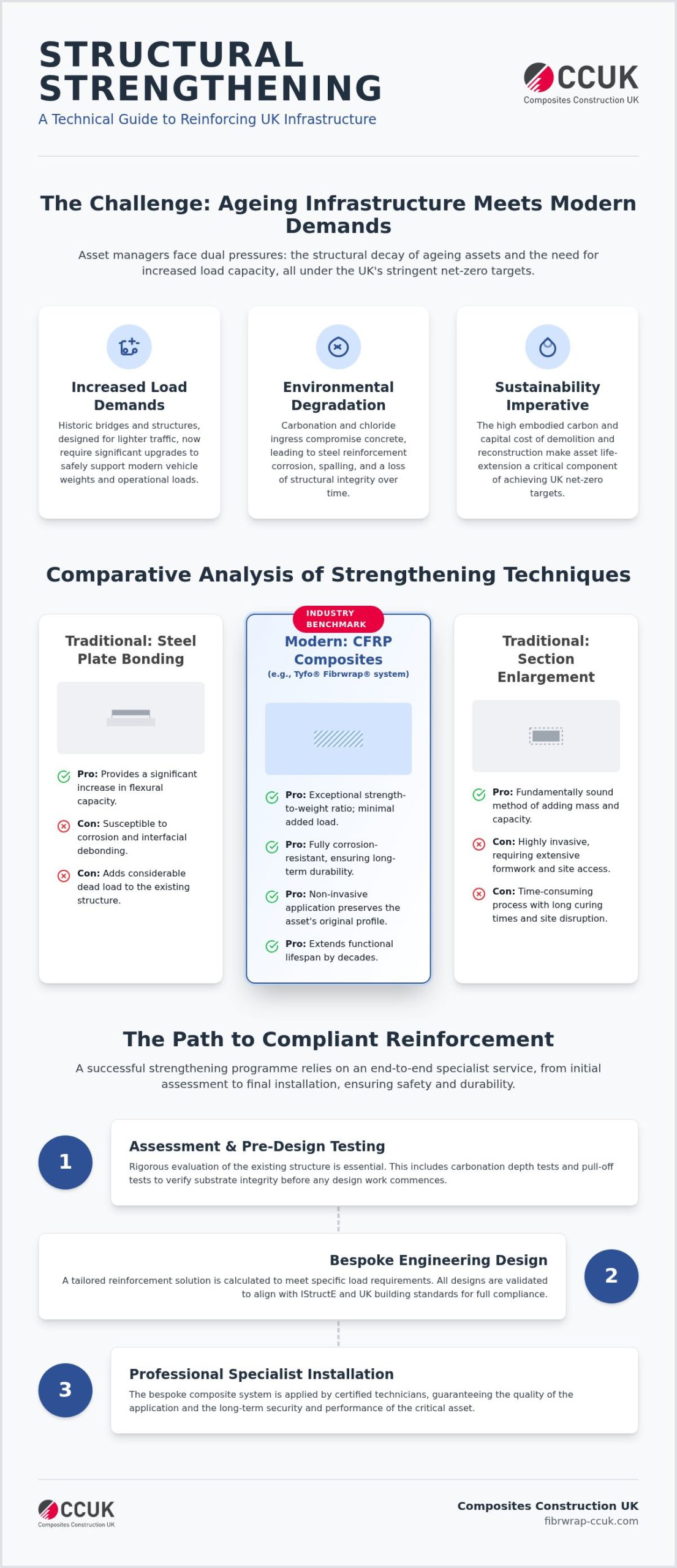
Engineering priorities are increasingly defined by the imperative of sustainability and the reduction of embodied carbon. The environmental cost associated with the total demolition and subsequent reconstruction of concrete assets is often prohibitive when compared to the targeted application of high-performance reinforcements. Prolonging the functional lifespan of existing concrete and masonry is now viewed as a primary objective for asset controllers seeking to align with UK net-zero frameworks. The implementation of bespoke design features allows for the precise application of advanced composites, such as Carbon Fibre Reinforced Polymer (CFRP), which provides exceptional strength-to-weight ratios. These modern solutions offer a non-invasive alternative to traditional steel plate bonding, allowing for significant capacity increases whilst maintaining the architectural and functional profile of the asset.
Comparative Analysis of Structural Strengthening Techniques
Selecting the optimal intervention requires a rigorous assessment of the asset’s current state against its future performance requirements. Historically, engineers relied on a limited suite of structural strengthening techniques, primarily focused on the addition of mass or the external application of metallic reinforcements. Whilst these methods remain fundamentally sound, their application in 2026 is often constrained by the need for operational continuity and the logistical challenges of installing heavy materials in restricted environments. The decision-making process must balance material performance with the practicalities of site access and long-term durability.
Traditional Methods: Steel Plate Bonding and Section Enlargement
Steel plate bonding involves the adhesive attachment of steel plates to the tension face of reinforced concrete elements. Whilst this provides a significant increase in flexural capacity, the plates are susceptible to interfacial debonding and atmospheric corrosion, particularly in exposed UK infrastructure. The weight of the steel itself adds a non-negligible dead load, which may necessitate further reinforcement of the global structure. Section enlargement, the process of adding new reinforced concrete to an existing member, remains a viable engineering choice when both stiffness and strength must be increased. However, this method typically requires extensive formwork, the use of heavy plant, and prolonged curing periods, resulting in substantial asset downtime. These traditional approaches often struggle to meet the stringent criteria for risk mitigation, such as those discussed in the NIST Best Practices for Progressive Collapse, where rapid and reliable reinforcement is paramount for safety.
Advanced Methods: CFRP and Composite Wrapping
The emergence of Carbon Fibre Reinforced Polymer (CFRP) has redefined the benchmark for high-strength reinforcement. CFRP systems offer a tensile strength that exceeds steel by several orders of magnitude whilst contributing negligible additional dead load to the structure. This exceptional weight-to-strength ratio allows for the reinforcement of slabs, beams, and columns without altering the architectural profile or reducing head height. Composite wrapping is particularly advantageous for complex geometries, such as circular bridge piers or internal pipeline surfaces, where rigid steel plates are impractical.
The technical superiority of CFRP extends to its inherent resistance to electrochemical corrosion, eliminating the long-term maintenance burden associated with metallic systems. Installation is significantly faster, often completed with manual application and minimal site preparation, which reduces the economic impact of service disruptions. For projects requiring specific performance criteria, asset managers should learn more about our bespoke design features to understand how tailored engineering calculations ensure compliance with modern safety standards. Ultimately, the choice amongst structural strengthening techniques depends on the specific failure mode being addressed, whether it be shear deficiency, flexural weakness, or the requirement for axial confinement.
The Tyfo® Fibrwrap® System: A Technical Deep-Dive
The Tyfo® Fibrwrap® system represents a paradigm shift in the field of advanced composites, functioning as a fully integrated, tested solution for the reinforcement of critical infrastructure. Unlike generic materials, this proprietary system is engineered to provide specific performance characteristics through the synergy of high-modulus carbon or high-strain glass fibre fabrics and specialised epoxy resins. These components are applied through a precise wet-layup process, where the saturated fabric cures to form a high-strength laminate bonded directly to the substrate. It’s frequently selected as the primary intervention amongst modern structural strengthening techniques due to its extensive track record in seismic retrofitting and blast mitigation. For technical professionals seeking a comprehensive understanding of the application process, our technical guide to Tyfo® Fibrwrap® installation details the precise protocols required to ensure system performance.
Proprietary Composites for Pipeline and Industrial Use
Industrial assets, particularly ageing high-pressure conduits, benefit significantly from the versatility of these composites. The Tyfo® system facilitates trenchless pipeline rehabilitation, allowing for both internal and external reinforcement without the need for extensive excavation. Internal applications are typically designed to resist bursting pressures in deteriorated pipes, whilst external wrapping provides the necessary hoop and longitudinal strength to resist soil loads and traffic impacts. This methodology is particularly effective for large-diameter water mains and industrial cooling systems where traditional replacement is logistically impossible. Detailed insights into these specialised methodologies are available in our guide to pipeline rehabilitation and asset life-extension.
Performance Under Extreme Conditions
The efficacy of Tyfo® Fibrwrap® is most evident when subjected to extreme dynamic forces. In blast mitigation projects, the composite’s ability to absorb and redistribute energy prevents the catastrophic brittle failure of concrete members, significantly reducing the risk of progressive collapse. The chemical inertness of the resins ensures that the reinforcement remains unaffected by aggressive marine environments or chemical processing plants that typically degrade steel. Long-term bond integrity is maintained through rigorous quality control and material testing, ensuring that the structural strengthening techniques employed deliver a durable, compliant solution for the lifetime of the asset. This level of technical assurance is critical when protecting national infrastructure where failure is not an option.
Design Considerations and Engineering Selection Criteria
The implementation of structural strengthening techniques must be preceded by a rigorous diagnostic programme to ensure the compatibility of the proposed intervention with the existing substrate. Engineering selection criteria are not merely based on capacity requirements but are fundamentally dictated by the empirical condition of the asset. A failure to identify underlying degradation mechanisms, such as latent reinforcement corrosion or advancing carbonation, can significantly compromise the long-term performance of composite reinforcements. Consequently, the pre-design phase is characterised by a methodical sequence of structural surveys and material testing protocols designed to validate the structural integrity of the host member.
The Importance of Accurate Asset Inspection
A comprehensive inspection is essential to identify specific failure modes and defects, such as spalling or delamination, that must be addressed before the application of composites. Reference should be made to our comprehensive guide to concrete repairs for detailed remediation strategies regarding these underlying issues. Carbonation testing is typically conducted to determine the depth of the neutralised zone, whilst pull-off testing is utilised to quantify the tensile strength of the concrete surface. This latter test is critical; the bond between the Carbon Fibre Reinforced Polymer (CFRP) and the concrete must be capable of transferring the calculated loads without cohesive failure of the substrate. If the substrate tensile strength is found to be insufficient, alternative preparation or mechanical anchoring may be required to ensure system efficacy.
Developing Bespoke Engineering Solutions
Once the substrate suitability is confirmed, bespoke engineering calculations are developed to justify the strengthening solution in accordance with UK standards and international codes, such as Concrete Society Technical Report 55. These calculations dictate the precise configuration of the composite system, including the required number of layers and the specific fibre orientation necessary to satisfy tension, shear, or confinement requirements. Structural stabilisation programmes often require a multi-material approach, integrating masonry reinforcement with CFRP applications to address complex load paths in mixed-material structures. To ensure your project meets these exacting standards, you should contact our engineering team for bespoke design calculations. This tailored approach ensures that the reinforcement is optimised for the specific structural deficiency, providing a robust and compliant life-extension solution that satisfies the most stringent regulatory requirements.
Executing the Strengthening Programme: The Specialist Contractor
The execution of advanced structural strengthening techniques requires a level of technical precision that far exceeds the capabilities of general building contractors. It’s an engineering discipline where the performance of the final reinforcement is entirely dependent on the quality of the installation and the rigour of the application process. By utilising an end-to-end service, asset managers ensure that the original design intent is maintained from the initial feasibility study through to the final professional installation. This integrated approach allows for the seamless management of temporary works design and site safety, particularly during complex remediation projects where the structural integrity of the asset may be temporarily compromised. A detailed examination of this professional requirement is provided in our article on the role of a specialist engineering contractor in structural life-extension.
Site Preparation and Quality Assurance
Surface preparation is the most critical phase of the strengthening programme. Techniques such as grit blasting or mechanical grinding are employed to remove laitance and contaminants, creating an optimal profile for resin adhesion. Environmental conditions, specifically ambient temperature and humidity levels, must be strictly controlled during the application of epoxy-based systems to ensure proper curing and bond strength. Quality assurance is maintained through the creation of on-site witness panels and subsequent bond testing, providing empirical validation that the installed CFRP system meets the specified design parameters. These rigorous protocols ensure that the composite system functions as a monolithic extension of the host structure.
Project Management and Infrastructure Safety
Specialist contractors are adept at managing the logistical complexities of working within live infrastructure environments. Whether reinforcing railway bridges, highway structures, or industrial facilities, the objective is to minimise operational downtime whilst maintaining absolute safety. Every stage of the remedial works is meticulously documented, providing asset controllers with a permanent record for future structural assessments and regulatory compliance. As the exclusive UK licensee for Tyfo® Fibrwrap® systems, CCUK occupies a unique position as the national leader in CFRP applications, offering the technical expertise required to protect and preserve the United Kingdom’s most critical assets. This leadership is grounded in a history of successful project delivery and a commitment to the highest standards of engineering excellence.
Securing the Future of UK Infrastructure Through Engineering Rigour
The strategic application of advanced structural strengthening techniques has become a cornerstone of modern asset management, allowing for the significant life-extension of critical infrastructure without the environmental or economic costs of total replacement. The transition from heavy metallic reinforcements to high-performance composites like the Tyfo® Fibrwrap® system offers unparalleled benefits in terms of strength-to-weight ratios and long-term corrosion resistance. This technical evolution ensures that ageing concrete and masonry assets can meet 2026 load requirements whilst maintaining full compliance with IStructE and UK building standards. Achieving these outcomes requires a methodical approach, beginning with rigorous substrate testing and concluding with the precision of a specialist engineering contractor. For broader project requirements where structural remediation is part of a wider renovation, you can explore Project-Based Construction and Refurbishment Contracts with LEB Construction to ensure all works are managed to a high standard.
As the exclusive Tyfo® Fibrwrap® licensee in the United Kingdom, CCUK provides a national capability for specialist engineering design, supply, and installation. Our focus remains on delivering bespoke, scientifically validated solutions that guarantee the security of essential pipelines, bridges, and industrial facilities. To ensure your asset is reinforced for the decades ahead, consult with our specialist engineers for a bespoke structural strengthening design. It’s a commitment to engineering excellence that preserves the utility and safety of the nation’s most vital structures.
While we focus on the safety of our physical infrastructure, ensuring the safety and wellbeing of children in our communities is equally vital; you can learn more about foster care placements across London with Synergy Fostering.
Frequently Asked Questions
What are the primary structural strengthening techniques used in the UK?
Primary structural strengthening techniques in the United Kingdom include traditional methods like section enlargement and steel plate bonding, alongside modern Carbon Fibre Reinforced Polymer (CFRP) applications. Whilst traditional interventions remain viable for specific stiffness requirements, the industry benchmark has shifted towards high-modulus composites. These systems provide superior strength-to-weight ratios and are frequently deployed in the rehabilitation of bridges, pipelines, and commercial structures where minimising dead load and operational disruption is critical.
How does CFRP compare to steel plate bonding for bridge strengthening?
CFRP offers a significantly higher tensile strength and superior corrosion resistance compared to traditional steel plate bonding for bridge strengthening. Whilst steel is susceptible to electrochemical degradation and adds substantial dead load, CFRP is chemically inert and lightweight. This allows for rapid installation without heavy plant, making it a more durable solution for ageing UK bridge infrastructure where atmospheric exposure to chlorides is a persistent concern for asset controllers.
Can structural strengthening be used to repair concrete spalling?
Structural strengthening is not a direct remedy for concrete spalling; rather, concrete repair must be completed as a precursor to any reinforcement. Spalling is typically a symptom of underlying reinforcement corrosion which must be arrested and the substrate restored before composites are applied. Once the host member is remediated, structural strengthening techniques are then utilised to enhance the load-bearing capacity or provide confinement to the repaired element.
Is structural strengthening suitable for masonry buildings?
Modern structural strengthening techniques are highly effective for masonry buildings, particularly for seismic retrofitting or arresting movement in historical structures. Composite wrapping and masonry reinforcement systems can be used to improve shear capacity and out-of-plane flexural strength. These interventions are often non-invasive, allowing for the preservation of the original masonry whilst ensuring the asset meets modern safety standards and regulatory compliance for repurposed commercial use.
What is the lifespan of a CFRP strengthening system?
A properly designed and installed CFRP strengthening system typically has a functional lifespan that matches or exceeds the remaining life of the host structure, often cited as over 50 years. Because Carbon Fibre Reinforced Polymer is inherently resistant to the corrosion that plagues steel, its performance doesn’t degrade under normal environmental conditions. Long-term durability is further ensured through the use of high-performance epoxy resins that maintain bond integrity across decades.
Do I need a structural survey before choosing a strengthening technique?
A comprehensive structural survey and testing programme are mandatory before selecting any strengthening intervention. These assessments evaluate the substrate’s tensile strength through pull-off tests and determine the extent of carbonation or chloride ingress. Without accurate diagnostic data, the engineering calculations cannot be validated, and the risk of bond failure increases. It’s an essential step to ensure the chosen technique is compatible with the asset’s condition and the required performance specifications.
Is the Tyfo® Fibrwrap® system suitable for pipeline repair?
The Tyfo® Fibrwrap® system is specifically engineered for trenchless pipeline rehabilitation and is suitable for both internal and external reinforcement of high-pressure conduits. It provides a robust solution for arresting leaks and restoring the structural integrity of large-diameter water mains or industrial cooling pipes. This methodology avoids the logistical challenges of excavation, allowing for the rapid repair of essential assets whilst maintaining service continuity for critical national infrastructure.
How much does structural strengthening cost for commercial projects?
The total expenditure for structural strengthening is determined by the specific engineering requirements, the scale of the asset, and the complexity of the site environment. Whilst specific costs are project-dependent, these techniques are consistently more cost-effective than total demolition and reconstruction. Asset managers typically find that the investment in specialist composite reinforcement is offset by the significant reduction in downtime and the extension of the asset’s functional lifespan by several decades.