
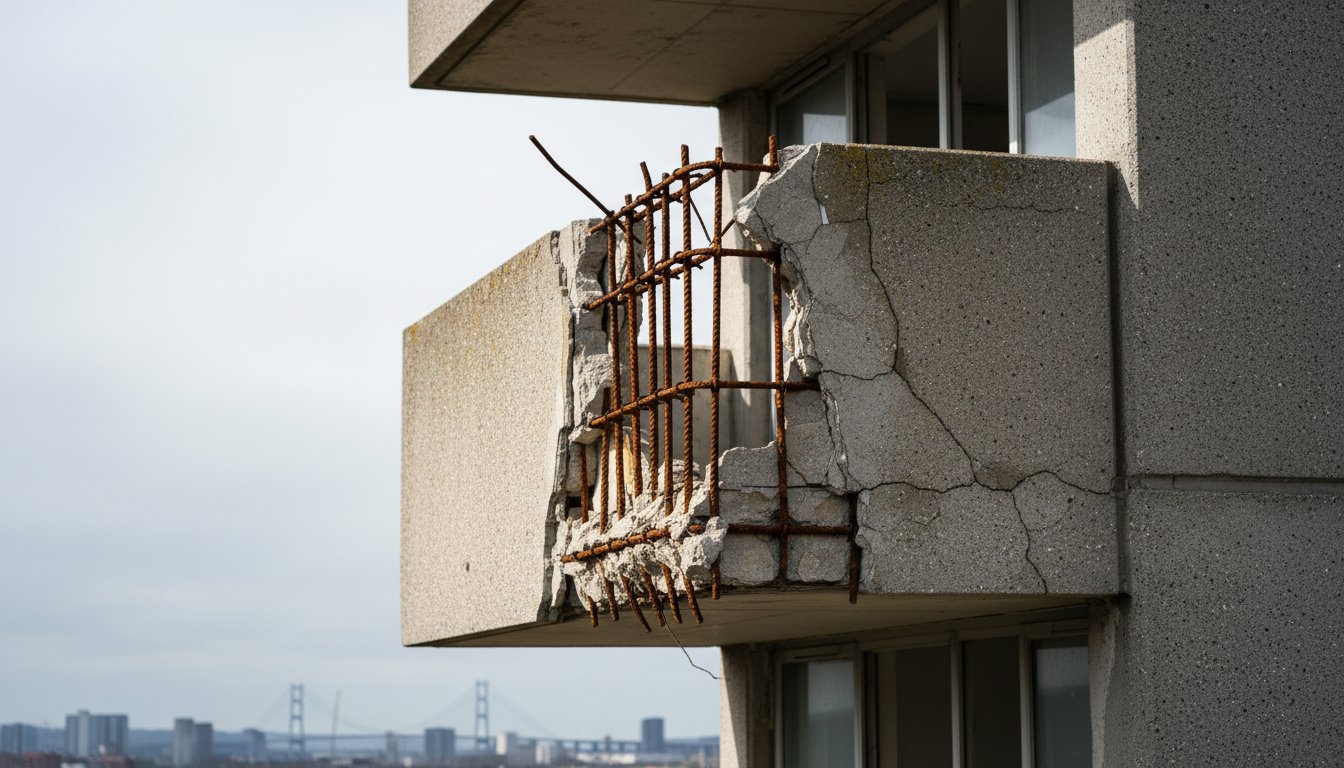
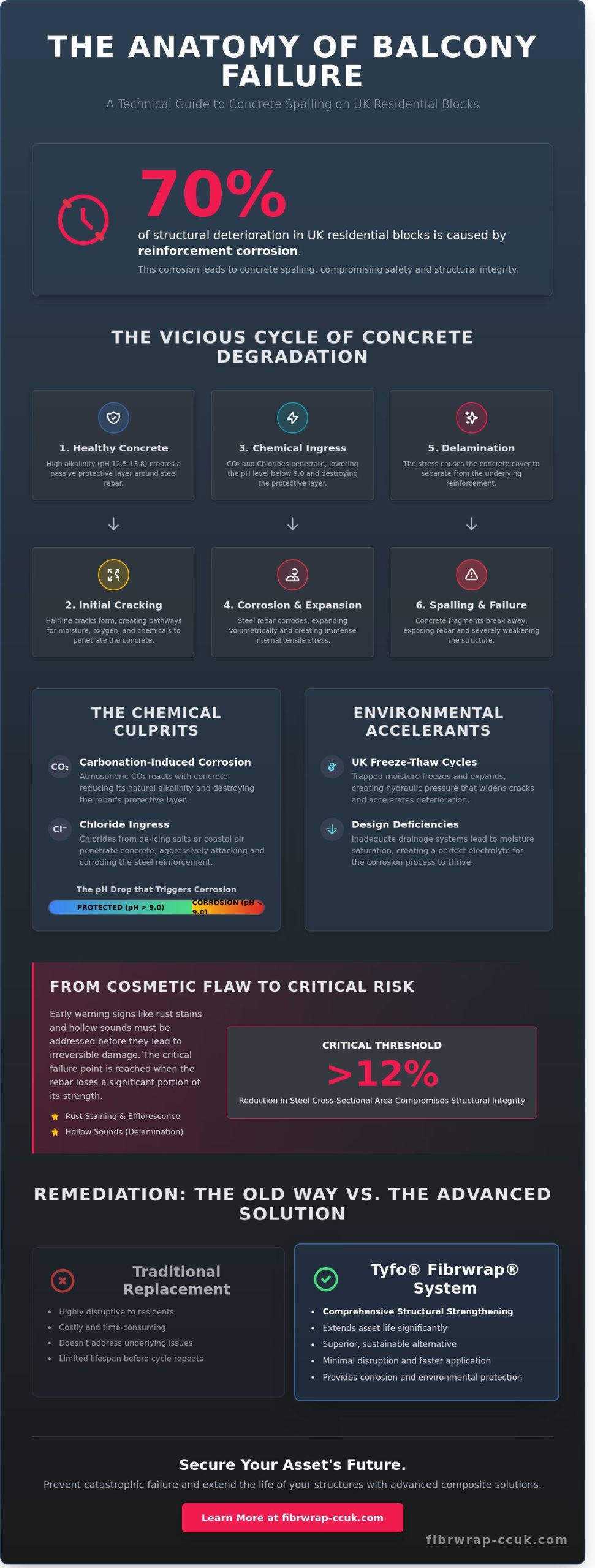
Recent industry data from the Concrete Repair Association indicates that approximately 70% of structural deterioration in UK residential blocks is directly attributable to reinforcement corrosion. For asset managers and surveyors, the sight of exposed rebar or delaminated surfaces is a clear indicator that the primary causes of concrete spalling on balconies have already compromised the building’s envelope. It’s understood that these defects represent more than just aesthetic concerns; they signify a critical loss of cross-sectional area in steel reinforcement that can lead to catastrophic failure if left unaddressed.
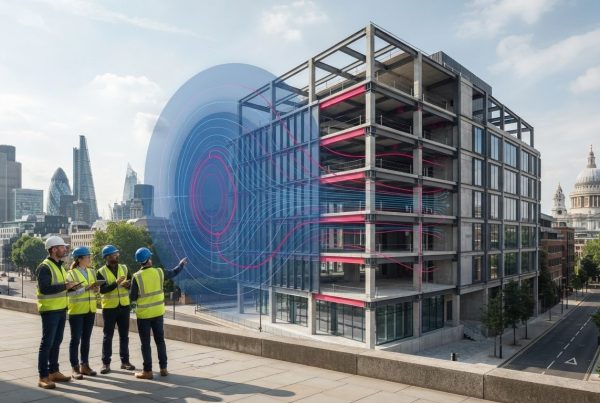
This technical analysis offers a professional engineering perspective on the chemical and mechanical mechanisms behind balcony failure, with a specific focus on the UK’s unique environmental stressors. You’ll gain an understanding of how carbonation and chloride-induced corrosion destabilise the cementitious matrix, alongside an evaluation of advanced structural strengthening technologies. By exploring the application of the Tyfo® system and other carbon fibre reinforced polymers, we’ll demonstrate how bespoke composite solutions provide a superior, sustainable alternative to traditional replacement, effectively extending asset life while mitigating safety liabilities.
Key Takeaways
- Gain a technical understanding of how internal tensile stresses and the inherent vulnerability of cantilevered geometries serve as primary causes of concrete spalling on balconies within the UK built environment.
- Examine the electrochemical mechanisms of carbonation and chloride ingress that facilitate reinforcement corrosion, exacerbated by the hydraulic pressures of British freeze-thaw cycles.
- Identify the critical transition from superficial aesthetic degradation to significant reinforcement section loss, ensuring the accurate quantification of diminished load-bearing capacity.
- Evaluate the efficacy of advanced Tyfo® Fibrwrap® composite systems in achieving comprehensive structural strengthening and sustainable asset life-extension over traditional remediation methods.
- Assess the impact of design deficiencies, such as inadequate drainage systems, on moisture saturation levels and the subsequent acceleration of structural deterioration.
Understanding Concrete Spalling and Its Impact on Balcony Integrity
Concrete spalling represents a critical failure state where internal tensile stresses, primarily generated by the volumetric expansion of corroding reinforcement steel, exceed the material’s inherent tensile strength. This physical manifestation, often defined as What is Concrete Spalling, results in the fracturing and eventual ejection of concrete fragments from the primary structure. Balconies are uniquely vulnerable to these processes because of their cantilevered geometry and multi-face exposure to the UK’s aggressive coastal and urban environments. Unlike internal floor slabs, balcony elements are subjected to moisture ingress from the top surface, the soffit, and the leading edges simultaneously, which accelerates the degradation of the concrete cover.
The degradation sequence typically follows a predictable trajectory. It begins with the formation of hairline cracks that provide a direct conduit for moisture and oxygen. This leads to delamination, where the concrete cover separates from the underlying reinforcement. The process is driven by the formation of a “corrosion cell” within the concrete matrix. In this electrochemical environment, the steel reinforcement acts as an electrode while the moisture within the concrete pores serves as an electrolyte, facilitating the flow of ions that leads to rapid metal loss and oxide expansion. Identifying these causes of concrete spalling on balconies is the first step in any robust structural remediation strategy.
The Porous Nature of Reinforced Concrete
Hardened concrete contains an intricate network of capillary pores and micro-cracks that act as pathways for deleterious agents like chlorides and carbon dioxide. Under normal conditions, the high alkalinity of the concrete, which typically maintains a pH between 12.5 and 13.8, provides a passivating layer that protects the steel from oxidation. When carbonation or chloride ions penetrate the concrete cover, this alkalinity is lost. Once the pH level drops below approximately 9.0, the protective layer dissolves, triggering the onset of the corrosion cycle and subsequent causes of concrete spalling on balconies.
Identifying Early Warning Signs
Proactive asset management relies on the early detection of structural distress to avoid the high costs of complete replacement. Engineers frequently identify rust staining and surface efflorescence as primary visual indicators of internal moisture movement and salt crystallisation. During a professional survey, hammer testing is employed to detect “hollow” or “drumbly” sounds that signify subsurface delamination before the concrete actually detaches. It’s essential to differentiate between minor surface scaling and deep structural spalling. While scaling may be aesthetic, structural spalling indicates a loss of reinforcement section. If the cross-sectional area of the steel reduces by more than 12%, the structural integrity of the balcony may be compromised, necessitating urgent structural strengthening or the application of specialized Tyfo® composite systems to ensure long-term asset life-extension.
Electrochemical Mechanisms: Carbonation and Chloride Ingress
The degradation of reinforced concrete is fundamentally an electrochemical process driven by the interaction between the material and its environment. In the United Kingdom, atmospheric conditions and infrastructure maintenance practices contribute significantly to the primary causes of concrete spalling on balconies. When the chemical equilibrium within the concrete matrix is disrupted, the embedded steel reinforcement loses its natural protection, leading to expansive corrosion that compromises structural integrity.
The Process of Carbonation-Induced Corrosion
Carbonation represents a pervasive threat in urban UK environments where elevated levels of carbon dioxide are present due to traffic and industrial activity. As atmospheric CO2 penetrates the porous matrix of the balcony slab, it reacts with calcium hydroxide to form calcium carbonate. This chemical transition steadily reduces the natural alkalinity of the material. The protective passivation layer on the steel reinforcement is compromised once the alkalinity of the concrete pore solution drops below a pH threshold of approximately 9.
The progression of this “carbonation front” is a slow but relentless movement toward the reinforcement. Its velocity is dictated by the permeability of the concrete and the depth of the structural cover. Once the carbonation front reaches the depth of the rebar, the passive environment is destroyed, allowing moisture and oxygen to initiate the oxidation of the steel. This process is often uniform across the bar, leading to widespread delamination over time.
Chloride-Induced Pitting and Accelerated Decay
Chloride ingress presents an even more aggressive pathway for structural deterioration, particularly for assets in coastal regions or those exposed to de-icing salts. Chloride ions possess the unique ability to “attack” and penetrate the passivation layer even when the surrounding concrete remains highly alkaline. This leads to localized pitting corrosion, a dangerous phenomenon where the steel loses significant cross-sectional area at specific points. Because this decay occurs deep within the slab, it often lacks visible surface signs until the structural integrity is severely weakened.
Sources of chlorides in the UK are typically dual-fold:
- Environmental Exposure: Marine aerosols in coastal towns can transport salt over several miles, depositing ions on balcony surfaces.
- Legacy Additives: Calcium chloride was frequently used as an accelerant in concrete mixes during the mid-20th century, meaning some balconies carry the catalyst for their own decay within the original pour.
The physical manifestation of spalling is the direct result of the volumetric expansion of rust. As the steel corrodes, the resulting iron oxide occupies a volume up to 6 times greater than the original metal. This expansion generates internal tensile stresses that concrete, which is naturally weak in tension, cannot withstand. Utilizing Advanced Remediation Techniques is essential to arrest these electrochemical cycles. For asset managers, early intervention through structural remediation is the most effective strategy for ensuring long-term asset life-extension and occupant safety.
Environmental Stressors and Design Deficiencies
The structural integrity of a balcony is often compromised by a combination of atmospheric conditions and inherent design oversights. In the UK, the prevalence of freeze-thaw cycles is a significant factor in material degradation. When moisture enters the porous concrete matrix and freezes, it expands by approximately 9%. This expansion generates internal hydraulic pressure that eventually surpasses the concrete’s tensile capacity, resulting in the separation of the surface layer. This physical stress is a primary driver behind the causes of concrete spalling on balconies in temperate climates.
A critical design deficiency often observed in older assets is inadequate concrete cover. If the distance between the reinforcing steel and the external environment is insufficient, the protective passivating layer is lost much faster. This vulnerability directly contributes to the corrosion of reinforcing steel as a cause of spalling, as the metal expands up to six times its original volume upon oxidation. Modern engineering standards typically require a cover of 30mm to 50mm to prevent this early-onset decay, yet many structures built before 1990 fail to meet these specifications.
Thermal Expansion and BBQ-Induced Stress
Localised heat sources, specifically domestic grills and BBQs, introduce significant thermal gradients into the concrete slab. The surface temperature can rise rapidly while the slab core remains at ambient temperature, causing differential thermal expansion. This disparity generates micro-fissures that provide direct pathways for moisture and chlorides. Beyond physical cracking, grease and oil spillages act as aggressive chemical contaminants. These substances often degrade the chemical bonds of waterproofing membranes, leaving the structural substrate exposed to further environmental attack.
Drainage Failures and Moisture Entrapment
Poorly designed or maintained drainage systems, such as blocked scuppers or insufficient falls, result in ponding water. This standing water leads to localised moisture saturation at the slab edges, which remains one of the leading causes of concrete spalling on balconies. Moisture entrapment doesn’t just fuel freeze-thaw damage; it also accelerates chemical decay through the leaching of calcium hydroxide. Maintaining asset life-extension requires a robust, integrated waterproofing strategy to shield the structural substrate—for property owners seeking professional building envelope maintenance, it’s beneficial to check out Pro Torch Roofing for examples of comprehensive exterior care. Without effective drainage, even high-quality concrete will eventually succumb to the persistent pressure of moisture ingress and the subsequent internal expansion of the reinforcement bars. For property owners looking to address drainage issues at the source, such as leaking gutters or flat roof sections that contribute to moisture runoff, specialist waterproofing resources from Goo For It provide effective tools for preventative maintenance.
Evaluating Structural Risk: From Cosmetic Flaking to Section Loss
The transition of spalling from a maintenance nuisance to a critical safety hazard occurs when the corrosion of internal steel reinforcement leads to significant section loss. As the iron oxide expands, it exerts internal pressures exceeding 25 MPa, which far exceeds the tensile capacity of standard concrete. This mechanical failure results in the forceful ejection of concrete fragments. In high-density residential assets across the UK, falling debris presents an immediate risk to public safety. If the load-bearing capacity of the balcony slab is sufficiently diminished, the risk of progressive collapse increases.
Surface-level patching is frequently insufficient because it fails to address the underlying electrochemical imbalance. When a repair is performed without addressing the chloride contamination or carbonation in the surrounding area, it often creates an “incipient anode” effect. This phenomenon accelerates corrosion in the “parent” concrete adjacent to the new patch, leading to further structural strengthening requirements within 24 to 36 months. Effectively managing the causes of concrete spalling on balconies requires a transition from reactive aesthetics to rigorous engineering analysis.
Diagnostic Testing and Structural Surveys
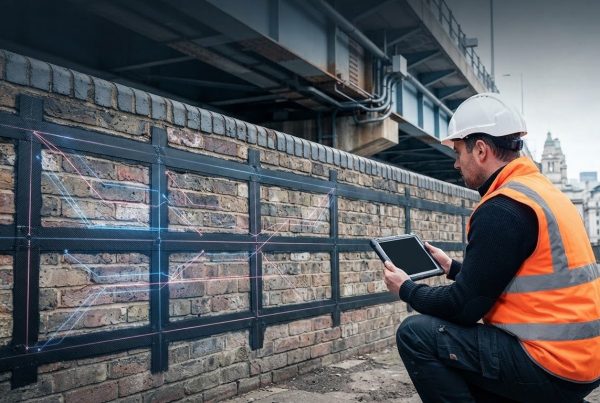
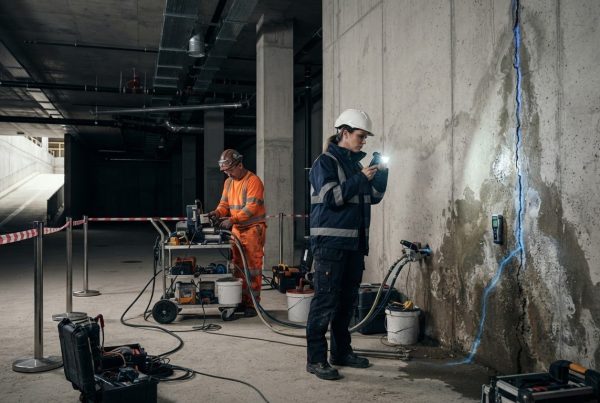
Professional surveys rely on carbonation depth testing and chloride profile analysis to determine the remaining service life of the structure. Engineers utilize half-cell potential mapping to identify active corrosion zones before physical cracking manifests. Pull-off testing is conducted to verify the bond strength of existing concrete layers, ensuring they can support the application of advanced composite systems. These empirical methods allow for a bespoke remediation strategy that targets the root causes of concrete spalling on balconies rather than just the symptoms.
The “Incubation Period” of Concrete Decay
It’s vital to recognize that spalling is the final stage of a long-term internal deterioration process. The “incubation period” involves the slow ingress of contaminants that eventually breach the protective passivity of the steel reinforcement. A lack of visible spalling doesn’t equate to a lack of structural risk; internal delamination can exist long before the concrete face detaches. Proactive testing and early intervention can reduce overall remediation costs by up to 50% compared to emergency structural repairs. Our team focuses on asset life-extension through scientifically validated methods.
Advanced Remediation: Extending Asset Life via Tyfo® Fibrwrap®
Traditional remediation strategies for balcony degradation frequently rely on localized “patch and paint” repairs. These superficial interventions often fail to address the fundamental structural compromises resulting from the primary causes of concrete spalling on balconies, such as chloride-induced corrosion or carbonation. Composites Construction UK advocates for a transition toward comprehensive structural strengthening. The application of the Tyfo® Fibrwrap® system allows for the restoration and enhancement of balcony load capacity. By utilizing Carbon Fibre Reinforced Polymer (CFRP), engineers provide a lightweight, non-corrosive alternative to traditional steel plate bonding. This methodology aligns with modern sustainability objectives. Extending the operational lifespan of existing infrastructure reduces the carbon footprint associated with demolition and reconstruction. It’s a strategic choice for asset managers focused on long-term value and environmental responsibility.
The Tyfo® Fibrwrap® Advantage
The Tyfo® Fibrwrap® system is characterized by an exceptional strength-to-weight ratio. This property permits structural strengthening without adding substantial dead load to the existing balcony assembly. The application process is seamless. It ensures the original architectural profile of the balcony remains largely unchanged. This is vital for maintaining the aesthetic integrity of high-rise residential blocks. Unlike traditional steel reinforcement, CFRP composites are inherently impervious to the chemical drivers of spalling. Their corrosion resistance ensures that the remediation remains effective even in aggressive marine or urban environments where salt spray and atmospheric pollutants are prevalent. The materials are tested to rigorous standards, often providing tensile strengths exceeding 3,000 MPa, ensuring performance under extreme load conditions.
Integrating Cathodic Protection and Specialized Coatings
Effective structural remediation requires a multi-layered approach to mitigate the underlying causes of concrete spalling on balconies. The integration of sacrificial anodes provides galvanic cathodic protection. This process halts ongoing corrosion within the surrounding concrete by diverting the oxidative process away from the internal steel reinforcement. Following the structural application of Tyfo® Fibrwrap®, advanced anti-carbonation coatings are applied. These barriers prevent future chemical ingress and moisture penetration. The CCUK approach focuses on bespoke design solutions. Each asset’s specific engineering requirements are analysed to ensure the chosen remediation strategy provides maximum durability. This methodical process ensures compliance with UK building regulations and provides asset managers with long-term security. By addressing both the structural deficiency and the environmental catalysts, the design life of the balcony is frequently extended by 30 years or more.
Implementing Advanced Remediation for Long-Term Structural Stability
Mitigating the causes of concrete spalling on balconies necessitates a rigorous technical approach that addresses both electrochemical carbonation and chloride-induced corrosion. When structural surveys identify significant section loss in reinforcement steel, the transition from cosmetic maintenance to essential structural strengthening becomes a priority for safety and regulatory compliance. It’s often found that early intervention using the Tyfo® Fibrwrap® system can extend the design life of an asset by decades, avoiding the excessive costs associated with full reconstruction. This methodology aligns with the stringent requirements of the UK Building Safety Act 2022, ensuring that high-rise assets remain resilient against environmental stressors.
Fibrwrap Construction UK operates as the exclusive UK licensee for the Tyfo® Fibrwrap® system, providing a specialized framework for high-rise and infrastructure asset life-extension. Our engineering team utilizes comprehensive structural survey and testing capabilities to determine the precise requirements for every bespoke project. By prioritizing advanced materials science over traditional repair methods, the integrity of the built environment is preserved for the long term. Consult with our specialist engineering team regarding your balcony remediation project. Taking these technical steps today secures the future of your infrastructure assets.
Frequently Asked Questions
What is the main cause of concrete spalling on balconies?
The primary cause of concrete spalling on balconies is the oxidation of internal steel reinforcement, commonly known as rebar. When steel corrodes, it expands to approximately 6.5 times its original volume, exerting massive internal pressure on the surrounding material. This process results in the cracking and eventual detachment of the outer concrete layer. Identifying the specific causes of concrete spalling on balconies is essential for determining the correct remediation strategy and ensuring structural integrity.
Is spalling concrete on a balcony dangerous?
Spalling concrete presents significant safety risks to both the building’s occupants and the public. Falling debris, even small fragments weighing less than 500 grams, can cause serious injury or property damage when falling from height. From a structural perspective, spalling indicates that the internal reinforcement is degrading. If it’s left untreated, the load-bearing capacity of the balcony decreases, which can eventually lead to a total structural failure.
Can you repair concrete spalling yourself?
You shouldn’t attempt to repair structural concrete spalling without professional engineering oversight. Simple DIY surface patches often fail within 12 to 24 months because they don’t address the underlying electrochemical causes of the corrosion. Professional remediation must follow BS EN 1504 standards to ensure the repair is chemically compatible and structurally sound. Specialist contractors use precise techniques like mechanical breakout and primer application that are difficult to replicate with domestic tools.
How long does a concrete spalling repair last?
A professionally executed repair using advanced composite materials can extend the asset’s life by 25 to 50 years. The longevity depends on the quality of the surface preparation and the subsequent application of protective coatings or carbon fibre systems. When repairs are performed according to rigorous engineering specifications, they stop the ingress of moisture and chlorides. This preventative approach ensures the structural strengthening remains effective for the remainder of the building’s service life.
Does insurance cover concrete spalling on balconies?
Standard UK buildings insurance policies typically exclude damage caused by gradual deterioration, wear and tear, or lack of maintenance. It’s rare for insurance to cover spalling unless the damage is the direct result of a sudden, insured event like a fire or vehicle impact. You should review your policy for specific clauses regarding latent defects or structural subsidence. Property managers often need to fund these repairs through a sinking fund or a special levy on leaseholders.
How much does it cost to fix spalling concrete in the UK?
Repair costs fluctuate based on the severity of the corrosion and the accessibility of the balcony structure. Industry data suggests that localized patch repairs in the UK often range from £500 to £1,500 per square metre. For comprehensive structural remediation on a multi-storey residential block, overall project costs can quickly surpass £75,000. These figures include the necessary scaffolding, material testing, and the application of specialist protective systems required for a permanent fix.
What is the difference between carbonation and chloride ingress?
Carbonation is a chemical reaction where atmospheric carbon dioxide reacts with concrete hydrates, lowering the pH level from 12.5 to below 9. This loss of alkalinity destroys the protective layer around the steel. Chloride ingress occurs when salt ions from marine environments or de-icing salts penetrate the concrete. These ions directly attack the steel reinforcement even if the pH remains high. Both processes lead to the causes of concrete spalling on balconies by triggering rapid rebar corrosion.
How does Tyfo® Fibrwrap® help with spalling repairs?
The Tyfo® system provides bespoke structural strengthening by bonding carbon fibre reinforced polymers to the concrete surface. This advanced composite material increases the load-bearing capacity of the balcony without adding significant weight or thickness. It creates an impermeable barrier that prevents the ingress of moisture and oxygen, effectively halting the corrosion cycle. Engineers use this technology for asset life-extension, providing a more sustainable and durable alternative to traditional concrete replacement methods.