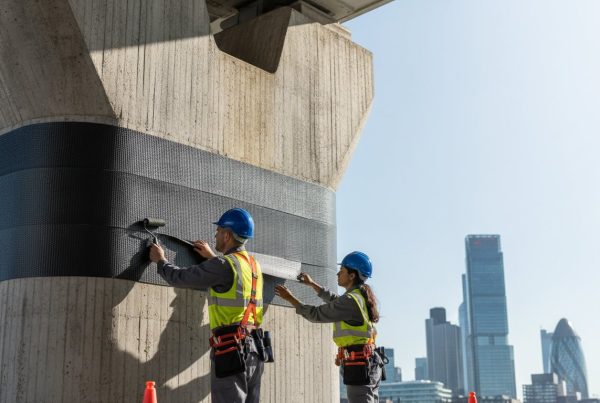

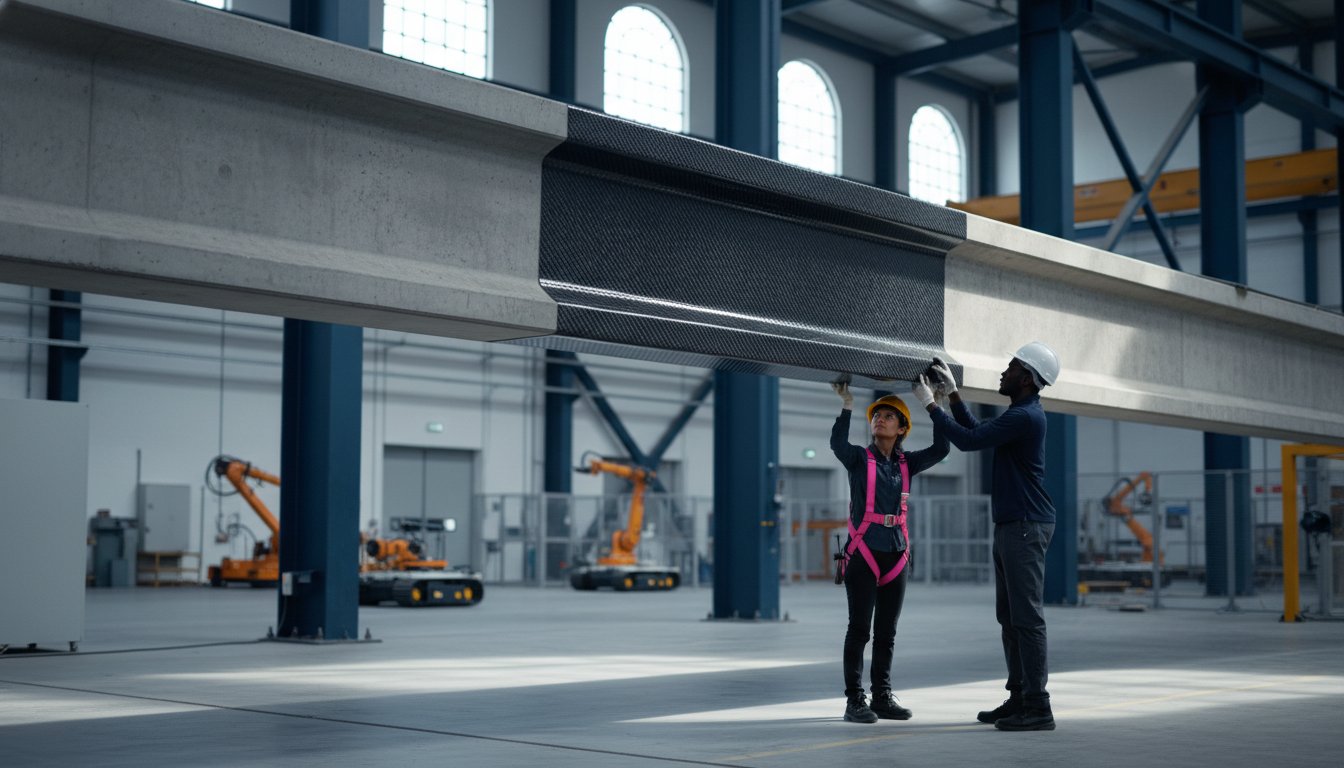
What if the most effective method to accommodate increased load demands from modern robotics is not to replace the structure, but to chemically enhance its existing composition? As non-residential construction input prices continue to rise, the financial imperative for a structural upgrade for industrial facilities has shifted from a routine maintenance task to a critical strategic intervention. You likely recognise that the traditional approach of heavy demolition and steel reinforcement often creates more operational disruption than the original structural deficit warrants.
It’s understood that maintaining production continuity whilst meeting the 2026 updates to the California Building Standards Code is a complex balancing act. This technical guide provides an expert exploration of advanced composite strengthening and structural remediation strategies designed to enhance asset integrity without the necessity for prolonged downtime. We will examine the application of proprietary systems like Tyfo® Fibrwrap®, which offers tensile capacities significantly exceeding traditional structural steel; the nuances of seismic retrofitting; and how bespoke engineering solutions can extend the functional lifespan of aging concrete and steel assets amongst evolving industrial constraints.
Key Takeaways
- Identify the technical drivers necessitating a structural upgrade for industrial facilities, ranging from increased superimposed loads to modern seismic compliance.
- Understand the engineering science behind Carbon Fibre Reinforced Polymer (CFRP) and Tyfo® Fibrwrap® systems as high-tensile alternatives to traditional reinforcement.
- Evaluate the logistical advantages of composite strengthening over steel plate bonding, specifically regarding weight reduction and the avoidance of secondary foundation works.
- Recognise the importance of advanced diagnostic testing, such as carbonation and ultrasonic pulse velocity surveys, in establishing an empirical baseline for remediation.
- Discover how specialist engineering contractors manage risk and safety protocols to ensure successful asset life-extension within high-hazard industrial environments.
The Imperative for Structural Upgrade for Industrial Facilities
In heavy industrial environments, a structural upgrade for industrial facilities is defined as the systematic enhancement of a building’s load-bearing capacity and resilience to meet modern operational requirements. This process transcends routine maintenance; it involves the application of advanced engineering principles to ensure that aging infrastructure can withstand the rigours of contemporary manufacturing and logistics. As total construction spending reached $2.186 billion in March 2026, the focus has shifted towards the preservation of existing assets as a more viable alternative to the volatility of new-build costs. Regulatory compliance, particularly adherence to modern British Standards and the Eurocodes, serves as a non-negotiable benchmark for asset controllers who must balance safety with commercial viability.
Primary Triggers for Industrial Structural Remediation
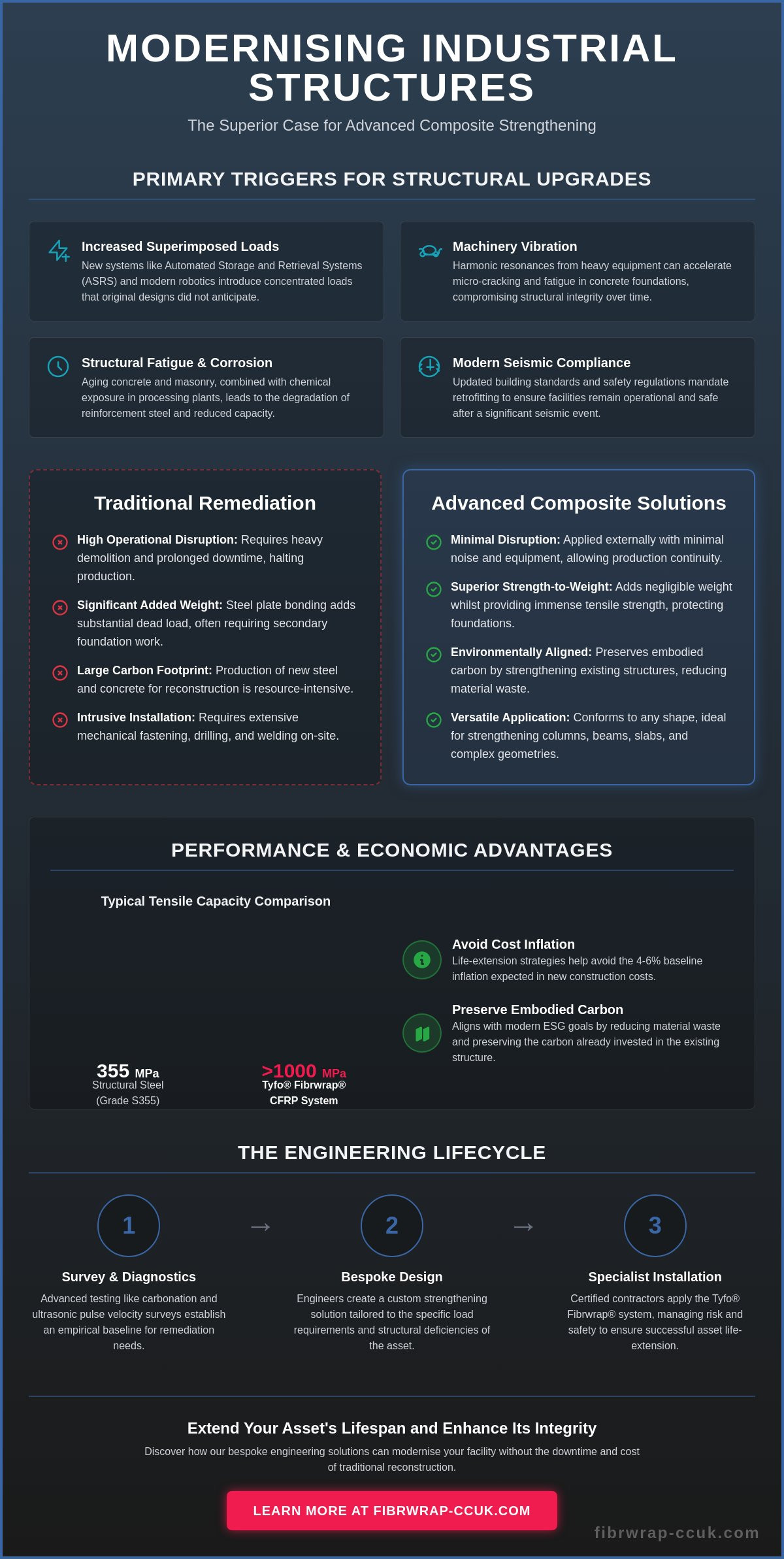
Modern industrial operations frequently introduce stresses that original designers didn’t anticipate. The implementation of Automated Storage and Retrieval Systems (ASRS) often necessitates a bespoke design to accommodate concentrated point loads on suspended slabs or mezzanine levels. It’s common for machinery vibration to induce harmonic resonances that accelerate micro-cracking in concrete foundations, requiring high-performance damping or strengthening solutions. Beyond load increases, structural fatigue amongst aging concrete and masonry elements remains a primary concern. Processing plants, in particular, face the relentless challenge of chemical exposure and corrosion, which can compromise the integrity of reinforcement steel over decades of service. In regions prone to geological instability, a comprehensive seismic retrofit is often mandated to comply with updated safety regulations, such as the 2026 enforcement of new building standards, ensuring that the facility remains operational following a significant event.
The Economic and Environmental Case for Life-Extension
Advanced Composite Solutions: Tyfo® Fibrwrap® and CFRP Strengthening
Carbon Fibre Reinforced Polymer (CFRP) represents a paradigm shift in how technical professionals approach a structural upgrade for industrial facilities. Unlike traditional steel plate bonding, which adds significant dead weight and requires intrusive mechanical fastening, CFRP systems utilise high-tensile fibres embedded in a polymer matrix to provide superior external reinforcement. These Advanced Composite Materials offer a tensile capacity that frequently exceeds 1000 MPa, providing a strength-to-weight ratio that is vastly superior to Grade S355 structural steel, which typically yields at 355 MPa. This disparity allows for the substantial strengthening of columns, beams, and slabs without altering the building’s original mass or architectural footprint, ensuring that the existing foundations aren’t overstressed by the remediation itself.
Technical Properties of Tyfo® Fibrwrap® Systems
The efficacy of the Tyfo® Fibrwrap® system is derived from the synergistic interaction between specialised epoxy resins and high-modulus carbon fibre fabrics. During the Tyfo® Fibrwrap® installation process, the fabric is saturated with a proprietary resin that, once cured, creates a rigid composite capable of resisting extreme industrial temperature fluctuations and repetitive load cycles. Its inherent corrosion resistance makes it particularly suitable for industrial pipeline rehabilitation and facilities exposed to aggressive chemical environments where traditional steel would rapidly degrade. The system’s versatility ensures it remains a primary choice for engineers tasked with maintaining asset integrity amongst the harsh conditions of heavy manufacturing.
Bespoke Design for Complex Industrial Geometry
Industrial facilities rarely present uniform surfaces for reinforcement. The inherent flexibility of dry carbon fabrics before resin impregnation allows these systems to conform to irregular structural shapes, such as circular columns or tapered beams, even whilst working amongst densely packed machinery. Every intervention relies on bespoke engineering calculations to determine the precise fibre orientation and layering required to meet specific performance criteria. This tailored approach is essential for achieving high-level seismic retrofitting and blast mitigation, where advanced material layering is utilised to absorb and dissipate energy during extreme events. If your facility requires technical validation for a specific load-bearing challenge, you can consult our technical department for a detailed feasibility assessment. This methodical design process ensures that every structural upgrade for industrial facilities is grounded in empirical evidence and engineering rigour.
Comparing Traditional Remediation vs. Composite Strengthening
Evaluating the logistical requirements of traditional steel plate bonding against advanced Carbon Fibre Reinforced Polymer (CFRP) wrapping reveals a significant disparity in site efficiency and structural impact. Traditional methods often necessitate the mechanical anchoring of heavy steel sections, which increases the dead load of the structure. This added weight frequently triggers a requirement for secondary foundation strengthening, a process that is both invasive and costly. By contrast, a structural upgrade for industrial facilities using CFRP adds negligible mass. The high strength-to-weight ratio of composites ensures that the existing substructure remains within its design capacity, even whilst the superimposed load capacity of the primary members is substantially increased. This technical advantage eliminates the need for expensive geotechnical interventions below the slab.
Operational Impact and Facility Downtime
The “hidden costs” of production halts are often the most significant factor in industrial project planning. Traditional remediation requires heavy lifting equipment and often involves hot work, such as welding, which may be prohibited in volatile or food-safe environments. CFRP systems are hand-applied and require minimal site access, allowing for installation in confined spaces amongst live machinery. Since no hot work is required, production can often continue in adjacent zones, significantly reducing the overall economic impact of the project. The rapid curing times of proprietary resins ensure that structural capacity is restored within hours, facilitating a much tighter project programme than traditional concrete or steel interventions. For general maintenance and secondary bonding requirements that also demand high-performance, non-intrusive solutions, specialists like Fosseway Tapes & Fixings Limited provide the industrial-grade tapes and adhesives necessary for modern facility management.
Structural Performance and Durability
In terms of long-term asset management, the performance of composites under cyclic loading is superior to that of traditional steel. Steel plates are susceptible to fatigue at bolt holes and weld points, whereas CFRP distributes stresses more evenly across the bonded surface. Corrosion resistance is another critical differentiator; whilst steel requires ongoing inspection and protective coatings to prevent oxidation, carbon fibre is inherently inert. This makes it an ideal solution for a structural upgrade for industrial facilities located in aggressive chemical or coastal environments. Properly designed composite systems can offer a functional durability exceeding 50 years, whereas traditional concrete repairs often require re-intervention within a 20-year cycle. This longevity is supported by bespoke design features that account for the specific environmental stressors of the site, ensuring that the remediation remains robust for the remainder of the asset’s service life.
The Engineering Lifecycle: From Structural Survey to Bespoke Design
A successful structural upgrade for industrial facilities is fundamentally dependent on the quality of the initial diagnostic data. A comprehensive structural survey serves as the empirical foundation upon which all subsequent engineering decisions are made. Without a rigorous assessment of the existing material properties, any strengthening strategy remains speculative. Technical professionals must identify latent defects that are not visible to the naked eye; these include carbonation-induced corrosion or internal delamination within concrete matrices. By conducting a systematic feasibility study, asset controllers can determine the most cost-effective strengthening strategy that balances long-term durability with immediate budgetary constraints.
Diagnostic Testing and Asset Inspection
Assessing the residual strength of industrial concrete and masonry requires a suite of sophisticated non-destructive testing (NDT) methods. Ultrasonic pulse velocity (UPV) is utilised to detect internal voids and cracks, whilst electromagnetic cover meters map the precise location and depth of existing reinforcement within industrial slabs. To ensure the substrate is suitable for Carbon Fibre Reinforced Polymer (CFRP) bonding, pull-off tests are conducted to verify the tensile strength of the concrete surface. These diagnostics are often integrated with broader concrete repairs to ensure that the underlying structure is chemically and physically stabilised before any external reinforcement is applied. This methodical approach identifies whether the existing concrete can support the transfer of stresses from the composite wrap.
Collaborative Design and Technical Specification
The transition from raw survey data to a technical design requires close collaboration with specialist engineering contractors who possess a deep understanding of advanced materials. This phase involves the development of bespoke engineering calculations that translate identified structural deficits into precise material requirements. Every specification must adhere to the rigour of UK building regulations and relevant safety standards, such as the Eurocodes, to ensure absolute reliability. The resulting design features specify the exact fibre orientation, resin types, and layering sequences required to achieve the desired load-bearing capacity. For facilities requiring immediate technical validation of their infrastructure, you should contact our engineering team to initiate a formal diagnostic review. This disciplined engineering lifecycle ensures that the structural upgrade for industrial facilities is both scientifically sound and operationally viable for the remainder of the asset’s functional life.
Strategic Asset Management: Extending Lifespans with Specialist Contracting
The successful execution of a structural upgrade for industrial facilities reaches its critical phase during the transition from technical specification to physical implementation. In high-hazard environments, the specialist engineering contractor serves as the primary guardian of both project safety and structural integrity. This role involves more than simple installation; it requires the management of complex logistical constraints whilst adhering to the rigorous safety standards expected in 2026. With the Occupational Safety and Health Administration (OSHA) implementing stricter enforcement and expanded inspections across high-risk industries this year, the integration of robust risk management protocols is non-negotiable. Effective contracting ensures that every intervention is performed with methodical precision, minimising the risk of latent defects that could compromise the asset’s long-term security.
Selecting a Specialist Partner for Industrial Upgrades
Evaluating a potential partner for a structural upgrade for industrial facilities requires a deep analysis of their technical competence and history of successful project delivery. Technical professionals should prioritise contractors who offer end-to-end design and installation capabilities, as this continuity reduces the risk of miscommunication between the engineering and application phases. Exclusive access to proprietary systems, such as Tyfo® Fibrwrap®, provides a necessary assurance of quality; these materials are only installed by certified professionals who have undergone rigorous training in composite science. This exclusivity acts as a signature of reliability, ensuring that the performance characteristics defined in the bespoke engineering calculations are accurately replicated on-site. Commissioning and handover should include detailed documentation of the cured material properties, providing a clear empirical record for the facility’s asset management plan.
Future-Proofing the Industrial Facility
Strategically extending the lifespan of an asset through structural remediation provides the flexibility required for future operational shifts. As industrial facilities evolve to accommodate heavier robotics or automated storage systems, a reinforced structure offers the necessary headroom for layout changes without further invasive construction. This relationship between structural integrity and long-term asset value is fundamental to modern infrastructure guardianship. By opting for sophisticated composite strengthening over total replacement, asset controllers can preserve the functional utility of essential structures whilst avoiding the volatility of the 2026 construction market. For technical professionals seeking to initiate a formal review of their infrastructure’s current capacity, please contact our engineering team to arrange a comprehensive structural assessment. This methodical approach to asset management ensures that industrial facilities remain compliant, safe, and productive for decades to come.
Advancing Infrastructure Guardianship through Technical Innovation
The transition towards sophisticated remediation strategies represents a fundamental shift in modern asset management. By prioritising a structural upgrade for industrial facilities through the application of advanced composites, technical professionals can bypass the logistical constraints and carbon costs associated with traditional demolition and steel construction. We have explored how the integration of rigorous diagnostic testing with bespoke engineering design ensures that aging infrastructure remains resilient amongst the evolving demands of modern automation and 2026 regulatory benchmarks. This methodical approach to life-extension preserves the embodied carbon of the structure whilst significantly reducing operational downtime.
Achieving these technical outcomes requires a partnership with a seasoned specialist that possesses both the design expertise and the exclusive material systems necessary for high-hazard environments. As the exclusive UK licensee for Tyfo® Fibrwrap® systems, we provide a proven track record in national infrastructure projects, ensuring every intervention is grounded in empirical evidence and engineering rigour. It is now possible to secure the functional utility of essential assets with absolute reliability. Consult with our specialist engineers for your industrial structural upgrade to ensure long-term security and operational excellence. Your facility’s structural integrity remains the primary foundation of your future productivity.
Frequently Asked Questions
What are the main benefits of using CFRP for a structural upgrade in an industrial facility?
Carbon Fibre Reinforced Polymer (CFRP) provides a high strength-to-weight ratio that allows for the enhancement of load-bearing capacity without adding significant dead weight to existing foundations. Its inherent corrosion resistance ensures long-term durability in aggressive chemical environments, whilst its flexible application allows it to conform to complex geometries. This makes it a superior choice for a structural upgrade for industrial facilities compared to traditional methods that require mechanical fixings and secondary substructure reinforcement.
How long does a typical CFRP structural strengthening project take to complete?
The timeline for a CFRP strengthening project is typically shorter than traditional steel interventions due to the rapid curing properties of proprietary resins and the lack of heavy lifting equipment. Whilst the specific duration depends on the surface area and substrate condition, many industrial applications can be completed in days rather than weeks. This efficiency is achieved through methodical planning and the use of hand-applied materials that reach full structural capacity quickly.
Can structural upgrades be performed whilst the industrial facility is still operational?
Structural upgrades can frequently be performed whilst the facility remains operational; since the process is hand-applied and doesn’t require hot work, it eliminates the fire risks associated with traditional welding. This allows production to continue in adjacent zones, significantly reducing the economic impact of facility downtime. A detailed safety and logistics plan is established by a specialist contractor to ensure that the remediation works don’t interfere with daily production cycles.
Is CFRP strengthening more expensive than traditional steel plate bonding?
Whilst the raw material cost of carbon fibre is often higher than structural steel, the total project expenditure is frequently lower due to reduced logistical and installation costs. Traditional steel plate bonding requires heavy machinery, mechanical anchors, and often secondary foundation strengthening to support the added mass. CFRP avoids these requirements, making it a more cost-effective solution when considering the “hidden costs” of production halts and the avoidance of extensive structural modifications.
What types of industrial structures are most suitable for Tyfo® Fibrwrap® systems?
Tyfo® Fibrwrap® systems are suitable for a wide range of structures, including reinforced concrete columns, beams, slabs, and chimneys, as well as industrial pipelines and masonry walls. These systems are particularly effective for retrofitting aging assets to meet modern seismic requirements or to support increased superimposed loads from automated machinery. The versatility of the wrap allows it to be applied to circular, square, or irregular profiles with equal efficacy amongst complex industrial machinery.
How do I know if my industrial facility requires a structural upgrade?
It’s likely that an industrial facility requires a structural upgrade for industrial facilities if there’s a planned change of use, such as the installation of heavier machinery, or if visible signs of degradation like concrete spalling are present. Regulatory updates, including changes to seismic standards or building codes, may also mandate a formal intervention. A professional structural survey and non-destructive testing are essential to determine the current residual strength of the asset.
Does CFRP provide fire resistance for industrial buildings?
CFRP systems require the application of specialised fire-retardant coatings or cementitious insulation layers to achieve the fire ratings mandated by building regulations. Whilst the epoxy resins are sensitive to elevated temperatures, these protective layers ensure the structural integrity is maintained for the required duration during a fire event. Every bespoke design accounts for these thermal requirements to ensure compliance with local safety standards and long-term infrastructure guardianship.
What is the expected lifespan of a composite structural repair?
It’s expected that a professionally designed and installed composite structural repair will have a functional lifespan exceeding 50 years. This longevity is achieved through the use of inert materials that don’t suffer from the oxidation or fatigue common in traditional steel and concrete repairs. By protecting the underlying substrate from further environmental ingress, these systems effectively stabilise the asset and ensure its utility for the remainder of its service life.