
Approximately 10% of Great Britain’s 71,000 bridges are currently classified as substandard; it’s a statistic that underscores the critical nature of maintaining the UK’s ageing infrastructure. For asset controllers and structural engineers, the appearance of fractured concrete is rarely a surprise, yet the technical spalling meaning is often misunderstood as a mere surface defect. In reality, spalling serves as a forensic indicator of deep-seated electrochemical failure, typically triggered by chloride ingress or carbonation that compromises the internal reinforcement steel.
You understand that reactive, localised patching is no longer sufficient to ensure long-term structural safety or compliance with the Building Safety Act 2022. This article delivers an engineering-led analysis of the mechanisms driving concrete delamination and the structural implications for high-value assets. We provide a comprehensive overview of advanced remediation strategies, including the application of Tyfo® Fibrwrap® systems and Carbon Fibre Reinforced Polymer (CFRP) strengthening. By examining the transition from traditional repair methods to sophisticated, evidence-based interventions, we demonstrate how to achieve rigorous safety standards whilst significantly extending the functional utility of essential concrete structures.
Key Takeaways
- Understand the technical spalling meaning as a forensic indicator of internal electrochemical failure rather than a superficial aesthetic defect.
- Identify the primary mechanisms of deterioration, specifically the expansive forces generated by reinforcement corrosion which exceed the cohesive strength of the concrete substrate.
- Evaluate the critical structural risks associated with unchecked delamination, including the significant loss of section and the compromise of steel-to-concrete bond integrity.
- Learn the standard forensic protocols required for accurate diagnosis, including carbonation testing and chloride ion analysis, to inform bespoke engineering solutions.
- Explore advanced life-extension strategies using Carbon Fibre Reinforced Polymer (CFRP) and Tyfo® Fibrwrap® systems to restore structural capacity whilst prioritising sustainability.
Spalling Meaning: Defining Concrete and Masonry Fragmentation
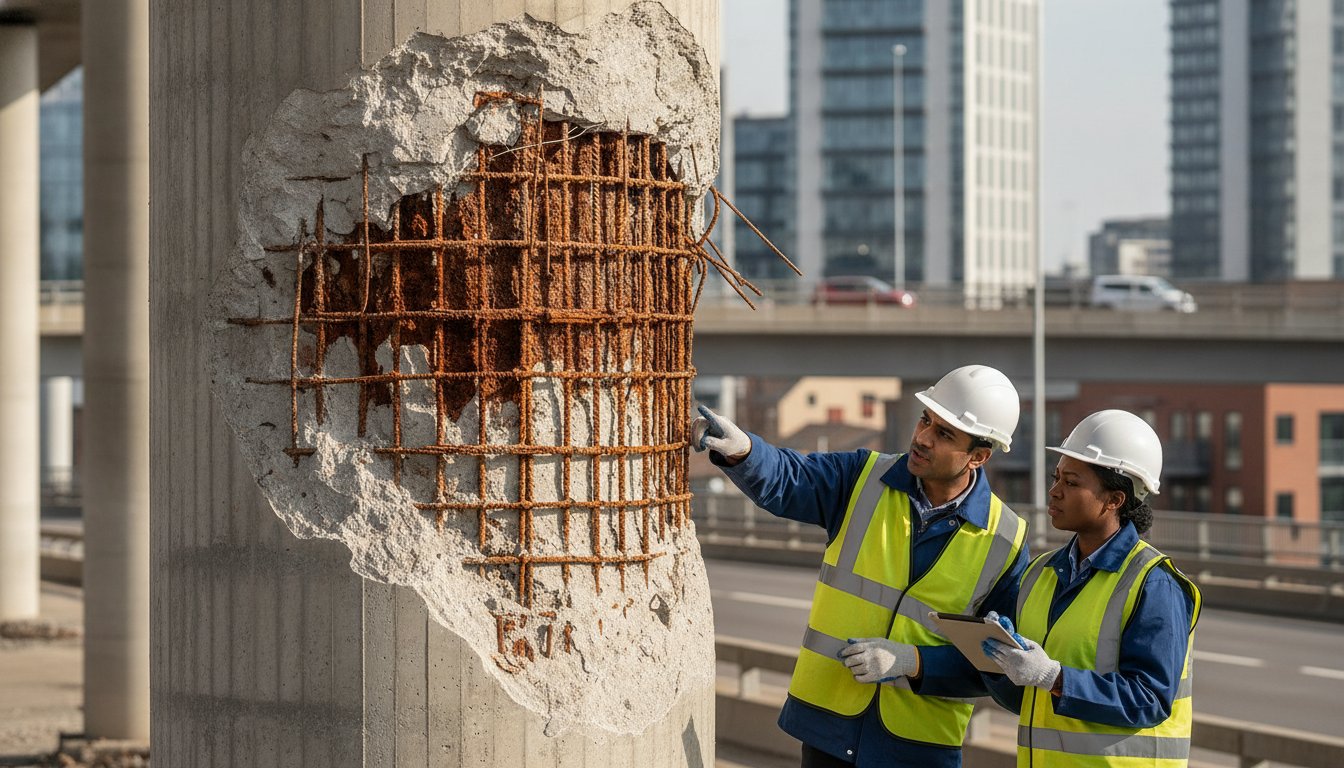
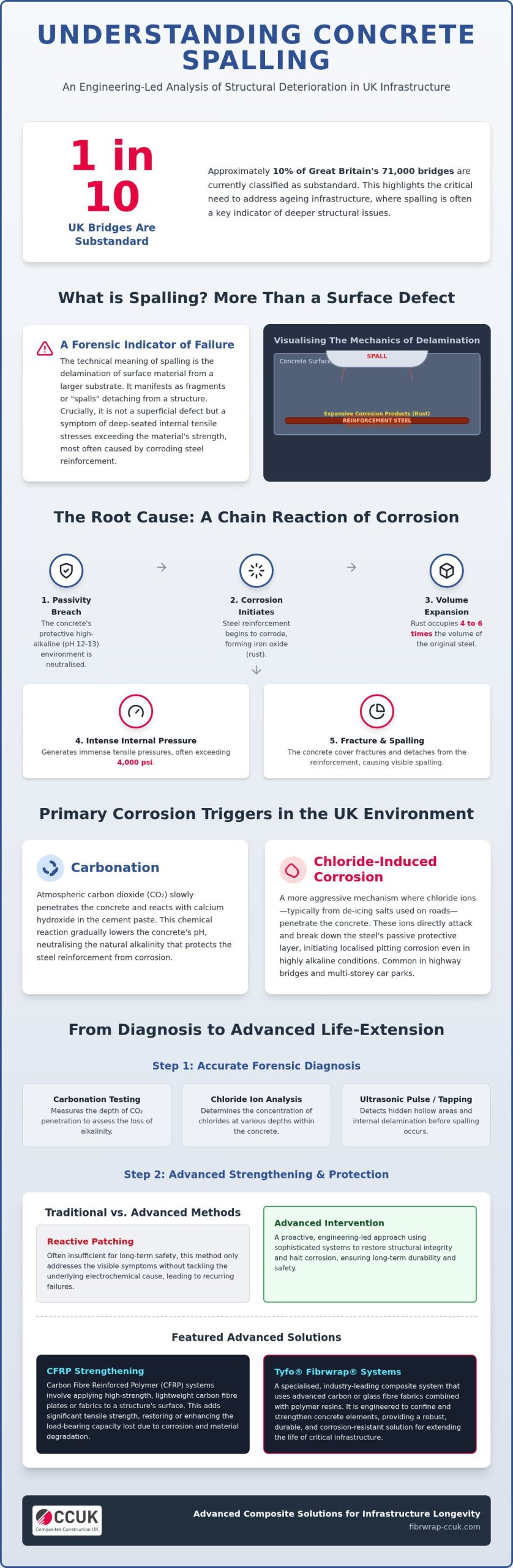
In the context of civil engineering, the technical spalling meaning describes the delamination of surface material from a larger, solid substrate. This is a progressive failure mechanism where fragments, often referred to as spalls, detach from the main body of a structure. Unlike minor surface abrasions, spalling is driven by internal tensile stresses that eventually exceed the material’s inherent cohesive strength. Whilst it manifests as visible “potholes” or craters in concrete, the underlying cause is typically found deep within the material matrix. It’s essential to distinguish between true structural spalling and minor surface scaling. The former indicates a failure of the material’s internal bond, whereas the latter is often a result of freeze-thaw cycles affecting only the surface paste. In masonry and natural stone, spalling often follows bedding planes or results from salt crystallisation. In reinforced concrete, however, it’s almost always a symptom of steel corrosion.
The Mechanics of Delamination
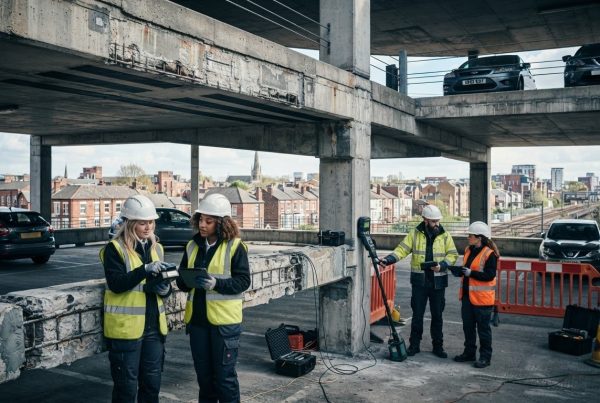
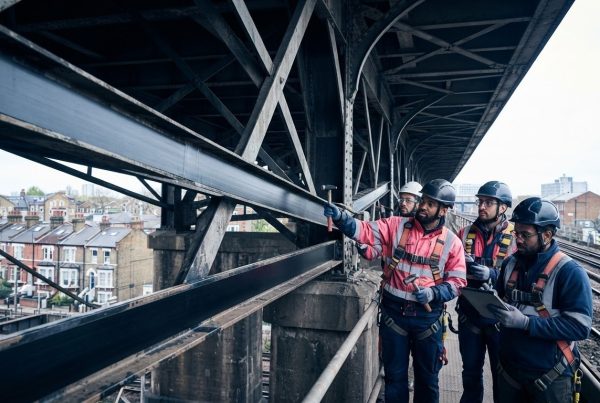
Delamination occurs when internal pressures force layers of concrete to separate, typically along the plane of the reinforcement bars. As corrosion products accumulate on the steel, they exert an outward force that the concrete cannot withstand. The face of the concrete is literally pushed away from the core. It’s a deceptive process. Surface-level observations often mask extensive internal fractures that haven’t yet reached the exterior. Engineers use hammer sounding or ultrasonic pulse velocity tests to detect these hollow areas before the material physically detaches. This proactive detection is vital for maintaining compliance with UK health and safety standards, as falling debris poses a significant risk to the public and site personnel.
Common Terminology in UK Engineering
Within UK structural survey reports, terminology must be precise to inform the remediation strategy. “Concrete cancer” is a colloquial term often used to describe spalling caused by Alkali-Silica Reaction (ASR) or severe chloride-induced corrosion. However, professionals differentiate between the broader spalling meaning and specific defects like “scaling” or “pop-outs”. Scaling refers to the loss of surface mortar, whilst pop-outs are small, conical fragments typically caused by expansive aggregates near the surface. Understanding these distinctions allows asset controllers to categorise the severity of the deterioration. It ensures that engineering resources are directed toward structural risks rather than aesthetic concerns. Accurate terminology facilitates the development of bespoke engineering calculations required for long-term structural life-extension.
Primary Mechanisms of Spalling in the UK Environment
Within the British built environment, the technical spalling meaning is most frequently associated with the electrochemical deterioration of reinforced concrete. Corrosion of the internal steel reinforcement acts as the primary catalyst for structural fragmentation. Concrete naturally provides a highly alkaline environment with a pH between 12 and 13, which passivates the steel by forming a protective oxide film. When this passivity is breached, corrosion initiates, leading to the formation of iron oxide. This byproduct occupies a volume significantly greater than the original steel, often expanding by four to six times its initial size. This volumetric increase generates intense internal tensile pressures that eventually exceed 4,000 psi, causing the concrete cover to fracture and detach from the reinforcement.
Two distinct chemical processes drive this corrosion across UK infrastructure. Carbonation occurs when atmospheric carbon dioxide reacts with calcium hydroxide in the cement paste, lowering the pH and neutralising the protective alkalinity. Conversely, chloride-induced corrosion is a more aggressive mechanism, particularly prevalent in highway bridges and multi-storey car parks. The widespread use of sodium chloride for winter road maintenance ensures that chloride ions are readily available to penetrate the concrete matrix. This ingress attacks the steel’s passive layer even in highly alkaline conditions, leading to localised pitting corrosion. A detailed analysis of Concrete Spalling: Causes, Effects and Repair highlights how these chemical shifts dictate the speed of asset deterioration.
Freeze-Thaw Cycling and Hydraulic Pressure
The British climate presents a specific challenge through repeated freeze-thaw cycles, especially during volatile winter months. Water ingress into the capillary pores of porous masonry or low-density concrete undergoes a 9% volume expansion upon freezing. This creates intense hydraulic pressure within the material matrix. Over successive cycles, particularly in coastal or northern regions with high precipitation, these cumulative stresses lead to micro-cracking and eventual surface spalling. Poor drainage systems exacerbate this issue, as standing water provides a constant source for saturation, which accelerates the decay of the substrate and compromises its structural integrity.
The Role of Poor Workmanship and Design
Structural vulnerabilities are often traced back to the original construction phase or historical design oversights. Insufficient concrete cover over reinforcement bars reduces the distance corrosive agents must travel to reach the steel, making the asset more susceptible to early failure. Similarly, poorly consolidated concrete contains excessive voids that facilitate rapid gas and liquid penetration. When combined with a lack of adequate movement joints to accommodate thermal expansion, the resulting internal stresses make spalling inevitable. Understanding the broader spalling meaning helps asset controllers recognise that these physical symptoms are often the result of these latent defects. For those managing ageing assets, a specialist structural survey is the first step in identifying these flaws before they manifest as critical safety risks.
Assessing the Structural Risks of Unchecked Spalling
Unchecked deterioration transforms a surface defect into a systemic structural vulnerability. When we analyse the broader spalling meaning, we must account for the “loss of section”. This refers to the reduction in the effective cross-sectional area of a concrete element. In compression members like columns, even a minor reduction in section can lead to significant eccentric loading, potentially causing buckling. Simultaneously, spalling leads to bond failure. The mechanical interlock between reinforcement and the concrete matrix is destroyed once the cover is lost. Without this bond, the steel cannot transfer tensile forces, rendering the reinforcement effectively redundant and compromising the element’s flexural capacity.
The removal of the protective alkaline layer significantly increases the permeability of the remaining structure. This “gateway effect” allows moisture, oxygen, and corrosive agents to penetrate the core more rapidly, accelerating the decay of previously sound material. Beyond structural capacity, public safety liabilities are paramount. In urban environments or high-rise assets, falling concrete fragments pose a lethal risk to pedestrians and site personnel. Asset controllers must recognise that spalling isn’t just an aesthetic concern; it’s a signal of active failure that requires immediate forensic assessment to maintain compliance with safety standards.
Structural Integrity and Load Path Alteration
Spalling in primary load-bearing beams forces a redistribution of stresses to adjacent elements. This load path alteration can exceed the design capacity of secondary members, leading to a risk of sudden brittle failure. Unlike the gradual deformation typically seen in ductile materials, a compromised concrete core may fail without significant warning. Implementing detailed structural surveys is essential for quantifying these risks. These assessments allow engineers to calculate residual strength and determine if the asset can still support its intended design loads.
Economic Implications of Delayed Remediation
Delaying remediation is a high-risk financial strategy. The cost of concrete repair increases exponentially as corrosion spreads through the reinforcement network and deeper into the structure. Beyond direct repair costs, asset devaluation and rising insurance premiums can impact the long-term viability of the infrastructure. From a sustainability perspective, prolonging the functional lifespan of a structure through targeted repair is significantly greener than demolition. It preserves the embodied carbon of the original build whilst avoiding the substantial environmental impact associated with new cement production and site clearance.
Traditional Concrete Repair and Remediation Protocols
Effective remediation begins with a rigorous forensic diagnosis that extends beyond a visual assessment of the surface. To accurately address the spalling meaning within a specific asset, engineers employ carbonation depth testing using phenolphthalein indicators and chloride ion analysis via dust sampling at varying depths. These tests determine if the passivity of the steel has been lost throughout the structure or if the damage is localised. Once the extent of the contamination is quantified, surface preparation involves the mechanical removal of all delaminated and carbonated concrete. It’s a precise process where the substrate must be excavated until a sound, uncontaminated surface is reached, typically requiring the removal of material at least 20mm behind the reinforcement bars to ensure a complete mechanical bond for the repair mortar.
Reinforcement treatment is the next critical phase in the restoration of structural integrity. Corroded steel bars are cleaned to a bright finish, often reaching SA 2.5 standards, to remove all oxides before being treated with a zinc-rich primer or an epoxy-based bonding agent. The application of specialist repair mortars must then align with BS EN 1504 standards, ensuring that the repair material possesses a similar modulus of elasticity and thermal expansion coefficient to the parent concrete. This compatibility is essential to prevent internal stresses that lead to premature debonding under cyclical thermal loading.
Electrochemical Protection Strategies
Traditional repairs often suffer from the “incipient anode” effect, where the patch itself creates a new electrochemical imbalance that accelerates corrosion in the adjacent, seemingly healthy concrete. To mitigate this, engineers integrate sacrificial anodes into the repair zones, which provide galvanic protection by corroding in preference to the steel. For more severe environments, such as marine structures or coastal bridges, cathodic protection systems are installed to provide a permanent, impressed current that suppresses the corrosion reaction. Migrating corrosion inhibitors (MCIs) can also be applied to the surface, where they penetrate the concrete matrix to form a protective molecular layer on the reinforcement steel.
Limitations of Traditional Patch Repairs
Whilst patch repairs address immediate safety concerns, they frequently fail within 5 to 10 years if the underlying electrochemical drivers aren’t fully suppressed. The challenge lies in the inherent difference between the new repair mortar and the aged, often contaminated, original substrate. Without a transition from reactive maintenance to a comprehensive strategy involving structural strengthening, the asset remains in a cycle of perpetual decay. Relying solely on patching ignores the structural implications of section loss discussed earlier in this guide. To ensure long-term stability and safety, contact our specialist engineers to discuss a bespoke remediation plan for your infrastructure.
Advanced Life-Extension: CFRP Strengthening and Tyfo® Fibrwrap®
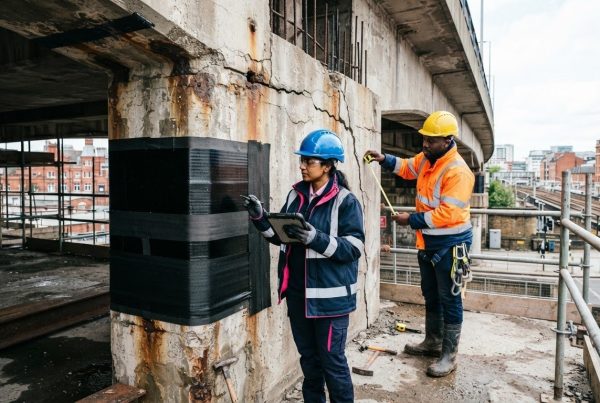
Whilst traditional patch repairs address the immediate symptoms of decay, advanced life-extension requires a transition toward high-performance composite materials. Carbon Fibre Reinforced Polymer (CFRP) has emerged as the industry benchmark for restoring structural integrity in assets where the spalling meaning indicates significant section loss or bond failure. These systems don’t merely replace lost concrete; they provide an external reinforcement layer that possesses a tensile strength significantly higher than that of traditional steel plates. Because CFRP is exceptionally lightweight, it adds negligible dead load to the structure, making it a preferred choice for strengthening bridges, pipelines, and commercial columns that are reaching the end of their original design life.
The application of these materials is governed by rigorous engineering rigour and empirical evidence. Industry data indicates that CFRP installation is 60% to 70% faster than traditional structural repair methods, which is a critical factor for infrastructure where operational downtime must be minimised. Over a 50-year lifecycle, the use of CFRP has been shown to result in a 40% to 60% lower cost compared to conventional methods, primarily due to its inherent resistance to corrosion and the elimination of future spalling cycles. This makes it a financially prudent choice for asset controllers managing large-scale UK infrastructure portfolios.
The Tyfo® Fibrwrap® Advantage
The Tyfo® Fibrwrap® system represents a proprietary advancement in composite technology, offering a seamless application that conforms to complex structural geometries. Unlike rigid steel plates, these flexible fibre wraps are saturated with specialised resins and applied directly to the prepared concrete substrate, creating a high-strength jacket that prevents future moisture and chloride ingress. This process relies on a bespoke design process where every calculation is tailored to the specific material properties and load requirements of the asset. This ensures that the reinforcement restores the necessary factor of safety whilst preventing the electrochemical triggers of further fragmentation.
Implementing a Long-Term Remediation Strategy
A sophisticated remediation strategy combines forensic concrete repair with CFRP strengthening to extend the functional lifespan of an asset by 30 years or more. This approach aligns with the UK’s sustainability goals by prioritising the maintenance of existing infrastructure over carbon-intensive demolition and replacement. By sealing the core and providing external reinforcement, the cycle of deterioration is effectively halted. Asset controllers looking to secure their infrastructure should consider contacting a specialist engineering contractor to conduct a feasibility study and develop a tailored life-extension programme.
Securing the Functional Future of UK Infrastructure
Understanding the technical spalling meaning is the primary requirement for transitioning from reactive maintenance to strategic asset management. As established throughout this guide, visible fragmentation is rarely an isolated surface defect; it’s a forensic indicator of deeper electrochemical instability that necessitates a rigorous engineering response. By addressing the root causes of reinforcement corrosion and implementing advanced Carbon Fibre Reinforced Polymer (CFRP) solutions, asset controllers can bypass the cycle of repetitive patching and achieve genuine structural life-extension.
Composites Construction UK (CCUK) serves as the exclusive UK licensee for the Tyfo® Fibrwrap® system, providing a combination of expert design and precision installation. Our team specialises in the sustainable remediation of national infrastructure, ensuring that high-value assets remain safe and compliant whilst avoiding the environmental impact of demolition. We prioritize the technical rigour required to protect essential structures for decades to come. To secure the long-term integrity of your assets, contact our engineering team for a structural survey and remediation design. We look forward to assisting you in extending the utility of your critical infrastructure.
Frequently Asked Questions
What is the literal meaning of spalling in construction?
The technical spalling meaning refers to the delamination of surface fragments from a solid substrate, typically triggered by internal tensile stresses. In construction, this occurs when the material’s cohesive strength is exceeded by expansive forces, such as those generated by corroding reinforcement steel. This process results in the physical detachment of concrete or masonry layers, exposing the core structure to environmental acceleration of decay and further electrochemical attack.
Is spalling concrete always dangerous to the structure?
Whilst a single spall might not cause immediate collapse, it serves as a forensic indicator of systemic failure. The primary danger often lies in the risk of falling debris in urban environments, which poses a significant public safety liability. Structurally, unchecked spalling leads to a progressive loss of section and bond integrity. This degradation will eventually compromise the load-bearing capacity of the asset, necessitating a transition from reactive maintenance to structural strengthening.
What causes concrete to spall in the UK climate?
The UK climate presents specific challenges through repeated freeze-thaw cycles and high precipitation. Water ingress into porous masonry expands during freezing, creating hydraulic pressure that fractures the substrate. Additionally, the widespread use of de-icing salts on highways introduces chloride ions into the concrete matrix. These ions aggressively attack the passive layer of reinforcement steel, initiating the expansive corrosion that drives surface fragmentation across much of the nation’s ageing infrastructure.
Can I simply paint over spalled concrete to stop it?
Applying a surface coating or paint without addressing the underlying cause is technically insufficient and potentially hazardous. This approach merely masks the visual symptoms whilst the electrochemical corrosion process continues to degrade the internal reinforcement. Effective remediation requires the forensic removal of contaminated concrete, treatment of the steel, and the application of specialist repair mortars. This process restores the alkaline environment and ensures the long-term stability of the structural core.
How do you tell the difference between spalling and cracking?
Cracking is defined as a linear fracture within the material matrix, whereas spalling is the physical loss of surface material, manifesting as craters or potholes. Cracks often act as the primary conduit for moisture and chloride ingress, which then triggers the internal expansive forces that lead to spalling. Whilst cracking indicates stress or settlement, spalling represents the advanced stage where material has physically detached, signalling a breach in the structure’s protective cover.
What is the best way to repair spalling on a bridge or car park?
For high-load infrastructure like bridges or car parks, the most robust remediation strategy involves combining traditional concrete repair with advanced composite strengthening. Systems such as Tyfo® Fibrwrap® or CFRP are utilised to restore and enhance structural capacity whilst providing a corrosion-resistant barrier. This engineering-led approach, often supported by sacrificial anodes or cathodic protection, ensures a long-term extension of the asset’s functional utility and compliance with modern safety standards.
How much does it cost to fix concrete spalling on a commercial asset?
Remediation costs are determined by the scale of the deterioration, the specific engineering requirements, and the chosen strengthening system. Fees are typically structured as fixed-price contracts following a detailed structural survey and feasibility study. Because every project requires bespoke engineering calculations to ensure safety and compliance, costs vary significantly depending on whether the intervention involves localised patching or full-scale composite reinforcement tailored to the asset’s specific load requirements.
Will spalling concrete eventually lead to structural collapse?
If left unaddressed, progressive spalling will inevitably lead to structural failure. The loss of concrete section reduces compressive strength, whilst the loss of bond between the steel and the matrix eliminates tensile capacity. Over time, these factors reduce the factor of safety below the minimum design requirements. This can result in brittle failure or collapse, particularly under extreme loading conditions or as environmental stresses further weaken the compromised structural elements.