
What if the most substantial threat to an asset’s long-term valuation is not found within the volatile fluctuations of the UK property market, but rather in the silent, incremental degradation of its primary structural integrity? Asset managers frequently find themselves in the unenviable position of advocating for critical safety works whilst facing immediate budget rejection from boards that prioritise short-term liquidity over infrastructure resilience. When evaluating various structural upgrade options for commercial buildings, the challenge lies in articulating why a permanent engineering solution is more fiscally responsible than a temporary, superficial fix.
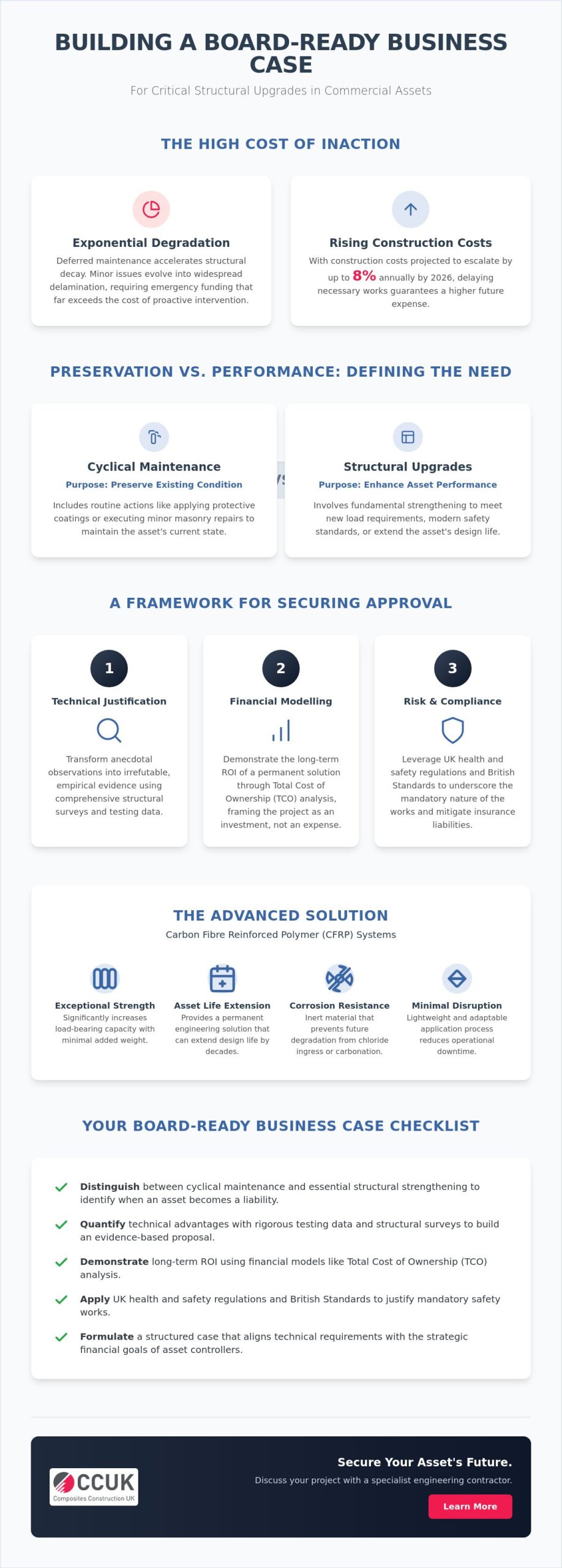
It’s understood that quantifying the precise risk of deferred maintenance remains a significant hurdle during the annual budgeting cycle, especially as annual cost escalations for construction are projected to reach up to 8% by 2026. This guide serves to bridge that gap, offering a structured framework to transform technical requirements into a compelling financial business case that secures board-level approval. You’ll discover how to utilise empirical data to support the adoption of advanced systems like Carbon Fibre Reinforced Polymer (CFRP), ensuring that critical infrastructure upgrades are viewed as essential risk-mitigation investments rather than mere capital expenditures.
Key Takeaways
- Distinguish between cyclical maintenance and essential structural strengthening to identify the precise moment an asset becomes a liability.
- Quantify the technical advantages of different structural upgrade options for commercial buildings by utilising rigorous testing data and structural surveys.
- Master financial modelling techniques, such as Total Cost of Ownership (TCO) analysis, to demonstrate the long-term ROI of advanced materials like CFRP.
- Apply UK health and safety regulations and British Standards as a strategic framework to justify mandatory infrastructure safety works.
- Formulate a structured, board-ready business case that aligns technical engineering requirements with the strategic financial goals of asset controllers.
Defining the Necessity: Structural Upgrades vs. Routine Maintenance
Asset managers must maintain a rigorous distinction between cyclical maintenance and fundamental structural strengthening. Cyclical maintenance, such as the application of protective coatings or minor masonry repairs, is designed to preserve the existing condition of an asset. In contrast, structural upgrades involve enhancing the performance characteristics of the primary frame to meet new load requirements or modern safety standards. This distinction is critical when evaluating various structural upgrade options for commercial buildings, as the two categories require entirely different budgetary justifications and engineering oversight.
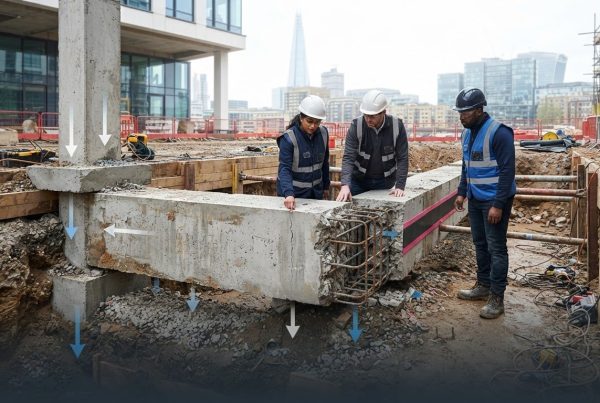
Identifying the transition from a mere aesthetic defect to a structural liability requires a deep understanding of structural integrity and the specific mechanisms of failure. Whilst a hairline crack in a non-load-bearing partition may be a routine maintenance concern, similar manifestations in a reinforced concrete column often indicate deeper systemic issues, such as reinforcement corrosion or flexural distress. Once this tipping point is reached, the asset moves from a state of simple preservation to one of active risk management where deferred action can lead to catastrophic consequences.
The specialist engineering contractor plays a pivotal role in this phase by defining a project scope that’s technically sound yet commercially viable. Their involvement ensures that the proposed interventions align with the long-term strategic goals of the organisation, such as increasing floor loading for new commercial tenants or achieving seismic retrofitting compliance. By engaging specialists early, asset managers can ensure that the selected structural upgrade options for commercial buildings are precisely tailored to the building’s specific structural deficiencies.
The Consequences of Deferred Structural Intervention
Repairs delayed unnecessarily lead to an exponential acceleration of degradation. What begins as minor carbonation or chloride ingress can evolve into widespread concrete delamination, necessitating emergency funding that far exceeds the cost of proactive reinforcement. Neglecting these requirements doesn’t only threaten physical safety. It directly impacts insurance premiums and professional indemnity, as insurers increasingly demand evidence of robust structural management and adherence to modern compliance standards.
Establishing Clear Upgrade Objectives
Success must be defined through measurable engineering outcomes, such as a specific percentage increase in load-bearing capacity or the extension of the asset’s design life by thirty years. A hierarchy of needs should be established, prioritising structural criticality and asset utility over aesthetic finishes. Rigorous initial engineering assessments and feasibility studies are essential to prevent scope creep, ensuring that the project remains within the approved financial framework whilst meeting all regulatory obligations.
Technical Justification: Using Surveys and Testing Data as Evidence
Securing approval for capital-intensive projects requires more than anecdotal observation. It demands a foundation of empirical evidence. Stakeholder scepticism is often rooted in the perceived opacity of structural engineering. This makes it essential to present data that’s both objective and irrefutable. When asset managers present various structural upgrade options for commercial buildings, the inclusion of comprehensive structural surveys serves to demystify technical requirements. It transforms them into quantifiable risks.
Accuracy in budgeting is directly proportional to the quality of the initial data set. The utilisation of bespoke engineering calculations ensures that the proposed solution is neither over-engineered, leading to excessive costs, nor under-specified, which risks future failure. These calculations provide the rigorous validation required by technical professionals and financial controllers alike. They form the bedrock of a proposal that prioritises long-term asset security over short-term expediency.
Key Diagnostic Tests to Support Your Case
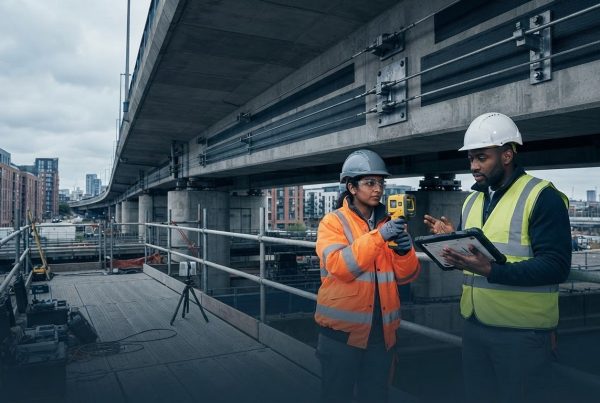
Objective data is gathered through a suite of specialised diagnostic procedures. Carbonation testing and chloride ion analysis are employed as critical predictors of reinforcement corrosion. These tests allow for intervention before physical spalling occurs. Concrete integrity is further assessed through pull-off tests and half-cell potential mapping, which provide a window into the electrochemical state of the reinforcement. Non-destructive testing (NDT) remains a preferred method for identifying subsurface defects without necessitating asset downtime or intrusive core sampling.
Visualising the Data for Non-Technical Boards
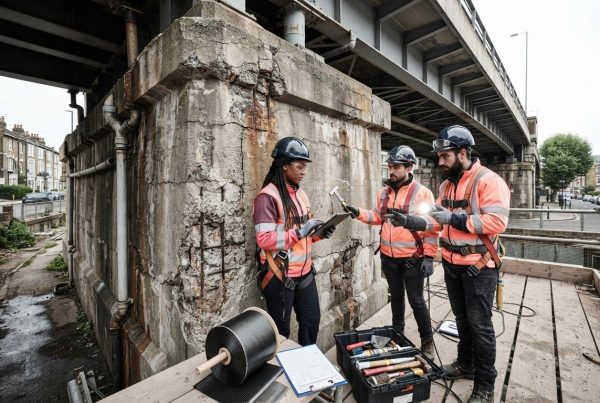
The translation of raw engineering data into a board-ready format is a critical step in the approval process. Laboratory results must be synthesised into a clear risk-assessment matrix. Complex structural upgrade options for commercial buildings should be presented through traffic light risk-priority systems. This approach allows non-technical directors to immediately grasp the urgency of specific interventions. Integrating photographic evidence of masonry cracks or exposed reinforcement into the executive summary creates a visceral sense of necessity. It bridges the gap between abstract engineering theory and tangible property risk.
Asset managers should consider initiating a formal structural survey to establish the empirical baseline required for any successful funding application.
Financial Modelling: The ROI of Asset Life-Extension
Securing board-level approval necessitates a transition from technical diagnostics to rigorous financial modelling. Whilst the engineering data provides the necessary justification for safety, the financial business case provides the mechanism for funding. When assessing various structural upgrade options for commercial buildings, asset managers must move beyond a simple comparison of initial quotes to a comprehensive Total Cost of Ownership (TCO) analysis. This approach evaluates the full lifecycle costs of an intervention, contrasting the immediate capital expenditure of structural strengthening against the far more substantial costs associated with total asset replacement.
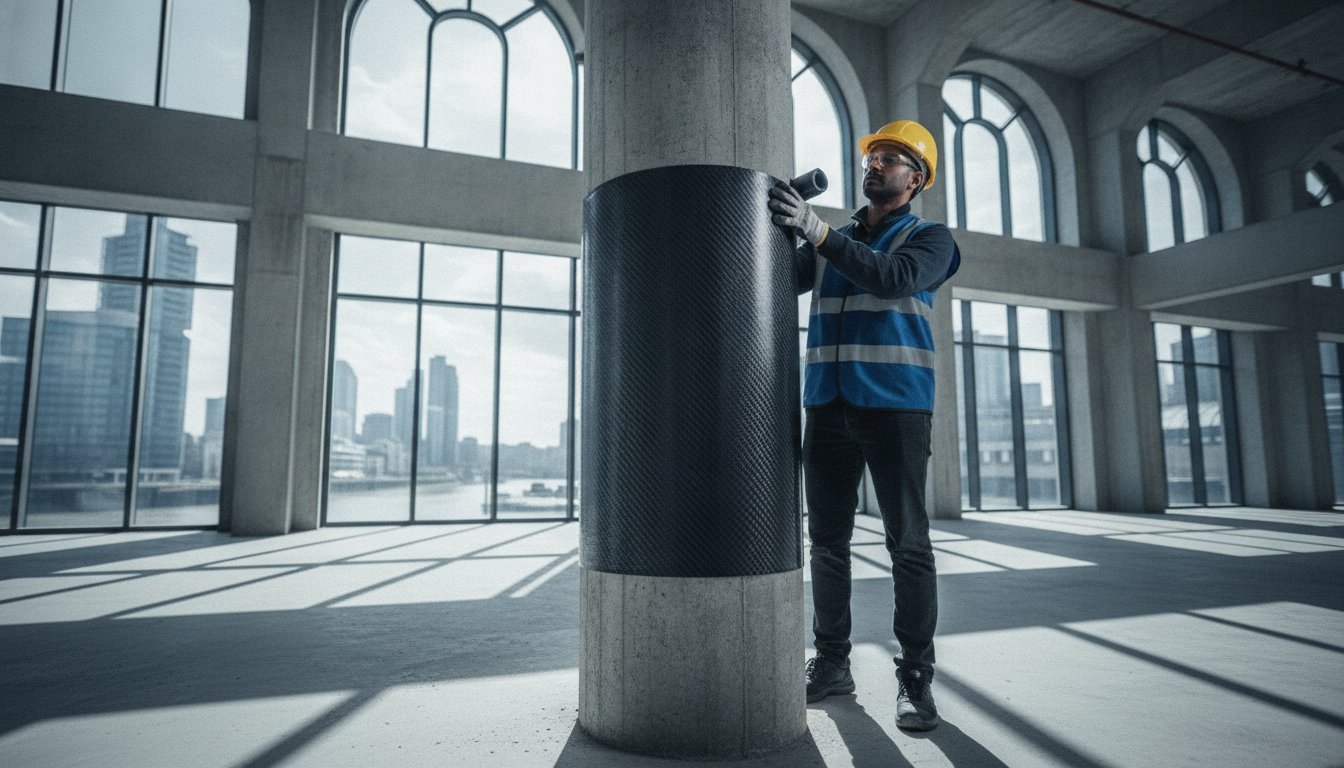
The financial advantage of Carbon Fibre Reinforced Polymer (CFRP) systems, such as Tyfo® Fibrwrap®, becomes evident when considering the reduction in project duration and associated labour costs. Traditional methods, such as steel plate bonding or section enlargement, often require extensive on-site fabrication and heavy plant; these factors inherently increase both the risk profile and the downtime of the facility. By contrast, composite systems offer a lower-CAPEX alternative that minimises disruption to business continuity. This is frequently the deciding variable for stakeholders in the commercial sector who must balance infrastructure safety with revenue preservation.
Calculating the Cost of Inaction (COI) is equally vital for a persuasive proposal. With annual construction cost escalations currently ranging between 3% and 8%, delaying critical works by even five years can result in a significantly higher financial burden. Proactive intervention allows asset managers to lock in current rates and avoid the premium costs associated with emergency repairs or the accelerated degradation of the primary frame.
The ‘Repair vs. Replace’ Financial Framework
A robust proposal must analyse the capital expenditure of new construction versus structural remediation. New builds involve significant costs beyond the structure itself, including planning fees, extended downtime, and the carbon cost of demolition. In the UK, where environmental levies and sustainability targets are increasingly stringent, the ability to avoid demolition through structural strengthening offers a distinct economic advantage. It’s often found that remediating an existing asset through advanced engineering is far more cost-effective than the total lifecycle cost of a new facility.
Quantifying the Value of Lifespan Extension
Extending an asset’s design life by 20 years via CFRP application has a profound effect on balance sheet depreciation. By utilising targeted structural repairs, asset managers can protect the long-term valuation of the property and ensure it remains a performing asset. Proposals should always include a contingency fund that reflects engineering reality, typically 10-15%, to ensure the project remains viable even if unforeseen subsurface defects are discovered during the execution phase. This transparency builds trust with the board and demonstrates a disciplined approach to capital management.
Navigating Regulatory Compliance and Risk Mitigation
Regulatory compliance in the United Kingdom isn’t merely an administrative requirement; it’s a fundamental legal imperative that dictates the operational viability of any commercial asset. The Health and Safety at Work etc. Act 1974 mandates that building owners and employers maintain a safe environment for all occupants, a duty that cannot be delegated. When asset managers evaluate various structural upgrade options for commercial buildings, the primary metric for success must be alignment with current British Standards, such as BS EN 1504 for the protection and repair of concrete structures. Adherence to these rigorous standards ensures that interventions are technically robust and legally defensible.
Reducing corporate liability is achieved through the implementation of certified engineering interventions. By utilising proprietary systems with proven performance data, organisations can demonstrate that all reasonable steps have been taken to mitigate structural risks. Modern security requirements have also evolved, making blast mitigation and seismic retrofitting essential components of a comprehensive risk-management strategy. These advanced upgrades don’t just address internal structural decay; they protect the asset against external threats, ensuring the infrastructure remains resilient in an increasingly complex global environment.
The Legal Cost of Structural Failure
The role of the ‘Responsible Person’ under UK safety legislation carries significant legal weight. Failure to address known structural deficiencies can lead to severe litigation, substantial fines, and irrevocable reputational damage. It’s essential that all remedial works are designed to meet or exceed current building regulations, providing a clear audit trail of compliance. Proactive strengthening is always more cost-effective than the legal and compensatory costs associated with a structural failure.
Insurance and Asset Valuation
Structural strengthening serves as a critical tool for protecting the resale and collateral value of a commercial asset. Insurers are increasingly diligent in their assessment of structural health, often demanding detailed survey data before offering coverage. By implementing proven structural stabilisation, asset managers can often negotiate lower insurance premiums, as the perceived risk to the underwriter is significantly reduced. This requires the use of specialist-certified materials and installers to ensure the validity of the technical warranty and the long-term security of the investment.
To ensure your proposed works meet the highest regulatory standards, you can request a technical design review to validate your compliance strategy.
Presenting the Business Case: Securing Final Approval
The culmination of the asset manager’s strategic planning is found in the formal presentation of the business case to the board. Success in this final phase depends on the ability to synthesise the technical, financial, and regulatory data discussed previously into a cohesive narrative of risk mitigation. When presenting structural upgrade options for commercial buildings, the proposal must be structured logically, transitioning from a high-level executive summary to detailed technical appendices. This allows stakeholders to engage with the level of detail most relevant to their specific concerns, whether they are focused on immediate capital allocation or long-term infrastructure safety.
A significant hurdle in securing approval is the justification of the premium associated with specialist engineering. Whilst general contractors may offer lower initial quotes, they often lack the technical depth required when evaluating advanced structural upgrade options for commercial buildings. The Tyfo® Fibrwrap® installation process is a primary example of how specialised methodology reduces project risk. By selecting a partner that offers a comprehensive design-and-install service, asset managers can ensure that the structural integrity of the building is restored without the risks associated with fragmented supply chains or uncertified labour.
Operational continuity remains a primary concern for commercial tenants, particularly in high-occupancy urban centres. The proposed timeline should demonstrate a phased approach to the works, utilising the rapid application properties of CFRP to avoid the prolonged closures associated with traditional concrete repair. By minimising the physical footprint of the construction site and reducing the duration of on-site activity, the impact on daily business operations is mitigated. This reduces the likelihood of tenant friction and protects the landlord’s rental income during the remediation phase.
Drafting the Executive Summary for the Board
The executive summary should be prioritised as the most critical document in the proposal. It must translate the engineering rigour of the project into the language of corporate governance, focusing on risk avoidance, cost-mitigation, and the preservation of strategic asset utility. The sustainability benefits of repairing existing infrastructure over replacement should be highlighted as a recurring thematic signature. This aligns the technical requirements of the building with broader environmental goals, positioning the upgrade as a responsible stewardship of the organisation’s physical capital.
Finalising the Specialist Partnership
Selecting a contractor with a proven UK track record is essential for ensuring the project meets all regional regulatory requirements and British Standards. A comprehensive proposal should encompass the entire lifecycle of the intervention: from initial diagnostic testing and bespoke design to material supply and final installation. This holistic approach ensures that the final result is a structurally sound, compliant asset that contributes to the long-term security of the property portfolio.
To secure a technical assessment for your budget proposal, contact our engineering team today.
Implementing a Resilient Asset Strategy
The transition from identifying a structural deficiency to securing board-level approval is a process rooted in empirical evidence and strategic financial modelling. By prioritising objective diagnostic data and adhering to British Standards, asset managers can transform necessary safety works into a compelling business case for life-extension. When evaluating structural upgrade options for commercial buildings, the focus must remain on the long-term sustainability of repair over the excessive capital expenditure of replacement. This disciplined approach ensures that essential assets continue to perform whilst minimising operational disruption.
As the exclusive UK licensee for Tyfo® Fibrwrap® systems, we provide comprehensive design, supply, and installation expertise with a specialist focus on critical infrastructure life-extension. Our methodology is designed to project competence and long-term security to asset controllers who require absolute reliability. It’s time to move beyond temporary fixes and invest in the science of structural resilience. Consult with our specialists to build your structural business case and ensure your property portfolio remains a secure, high-performing investment.
Frequently Asked Questions
How do I quantify the financial risk of delaying structural upgrades?
Financial risk is quantified by calculating the Cost of Inaction (COI) against current market escalation rates. With annual construction costs rising by up to 8% in 2026, delaying a project by twelve months creates a significant budgetary deficit. This model must also account for the exponential nature of structural decay; minor cracks often transition into critical failures that require emergency funding rather than planned capital expenditure.
What is the most cost-effective method for strengthening commercial infrastructure?
The most cost-effective structural upgrade options for commercial buildings are those that prioritise the reduction of site-wide disruption. Carbon Fibre Reinforced Polymer (CFRP) strengthening often represents the most efficient solution because its high strength-to-weight ratio eliminates the need for heavy lifting equipment. By reducing the project duration and associated site preliminaries, the total lifecycle cost is kept significantly lower than traditional concrete or steel-based interventions.
How does CFRP strengthening compare to traditional steel plate bonding in cost?
CFRP strengthening provides a superior financial profile compared to steel plate bonding when total installation costs are considered. Whilst the raw material cost of composites is often higher, the absence of on-site welding, heavy plant, and temporary propping reduces the labour component of the budget. Additionally, the thin profile of CFRP preserves the building’s internal clear heights, avoiding the loss of lettable floor space that often accompanies steel section enlargement.
Can structural upgrades be performed whilst the building is still in use?
Advanced structural strengthening can be executed within live environments with minimal impact on commercial tenants. Systems like Tyfo® Fibrwrap® are applied using manual techniques that don’t generate the vibration, noise, or dust typical of traditional demolition and reconstruction. This allows for the phased remediation of columns, beams, and slabs whilst the facility remains operational, protecting the landlord’s rental income and preventing the high costs of business relocation.
What technical data is most persuasive for a CFO during budget reviews?
CFOs respond most effectively to Total Cost of Ownership (TCO) analyses that contrast proactive remediation with the total cost of asset replacement. Technical data should be synthesised into a risk-priority matrix that identifies the precise engineering thresholds where deferred maintenance becomes a balance-sheet liability. Presenting a 20-year asset life-extension plan supported by empirical survey data allows the board to view the upgrade as a strategic investment rather than a sunk cost.
How do structural upgrades affect the long-term valuation of a commercial asset?
Structural upgrades directly enhance an asset’s valuation by removing the brown discount associated with deferred maintenance liabilities. A building with a certified structural life-extension is more attractive to institutional investors and remains mortgageable under increasingly stringent lending criteria. Once the core structure is reinforced, the addition of high-end bespoke cabinetry from Finest Furniture Studio can further elevate the asset’s appeal for premium tenants. By addressing fundamental integrity issues, asset managers ensure the property retains its collateral value and remains competitive in the UK commercial market, where structural safety is a non-negotiable requirement.
What are the regulatory consequences of failing to address structural defects in the UK?
Failure to address known structural defects constitutes a breach of the Health and Safety at Work etc. Act 1974 and the Management of Health and Safety at Work Regulations. In the UK, the Responsible Person faces potential criminal prosecution, unlimited fines, and personal liability if neglect leads to failure. Beyond legal penalties, the reputational damage and the subsequent increase in insurance premiums often exceed the initial cost of the required structural intervention.
Is it better to repair or replace a structure with significant carbonation damage?
Repair is almost always the preferred strategy when evaluating structural upgrade options for commercial buildings affected by carbonation. Replacing a structure involves substantial demolition costs, waste disposal fees, and the carbon levies associated with new-build construction. Utilising targeted concrete repair and cathodic protection allows the existing frame to be stabilised and strengthened, achieving a similar design-life extension at a fraction of the environmental and financial cost of a rebuild.