
A structure’s visual stability often masks a silent chemical transformation that, if ignored, renders even the most robust reinforced concrete vulnerable to internal degradation. Whilst a facade might appear pristine, the ingress of atmospheric carbon dioxide systematically reduces the alkalinity of the cement matrix, eventually compromising the protective passivity of the embedded reinforcement. Because this process typically occurs at a rate of 1mm to 5mm per year, concrete carbonation testing is the only reliable method to detect the depth of the carbonation front before active corrosion is initiated. Asset controllers frequently encounter the uncertainty of whether to sanction significant capital expenditure when the true extent of structural risk remains hidden from visual inspection.
This technical guide serves as an essential resource for engineers, providing the empirical data necessary to transition from reactive maintenance to proactive asset management. By adhering to the protocols outlined in BS EN 14630, the diagnostic process ensures that remediation is based on scientific rigour rather than conjecture. Within this article, the chemical mechanisms of pH reduction are analysed, professional site investigation methodologies are detailed, and a framework for interpreting diagnostic data is established to facilitate the implementation of targeted strategies that safeguard UK infrastructure for the long term.
Key Takeaways
- Understand the chemical mechanisms by which atmospheric carbon dioxide penetration reduces pH levels, neutralising the passivity of embedded steel reinforcement.
- Master the methodologies for concrete carbonation testing in accordance with BS EN 14630 to secure precise measurements of the carbonation front.
- Learn to interpret diagnostic data to calculate the residual service life of a structure, allowing for more informed decisions regarding capital expenditure.
- Discover how integrating diagnostic results with advanced remediation techniques, such as Tyfo® Fibrwrap® systems, can effectively prolong the functional lifespan of an asset.
- Recognise the fiscal and safety advantages of a data-driven strategy that prioritises the sustainability of repair over premature and costly asset replacement.
The Science of Concrete Carbonation: Mechanisms and Structural Risks
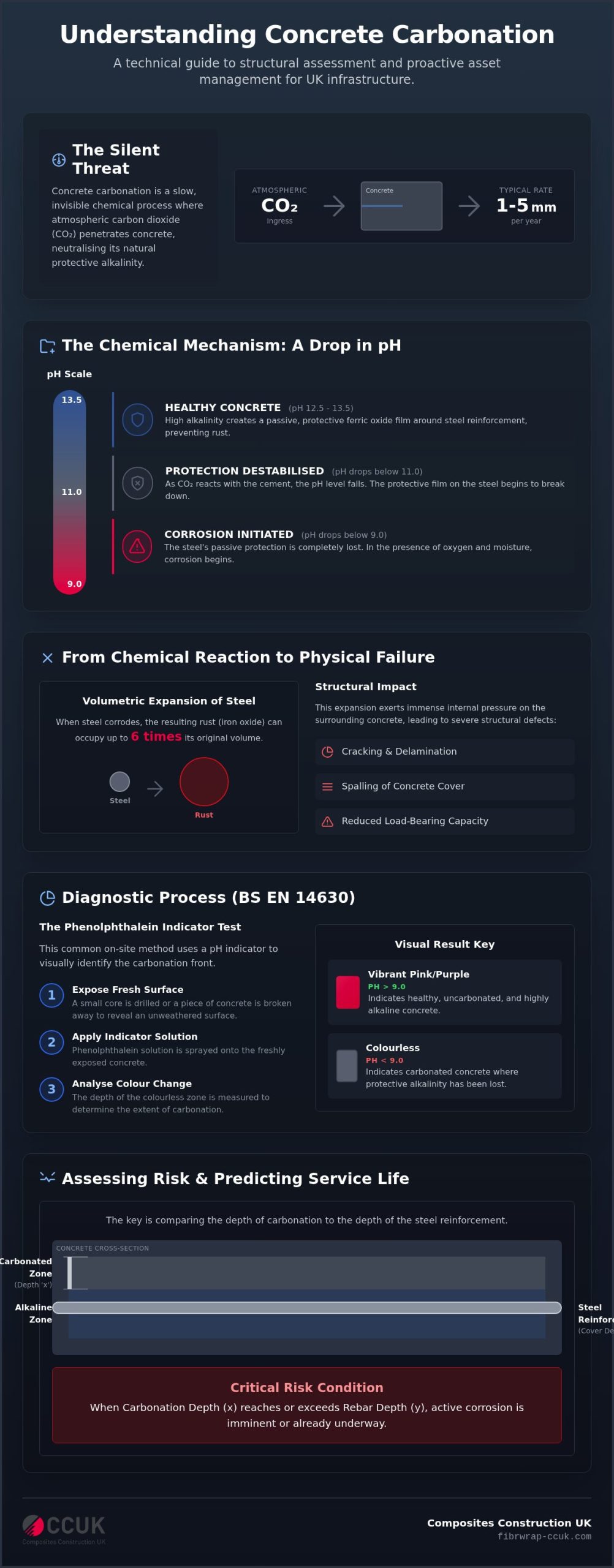
Concrete carbonation is a progressive physico-chemical process where atmospheric carbon dioxide diffuses through the pore structure of the concrete to react with the alkaline hydration products. This reaction primarily targets calcium hydroxide, converting it into calcium carbonate. Whilst this chemical shift might seem benign at the surface, it represents a fundamental threat to the durability of reinforced concrete assets. Professional concrete carbonation testing is essential to map the advancement of this carbonation front towards the embedded steel reinforcement, ensuring that interventions are staged before structural integrity is compromised.
The Carbonation Reaction and pH Depletion
The alkalinity of concrete, typically maintained at a pH of 12.5 to 13.5, provides a passive environment that protects reinforcement steel from oxidation. The Science of Concrete Carbonation reveals that as CO2 reacts with the cement paste, the pH level within the pore water significantly diminishes. When the pH level drops below 11.0, the protective ferric oxide film on the steel surface is destabilised. Once the pH falls below 9.0, the passivity is entirely lost. The rate of this ingress is heavily influenced by the porosity of the concrete and environmental humidity. Peak carbonation rates are typically observed in conditions of 50% to 70% relative humidity, where pores are neither too dry for the reaction nor too saturated for gas diffusion.
Impact on Structural Integrity and Safety
Once the carbonation front reaches the depth of the reinforcement, the resulting corrosion causes a volumetric expansion of the steel. As iron is converted to rust, it occupies up to six times its original volume, exerting immense internal tensile stresses on the surrounding concrete matrix. Because concrete possesses relatively low tensile strength, these internal forces inevitably lead to longitudinal cracking, delamination, and eventually, the spalling of the concrete cover. This is not merely an aesthetic defect. It represents a direct reduction in the cross-sectional area of the steel, which compromises the load-bearing capacity of the asset.
Early indicators, such as hairline cracking or subtle rust staining, should be investigated promptly through concrete carbonation testing to prevent the formation of incipient anodes. This phenomenon occurs when localised repairs are performed without addressing the wider carbonated environment, potentially accelerating corrosion in adjacent, untreated sections. Accurate diagnosis at this stage allows for the implementation of bespoke structural design and engineering solutions that prioritise the long-term sustainability of the structure over reactive, short-term fixes.
Professional Testing Methodologies: Measuring the Carbonation Front
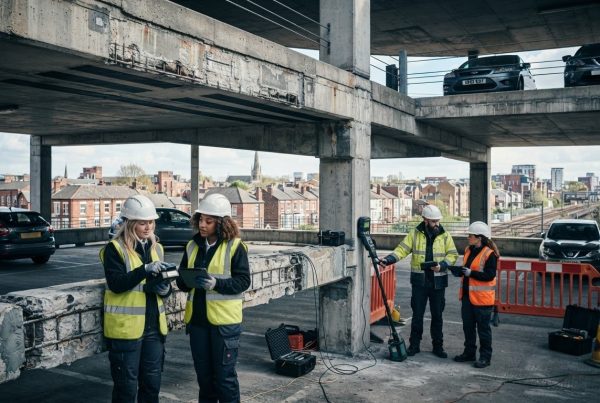
Accurate diagnosis of an asset requires a strategic combination of rapid on-site screening and rigorous laboratory validation. Selecting representative sample points is critical; testing must account for varying environmental exposures, such as wind-driven rain or sheltered elevations, which significantly influence the rate of CO2 ingress. These data points directly inform the specification of structural repairs, ensuring that remediation is precisely targeted to the affected zones. When conducting concrete carbonation testing, specialist contractors must manage site access meticulously to minimise operational downtime for asset owners. Precision is paramount.
The Phenolphthalein Indicator Test
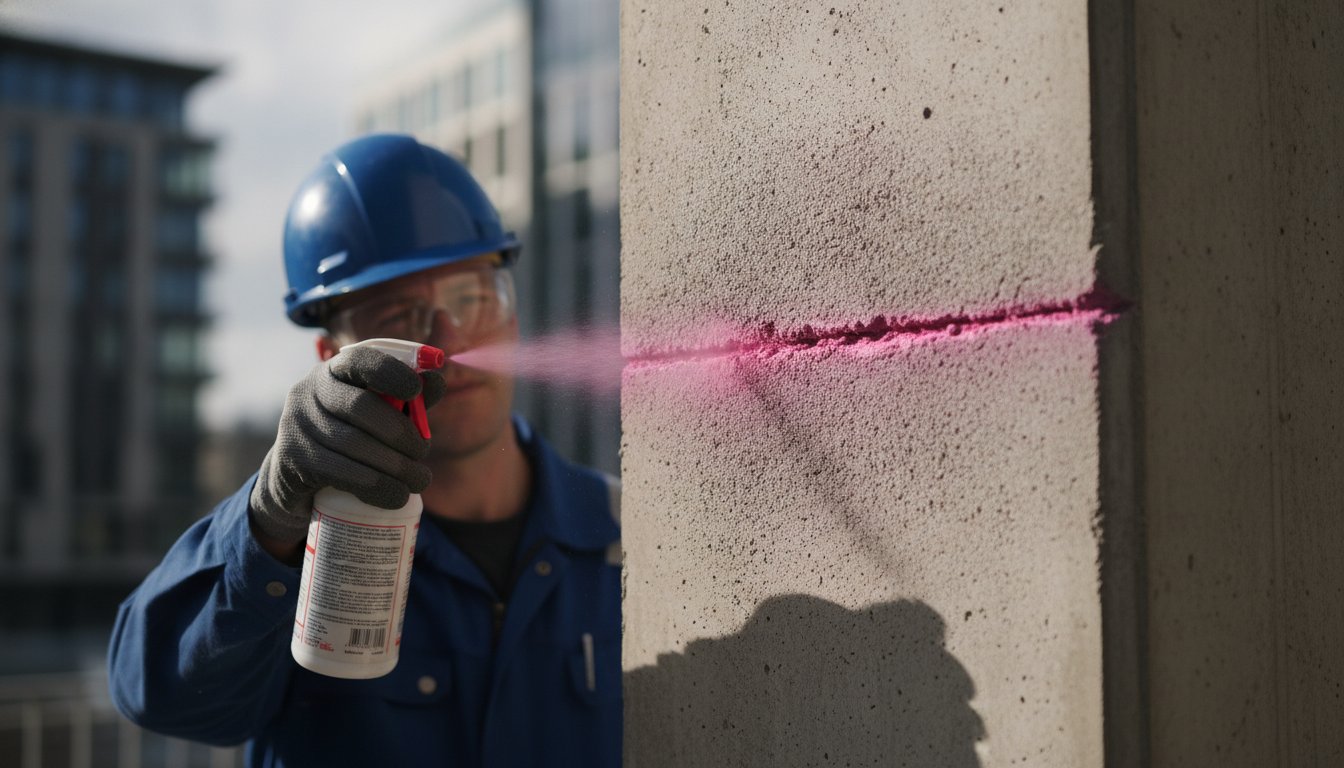
The most common on-site method involves the application of a phenolphthalein indicator solution to a freshly exposed concrete surface, typically achieved through drilling or localised breakout. This pH-sensitive indicator undergoes a distinct colour transition: areas with a pH above approximately 9.0 turn a vibrant pink, indicating uncarbonated, alkaline concrete. Conversely, carbonated regions remain colourless, allowing for a direct measurement of the carbonation depth from the surface. Whilst efficient, this spray test has limitations, particularly in older structures where leaching or atmospheric pollutants may skew the results. It’s a vital first step, but it often requires deeper analytical support.
Core Sampling and Laboratory Analysis
For critical infrastructure, on-site indicators are often supplemented by laboratory-based professional testing methodologies. Core sampling allows for a more granular evaluation through petrographic analysis, which identifies microscopic changes in the cement matrix. By correlating carbonation depth data with cover meter surveys, engineers can calculate the ‘corrosion margin’. This is the distance between the advancing carbonation front and the reinforcement steel. This calculation is vital for determining whether the passivity of the steel is currently under threat or if failure is imminent. It allows for a data-driven approach to maintenance scheduling.
Effective testing protocols ensure that the chosen remediation strategy is commensurate with the actual risk profile of the asset. Rather than adopting a generic approach, the data enables engineers to design interventions that address the specific chemical state of the concrete. For asset controllers requiring a comprehensive diagnostic assessment, you can consult with our technical specialists to arrange a site-specific survey. This ensures that every pound spent on maintenance is backed by empirical evidence.
Interpreting Test Results: Assessing Corrosion Risk and Service Life
The transition from raw data to a strategic maintenance plan requires a precise evaluation of the ‘corrosion margin’, defined as the distance remaining between the advancing carbonation front and the reinforcement bars. Concrete carbonation testing provides the empirical basis for this assessment, allowing engineers to determine whether the structure remains in a passive state or has entered the initiation phase of active corrosion. When the carbonation front reaches the depth of the steel, the alkaline protection is lost; the presence of moisture and oxygen will then inevitably trigger oxidation and volumetric expansion.
Determining the Rate of Carbonation
Predicting the future performance of an asset is achieved by applying the ‘square root of time’ law, where the depth of carbonation (d) is proportional to the square root of the structure’s age (t), multiplied by a diffusion coefficient (k). This coefficient is influenced by the structural risks of carbonation and intrinsic material properties, such as the water-cement ratio and the degree of compaction. Structures with higher permeability or those situated in high-CO2 urban environments exhibit a larger ‘k’ value, necessitating more frequent monitoring. By calculating this rate, asset managers can estimate the residual service life before the carbonation front penetrates the ‘critical carbonation depth’, which is the point where the pH at the reinforcement level falls below the threshold of passivity.
Risk Categorisation for Asset Managers
To facilitate effective decision-making, diagnostic data should be organised into a risk-based framework. Assets are typically categorised as ‘Safe’ when the carbonation depth is less than 50% of the concrete cover, ‘At Risk’ when it reaches 50-90%, and ‘Critical’ once the front encroaches upon the reinforcement. This prioritisation ensures that capital expenditure is directed towards structures where the risk of spalling and section loss is most imminent. The critical carbonation depth represents the specific measurement where the protective alkalinity of the concrete matrix is no longer sufficient to prevent the onset of steel corrosion.
A significant risk in remediating carbonated structures is the ‘Incipient Anode’ effect, where localised repairs to spalled areas create a strong electrochemical potential difference between the new, highly alkaline repair mortar and the surrounding carbonated concrete. This often accelerates corrosion in the adjacent, untreated zones, leading to a cycle of recurring failures. To mitigate this, data from concrete carbonation testing must be integrated into a bespoke structural design that addresses the chemical environment of the entire element rather than just the visible defects. This holistic approach ensures the long-term stability of the asset and avoids the exponential costs associated with repeated, piecemeal interventions.
Standards and Compliance: The UK Regulatory Framework for Testing
The execution of concrete carbonation testing within the United Kingdom is governed by rigorous technical standards that ensure the reproducibility and accuracy of diagnostic data. Adherence to BS EN 14630:2006, which specifies the methodology for determining carbonation depth in hardened concrete, is mandatory for any professional assessment intended to inform structural remediation. By employing standardised protocols, specialist engineering contractors provide asset owners with a legally defensible record of structural condition. These professional structural surveys and testing programmes are fundamental to satisfying health and safety obligations, particularly under the Construction (Design and Management) Regulations 2015, where accurate site data is a prerequisite for safe design.
BS EN 14630 and RILEM Recommendations
The technical requirements of BS EN 14630 focus on the phenolphthalein indicator method, requiring fresh concrete surfaces to be exposed and cleared of dust before the application of the reagent. Accuracy is contingent upon the precision of the measurement, which must be recorded to the nearest millimetre at multiple points to account for the non-uniform nature of the carbonation front. Best practices, often aligned with RILEM recommendations, suggest that measurements should be taken immediately after the colour change occurs to prevent atmospheric CO2 from further altering the exposed surface. The integration of calibrated electromagnetic cover meters is also essential. Without precise reinforcement depth data, the carbonation depth measurement lacks the necessary context to determine the remaining corrosion margin.
Competency and Professional Certification
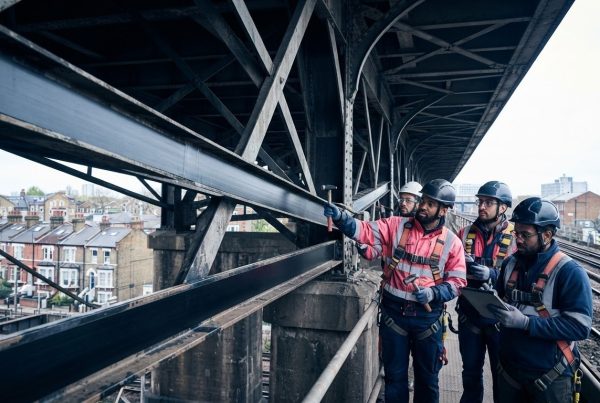
Structural diagnostics should only be undertaken by qualified engineering professionals who possess the technical expertise to interpret complex material behaviours. The value of third-party accreditation and professional certification is significant, as these credentials ensure that test results are admissible in structural integrity audits and insurance claims. Non-specialist testing often fails to account for variables such as concrete moisture content or cement type, leading to erroneous conclusions that may either understate the risk or trigger unnecessary capital expenditure. Comprehensive reporting must include high-resolution photographic evidence, calibrated measurement data, and a clear correlation between carbonation depth and reinforcement cover.
A robust diagnostic report serves as a critical asset for insurance valuation and long-term liability management. It provides a transparent audit trail that validates the necessity of specific interventions, such as carbon fibre strengthening or cathodic protection. To ensure your asset remains compliant with current UK engineering standards, contact our technical department to schedule a professional diagnostic survey. Professional oversight ensures that every measurement is recorded with the precision required for high-stakes infrastructure management.
Beyond Diagnosis: Integrating Testing with Structural Remediation
Beyond structural integrity, maintaining full regulatory adherence across a portfolio is essential. Providers like oxford-ec.co.uk offer multi-disciplinary property compliance services that help UK asset controllers manage environmental and safety risks alongside their structural maintenance programmes.
A diagnostic report serves as a critical baseline, but its value is only realised when it informs a robust remediation strategy. Adopting a ‘test and forget’ approach is financially reckless; it permits the carbonation front to advance towards the reinforcement unchecked, turning a predictable maintenance cycle into a structural crisis. Given that the UK’s repair, maintenance, and improvement (RM&I) sector is forecast to grow by 0.9% in 2026, the industry is clearly shifting towards the sustainability of repair over replacement. Proactive concrete carbonation testing allows asset controllers to specify bespoke concrete repairs that arrest degradation before it necessitates major capital expenditure.
Remediation Strategies for Carbonated Concrete
Once the depth of carbonation is accurately mapped, several engineering solutions can be deployed to arrest the ingress of CO2. Anti-carbonation coatings, specifically formulated as pore-liners or high-build acrylics, are applied to the external surface to significantly reduce the rate of future carbon dioxide diffusion. For structures where the pH has already dropped to critical levels, re-alkalisation techniques can be utilised to chemically restore the protective alkaline environment around the reinforcement. The transition from a diagnostic survey to a bespoke structural design ensures that the chosen remediation method addresses the specific chemical state of the concrete matrix, rather than merely treating the visible symptoms of decay.
The Synergy of Testing and CFRP Strengthening
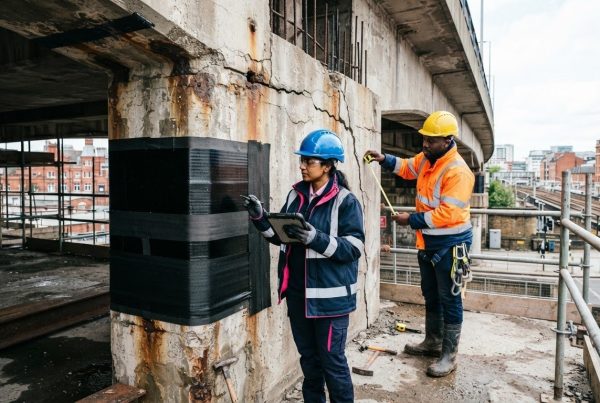
Where carbonation has already led to reinforcement corrosion and subsequent loss of steel section, restoring the structure’s original load-bearing capacity is paramount. Composite systems provide a sophisticated solution for these challenges. Diagnostic data determines the precise extent of Tyfo® Fibrwrap® installation required to reinstate structural integrity. These Carbon Fibre Reinforced Polymer (CFRP) systems act as external reinforcement, effectively assuming the tensile loads that the compromised internal steel can no longer support. As a single-source partner, CCUK manages the entire trajectory from initial concrete carbonation testing to complex remediation. You should contact the CCUK engineering team for integrated feasibility studies that prioritise the long-term sustainability of your essential infrastructure.
Securing Structural Longevity through Diagnostic Rigour
The long-term stability of UK infrastructure depends upon the transition from visual inspection to empirical diagnosis. Understanding the chemical progression of the carbonation front allows asset managers to move beyond reactive maintenance cycles. By identifying the specific depth where steel passivity is lost, remediation strategies become both fiscally efficient and structurally sound. Professional concrete carbonation testing, conducted in accordance with BS EN 14630, provides the foundational data required to implement life-extension measures before internal degradation manifests as critical spalling or section loss.
As specialist designers and installers of Tyfo® Fibrwrap® systems, CCUK provides an end-to-end service that bridges the gap between diagnosis and remediation. Our national coverage ensures that essential assets benefit from comprehensive structural surveys and sophisticated petrographic analysis, regardless of the project’s scale. Contact our engineering specialists for a professional carbonation survey and structural assessment to establish a data-driven strategy for your asset. Proactive intervention remains the most effective safeguard for the continued utility of our built environment.
Frequently Asked Questions
What is the primary cause of concrete carbonation in UK infrastructure?
The primary cause is the diffusion of atmospheric carbon dioxide into the concrete pore structure, where it reacts with calcium hydroxide to form calcium carbonate. This process is particularly prevalent in UK urban environments due to higher CO2 concentrations from industrial and vehicular emissions. Whilst the reaction is slow, it’s relentless. It systematically lowers the alkalinity of the concrete, which is the fundamental mechanism that protects embedded steel from corrosion.
Is the phenolphthalein test destructive to the structure?
The phenolphthalein indicator test is classified as a semi-destructive methodology. It requires the removal of a small amount of concrete cover, usually through drilling or localised breakout, to reveal a fresh surface for the reagent. Whilst this technically involves a physical intervention, the impact is negligible and the test sites are professionally reinstated immediately. It remains the most reliable on-site method for concrete carbonation testing without necessitating large-scale structural disruption.
How often should carbonation testing be performed on bridges or car parks?
Inspection intervals are determined by the asset’s specific risk profile and environmental exposure. For critical infrastructure like bridges or multi-storey car parks, a comprehensive survey is typically recommended every 10 to 15 years. However, if visual indicators such as rust staining or hairline cracks are detected, testing should be prioritised immediately. Regular monitoring allows engineers to calculate the rate of carbonation ingress and predict the structure’s remaining service life.
Can carbonation occur in relatively new concrete structures?
Carbonation can indeed manifest in relatively new structures if the concrete quality is suboptimal. Factors such as a high water-cement ratio, inadequate compaction, or insufficient curing periods increase the material’s permeability. This allows CO2 to penetrate the matrix much faster than the typical 1mm to 5mm annual rate. In such cases, concrete carbonation testing is vital to identify whether the design life of the asset is being prematurely compromised by environmental factors.
What is the difference between carbonation and chloride-induced corrosion?
Carbonation involves a uniform reduction in pH levels across the concrete matrix, whereas chloride-induced corrosion is often localised and more aggressive. Chlorides, typically from de-icing salts or marine spray, penetrate the concrete to cause ‘pitting’ corrosion on the reinforcement. Whilst both processes destroy the steel’s passive layer, carbonation is a slower chemical transformation. Understanding the distinction is essential for designing an effective remediation strategy that addresses the specific cause of degradation.
How much does a professional concrete carbonation survey typically cost?
Survey fees are structured as project-based fixed contracts that reflect the technical requirements and scale of the asset. Factors such as the number of core samples, the complexity of site access, and the depth of laboratory analysis required all influence the final cost. These fees provide the essential data needed to justify remedial works. Investing in accurate diagnostics is a cost-saving measure that prevents the exponential expense of unmanaged structural failure.
Can anti-carbonation coatings stop the process once it has started?
Anti-carbonation coatings are designed to act as a barrier that significantly retards the diffusion of CO2 into the concrete. They don’t reverse the chemical neutralisation that has already taken place within the matrix. If the carbonation front is already close to the reinforcement, these coatings should be used alongside other techniques like re-alkalisation. This ensures that the existing chemical imbalance is managed whilst preventing further ingress from the atmosphere.
What happens if carbonation reaches the reinforcement steel?
Once the carbonation front reaches the reinforcement, the high-alkalinity environment that maintains the steel’s passivity is lost. In the presence of moisture and oxygen, the steel begins to oxidise and expand. This volumetric expansion, which can be up to six times the original size of the steel, creates immense internal tensile stress. This inevitably leads to longitudinal cracking, delamination of the concrete cover, and eventually, the spalling of large sections.