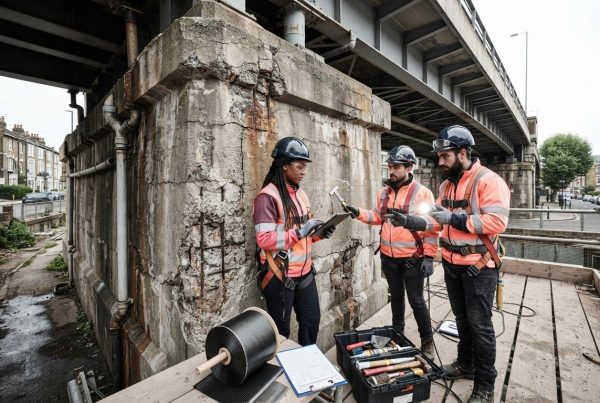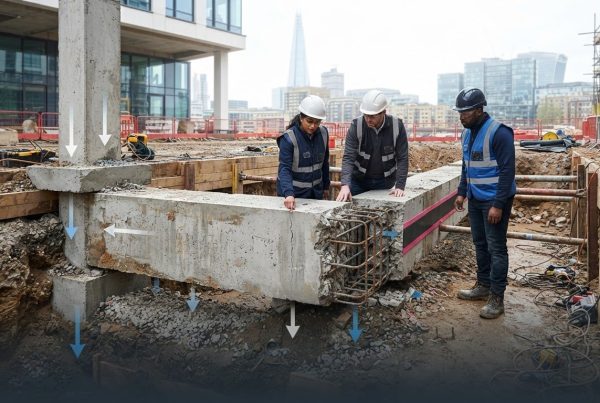

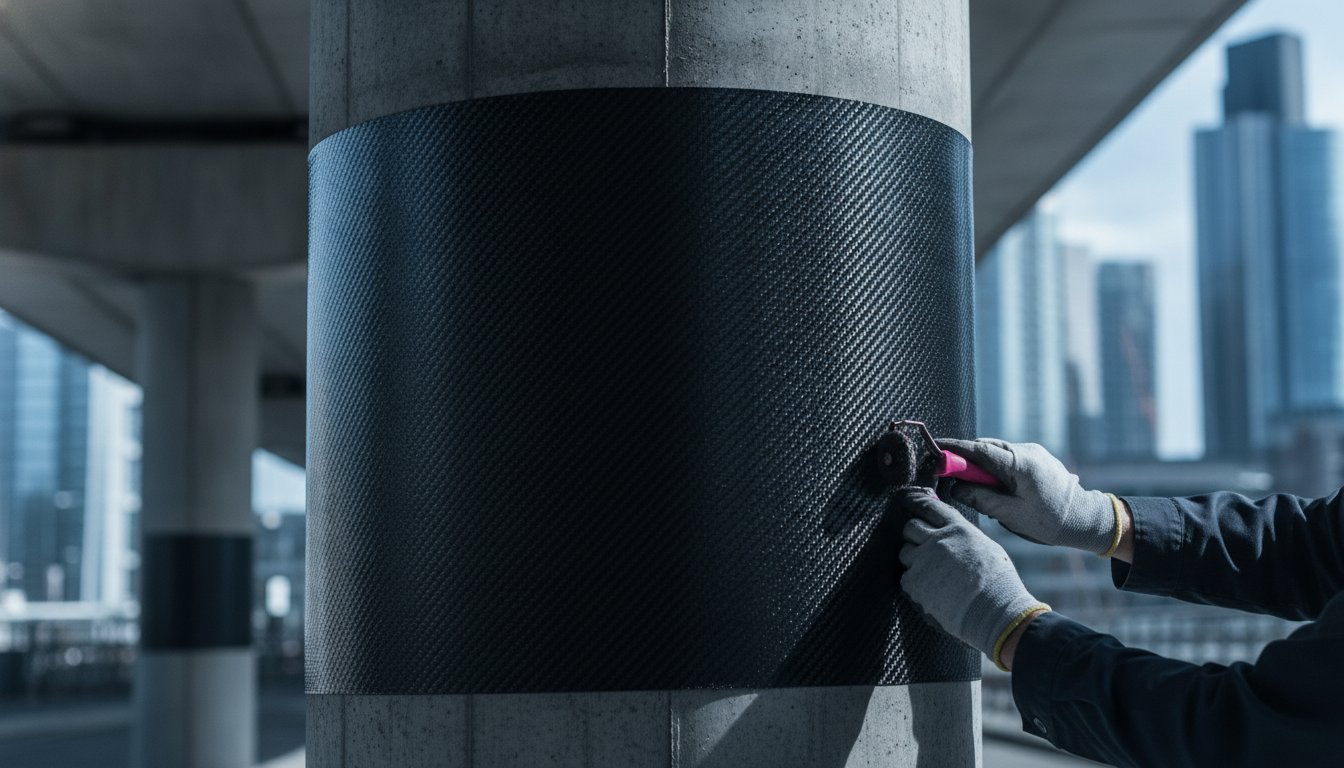
Approximately 10% of the 71,000 bridges across Great Britain are currently classified as substandard, presenting a remediation challenge that is estimated to exceed £1 billion in total costs. This systemic degradation highlights an urgent requirement for carbon fibre wrapping for concrete columns to restore structural integrity and enhance load-bearing capacity without the logistical burden of traditional steel jacketing. It’s recognised that asset controllers must balance the necessity of meeting stringent structural safety regulations whilst simultaneously minimising operational downtime and avoiding the prohibitive costs associated with full demolition and replacement.
This article provides an expert-led examination of Carbon Fibre Reinforced Polymer (CFRP) wrapping techniques, specifically focusing on the rigorous engineering principles that govern effective confinement and axial load enhancement. We’ll explore the technical specifications of the Tyfo® Fibrwrap® system, a solution engineered to provide a 120-year design life. By evaluating the performance of these high-modulus materials, we’ll demonstrate how bespoke engineering interventions facilitate the sustainable life-extension of critical infrastructure assets through precise, non-intrusive methodology.
Key Takeaways
- Learn how carbon fibre wrapping for concrete columns creates a triaxial stress state to restrict lateral expansion and significantly enhance axial load capacity.
- Understand why composite wrapping is a superior alternative to traditional steel jacketing, offering reduced dead weight and exceptional resistance to reinforcement corrosion.
- Discover the critical role of Concrete Society Technical Report 55 (TR55) in governing bespoke engineering designs for compliant structural remediation.
- Gain insights into the technical installation process, from initial carbonation testing to the application of the high-performance Tyfo® Fibrwrap® system.
Understanding Carbon Fibre Wrapping for Concrete Column Strengthening
Structural engineering has undergone a significant paradigm shift with the adoption of Carbon Fiber Reinforced Polymer (CFRP) as a primary medium for asset life-extension. Carbon fibre wrapping for concrete columns is defined as a non-intrusive structural intervention where high-strength carbon filaments are bonded to the exterior of a concrete member. This process creates a high-tensile external reinforcement cage that effectively compensates for internal steel degradation or insufficient original design capacity. Whilst traditional methods such as steel jacketing or section enlargement were once the industry standard, they’re increasingly viewed as suboptimal due to their significant dead load and susceptibility to environmental degradation. Modern composite systems are now favoured for seismic retrofitting and rapid load upgrades, offering a streamlined path to structural compliance.
The Composition of Advanced Structural Wraps
The efficacy of a composite wrap is predicated on the synergy between the carbon fabric and the saturant resin. Unidirectional fabrics, where the majority of fibres are oriented in a single direction, are typically specified for confinement applications to maximise hoop strength. In contrast, multi-directional weaves may be utilised when complex stress distributions, such as shear or torsion, must be addressed. The selection of high-performance epoxy resins is equally critical; these polymers ensure the load is effectively transferred from the concrete substrate to the composite jacket. Inferior material quality or poor saturant penetration will inevitably compromise the bond integrity, leading to premature failure of the structural remediation.
Why Column Strengthening is Critical for UK Infrastructure
The UK’s built environment faces a persistent challenge from the legacy of mid-century construction, where carbonation and chloride-induced corrosion have compromised internal reinforcements. Carbon fibre wrapping for concrete columns offers a method to adapt these existing structures to meet modern load requirements and updated safety codes without the need for total reconstruction. This approach aligns with broader economic and environmental goals by prioritising the sustainability of repair over replacement. Every solution is a bespoke design tailored to specific asset requirements, ensuring that aging infrastructure remains functional and compliant with current structural standards for decades to come. By extending the functional lifespan of national assets, engineers can avoid the immense carbon footprint associated with new concrete production and demolition.
The Engineering Principles of CFRP Column Confinement
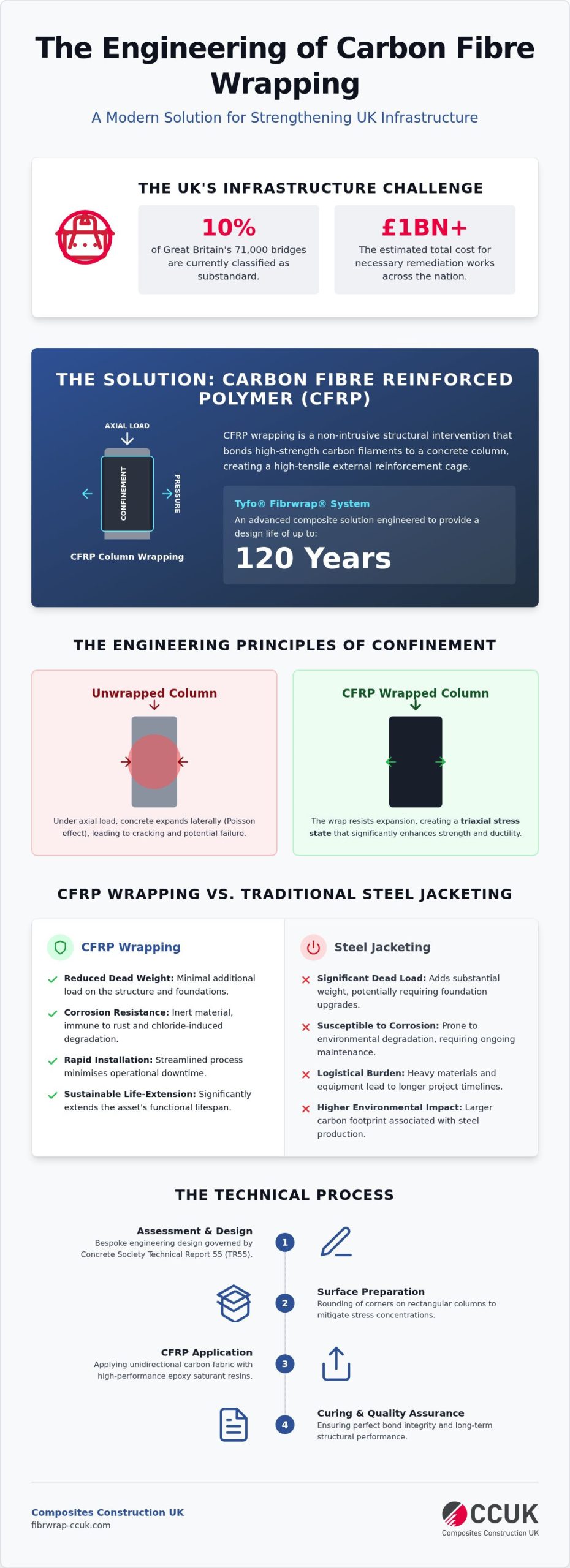
The efficacy of carbon fibre wrapping for concrete columns is rooted in the physics of passive confinement. When a concrete column is subjected to axial loading, it naturally exhibits lateral expansion due to the Poisson effect. By encasing the member in a high-modulus CFRP jacket, this transverse strain is physically resisted, generating a reactive radial pressure. This mechanism forces the concrete into a triaxial stress state, which significantly delays the onset of internal crushing and increases the ultimate compressive strength of the member. According to WSDOT research on CFRP column retrofitting, this confinement effect is essential for maintaining structural stability under extreme load conditions.
Circular profiles are inherently more efficient for confinement as the radial pressure is distributed uniformly around the perimeter. In contrast, rectangular columns experience non-uniform pressure, with the confinement effect being most potent at the corners. To mitigate stress concentrations that could lead to premature fabric failure, rectangular corners are typically rounded to a specific radius before the application of the composite material. This geometry optimisation ensures that the carbon fibre wrapping for concrete columns provides the necessary hoop tension without localised points of weakness.
Ductility and Load-Bearing Enhancements
Confinement is the restriction of transverse strain to enhance vertical load capacity. Beyond simple strength increases, CFRP jackets provide a substantial boost to a column’s ductility. This is particularly vital for seismic resilience, where the ability of a structure to undergo large deformations without collapsing is a critical safety requirement. Data suggests that CFRP systems can increase a member’s load capacity by 25% to 60%, allowing for significant load upgrades without altering the original structural dimensions. Engineers requiring precise performance data for specific site conditions should consider a bespoke design evaluation to ensure the confinement pressure meets the required safety margins.
The Science of Bond-Critical vs Contact-Critical Applications
The distinction between bond-critical and contact-critical applications dictates the surface preparation and resin selection. In bond-critical scenarios, such as shear or flexural strengthening, the resin must facilitate a perfect transfer of stress between the concrete and the carbon fibres. For pure axial confinement, the application is often contact-critical, where the fabric acts as a tensioned hoop. Even in contact-critical designs, the concrete substrate must have a minimum compressive strength of 2,500 psi to ensure the system’s effectiveness. Correct material selection and rigorous application standards are the only ways to guarantee that the composite system survives the intended 120-year design life whilst resisting environmental stressors.
Comparing CFRP Wrapping with Traditional Concrete Strengthening Methods
Traditional structural remediation has historically relied on steel jacketing or concrete section enlargement. Whilst these methods are established, they introduce significant engineering compromises that modern asset controllers often find unacceptable. Steel jackets, for instance, are notoriously susceptible to corrosion and require intensive welding or bolting. In contrast, carbon fibre wrapping for concrete columns utilises materials with approximately ten times the tensile strength of structural steel at about one-quarter of the density. This weight reduction is critical in seismic zones or for aging bridges where additional dead load must be avoided.
Section enlargement involves casting a new concrete layer around the existing member, which inevitably increases the column’s footprint and consumes valuable floor space. Composite wrapping offers a low-profile alternative, typically adding only a few millimetres to the member’s dimensions. In aggressive marine or industrial settings, the chemical inertness of CFRP provides a durable barrier against chloride ingress, whereas traditional repairs often succumb to the same corrosive forces that necessitated the original intervention.
Operational Advantages of Composite Systems
The speed of application remains a primary driver for selecting composite systems over traditional methods. CFRP installation is documented to be up to 70% faster than concrete jacketing, which is essential for minimising downtime in high-traffic infrastructure or commercial centres. Because the materials are lightweight and hand-applied, the requirement for heavy plant and extensive propping is eliminated. This allows the asset to remain in service during the remediation process, avoiding the massive economic losses associated with operational closure.
Sustainability and Life-Cycle Assessment
Extending the functional lifespan of an existing structure is fundamentally more sustainable than demolition and reconstruction. By avoiding the carbon-intensive process of new concrete production, engineers can significantly reduce a project’s environmental impact. Structural life-extension through carbon fibre wrapping for concrete columns aligns with national sustainability targets by preserving essential infrastructure through sophisticated engineering. This approach ensures that the built environment remains resilient whilst adhering to the strict carbon budgets required for modern construction projects.
The Technical Process: Designing and Installing Column Wraps
The successful implementation of carbon fibre wrapping for concrete columns begins with a rigorous diagnostic phase. Initial structural surveys must be conducted to evaluate the current state of the substrate, typically involving carbonation depth testing and chloride analysis to identify the root causes of reinforcement corrosion. These empirical findings dictate whether the concrete requires electrochemical treatment or traditional patch repair before the composite system is applied. Without this baseline data, the long-term efficacy of the strengthening intervention cannot be guaranteed.
The Importance of Bespoke Engineering Design
Every structural intervention is governed by a bespoke engineering design that adheres to the Concrete Society Technical Report 55 (TR55) or relevant UK structural codes. This design phase involves complex calculations to determine the precise number of fibre layers, their orientation, and the required modulus of elasticity to meet the new load-bearing specifications. By integrating specific design features into the remediation strategy, engineers ensure the strengthening system is fully compatible with the existing structural behaviour, preventing unintended stress redistributions that could compromise the asset’s integrity.
Surface Preparation and Concrete Remediation
Achieving the correct surface profile is the most critical factor in ensuring optimal epoxy adhesion. The concrete substrate must be mechanically abraded, often through grit blasting, to remove laitance and expose the aggregate. Any spalled or delaminated concrete must be removed and reinstated using specialised mortars. For detailed standards on substrate preparation, refer to our guide on concrete repairs. Once the surface is prepared, the precision application of primers and saturants begins, followed by the careful layup of the carbon fibre layers.
Quality assurance is maintained through a structured testing regime. Pull-off tests are performed to verify the bond strength between the CFRP system and the concrete, ensuring it meets the minimum tensile requirements specified in the design. Digital logging of environmental conditions, such as dew point and ambient temperature, is also mandatory to ensure the resins cure correctly. To ensure your asset benefits from this level of technical rigour, discuss your project requirements with our specialist engineering team today.
Asset Life-Extension through Tyfo® Fibrwrap® Systems
The selection of a composite system is a decision that impacts the long-term security of critical infrastructure. Tyfo® Fibrwrap® is recognised as a global benchmark for carbon fibre wrapping for concrete columns, utilised in some of the most demanding engineering environments worldwide. This system isn’t merely a collection of materials; it’s a fully integrated structural solution comprising proprietary saturant resins and high-modulus carbon fabrics like Tyfo® SCH. These components are engineered to work in unison, providing a verified 120-year design life that far exceeds the performance of generic composite alternatives. By choosing a specialist engineering contractor with the technical expertise to install these systems, asset owners ensure that the remediation meets the most stringent safety criteria.
Proven Results in Extreme Environments
Durability is a non-negotiable requirement for infrastructure exposed to thermal fluctuations or aggressive chemical ingress. Tyfo® Fibrwrap® has been subjected to extensive third-party testing and certification to validate its performance under extreme stress. This includes resistance to UV degradation and chemical exposure, which is vital for maintaining the integrity of the epoxy matrix over decades. Tyfo® Fibrwrap® is widely regarded as the industry standard for seismic and blast resilience, offering proven energy dissipation and confinement properties. These high-performance metrics are essential for assets that must remain operational during and after significant structural events, such as seismic activity or accidental impacts.
Your Partner in Structural Remediation
Composites Construction UK (CCUK) serves as the exclusive UK licensee for Tyfo® Fibrwrap®, providing a seamless transition from initial feasibility studies to final quality assurance. This end-to-end approach ensures that the engineering design is executed with precision, utilising a specialist team for bespoke calculations. CCUK provides national support for complex infrastructure projects, addressing the unique regional requirements of the UK’s built environment. By prioritising the sustainability of repair over the high cost of replacement, we help asset controllers extend the utility of essential structures through advanced materials science. Contact our technical team today to arrange a bespoke structural survey and discover how carbon fibre wrapping for concrete columns can safeguard your assets for the future.
Securing Structural Integrity for Future Infrastructure
The transition towards advanced composite materials represents a strategic advancement in asset management. Carbon fibre wrapping for concrete columns is established as a mathematically precise method for enhancing axial load capacity whilst preserving the original structural footprint. By utilising the principles of passive confinement, engineers can effectively mitigate the risks associated with reinforcement corrosion and outdated design codes. This approach prioritises the sustainability of structural life-extension, avoiding the environmental and economic costs of demolition and reconstruction. It’s a solution that balances rigorous engineering requirements with the practicalities of modern asset operation.
As the exclusive UK licensee for Tyfo® Fibrwrap®, Composites Construction UK brings over a decade of specialist engineering experience to every project. Our full end-to-end service ensures that every intervention is grounded in empirical data and compliant with the highest safety standards. We’re committed to protecting the nation’s infrastructure through sophisticated science and rigorous installation standards. Consult our specialist engineers for a bespoke structural design solution to ensure your assets remain resilient and compliant for decades to come. We look forward to helping you extend the functional lifespan of your critical infrastructure.
Frequently Asked Questions
How much load capacity can carbon fibre wrapping add to a concrete column?
CFRP systems can increase a concrete member’s load capacity by 25% to 60%, depending on the specific engineering design and column geometry. For bridge piers, the application of carbon fibre wrapping for concrete columns can increase axial load capacity by 20% to 50% through effective confinement. These figures are contingent upon the substrate’s initial compressive strength and the number of composite layers applied during the structural remediation process.
Is carbon fibre wrapping suitable for rectangular concrete columns?
Rectangular columns are suitable for CFRP wrapping, provided the corners are rounded to a minimum radius of 20mm to 30mm to prevent stress concentrations. Whilst circular columns offer the most efficient confinement, rectangular members can be effectively strengthened by addressing the non-uniform pressure distribution. Specialist engineering calculations are required to determine the effective confinement area, as the pressure is primarily concentrated at the corners of the rectangular profile.
How long does a CFRP column wrap system typically last?
A professionally installed Tyfo® Fibrwrap® system is engineered to provide a 120-year design life, aligning with the requirements for major infrastructure projects. This longevity is achieved through the use of high-performance saturant resins and carbon fabrics that resist environmental degradation. The system’s durability is validated through extensive long-term testing, ensuring that the structural life-extension remains effective throughout the intended service period of the essential asset.
Does carbon fibre wrapping provide fire protection for concrete structures?
Carbon fibre itself is heat resistant, but the epoxy resin matrix typically begins to lose structural integrity at temperatures between 60°C and 80°C. Consequently, CFRP systems don’t inherently provide fire protection and require the application of a secondary fire-resistant coating or cementitious overlay. These additional layers are specified to meet building regulations and ensure the strengthening system remains functional during a fire event to protect the structural core.
Can carbon fibre wrapping be applied to wet or damp concrete surfaces?
Standard CFRP systems require a dry substrate with a maximum moisture content of 4% to ensure the epoxy resin achieves a full structural bond. If the concrete is damp or saturated, the bond integrity may be compromised, leading to premature delamination. Specialist underwater or moisture-tolerant resins are available for specific applications, but these must be specified during the design phase to ensure compatibility with the environmental conditions of the site.
What is the typical thickness of a finished carbon fibre column wrap?
The finished thickness of carbon fibre wrapping for concrete columns typically ranges from 1mm to 5mm, depending on the number of layers required by the engineering design. This low-profile characteristic is a significant advantage over traditional concrete jacketing, which can add 100mm or more to the column’s dimensions. The minimal thickness ensures that the structural upgrade doesn’t impede floor space or significantly alter the building’s original appearance.
How does the cost of CFRP wrapping compare to traditional steel jacketing?
Whilst the raw material cost of carbon fibre is higher than structural steel, the total project cost is often lower due to reduced labour and plant requirements. CFRP installation is documented to be up to 70% faster than traditional methods; it eliminates the need for heavy lifting equipment or extensive site propping. This speed of application significantly reduces operational downtime, providing a more economical solution for complex infrastructure remediation projects.
What surface preparation is required before installing carbon fibre wraps?
Surface preparation involves mechanical abrasion, such as grit blasting or grinding, to achieve a concrete surface profile (CSP) of 3 or higher. All laitance, oils, and existing coatings must be removed to ensure a direct bond to the aggregate. Any spalled concrete must be repaired with high-strength mortars, and the substrate must meet a minimum tensile bond strength of 200 psi before the primer and saturant resins are applied.