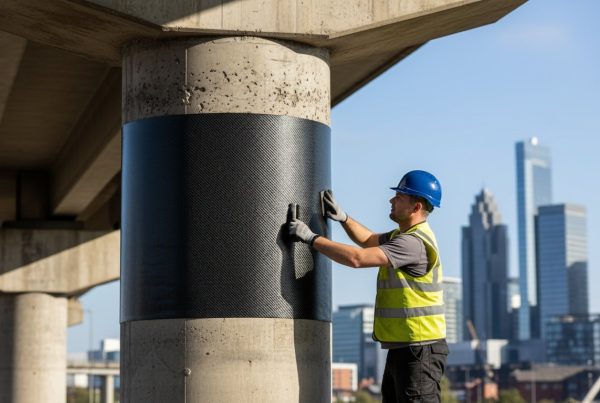

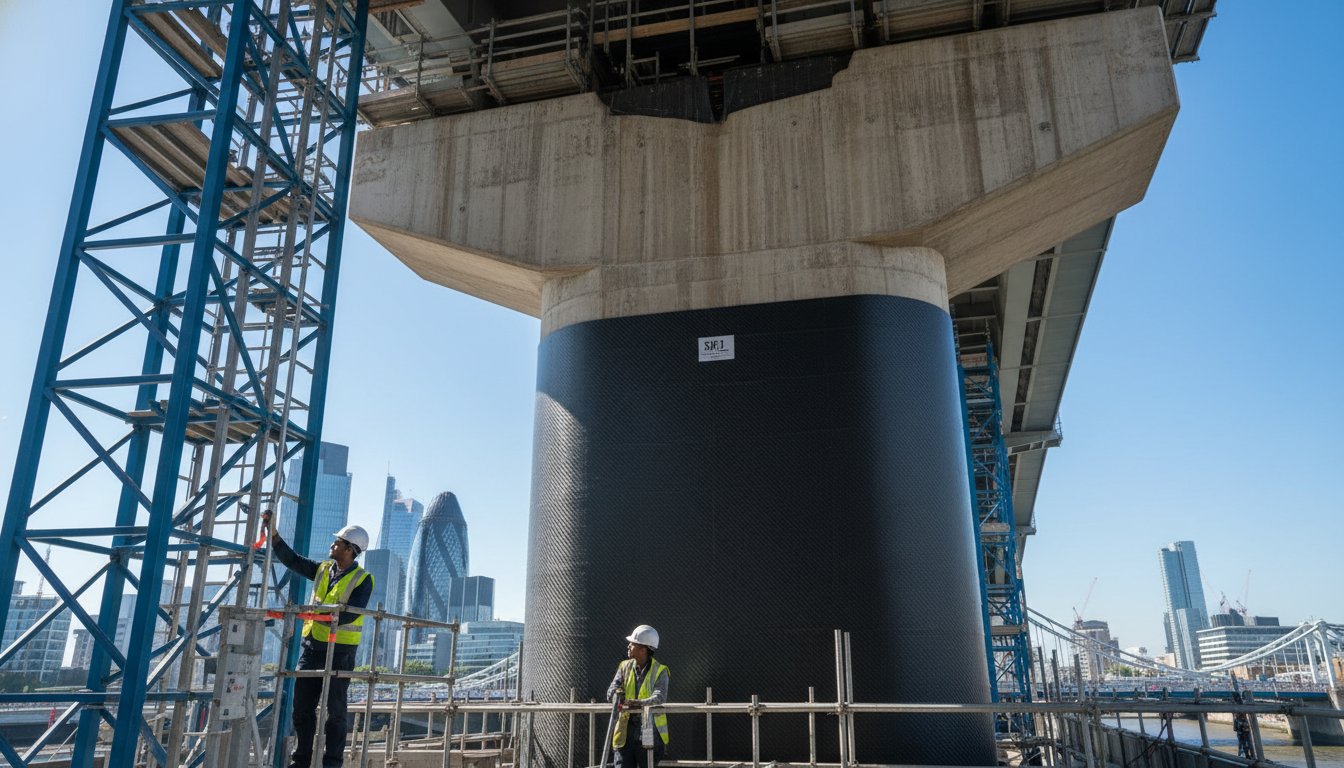
With the UK fibre reinforced polymer composites market projected to reach a valuation of USD 2.5 billion by 2026, the strategic transition from wholesale asset replacement to engineered structural life-extension has become a fundamental necessity for infrastructure controllers. It’s understood that the accelerated degradation of concrete assets, coupled with the logistical complexities of operational downtime, presents a significant challenge to modern civil engineering. This article provides a comprehensive engineering analysis of FRP composite repair systems UK, demonstrating how advanced materials can be deployed to meet rigorous structural load requirements without the prohibitive costs of demolition.
You’ll gain an expert-led perspective on the application of high-performance reinforcements, including the Tyfo® Fibrwrap® system, within the framework of international standards such as ISO 24817:2017 and ASME PCC-2. The following discussion details the methodology for structural strengthening, seismic retrofitting, and the technical validation required to ensure long-term reliability and compliance with updated UK safety regulations. By prioritising the sustainability of repair over replacement, essential infrastructure can be preserved through sophisticated material science and disciplined engineering practice.
Key Takeaways
- Understand the fundamental mechanics of load transfer and the chemical synergy between fibre reinforcements and adhesive matrices required for effective structural remediation.
- Compare the logistical efficiencies and dead-load advantages of advanced composites against traditional steel plate bonding for weight-sensitive infrastructure.
- Master the technical requirements of Concrete Society Technical Report 55 (TR55) to ensure that FRP composite repair systems UK achieve optimal bond performance through rigorous substrate preparation.
- Explore the application of integrated, tested solutions like the Tyfo® Fibrwrap® system for high-performance pipeline rehabilitation and industrial storage strengthening.
- Learn how to execute non-disruptive structural upgrades that align with modern UK standards whilst significantly extending the functional utility of concrete and masonry assets.
The Evolution of Structural Remediation: FRP Composite Repair Systems in the UK
The landscape of civil engineering in the United Kingdom is currently defined by a critical pivot from traditional replacement strategies to sophisticated life-extension methodologies. Within this context, FRP composite repair systems UK have emerged as a primary solution for the restoration and reinforcement of essential assets. These systems are defined as high-performance composite materials consisting of high-strength fibres—typically carbon, glass, or aramid—embedded within a specialised polymer resin matrix. This combination creates a material that is not only exceptionally strong but also tailored to the specific geometric and structural requirements of the host asset.
Whilst traditional methods like steel plate bonding or section enlargement remain viable in specific scenarios, the adoption of Fibre-Reinforced Plastic (FRP) represents a paradigm shift in strength-to-weight performance. Composites allow for significant structural enhancement without adding substantial dead load to the existing structure. It’s a critical consideration for assets already operating at or near their original design capacity. The primary components—high-modulus fibres and advanced resins—work in synergy to provide a durable, external reinforcement layer that arrests crack propagation and increases load-bearing capacity.
Addressing the UK Infrastructure Deficit
Much of the UK’s current bridge inventory dates back to the Victorian era or the post-war reconstruction period. These structures weren’t designed for the current volume or weight of heavy goods vehicle traffic. The degradation of these assets is often compounded by chloride ingress and carbonation, leading to the corrosion of internal steel reinforcement. Modern concrete repairs must therefore evolve beyond simple patch fixes to include active structural enhancement. There’s a clear economic imperative for this approach. Extending the operational life of a bridge or industrial facility through targeted intervention is frequently more viable than the immense capital expenditure and environmental cost associated with full demolition and reconstruction.
Material Properties and Performance Characteristics
The efficacy of these FRP composite repair systems UK is rooted in their exceptional tensile strength and inherent resistance to corrosion. Such traits are particularly advantageous in the UK’s damp and salt-laden coastal environments. Beyond purely mechanical advantages, modern composites offer electromagnetic neutrality. This makes them indispensable for structures housing sensitive electronic equipment or those within the rail sector. These systems are engineered to withstand sustained environmental stress, ensuring that the bond between the substrate and the reinforcement remains intact despite thermal cycling. The synergy between the fibre and the resin matrix ensures that load is distributed effectively, providing a tailored solution for complex structural deficiencies.
Engineering Principles of Fibre Reinforced Polymer (FRP) Systems
The efficacy of FRP composite repair systems UK is fundamentally contingent upon the composite action achieved between the structural substrate and the reinforcement layer. This synergy is governed by the interfacial bond strength, which facilitates the seamless transfer of stresses from the host structure into the high-tensile fibres. In a correctly specified system, the adhesive matrix—typically a high-performance epoxy resin—encapsulates the fibres, protecting them from environmental degradation whilst ensuring that the load is distributed uniformly across the entire laminate surface. This mechanics of load transfer allows for the effective restoration of structural integrity in elements suffering from reinforcement corrosion or section loss.
Selection between Carbon Fibre Reinforced Polymer (CFRP) and Glass Fibre Reinforced Polymer (GFRP) is dictated by the required modulus of elasticity and the specific performance objectives of the project. As noted in a recent academic review of FRP structures, the high stiffness-to-weight ratio of carbon fibres makes them the primary choice for flexural strengthening where deflection control is paramount. Conversely, GFRP is often utilised for its superior impact resistance and electrical insulation properties. The anisotropic nature of these materials means that fibre orientation is a critical design parameter; unidirectional fabrics are strategically aligned with principal stress trajectories to address flexural deficiencies, whilst bi-directional or quad-axial weaves are deployed to manage complex shear forces and confinement requirements.
Engineers must also account for the viscoelastic behaviour of the polymer matrix, which can be influenced by sustained loading and thermal fluctuations. Precise computational modelling is required to ensure that the composite system remains within its linear-elastic range throughout the remaining service life of the asset. For those seeking to understand the specific parameters used in these calculations, reviewing the technical design features of proprietary systems can provide clarity on how material properties are translated into structural capacity.
Carbon Fibre Reinforced Polymer (CFRP) Applications
CFRP is the preferred medium for high-modulus structural strengthening due to its exceptional tensile strength and low creep characteristics. It’s particularly effective in seismic retrofitting and blast mitigation scenarios, where the material’s ability to absorb energy and provide confinement is vital for life safety. Beyond its immediate strength gains, CFRP offers superior long-term fatigue resistance, making it ideal for transport infrastructure subjected to millions of cyclic load repetitions. This durability ensures that the intervention remains robust over decades of service.
The Role of the Resin Matrix
The resin matrix serves as the critical bonding agent that maintains structural integrity. Epoxy resins are favoured for their high adhesive strength and chemical compatibility with concrete and masonry substrates. However, the curing process is highly sensitive to the UK’s variable weather conditions. Factors such as ambient temperature and surface moisture must be meticulously managed to ensure a complete polymerisation of the matrix. Specific resin formulations are often required to achieve a full cure in low-temperature environments, preventing the risk of bond failure or reduced mechanical performance.
Comparative Analysis: Composite Strengthening versus Traditional Interventions
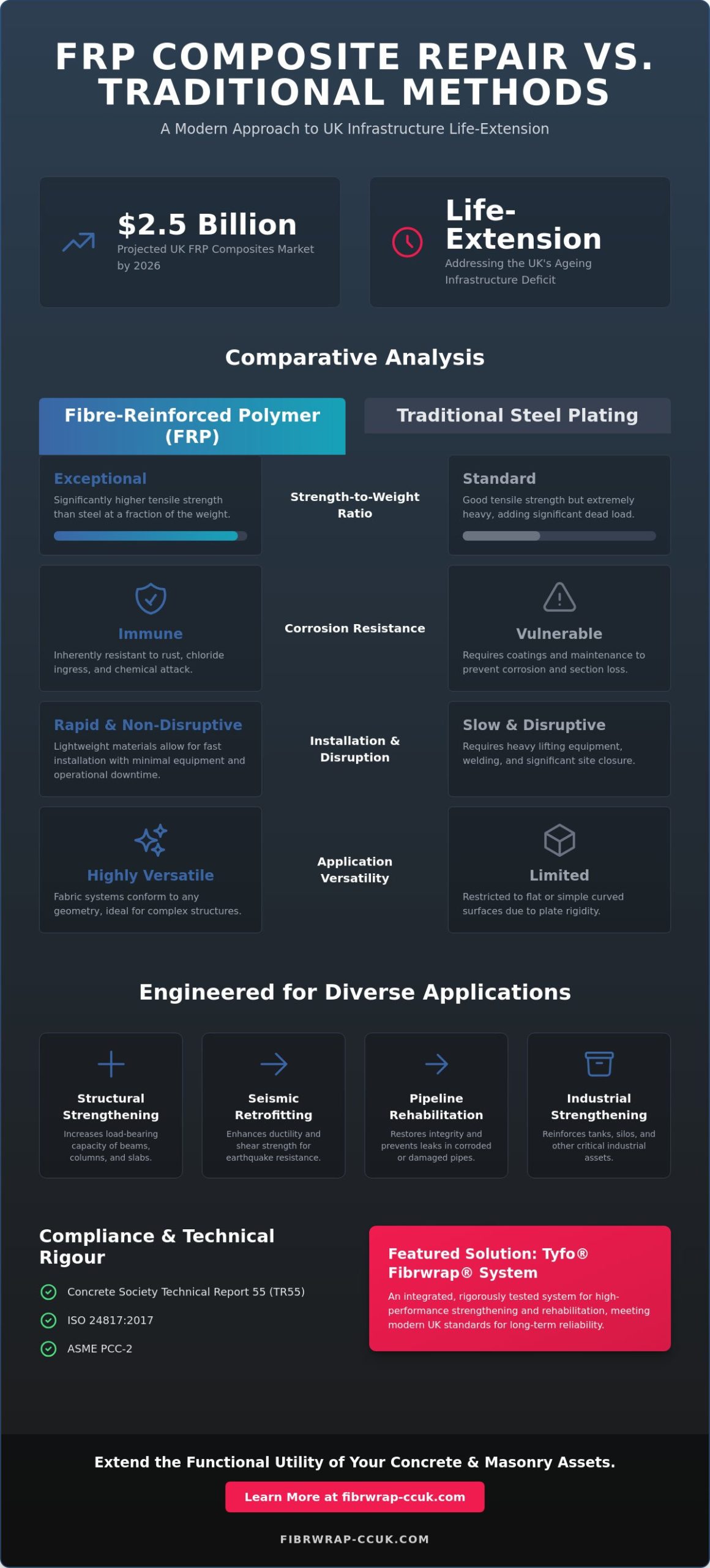
Selecting the optimal remediation strategy requires an empirical evaluation of logistical, structural, and economic variables. Whilst steel plate bonding has historically served as a standard for flexural reinforcement, the deployment of FRP composite repair systems UK offers a definitive advantage in terms of strength-to-weight ratio. Traditional steel interventions necessitate heavy lifting equipment and significant plant presence, which often complicates site access in restricted urban or industrial environments. By contrast, composite laminates are lightweight and can be manually handled; this facilitates installation in confined spaces where mechanical lifting is impractical.
Structural dead load is a primary concern for asset controllers managing bridges or multi-storey car parks already operating at their design limits. Adding heavy steel plates can inadvertently consume the very capacity the intervention seeks to restore. FRP systems provide a high-tensile alternative that adds negligible mass to the structure. Adherence to the FRP Repair Best Practice Guide ensures that these lightweight systems meet the same rigorous safety thresholds as traditional methods whilst offering superior durability over a 50-year design life. This longevity is supported by the material’s inherent resistance to environmental degradation, which eliminates the need for the periodic repainting or corrosion monitoring required for metallic reinforcements.
Operational continuity is often the deciding factor for UK infrastructure projects. The speed of composite application allows for significantly reduced track possessions on rail networks and shorter lane closures on highways. Because the installation process is primarily a dry-wrap or wet-layup procedure, it doesn’t involve the high-heat or heavy-vibration activities associated with traditional welding or mechanical anchoring. This non-disruptive nature ensures that the asset remains functional during the works, protecting revenue streams and minimising public inconvenience.
FRP vs Steel Plate Bonding
The logistical burden of steel plate bonding includes the necessity for complex temporary works and precision-drilled anchor points. These anchors can sometimes damage existing internal reinforcement, creating new vulnerabilities. FRP composite repair systems UK avoid this risk through a surface-applied bond that distributes stress across a wider area. Furthermore, the susceptibility of steel to galvanic corrosion presents a hidden, long-term maintenance cost. Composites are chemically inert, providing a “fit and forget” solution that remains robust in the face of de-icing salts and industrial pollutants.
FRP vs Section Replacement
Analysing the carbon footprint of structural interventions reveals that life-extension through composite repair is significantly more sustainable than full section replacement. Demolition and new-build concrete works involve massive energy expenditure and material waste. By reinforcing the existing host structure, engineers can achieve the required load-bearing capacity whilst preserving the original embodied carbon of the asset. This approach aligns technical capabilities with broader environmental goals, offering a cost-effective alternative for commercial asset controllers who must balance budgetary constraints with modern sustainability standards.
Technical Implementation: Design, Specification, and Installation Protocols
The successful deployment of FRP composite repair systems UK is predicated on a rigorous transition from theoretical modelling to disciplined site execution. Within the British regulatory environment, the primary framework for these interventions is the Concrete Society Technical Report 55 (TR55). This document provides the essential design philosophy for externally bonded reinforcements, specifying the partial safety factors required to account for material properties, loading conditions, and long-term environmental degradation. Adherence to TR55 ensures that the strengthening is not merely a supplementary layer but a fully integrated structural component capable of meeting modern safety requirements.
Every project requires a bespoke design that considers the existing condition of the host asset. Engineers must accurately assess the current load-bearing capacity and the degree of reinforcement section loss before specifying the composite laminate thickness and fibre orientation. This process often involves finite element analysis (FEA) to predict stress distribution and identify potential areas of stress concentration. A conservative engineering approach is vital to mitigate the risk of debonding, a failure mode where the laminate separates from the substrate before its full tensile strength is utilised. By calculating the effective strain limits of the bond, designers ensure the system remains robust under peak operational loads.
Quality control is maintained through a sequence of empirical tests conducted during and after installation. Interlaminar shear strength and pull-off testing are standard requirements for verifying the integrity of the application. In a successful pull-off test, the failure must occur within the concrete substrate itself rather than at the resin interface, confirming that the bond exceeds the internal strength of the host material. These measures provide the technical validation necessary for asset controllers to certify the life-extension of critical infrastructure.
Design Philosophy and Calculations
The design process factors in the required load increases whilst maintaining a focus on the serviceability limit state. Calculations must account for the elastic modulus of the chosen fibre type, whether carbon or glass, to ensure compatibility with the host structure’s stiffness. Sophisticated modelling allows for the precise placement of reinforcements, ensuring that FRP composite repair systems UK address specific flexural or shear deficiencies with surgical accuracy. This level of detail is necessary to prevent the redistribution of stresses into unreinforced areas of the structure.
Professional Installation Standards
Substrate preparation is the most critical phase of the installation protocol. Techniques such as grit blasting or high-pressure water jetting are utilised to remove laitance and contaminants, creating a textured surface profile that facilitates a superior mechanical bond. Environmental monitoring is equally vital; epoxy resins are highly sensitive to the UK’s fluctuating humidity and temperature levels. Specialist contractors must ensure that the substrate remains above the dew point and within the specified temperature range during the curing process. For assets requiring high-performance structural upgrades, you should contact a specialist engineering team to discuss project-specific specifications and compliance requirements.
Strategic Asset Management: Extending Lifespans with Tyfo® Fibrwrap®
Strategic asset management requires a disciplined shift from reactive maintenance to the implementation of integrated, high-performance solutions. Within the portfolio of FRP composite repair systems UK, the Tyfo® Fibrwrap® system is distinguished as a fully tested, engineered assembly rather than a disparate collection of resins and fabrics. This distinction is vital for ensuring that the structural performance predicted in the design phase is replicated in the physical application. By utilising a proprietary system with a documented history of project success, asset owners can mitigate the risks associated with material incompatibility and bond failure.
The versatility of these systems extends beyond conventional concrete strengthening. There is significant utility in pipeline rehabilitation and the reinforcement of industrial storage assets. These applications are particularly demanding, requiring materials that can withstand internal pressure, chemical exposure, and varied thermal cycles. By choosing structural remediation over full replacement, organisations can achieve significant sustainability gains. Prolonging the functional lifespan of an existing structure reduces the demand for new cement and steel, aligning technical requirements with national carbon reduction targets.
Compliance with stringent UK health and safety and building regulations is a non-negotiable aspect of modern engineering. Adherence to these standards is facilitated through the use of systems that have undergone rigorous independent testing. It provides the necessary assurance that the rehabilitated asset meets or exceeds the original design safety factors, ensuring long-term security for both the operator and the public. This evidence-based approach to safety is what defines the reliability of advanced FRP composite repair systems UK.
Proven Performance in Critical Sectors
The efficacy of Tyfo® systems has been validated across multiple high-stakes environments, from bridge strengthening programmes to complex seismic retrofitting projects. These systems are particularly effective in marine and subterranean environments where traditional repair methods often struggle with moisture-induced degradation. The inherent corrosion resistance of the composite matrix ensures that the reinforcement remains effective even in aggressive salt-laden atmospheres. For asset owners, this proven performance translates into a reduction in long-term maintenance liabilities and a reassurance of structural stability.
The Future of UK Infrastructure Care
Innovation in the field is increasingly focused on the integration of predictive maintenance technologies. The application of embedded sensors within FRP wraps allows for real-time monitoring of structural health, providing data on strain levels and environmental conditions. Continuous advancements in resin technology are also enhancing the fire resistance of these systems, broadening their application in tunnels and high-rise structures. To ensure your next project benefits from these engineering advancements, you may request a technical consultation to discuss specific structural requirements and tailored reinforcement strategies.
Advancing Structural Longevity through Engineered Composites
The strategic adoption of FRP composite repair systems UK provides a technically robust pathway for the life-extension of critical infrastructure. By adhering to the rigorous standards of Concrete Society TR55 and utilising high-modulus carbon fibre reinforcements, asset controllers can achieve significant load increases whilst avoiding the high carbon and financial costs of demolition. The transition from traditional steel bonding to advanced, integrated systems ensures that interventions remain durable and non-disruptive over a 50-year design life.
As the exclusive UK licensee for Tyfo® Fibrwrap® systems, this organisation provides over 25 years of structural remediation expertise. This history is supported by an in-house bespoke design and engineering capability, ensuring that every reinforcement is tailored to the specific geometric and structural requirements of the host asset. Whether you’re managing bridge strengthening or industrial pipeline rehabilitation, technical validation remains the cornerstone of structural reliability. Consult with our Specialist Engineering Team to discuss how engineered composites can secure the functional future of your infrastructure. It’s a collaborative step towards a more resilient built environment.
Frequently Asked Questions
What is the typical design life of an FRP composite repair system in the UK?
The typical design life for these reinforcements is 50 years, provided the system is designed and installed in accordance with established engineering standards. This duration aligns with the expected service life requirements of most major civil infrastructure assets in the UK. The longevity is largely attributed to the material’s inherent resistance to corrosion and environmental degradation, which minimises the need for the frequent maintenance cycles associated with traditional metallic repairs.
How does the cost of CFRP compare to traditional steel strengthening methods?
Whilst the raw material cost of CFRP is generally higher than structural steel, the total project expenditure is frequently lower when logistical factors are considered. FRP composite repair systems UK require significantly less heavy plant and temporary works, which reduces labour costs and operational downtime. For weight-sensitive assets, the avoidance of substantial dead load also prevents the need for additional foundation strengthening, providing a more economical lifecycle value.
Can FRP systems be applied to structures that are currently experiencing active corrosion?
Composite systems shouldn’t be applied directly over active corrosion without prior remediation of the substrate. The underlying cause of the degradation, such as chloride ingress or carbonation, must be addressed through concrete repair or cathodic protection before the reinforcement is bonded. Failure to arrest the corrosion process can lead to internal pressure build-up and eventual delamination of the wrap, which would compromise the structural integrity of the intervention.
What are the temperature limitations for installing composite resins in winter?
Standard structural resins typically require a minimum ambient and substrate temperature of 5°C for effective polymerisation. During UK winter months, specialist low-temperature formulations or external heating may be necessary to ensure a full cure. It’s also vital that the substrate remains at least 3°C above the dew point to prevent condensation at the bond line, as moisture at the interface would jeopardise the interfacial bond strength.
Is it possible to apply protective coatings or finishes over an FRP wrap?
It’s common practice to apply protective coatings over an FRP wrap for aesthetic or functional reasons. Because epoxy resins can be susceptible to UV degradation over long periods, an aliphatic polyurethane or acrylic topcoat is often specified for exposed external structures. Additionally, specialised intumescent coatings can be utilised to enhance the fire resistance of the system, ensuring compliance with stringent building safety requirements for internal applications.
Which UK regulations govern the design and installation of FRP strengthening?
The design and installation of these systems in the UK are primarily governed by the Concrete Society Technical Report 55 (TR55). This document provides the necessary partial safety factors and design equations for externally bonded reinforcements. Engineers should also refer to National Highways standards, such as BD 85/02, for projects involving the strategic road network to ensure that all interventions meet the required safety and performance criteria.
How long does a structural strengthening project typically take to complete?
The duration of a structural strengthening project varies based on the scale of the asset, though it’s typically much faster than traditional reconstruction. Small-scale interventions can often be completed within a few days, whilst larger infrastructure projects may span several weeks. The rapid application and curing times of FRP composite repair systems UK significantly reduce the duration of site possessions, making them ideal for time-critical transport and industrial environments.
Can FRP be used for blast mitigation in high-security environments?
Advanced composite wraps are highly effective for blast mitigation in high-security environments. The high tensile strength and ductility of systems like Tyfo® Fibrwrap® allow the structure to absorb and dissipate energy from an explosion, reducing the risk of progressive collapse and fragmentation. These systems are frequently specified for government buildings, critical utility hubs, and transport terminals where the protection of personnel and essential assets is a primary security objective.