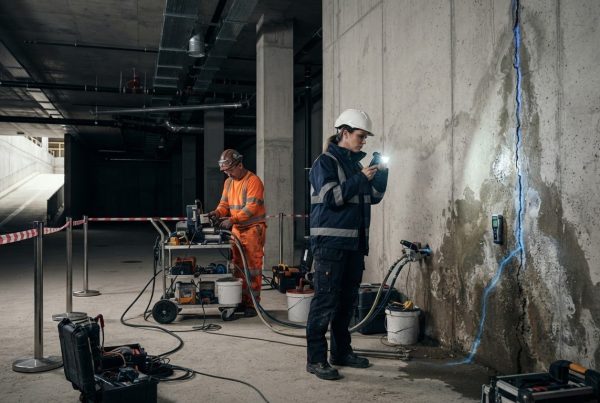

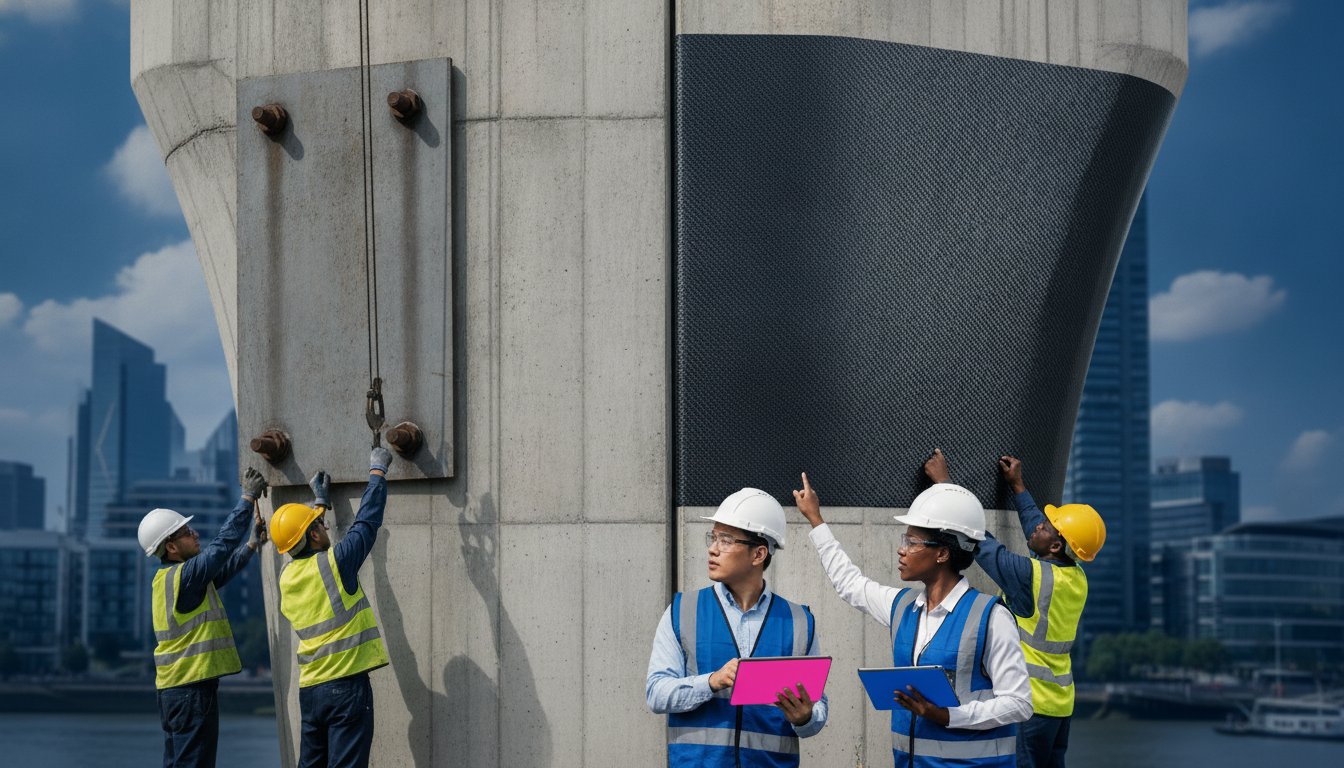
Whilst traditional steel plates have long served as the default for structural reinforcement, the engineering reality is that a material weighing less than 1% of steel’s mass can provide up to ten times its tensile strength. It’s widely understood that the accelerated corrosion of traditional steel reinforcement often leads to a cycle of expensive interventions, whilst the requirement for heavy plant and intrusive site access causes significant operational downtime. This article delivers a comprehensive engineering evaluation of CFRP vs steel plate bonding for critical infrastructure life-extension, presenting a data-backed justification for modern material selection.
Through a methodical comparison of material properties, such as the 350–650 ksi tensile strength of carbon fibre reinforced polymers versus the 58–80 ksi of steel plates, the discussion will illustrate how advanced composite systems, including Tyfo® Fibrwrap®, facilitate a shift from reactive repair to sustainable asset management. By examining the logistical advantages and the technical framework provided by ACI 440.2R-17, we provide the evidence necessary to reduce long-term maintenance requirements whilst ensuring minimal disruption to asset occupancy. This analysis serves as a guide for technical professionals seeking to prolong the functional lifespan of essential infrastructure through empirical evidence and engineering rigour.
Key Takeaways
- Quantify the mechanical advantages of carbon fibre reinforced polymers, which offer a tensile strength-to-weight ratio significantly higher than traditional S355 steel plates.
- Assess the logistical efficiencies of lightweight composites that facilitate rapid installation and reduce the requirement for heavy plant or intrusive site access.
- Conduct a comprehensive financial appraisal of CFRP vs steel plate bonding by evaluating initial capital expenditure against long-term operational savings and reduced maintenance cycles.
- Recognise the engineering rigour provided by proprietary solutions like the Tyfo® Fibrwrap® system, which ensures a bespoke and reliable approach to structural remediation.
- Prioritise the sustainability of structural repair over total asset replacement to extend the functional lifespan of critical infrastructure with minimal environmental impact.
Technical Fundamentals of Structural Bonding: CFRP and Steel Plates
Externally Bonded Reinforcement (EBR) represents a critical methodology in the remediation and life-extension of essential assets. By bonding supplementary materials to the tension face or perimeter of a structural member, the load-bearing capacity is increased without the need for total replacement. Historically, this was achieved through the application of heavy ferrous plates. However, the industry has undergone a decisive transition toward advanced Carbon-fibre reinforced polymer (CFRP) systems. This shift is driven by the need for more resilient, corrosion-resistant solutions in environments where traditional steel fails. Engineers typically deploy these systems for flexural strengthening, shear enhancement, and axial confinement. The success of any CFRP vs steel plate bonding intervention depends entirely on the integrity of the resin-substrate interface; it’s the mechanism that ensures structural composite action between the original structure and the new reinforcement.
The Mechanics of Externally Bonded Reinforcement (EBR)
The efficacy of EBR relies on the transfer of shear stresses through the adhesive bond-line. When a load is applied, the adhesive acts as the medium, distributing forces from the substrate into the reinforcement. It’s vital that the substrate, whether concrete, masonry, or cast iron, possesses sufficient tensile strength to support this transfer. Premature debonding often occurs if the substrate’s surface is degraded or lacks the necessary 200 psi (1.4 MPa) pull-off strength required by standards like ACI 440.2R-17. Whilst concrete is the most frequent candidate for EBR, historic cast iron structures require bespoke engineering consultancy to manage the specific thermal and mechanical variances inherent in legacy materials.
Material Composition: Carbon Polymers vs Structural Steel
The fundamental difference in CFRP vs steel plate bonding lies in the material morphology. CFRP is a composite consisting of high-strength carbon fibres embedded within a thermosetting epoxy matrix, providing a high strength-to-weight ratio. Conversely, structural steel plates, typically specified as S275 or S355 in the UK, are isotropic and offer predictable ductile behaviour. However, steel’s density and susceptibility to oxidation necessitate rigorous long-term maintenance. In hybrid systems where both materials are present, engineers must address the risk of galvanic corrosion. Carbon is electrically conductive; if it comes into direct contact with steel in the presence of an electrolyte, the steel will corrode at an accelerated rate. Insulating layers or specific primer systems are required to mitigate this risk.
Material Performance and Engineering Properties: A Comparative Analysis
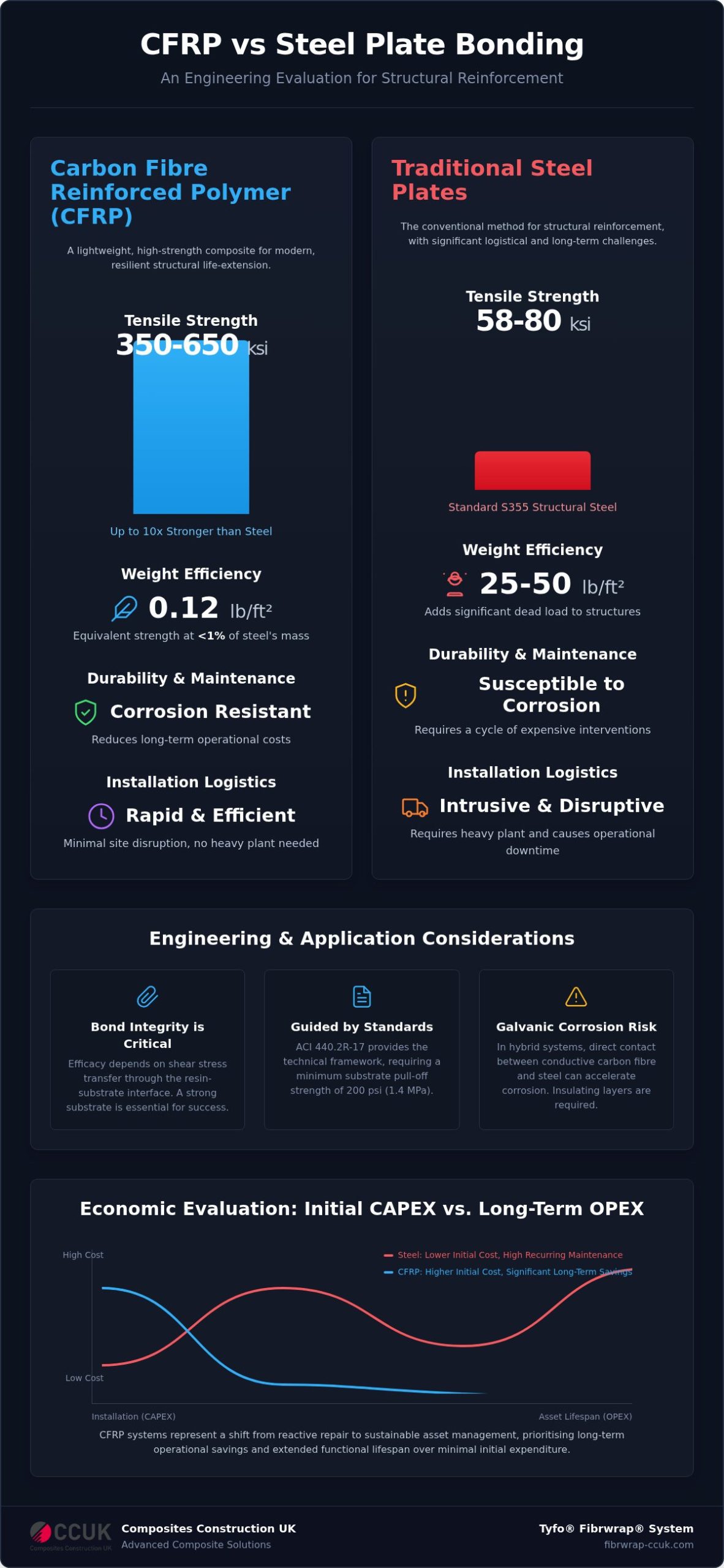
The engineering justification for selecting CFRP vs steel plate bonding often centres on the divergent mechanical behaviours of these materials under load. Whilst structural steel remains a reliable benchmark for ductility, advanced composites offer a magnitude of tensile capacity that traditional alloys cannot match. High-performance systems, such as Tyfo® Fibrwrap®, demonstrate ultimate tensile strengths ranging from 350 to 650 ksi, whereas standard S355 structural steel typically plateaus between 58 and 80 ksi. This disparity allows for a significant reduction in the volume of material required to achieve the necessary structural enhancement.
Tensile Strength and Weight Efficiency
The weight efficiency of CFRP laminate reinforcing is perhaps its most profound attribute. A single ply of CFRP typically weighs approximately 0.12 lb/ft², whereas steel plates of equivalent capacity can weigh between 25 and 50 lb/ft². By minimising additional dead loads, engineers can avoid the secondary stress concentrations often introduced by heavy steel plates. CFRP provides a tensile efficiency that allows for the delivery of equivalent structural reinforcement at less than 1% of the weight of traditional structural steel.
Modulus of Elasticity and Stiffness
In stiffness-critical applications, the Modulus of Elasticity (Young’s Modulus) is the primary design driver. Steel possesses a consistent modulus of approximately 200 GPa. Whilst standard modulus CFRP typically ranges between 165 and 230 GPa, it can be tailored through fibre orientation or the selection of high-modulus resins to meet specific stiffness requirements. This flexibility is essential for controlling deflections in flexural members without the bulk and logistical complexity associated with ferrous bonding.
Corrosion Resistance and Environmental Durability
Environmental durability represents the most significant long-term differentiator in the CFRP vs steel plate bonding debate. Steel is inherently susceptible to oxidative degradation, requiring protective coatings that demand maintenance every 5 to 7 years in exposed environments. Conversely, carbon polymers are chemically inert and immune to chloride-induced corrosion. This resistance eliminates the risk of future spalling caused by the expansive forces of corroding reinforcement, a common failure mode in marine or transportation infrastructure. Under cyclic loading, CFRP exhibits superior fatigue resistance, maintaining integrity over millions of cycles where steel might succumb to crack propagation. For projects requiring precise material specification, engaging with bespoke engineering design services ensures that the selected composite system aligns with the specific performance criteria of the asset.
Logistical Execution: Installation, Access, and Site Constraints
The logistical footprint of a structural strengthening project is often as critical as the material properties themselves. When evaluating CFRP vs steel plate bonding, the disparity in site requirements becomes immediately apparent. Steel plate bonding necessitates heavy lifting gear, extensive propping, and significant site clearance to manage plates weighing between 25 and 50 lb/ft². In contrast, the negligible mass of carbon fibre allows for a streamlined installation process that significantly reduces the overall project timeline. This reduction in plant requirements is particularly beneficial for projects where site access is limited or where the structural integrity of the asset is too compromised to support heavy machinery.
Manual Handling and Restricted Site Access
In environments with restricted access, such as subterranean tunnels or densely packed urban utility centres, the use of heavy plant is frequently impossible. CFRP becomes the primary choice because it is handled manually without the need for mechanical assistance. A typical two-person crew can install between 200 and 400 square feet of CFRP per day, whereas a four-person crew equipped with a crane might only manage 50 to 100 square feet of steel plates in similar overhead conditions. This elimination of heavy propping and mechanical lifting not only improves site safety but also allows for continuous occupancy of the asset during remediation. The flexibility of the composite material facilitates application around complex geometries and within confined spaces that would be inaccessible to rigid ferrous plates.
Surface Preparation and Adhesive Integrity
Achieving a successful bond requires meticulous substrate preparation, particularly in the variable environmental conditions common across the UK. For both systems, the concrete surface profile (CSP) must be prepared to a minimum standard, typically CSP 3 or higher, to ensure a robust mechanical interlock. However, the rigidity of steel plates presents a significant challenge; any slight irregularity in the substrate can lead to voids in the adhesive layer, potentially compromising the load transfer. CFRP conforms to the substrate’s geometry, ensuring a more consistent bond-line thickness across the entire application area. Rigorous quality control measures are essential to validate the installation, including:
- Pull-off testing: Verifying a minimum tensile bond strength of 200 psi (1.4 MPa) to ensure the substrate can support the EBR system.
- Bond-line monitoring: Ensuring the adhesive thickness remains within the design tolerance to prevent premature shear failure.
- Environmental logging: Tracking dew point and ambient temperature to ensure curing occurs within the specified parameters.
Whilst steel plates require temporary mechanical fixings to maintain position during the curing cycle, Tyfo® Fibrwrap® systems rely on the initial tack of the saturant resin, further simplifying the execution. The curing time for these high-performance epoxies allows for structural load-bearing capacity to be reached significantly faster than traditional methods, facilitating a rapid return to service for critical infrastructure. This efficiency in CFRP vs steel plate bonding execution directly translates to reduced site duration and lower indirect project costs.
Economic Evaluation: Initial CAPEX vs Long-Term OPEX
Financial appraisals of structural interventions often fail by focusing exclusively on initial procurement costs rather than the total installed expenditure. Whilst the raw material cost of structural steel remains lower than advanced composites on a weight-for-weight basis, the economic reality of CFRP vs steel plate bonding is determined by the logistical burden of the installation. Heavy plant hire, extensive temporary works, and the increased labour hours required for mechanical fixing often negate the lower initial CAPEX of ferrous plates. By contrast, the streamlined application of carbon fibre systems allows for a significant reduction in indirect project costs, making it a highly competitive solution for large-scale infrastructure remediation.
Analysing Life-Cycle Costs (LCC) for Infrastructure
Long-term asset controllers must evaluate the 25 to 50 year horizon when selecting a strengthening methodology. Steel plate bonding requires a rigorous maintenance regime; industry data indicates that protective coatings in exposed environments typically necessitate recoating every 5 to 7 years to prevent oxidative failure. These recurring maintenance cycles represent a substantial long-term OPEX that is entirely avoided with carbon polymers. CFRP is chemically inert and requires no such intervention, providing a corrosion-free reinforcement solution that maintains its structural integrity without the need for repeated remedial works. Inspection requirements are also simplified, as the absence of bond-line corrosion reduces the complexity and frequency of structural surveys.
Minimising Operational Downtime and Occupancy Impact
The commercial impact of asset closure often outweighs the direct costs of the engineering works. Whether a bridge requires a weight limit restriction or a commercial building necessitates a partial decant, every day of restricted access carries a financial penalty. The speed of CFRP installation, with two-person crews capable of applying 200 to 400 square feet per day, facilitates a rapid return to service that steel cannot match. This accelerated timeline translates to significant commercial savings by minimising the duration of site presence and reducing the disruption to building occupants or transport networks. Prolonging the functional lifespan of an asset through sophisticated science is consistently more economical than the total demolition and reconstruction of critical infrastructure. For a detailed appraisal of your asset’s requirements, contact our engineering team to discuss a bespoke strengthening strategy.
The Tyfo® Fibrwrap® System: Advanced Composite Solutions
Selecting the appropriate methodology for structural remediation requires more than a simple comparison of material properties; it necessitates a comprehensive, engineered system approach. Whilst the debate of CFRP vs steel plate bonding often focuses on tensile strength or weight, the Tyfo® Fibrwrap® system offers a level of integration that generic solutions cannot replicate. As a wet-layup composite system, it combines high-strength carbon or glass fibres with specialty epoxies, ensuring that the reinforcement is tailored specifically to the unique load paths and geometry of the asset. This systematic approach ensures that every component is chemically and mechanically compatible, providing long-term reliability for critical infrastructure.
A Systematic Approach to Structural Strengthening
The Tyfo® system outperforms generic “off-the-shelf” CFRP laminates by providing a versatile solution that addresses complex structural deficiencies. Generic plates are often limited by their fixed dimensions and rigid behaviour, whereas the wet-layup process allows for seamless application around circular columns, beam-column joints, and irregular masonry. Every project begins with bespoke engineering design services, where precise calculations determine the fibre orientation and ply count required to meet the design objectives. This rigour ensures compliance with international standards such as ACI 440.2R-17 and the Concrete Society’s Technical Report 55 (TR55), providing a validated engineering framework for flexural, shear, and confinement applications.
Partnering for National Infrastructure Life-Extension
Ensuring structural safety in high-consequence environments requires the expertise of a specialist contractor. CCUK, as the exclusive UK licensee for Tyfo® Fibrwrap®, provides an end-to-end delivery model that encompasses feasibility, design, and professional installation. This integrated approach eliminates the risks associated with fragmented supply chains, where material manufacturers and installers may lack a unified understanding of the design intent. By prioritising the sustainability of repair over total asset replacement, we extend the functional lifespan of bridges, pipelines, and buildings whilst adhering to stringent safety regulations. Specialist contracting ensures that quality control measures, such as on-site saturated resin testing and bond integrity surveys, are conducted to the highest standards. To evaluate the suitability of advanced composites for your specific project, contact our engineering team for a comprehensive technical feasibility study.
Advancing Infrastructure Resilience through Composite Engineering
The technical evaluation of CFRP vs steel plate bonding demonstrates a decisive shift toward advanced composite systems for modern structural remediation. Whilst traditional steel plates remain a known quantity, the empirical evidence regarding tensile efficiency and environmental durability favours carbon polymers for long-term asset security. By eliminating the oxidative risks inherent in ferrous bonding and drastically reducing the logistical footprint of site interventions, asset controllers can achieve significant life-extension with minimal operational disruption.
As the exclusive UK licensee for Tyfo® Fibrwrap®, we provide a full design, supply, and installation service with national coverage across all UK infrastructure sectors. This end-to-end capability ensures that every project is grounded in engineering rigour and delivered with absolute reliability. It’s possible to extend the functional lifespan of critical assets through sophisticated science and disciplined execution, ensuring safety and performance for decades to come.
Discuss your structural strengthening project with our engineers to determine the most effective strategy for your essential assets. We look forward to supporting your next complex engineering challenge with proven, expert-led solutions.
Frequently Asked Questions
Is CFRP strengthening more expensive than steel plate bonding?
The total installed cost of carbon fibre reinforced polymer is frequently more competitive than traditional methods when evaluating CFRP vs steel plate bonding on a project-wide basis. Whilst the raw material cost for composites is higher, the significant reduction in labour hours, plant hire, and site duration often leads to lower capital expenditure. Asset owners also benefit from reduced long-term operational costs as composites don’t require the periodic anti-corrosion treatments essential for bonded steel plates.
How does the fire performance of CFRP compare to structural steel?
CFRP systems rely on thermosetting resins which typically possess a lower glass transition temperature than the melting point of structural steel. Consequently, externally bonded systems require supplementary fire protection, such as intumescent coatings or cementitious renders, to meet required fire ratings. Once appropriately insulated, these composite systems achieve the same fire resistance periods as protected steel, ensuring compliance with stringent safety regulations whilst maintaining the structural integrity of the asset during a thermal event.
Can CFRP be used to strengthen cast iron and masonry structures?
Yes, carbon fibre is particularly effective for the remediation of brittle materials like cast iron and historic masonry. Its high tensile strength-to-weight ratio allows for the introduction of tensile capacity without significantly increasing the dead load on the structure. This is critical for heritage assets where maintaining original geometry is essential. The Tyfo® Fibrwrap® system facilitates a non-intrusive strengthening approach that preserves the aesthetic and structural character of legacy infrastructure.
What is the typical lifespan of a CFRP structural strengthening system?
A professionally designed and installed CFRP strengthening system typically provides a functional lifespan exceeding 50 years. Unlike steel plates, which are susceptible to oxidation and bond degradation over time, carbon polymers are chemically inert. This resistance to environmental degradation ensures that the reinforcement remains effective for the remaining life of the host structure. Regular visual inspections are recommended, though the requirement for remedial maintenance is significantly lower than that of ferrous alternatives.
Does CFRP bonding require heavy plant or specialised lifting equipment?
No, one of the primary logistical advantages of CFRP is that it doesn’t require heavy plant or specialised lifting equipment. The material is supplied in lightweight rolls or laminates that are easily handled by a two-person crew. This makes it the preferred choice for projects with restricted access or overhead applications where the installation of heavy steel plates would necessitate cranes, mechanical props, and extensive site clearance, thereby reducing disruption to building occupancy.
How do environmental factors in the UK affect the bond-line of CFRP?
Environmental factors such as high humidity and temperature fluctuations in the UK require careful management of the resin-substrate interface during installation. The substrate must be dry and the ambient temperature must remain above the dew point to ensure a successful bond. Once cured, modern epoxy resins are highly resistant to moisture ingress and freeze-thaw cycles. Specialist contractors utilise environmental logging to ensure that the application conditions remain within the parameters specified by the manufacturer.
Are there specific UK standards for CFRP structural strengthening?
The primary document guiding the design and application of composite strengthening in the United Kingdom is the Concrete Society’s Technical Report 55 (TR55). This standard provides the necessary engineering framework for calculations, material partial factors, and installation requirements. Compliance with TR55 ensures that the strengthening system is designed with appropriate safety margins. Our engineers also reference international standards like ACI 440.2R-17 to provide a robust, data-backed justification for every bespoke reinforcement design.
What surface preparation is required before bonding CFRP or steel plates?
Both systems require the substrate to be prepared to a minimum Concrete Surface Profile (CSP) 3 standard to facilitate a robust mechanical bond. This typically involves grit blasting or mechanical grinding to remove laitance and expose the aggregate. It’s essential that the concrete possesses a minimum tensile pull-off strength of 200 psi. Whilst steel plates are rigid, the flexibility of composites often simplifies the execution of CFRP vs steel plate bonding on irregular surfaces.