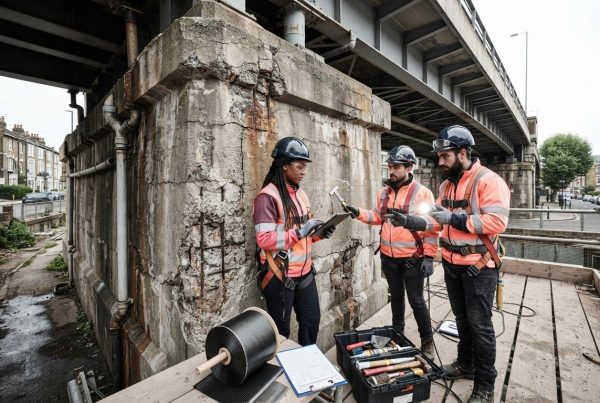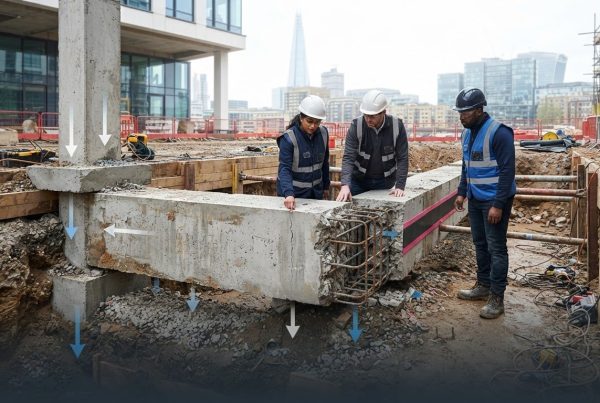

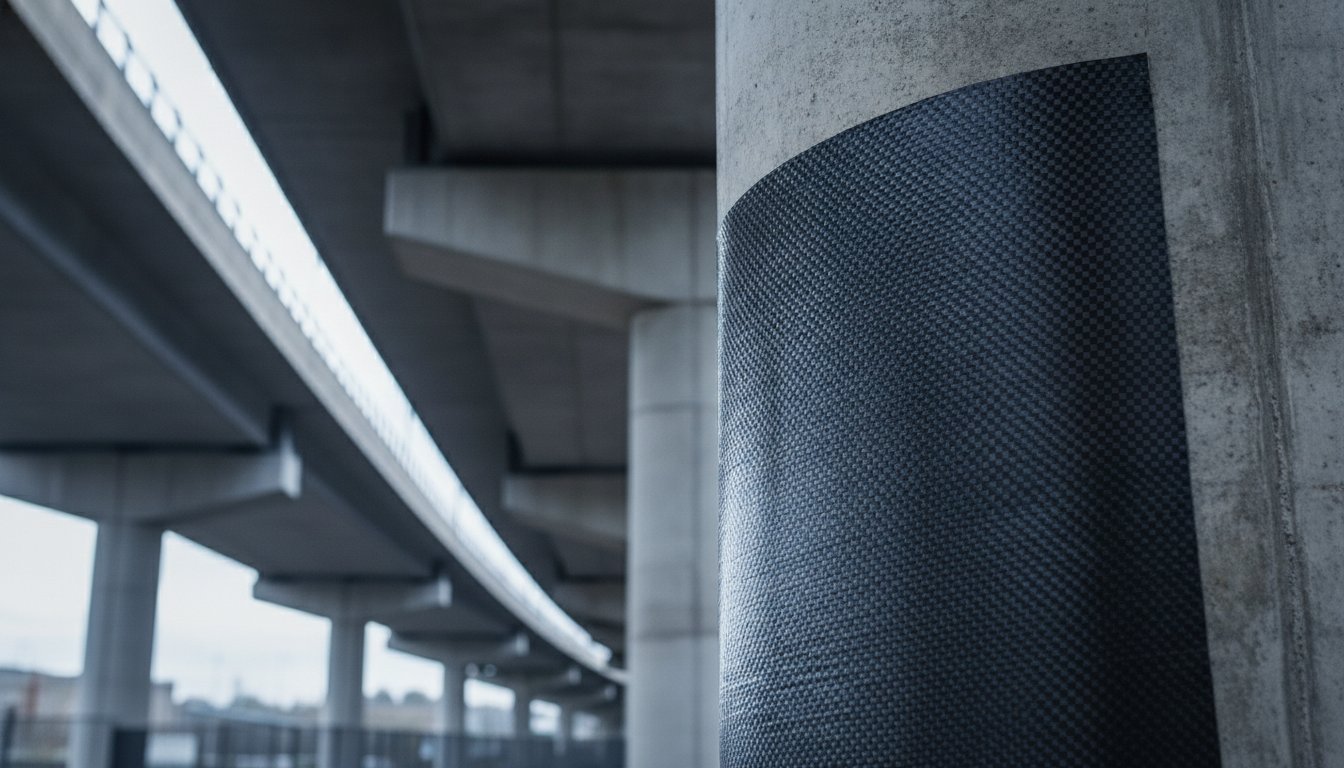
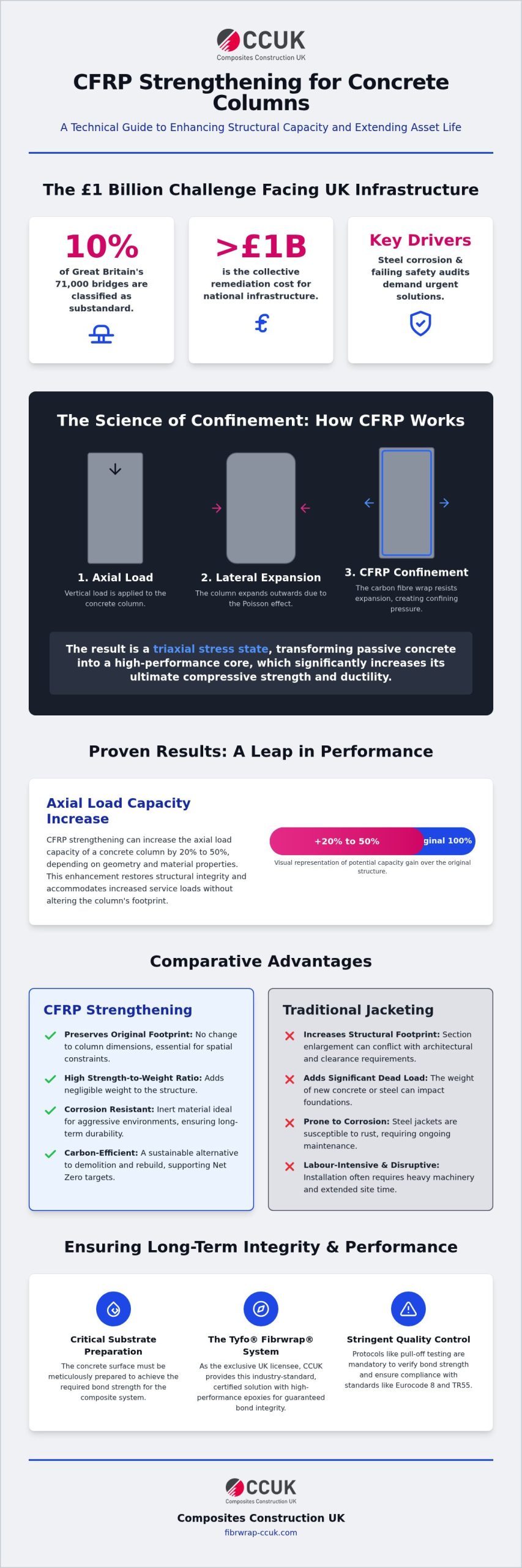
With approximately 10% of Great Britain’s 71,000 bridges currently classified as substandard, the collective remediation cost for national infrastructure has now exceeded £1 billion. As an asset controller or structural engineer, you’re likely navigating the pressure of failing safety audits whilst contending with internal steel reinforcement corrosion in increasingly aggressive environments. Traditional methods like section enlargement often prove unviable when project specifications demand that column footprints remain unchanged. This technical guide offers a comprehensive engineering perspective on how CFRP strengthening for concrete columns transforms passive concrete into a high-performance confined core, significantly enhancing both axial capacity and ductility.
We’ll provide a rigorous justification for the use of carbon fibre composites over conventional steel jackets, focusing on the sophisticated mechanics of confinement across various column geometries. You’ll also find a detailed roadmap for specialist installation and the stringent quality control protocols required to ensure long-term structural integrity. By examining the latest standards, including the 2026 updates to Eurocode 8 and Concrete Society TR55, this article establishes the empirical framework necessary for successful structural life-extension through advanced material science.
Key Takeaways
- Understand the engineering principles of passive confinement and hoop tension that allow composite wrapping to significantly increase the axial load capacity of reinforced concrete.
- Evaluate the logistical advantages of CFRP strengthening for concrete columns over traditional steel or concrete jacketing, particularly regarding the preservation of the original structural footprint.
- Identify the critical substrate preparation and quality control protocols, such as pull-off testing, required to ensure the long-term integrity of bond-critical Tyfo® Fibrwrap® systems.
- Discover how structural life-extension through carbon fibre composites serves as a carbon-efficient alternative to demolition, supporting the UK’s progress toward Net Zero targets.
- Review the latest 2026 design standards and regulatory requirements, including the second-generation Eurocode 8 and the updated Concrete Society Technical Report 55.
Fundamentals of CFRP Strengthening for Concrete Columns
The application of Carbon Fiber Reinforced Polymer (CFRP) represents a paradigm shift from conventional remedial works toward sophisticated structural life-extension. CFRP’s defined as a high-modulus composite system comprising high-strength, unidirectional carbon fibres encapsulated within a high-performance structural epoxy matrix. When utilised for CFRP strengthening for concrete columns, the system functions as an externally bonded reinforcement that restores or enhances the load-bearing characteristics of existing members. The fundamental objective of this intervention is the augmentation of axial, shear, and flexural capacities through the principle of confinement. This transition from traditional steel-intensive repairs to composite-based solutions has been accelerated across the United Kingdom, driven by the requirement for non-invasive, durable, and carbon-efficient engineering interventions that don’t compromise the existing architecture.
The synergy between the unidirectional carbon filaments and the resin matrix is critical; the fibres provide the requisite tensile strength whilst the epoxy ensures uniform load transfer and protects the filaments from environmental degradation. It’s this chemical and mechanical interaction that allows for a high strength-to-weight ratio, enabling structural upgrades without the significant weight penalties associated with concrete jacketing.
Triggers for Column Remediation in National Infrastructure
Several technical factors necessitate the deployment of advanced composite strengthening within the UK’s built environment. Structural upgrades are frequently required to address increased vertical loads resulting from building occupancy changes or revised bridge loading standards. Additionally, the mitigation of internal reinforcement corrosion and concrete carbonation is a primary driver for remediation in aggressive environments where traditional repairs might fail. For high-value critical assets, the requirement for seismic retrofitting or blast protection provides a further impetus for the application of CFRP, as these systems provide the ductility and energy dissipation properties essential for extreme loading events.
The Tyfo® Fibrwrap® System: A Global Standard
As the exclusive UK licensee for the Tyfo® Fibrwrap® system, CCUK provides a proprietary, certified solution that’s widely regarded as the industry standard for column confinement. The effectiveness of this system is underpinned by extensive empirical testing data, ensuring that performance characteristics are predictable and aligned with stringent regulatory requirements. Central to the success of the system is the use of specialist, high-performance epoxies that ensure long-term bond integrity between the composite jacket and the concrete substrate. This bespoke engineering approach allows for tailored designs that address specific structural deficiencies whilst maintaining the original column geometry. For complex projects requiring precise calculations, the bespoke design capabilities of our engineering team ensure that every intervention is optimised for safety and performance.
Engineering Mechanics: Confinement and Axial Capacity
The core mechanic of CFRP strengthening for concrete columns is the provision of passive confinement through hoop tension. As an axial load is applied to a concrete column, the material undergoes lateral expansion due to the Poisson effect. The externally bonded CFRP wrap resists this expansion, generating a reactive radial pressure that effectively places the concrete core into a triaxial stress state. This confinement inhibits the micro-cracking and volumetric expansion of the concrete, significantly increasing its ultimate compressive strength whilst maintaining the structural footprint.
Research indicates that CFRP strengthening can increase axial load capacity by 20% to 50%, depending on the specific geometry and material properties. The relationship between the number of composite layers and strength gain is predictable; each additional ply contributes to a higher confining pressure, though the rate of efficiency may diminish as the number of layers increases. Beyond pure capacity, the enhancement of ductility is perhaps the most critical outcome. By maintaining the integrity of the concrete core at high strain levels, columns exhibit superior energy dissipation, which is vital for seismic retrofitting or mitigating impact loading.
Confinement Efficiency: Circular vs Rectangular Columns
Circular columns represent the ideal geometry for composite wrapping because they allow for a uniform distribution of confining pressure around the entire perimeter. In contrast, rectangular columns suffer from the “archability” effect, where effective confinement is concentrated at the corners and diminishes across the flat faces. This leads to a significant reduction in efficiency. When designing CFRP strengthening for concrete columns, engineers must account for this geometry. To mitigate stress concentrations, corners must be rounded to a minimum radius, typically 20mm to 30mm, to prevent premature rupture of the carbon fibres.
Strain Compatibility and Load Sharing
The CFRP jacket and the concrete substrate must act as a unified structural element through strict strain compatibility maintained by the high-performance epoxy bond. This composite action allows the CFRP to share the load, effectively relieving the stress on internal steel reinforcement and preventing buckling of longitudinal bars. Engineers must calculate effective strain limits to ensure the wrap doesn’t reach its ultimate tensile capacity before the concrete reaches its design strength. If your project involves non-standard geometries, our team at Composites Construction UK can assist with bespoke engineering design to optimise the confinement ratio.
CFRP vs Traditional Steel and Concrete Jacketing
The transition from traditional remedial methods toward advanced composite solutions is driven by the logistical and spatial constraints inherent in modern infrastructure projects. Traditional section enlargement often necessitates an increase of 75mm to 150mm to the column radius, which isn’t always feasible in dense urban environments or restricted access sites. CFRP strengthening for concrete columns provides a streamlined alternative, adding negligible thickness; typically less than 5mm. This allows the original architectural clearances and functional footprints of the asset to be preserved. The process eliminates the requirement for heavy lifting plant and complex temporary works, as the lightweight nature of the fabric allows for manual handling and application in confined spaces.
Operational downtime is a critical metric for asset controllers, and composite systems offer a distinct advantage in this regard. Industry data indicates that CFRP installation can be up to 70% faster than bonded steel reinforcement. For example, reinforcing a significant structural element with steel might require 20 to 30 days of site presence, whereas a comparable CFRP intervention’s often completed within 7 to 10 days. This efficiency is achieved by removing the need for welding, bolting, or the installation of heavy mechanical anchors, which simplifies the site workflow and reduces the risk of noise and vibration disruption.
Strength-to-Weight Ratio and Dead Load Impact
CFRP systems provide a strength-to-weight ratio that’s vastly superior to metallic alternatives. For an equivalent increase in structural capacity, a carbon fibre system weighs approximately 20% of a comparable steel jacket. This massive reduction in added mass is essential when dealing with ageing foundations that lack the surplus capacity to support additional dead loads. It ensures that the structural life-extension doesn’t inadvertently trigger foundation failure. The slim profile also ensures that the original aesthetics and clearances of the structural members remain intact, avoiding the bulky appearance of concrete jacketing.
Lifecycle Durability and Corrosion Resistance
Lifecycle considerations further distinguish composite solutions from traditional repairs. Steel plate bonding is inherently susceptible to galvanic corrosion, particularly in chloride-rich or humid environments, which can lead to bond degradation. The Tyfo® Fibrwrap® matrix is entirely inert and impermeable to moisture and chloride ingress, effectively sealing the concrete substrate against further carbonation. This durability translates to significantly lower long-term maintenance costs. It aligns with the UK’s broader sustainability goals by extending the functional lifespan of essential assets through scientific intervention rather than carbon-intensive reconstruction.
Specialist Installation and Quality Control Protocols
The efficacy of CFRP strengthening for concrete columns relies entirely on the integrity of the bond between the composite system and the concrete substrate. Bond integrity is non-negotiable. Unlike mechanical reinforcement, CFRP is a bond-critical application where the transfer of stress occurs through the epoxy interface. Consequently, rigorous installation protocols are mandatory to ensure the system performs according to the design specifications. Before any material is applied, the tensile strength of the concrete must be verified through pull-off testing, typically requiring a minimum value of 1.5 MPa to ensure the substrate doesn’t fail before the composite reaches its effective strain limit.
The installation sequence follows a methodical trajectory. It begins with the application of a low-viscosity primer that penetrates the concrete pores, followed by the use of thickened epoxy putties to fill surface defects and restore the column profile. Environmental monitoring is maintained throughout the programme; installers must record ambient temperature, substrate temperature, and humidity to ensure the dew point isn’t exceeded during the curing phase. This disciplined approach prevents moisture-related bond degradation and ensures the long-term structural integrity of the intervention.
Substrate Preparation for Optimal Bond Strength
Achieving the correct Concrete Surface Profile (CSP) is the most critical step in the preparation phase. Mechanical means, such as grit blasting or diamond grinding, are employed to reach a CSP of 3 or 4, providing the necessary mechanical interlock for the saturant resin. Any spalled or delaminated concrete must be removed and repaired with high-strength, shrinkage-compensated mortars to restore the original column geometry. The final surface must be entirely free from oils, curing compounds, and loose friable material to prevent bond-line contamination.
Resin Impregnation and Fibre Saturation
For high-performance systems like Tyfo® Fibrwrap®, the wet-lay application method is typically preferred for column confinement. This involves pre-saturating the carbon fibre fabric with resin before it’s applied to the column, ensuring every filament is encapsulated. To prevent delamination, installers use ribbed rollers to expel air and ensure zero air voids between layers. Quality assurance is maintained through the creation of on-site witness panels and resin samples for laboratory testing. For critical infrastructure, infrared thermography is utilised post-installation to detect any sub-surface voids or anomalies that could compromise the confinement effect. If you require a site-specific assessment, we recommend you contact our technical team for a consultation.
Strategic Asset Management and Bespoke Design
Within the context of national infrastructure, the adoption of CFRP strengthening for concrete columns has transitioned from a niche technical intervention to a core component of sustainable asset management. Proactive structural life-extension’s now viewed as a financial and environmental imperative for asset controllers. Repairing existing structures rather than opting for total reconstruction offers significant carbon-efficiency benefits. The embodied carbon associated with new reinforced concrete production is substantial; by extending the functional lifespan of an existing column, engineers contribute directly to the UK’s Net Zero 2050 targets. This “repair over replacement” philosophy ensures that essential assets remain operational whilst minimising the environmental footprint of remedial works.
Early engagement with a specialist contractor is essential for conducting accurate feasibility studies and cost analyses. By integrating technical expertise at the preliminary project stages, bespoke solutions can be developed that address site-specific constraints, such as restricted access or aggressive chemical environments. This methodology prevents the over-specification of materials and ensures that the chosen confinement system is perfectly aligned with the structural deficiency identified during the survey phase.
Engineering Consultancy and Bespoke Design Solutions
The success of a composite intervention depends on how bespoke design solutions adapt CFRP properties to unique structural demands. Every column presents a distinct set of variables, from varied compressive strengths to complex load paths. Our engineering team utilises advanced software for CFRP calculations, ensuring full compliance with the latest UK engineering standards, including the 2026 updates to Eurocode 8 and the Concrete Society’s TR55. Rigorous structural surveys, incorporating carbonation testing and chloride analysis, are utilised to determine the viability of composite reinforcement and to calibrate the design for long-term performance under service loads.
Partnering with a Specialist Engineering Contractor
Selecting a partner for the delivery of CFRP strengthening for concrete columns requires a focus on end-to-end capability. The value of a full design-to-installation service lies in the seamless transition from the initial feasibility study to professional, certified application. This integrated approach ensures that the design intent is maintained throughout the construction phase, reducing the risk of site errors or material wastage. Compliance with national health and safety and environmental regulations is a prerequisite for any project involving critical infrastructure. For expert technical guidance on your asset or to discuss specific remediation requirements, we invite you to contact our engineering team for a detailed consultation.
Advancing Infrastructure Resilience through Composite Science
The implementation of CFRP strengthening for concrete columns represents a sophisticated response to the dual challenges of ageing infrastructure and evolving safety standards. By leveraging the mechanics of passive confinement, engineers can achieve significant gains in axial capacity and ductility without the spatial or weight penalties associated with traditional steel or concrete jacketing. This transition toward advanced composite materials is underpinned by the 2026 regulatory framework, ensuring that structural life-extension is both scientifically robust and environmentally sustainable.
As the exclusive UK licensee for the Tyfo® Fibrwrap® system, CCUK provides a comprehensive design, supply, and install service tailored to the rigorous requirements of national infrastructure. Our expertise ensures that every intervention is validated through stringent quality control protocols, from initial structural surveys and carbonation testing to post-installation pull-off verification. To secure the long-term integrity and safety of your assets, we invite you to contact CCUK for a structural strengthening feasibility study. Professional collaboration at the design stage remains the most effective route to achieving durable, high-performance results for critical structural members.
Frequently Asked Questions
How much does CFRP column strengthening increase load capacity?
Confinement through CFRP strengthening for concrete columns typically increases axial load capacity by 20% to 50%. The precise enhancement is contingent upon the column geometry, the concrete’s initial compressive strength, and the number of composite layers applied. Circular columns exhibit the highest efficiency due to uniform radial pressure distribution. Detailed engineering calculations, performed in accordance with Concrete Society TR55, are required to determine the specific capacity gains for each unique structural member.
Is carbon fibre wrapping fire resistant for building columns?
Standard epoxy resins utilised in CFRP systems possess limited inherent fire resistance and lose structural integrity when temperatures exceed their glass transition temperature. In building applications where a specific fire rating is mandatory, the system must be protected with specialised fire-resistant mortars or intumescent coatings. These secondary layers ensure the composite jacket maintains its confining properties for the duration required by UK building regulations and safety standards as of 2026.
How long does a CFRP wrap last in an outdoor environment?
A correctly installed CFRP system has an expected design life exceeding 50 years in outdoor environments. The composite matrix is inherently resistant to moisture, chloride ingress, and chemical degradation, which prevents the secondary corrosion of internal steel reinforcement. However, carbon fibres are susceptible to ultraviolet degradation; therefore, an aliphatic topcoat or a similar protective finish must be applied and periodically inspected to ensure the long-term durability of the installation.
What is the minimum concrete strength required for CFRP application?
The concrete substrate must possess a minimum compressive strength of 17 MPa, approximately 2,500 psi, to support effective composite action. Furthermore, the surface must demonstrate a tensile pull-off strength of at least 1.5 MPa during site testing. If the existing concrete falls below these thresholds, the bond-critical nature of the system is compromised, necessitating substrate consolidation or alternative remedial strategies before the composite application proceeds.
Can CFRP be applied to columns with significant reinforcement corrosion?
CFRP can be used for columns with reinforcement corrosion provided that the substrate is first restored to a sound condition. All delaminated or carbonated concrete must be removed, and the steel reinforcement must be cleaned and treated before high-strength repair mortars are used to reinstate the column profile. Once the substrate is structurally sound and properly prepared to a CSP 3 or 4 profile, the composite wrap can be applied to provide supplemental confinement.
How does the cost of CFRP wrapping compare to concrete jacketing?
The total project expenditure for CFRP strengthening for concrete columns is frequently lower than traditional methods due to reduced logistical requirements. While material costs are higher, installations typically achieve 30% to 50% savings in labour and can be completed up to 70% faster than concrete jacketing. The elimination of heavy machinery and extensive downtime makes it a highly cost-effective solution for the life-extension of critical national infrastructure.
Does the Tyfo® Fibrwrap® system require ongoing maintenance?
The Tyfo® Fibrwrap® system is designed for high durability and requires minimal ongoing maintenance throughout its service life. Standard asset management protocols involve periodic visual inspections to check for signs of impact damage or degradation of the protective UV topcoat. Should the protective coating show signs of weathering, a simple refresh of the finish is usually sufficient to maintain the integrity of the underlying composite layers and the structural bond.
Can CFRP be used for underwater column strengthening?
Specialised variants of the Tyfo® Fibrwrap® system are specifically engineered for underwater applications, such as bridge piers or marine pilings. These systems utilise moisture-tolerant resins that can be applied and cured in submerged conditions without compromising bond integrity. This capability allows for the structural life-extension of maritime assets without the requirement for expensive cofferdams or dewatering, providing a significant logistical advantage in challenging aquatic environments.