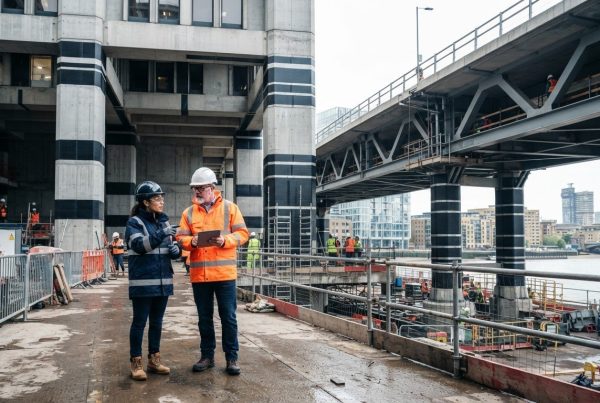


An abrasive blast can leave concrete looking clean without creating a dependable bond. Effective concrete surface preparation for CFRP depends on the substrate’s condition and the specified system requirements, not on blasting alone.
It’s reasonable to question whether abrasive blasting is suitable, particularly where concrete may be weak, contaminated or locally damaged. Removing sound material unnecessarily can be as problematic as leaving defects untreated. The aim is a clean, sound surface with a profile and condition appropriate to the engineered strengthening system.
This article explains the purpose and sequence of preparation, the substrate defects and conditions to assess, and why the method must be coordinated with the structural design and CFRP system. It also covers acceptance checks, including surface inspection and project-specific testing such as pull-off tests, which should be agreed before installation. Required profiles, moisture criteria and test thresholds aren’t universal, so confirm them against the project specification and applicable system requirements.
Key Takeaways
- Understand how concrete surface preparation for CFRP supports force transfer across the bond line, and let the specified system guide the required surface condition.
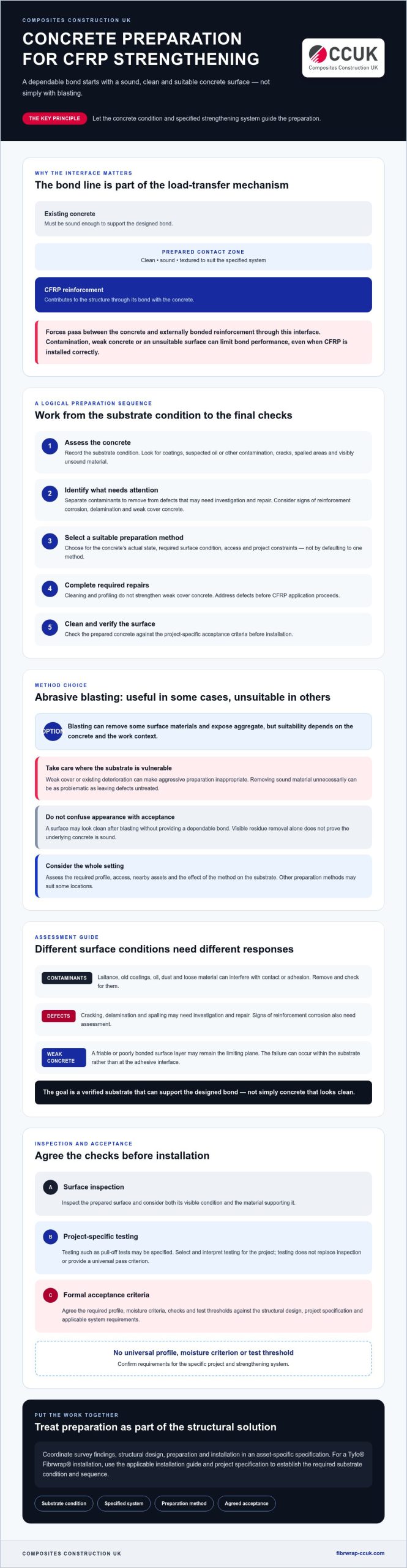
- Follow a logical sequence: assess the concrete, identify defects and contamination, select a suitable method, complete repairs, then clean and verify the surface.
- Choose preparation methods according to substrate condition, access and project constraints. Abrasive blasting isn’t appropriate for every concrete surface.
- Distinguish visual inspection from specified testing and formal acceptance. Agree the checks and criteria before installation.
- Coordinate survey findings, structural design, preparation and installation in an asset-specific specification rather than relying on a generic checklist.
Why concrete surface preparation matters before CFRP strengthening
Concrete surface preparation for CFRP is more than cleaning. It creates a substrate that is sound, free from bond-inhibiting contamination and textured to suit the specified strengthening system. This matters because CFRP, or Carbon Fiber Reinforced Polymer, contributes to the structure through its bond with the concrete. It does not act independently of the existing member.
The bond line is part of the load-transfer mechanism. Forces pass between the concrete and the externally bonded reinforcement through this interface. Contamination, weak concrete or an unsuitable surface can limit bond performance even when the CFRP is installed correctly. Preparation requirements should therefore follow the structural design and specified system, not a generic rule.
The prepared concrete-to-CFRP interface is the engineered contact zone through which forces pass between the existing member and its strengthening reinforcement.
What does a suitable concrete surface mean?
Suitability is defined by project-specific acceptance criteria, including concrete soundness, cleanliness and surface texture. Laitance, old coatings, oil, dust and loose material can interfere with contact or adhesion. Removing visible residue alone, however, doesn’t prove that the underlying concrete is sound. Confirm the required profile and preparation method against the design and system specification. A single roughness value should not be treated as universal.
How substrate defects can affect the CFRP bond
Cleaning and profiling cannot strengthen weak cover concrete. If the surface layer is friable or poorly bonded to the concrete beneath, it may remain the limiting plane. Failure can then occur within the substrate rather than at the adhesive interface. Assessment must consider both the visible surface and the material supporting it.
Different conditions need different responses. Dust, oil and coating residue are contaminants to remove and check for. Cracking, delamination and spalling are defects that may need investigation and repair. Signs of reinforcement corrosion also require assessment, since treating only the visible surface may leave deterioration unresolved. Complete the necessary assessment and remediation before CFRP application proceeds.
These distinctions help determine whether a preparation method is suitable. Abrasive treatment may remove contamination or create texture, but it must not weaken the surface or conceal defects that need separate attention. The goal is a verified substrate that can support the designed bond, not simply concrete that looks clean.
How to prepare concrete for CFRP: assessment, cleaning and repair
A reliable preparation plan starts with the concrete, not the equipment. First inspect the substrate and identify contamination and defects. Then select a suitable preparation method, complete required repairs, clean the surface and verify it against the project criteria. Each stage informs the next. For example, removing a coating may reveal unsound concrete that needs assessment before further profiling.
Choose the preparation method by working back from the required substrate condition, the concrete’s actual state and the specified CFRP system. Abrasive blasting is one option, not an automatic requirement.
Assess the substrate before choosing a preparation method
Record the concrete condition and note existing coatings, suspected oil or other contamination, cracks, spalled areas and visibly unsound material. Survey findings help establish whether cleaning and profiling are enough or whether defects need further investigation and repair. Select and interpret testing, including pull-off testing, for the project. Testing doesn’t replace inspection or provide a universal pass criterion.
Check system-specific requirements before work starts. For a Tyfo® Fibrwrap® installation, use the applicable installation guide and project specification to establish the required substrate condition and preparation sequence. This keeps site decisions aligned with the designed strengthening system rather than general assumptions.
Where abrasive blasting and other methods may fit
Abrasive blasting can remove some surface materials and expose aggregate, but its suitability depends on the concrete, required profile, access and nearby assets. Consider its effect on the substrate, especially where the cover is weak or deterioration is present. Mechanically prepared alternatives may suit some locations or surface conditions. No single method is right for every project.
Plan for practical constraints as well as the target surface. Consider dust control, debris collection and protection of adjacent assets. The method should produce the specified result without avoidable damage or residues that could interfere with bonding.
After preparation and any specified repairs, remove dust and loose debris, then inspect the exposed surface against the agreed acceptance criteria. If inspection reveals unexpected cracking, delamination or weak concrete, pause and refer the condition for assessment rather than covering it with CFRP. Coordinate preparation with the strengthening design. The CFRP design considerations can provide useful context.
Blasting material cleaning for CFRP: benefits, limits and alternatives
Abrasive blasting can be effective when surface deposits or weak material need to be removed and a suitable texture created. But “blasting material cleaning” doesn’t mean that every CFRP installation requires blasting. The right approach depends on the concrete condition, specified system, access and controls needed to protect the work area.
Judge preparation by the result, not just the method. The chosen approach must leave the concrete in the condition required by the project specification, without damaging sound material or overlooking defects. Cleaning alone cannot restore weak concrete, repair deep deterioration or resolve moisture conditions that are unsuitable for the specified system. Assess and, where required, remediate those issues before strengthening proceeds.
When abrasive blasting may be considered
Where the substrate can tolerate it, abrasive blasting may remove surface deposits and expose aggregate, helping create the texture required by the CFRP system. Assess the actual surface before selecting the method. Weak concrete may be eroded or loosened further, and edges may be damaged. Consider embedded services, nearby finishes and adjacent assets before work is agreed.
Before work starts, agree the proposed method and intended surface condition with the project engineer. Let the specification guide the assessment. Don’t assume that equipment settings, abrasive media or acceptance criteria can be carried over from another project.
When another preparation method may be more appropriate
Restricted access, fragile concrete and environmental controls can make abrasive blasting impractical or unsuitable. A mechanically prepared approach, or another method selected for the substrate, may offer better control in confined areas or near vulnerable finishes. An alternative is not automatically preferable: the resulting surface must still meet the specified CFRP system requirements.
Compare methods by considering the required surface result, risk of substrate damage, access, dust and debris management, and protection of surrounding assets. If preparation exposes cracking, delamination or spalling, pause to assess the defect rather than treating it as a cleaning issue. Concrete repair may be needed before the surface is prepared and accepted for strengthening. Determine the repair approach separately from the preparation method.
For concrete surface preparation for CFRP, the practical decision isn’t simply “blasting or no blasting”. It is which method can achieve the specified substrate condition, given the concrete and site constraints, without compromising the material that must carry the bond. Agree the method as part of the project-specific engineering specification.
How to inspect and verify concrete before CFRP application
Verification before CFRP application involves more than confirming that preparation is complete. Visual inspection, specified testing and formal acceptance have different purposes. Inspection identifies observable conditions, testing provides measured evidence, and acceptance confirms whether agreed project requirements have been met. None replaces the others.
Check the prepared surface for dust and loose debris, visible defects and the condition of the concrete. Complete specified repairs, and refer signs of weak or damaged material for assessment. Check moisture, temperature and other environmental conditions against the project specification and CFRP system requirements. A clean appearance alone doesn’t show that every acceptance criterion has been met.
What should be recorded at the prepared surface stage?
Keep a clear record of the preparation method, observed substrate condition, repaired areas and inspection timing. Note deviations from the specification, unexpected defects and areas that could not be assessed as planned. Records support review, but they don’t replace engineering judgement or test evidence. Obtain engineering review before CFRP application if a deviation could affect the substrate or strengthening design.
An inspection record describes what was observed; a test result provides measured evidence against defined project criteria.
How pull-off testing supports engineering decisions
Where specified, pull-off testing can inform an assessment of the prepared concrete or the performance of a bonded system, depending on the test stage and purpose. Define the test method, location and acceptance criteria for the project, then interpret the results in that context. Don’t assume that a result from one location represents every part of the strengthening area.
Review results alongside the concrete condition, repair history and design requirements. If failure occurs within weak concrete rather than at the intended interface, the failure mode may affect what the test demonstrates. Testing informs an engineering decision; it is not a universal pass or guarantee.
For concrete surface preparation for CFRP, agree inspection points, required tests, acceptance criteria and responsibility for formal approval before installation begins. This gives the project team a defined basis for deciding whether the substrate is ready or needs further investigation or remediation. For project-specific CFRP strengthening and testing requirements, contact the engineering team.
Plan CFRP surface preparation as part of the structural solution
Plan concrete surface preparation for CFRP alongside the strengthening design, not as an isolated site task. Survey findings establish what is known about the substrate. Design requirements define the interface needed by the specified system. Preparation and installation planning then determine how to achieve and verify that condition.
This coordination matters because assumptions about concrete soundness, existing coatings or surface variability may need confirmation before work starts. If investigation reveals local deterioration, the repair scope and preparation sequence may need to change. Allowing for assessment, repair and installation in the project plan helps manage access, sequencing and acceptance decisions without concealing uncertainty beneath the composite.
Coordinate preparation with CFRP design and installation
During feasibility and design development, identify assumptions about substrate condition, repair extent and the criteria for accepting the prepared surface. Align these decisions with the selected system requirements and installation guidance. For Tyfo® Fibrwrap® Systems, consider the applicable installation guide alongside the project design and specification. It provides system-specific context but doesn’t replace assessment of the asset.
Preparation and installation sequencing also affects planning. Coatings may need to be removed before the concrete can be properly assessed. Repairs may need to be completed and inspected before CFRP work proceeds. Defining these dependencies early helps identify where engineering review or formal acceptance is needed before the next stage.
When to seek specialist assessment
Specialist assessment is particularly relevant where concrete is deteriorated, coated, contaminated or variable across the structure, or where the extent of defects is uncertain. Structural surveys and testing, including pull-off testing where specified, can clarify substrate condition and inform preparation, repair and strengthening design. Findings support project decisions but don’t guarantee a particular outcome.
A generic checklist cannot account for every asset’s condition, design requirements, access constraints or CFRP system. An asset-specific specification can set out the preparation approach, inspection and testing decisions, and how deviations will be reviewed. Confirm the criteria for the project.
If the concrete condition or preparation requirements remain uncertain, discuss the project scope and relevant survey or testing needs with the engineering team. Contact Composites Construction UK to discuss CFRP strengthening requirements for your asset.
Set the bond line up for long-term performance
Reliable CFRP strengthening starts with an engineered understanding of the concrete, not a default preparation method. Assess the substrate for contamination, defects and soundness, then prepare and repair it to meet the specified system requirements. Abrasive blasting may suit some conditions, but inspection, project-specific testing and agreed acceptance criteria help establish whether the surface is ready for installation.
That is why concrete surface preparation for CFRP should be coordinated with survey findings, structural design and installation planning. Where conditions vary across an asset, a tailored specification can identify the investigation, remediation and verification needed before the bond line is formed.
Composites Construction UK provides specialist CFRP design and installation, concrete repair, surveys and testing, including pull-off testing where specified. As the exclusive UK licensee for the Tyfo® Fibrwrap® system, the team can consider substrate requirements in the context of the selected system and project.
Discuss your CFRP project requirements and any questions about concrete condition or preparation with Composites Construction UK. An asset-specific plan helps define the assessment, repair and verification needed before installation.
Frequently Asked Questions
Is abrasive blasting always required before CFRP is applied to concrete?
No. Abrasive blasting is one way to remove surface deposits and create texture, but it isn’t automatically required for every concrete substrate or CFRP system. Choose the method according to the concrete’s condition, access and project constraints, as well as the specified system requirements. If blasting could damage weak concrete or nearby finishes, consider another suitable approach and agree it with the project engineer.
Can CFRP be installed over painted or coated concrete?
Not without confirming that the coating is compatible with the specified CFRP system and project requirements. Paint and other coatings can form a weak or bond-inhibiting layer between the concrete and strengthening system, so they may need to be removed to expose suitable concrete. Assess and prepare the substrate as specified. If a coating is proposed to remain, obtain explicit technical confirmation rather than making an assumption.
How clean does concrete need to be before CFRP strengthening?
The surface should meet the cleanliness and condition criteria set for the project and specified CFRP system. Dust, loose debris, oil, laitance and unsuitable coatings can interfere with bonding, so address visible contamination and inspect the prepared surface. Cleanliness alone isn’t enough: the concrete must also be sound, and the required texture and environmental conditions must be confirmed against the relevant specification before installation.
What happens if concrete is weak beneath the prepared surface?
If weak cover concrete remains beneath the prepared surface, it may become the limiting layer in the bond, even when the surface looks clean. Failure can occur within the concrete rather than at the CFRP interface. Further assessment may be needed to establish the extent and cause of the weakness, followed by specified repair or other remediation. Don’t apply CFRP over unresolved unsound concrete without engineering review.
Is pull-off testing needed before CFRP application?
Not for every project. Pull-off testing can help assess concrete surface tensile strength or inform a project-specific evaluation, but whether it is required depends on the specification, system and engineering assessment. Agree the test method, locations and acceptance criteria for the project. Consider results alongside substrate condition and failure mode; a test result isn’t a generic guarantee of bond performance.
Can concrete be prepared for CFRP in damp or cold conditions?
It depends on the specified CFRP system and its requirements for moisture, ambient temperature and surface temperature. Damp or cold conditions may affect preparation, curing or application, so check the relevant criteria before work proceeds. Don’t assume a surface is suitable because it looks dry or the air temperature seems acceptable. Record site conditions as required and defer application if project or system limits aren’t met.
Does blasting material cleaning repair cracks or spalling?
No. Blasting may remove surface deposits or create texture, but it doesn’t repair cracks, delamination or spalled concrete, and it won’t resolve the cause of reinforcement corrosion. These conditions need assessment and, where specified, a separate repair or remediation sequence. If preparation reveals previously hidden defects, pause and seek engineering review before CFRP installation. Treating defects as a cleaning issue can leave the substrate unsuitable for the designed strengthening system.