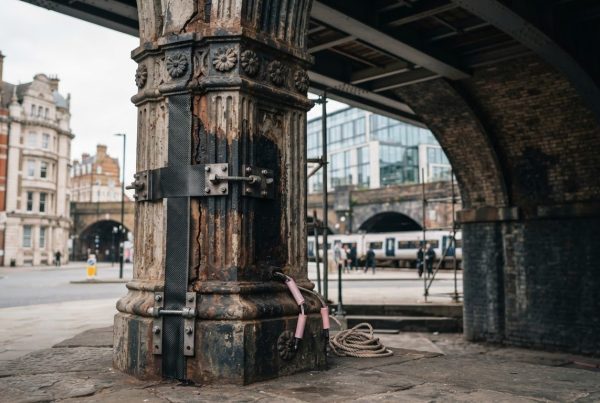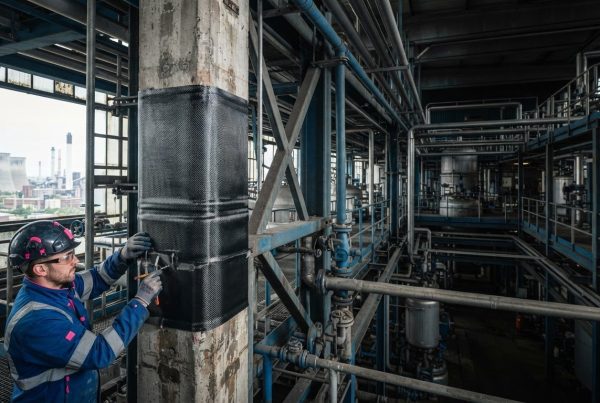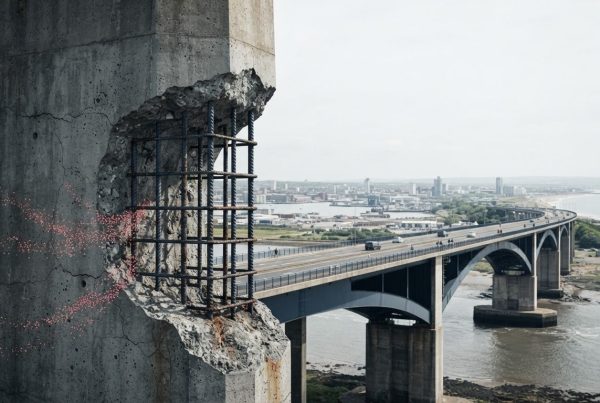

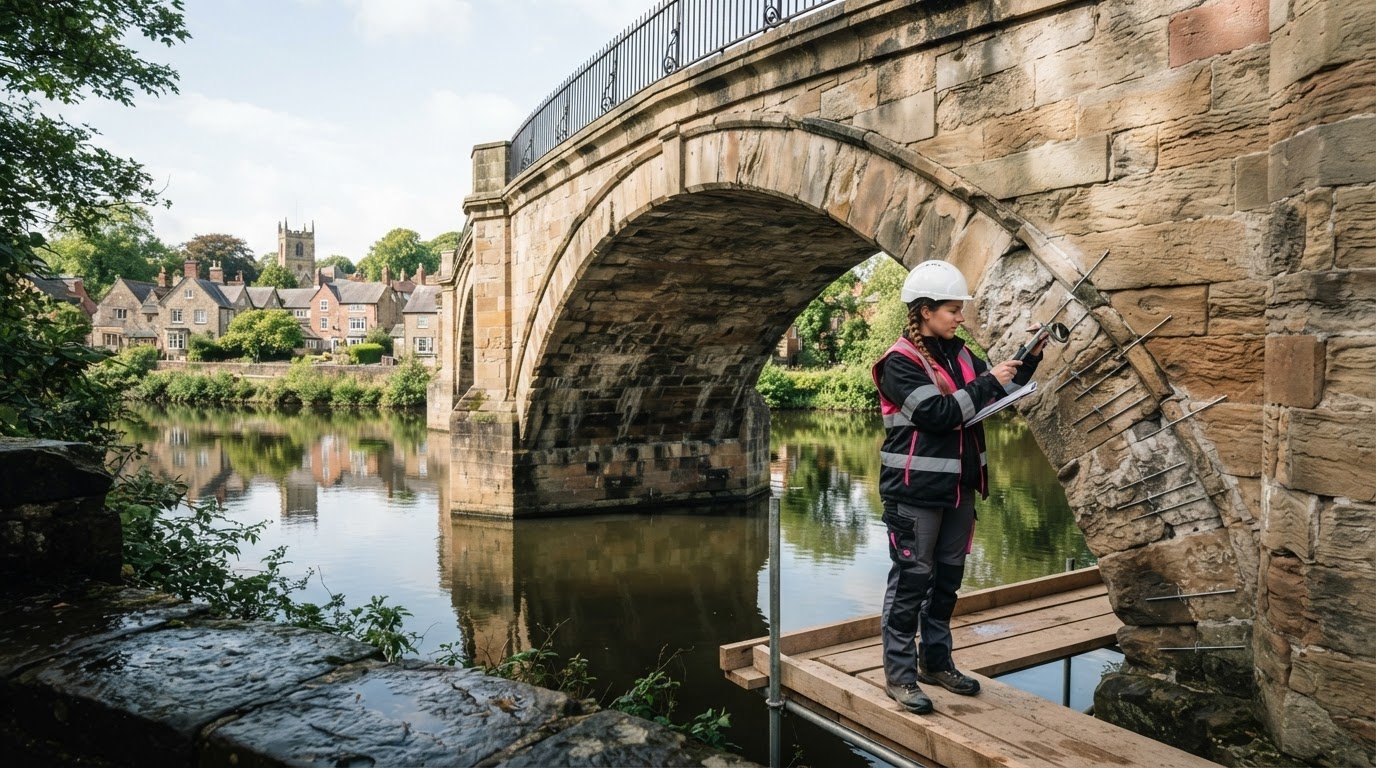
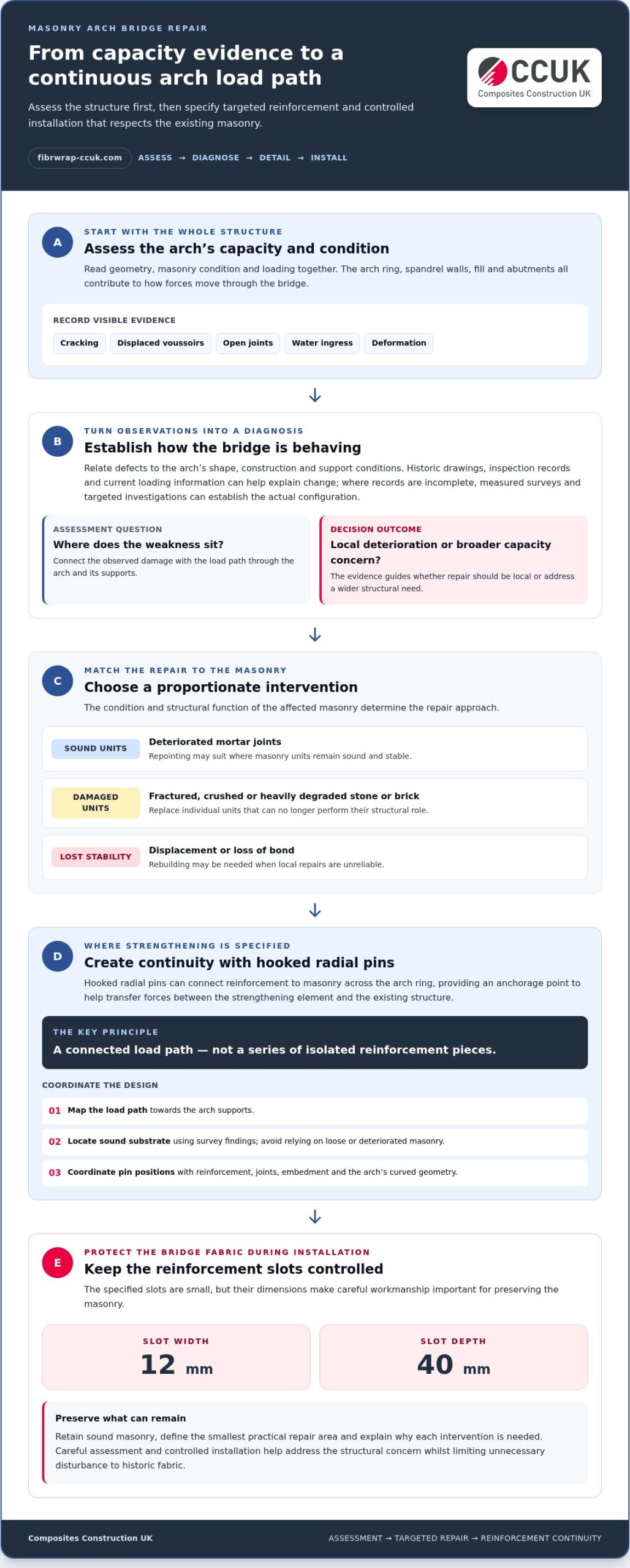
Assess capacity before selecting reinforcement. Masonry arch bridge repair should start with an assessment of the arch’s condition and load-carrying behaviour. The intervention can then address the identified structural weakness while preserving as much original masonry as practicable.
For asset owners, strengthening an existing arch is not simply a matter of adding material. The geometry, condition of the masonry and pattern of loading all inform the assessment, while the chosen method must work with the bridge’s existing construction rather than introduce unnecessary disturbance.
This article explains how capacity assessment informs repair decisions, how hooked radial pins can contribute to reinforcement, and why controlled installation matters for the arch’s fabric. It also covers practical project considerations, from choosing an appropriate intervention to planning work around the bridge’s continued use.
Key Takeaways
- Begin with an assessment of the arch’s condition, geometry and loading so reinforcement addresses the actual capacity concern.
- Consider how targeted repair can retain existing masonry fabric and support the continued use of a heritage structure.
- Understand how hooked radial pins can help create reinforcement continuity within the arch.
- Review installation details carefully: reinforcement slots are cut 12 mm wide and 40 mm deep, making controlled workmanship important to fabric preservation.
Assessment of existing arch capacity
Capacity assessment starts with the bridge’s geometry, masonry condition and load path. The arch ring, spandrel walls, fill and abutments must be considered together. A defect in one area can alter how forces are transferred through the structure. Assessment, maintenance and repair strategies can help guide decisions about caring for masonry arch bridges. These principles support a diagnosis before intervention is selected.
A practical assessment records visible cracking, displaced voussoirs, open joints, water ingress and deformation. The engineer relates these observations to the arch’s shape, construction and support conditions. Historic drawings, inspection records and current loading information can help show how the bridge has changed. Where records are incomplete, measured surveys and targeted investigations can establish the structure’s actual configuration. This evidence helps determine whether masonry arch bridge repair should address local deterioration or broader capacity concerns.
Repointing may suit deteriorated mortar joints when the masonry units remain sound and stable. Replace individual stones or bricks if they are fractured, crushed or too degraded to perform their structural role. Rebuilding may be needed when displacement or loss of bond makes local repairs unreliable. The intervention should reflect both the condition and structural function of the affected masonry.
UK permissions depend on the bridge’s ownership, designation, location and proposed work. Establish those factors first, then identify relevant consent requirements and constraints, including any heritage status or watercourse interface. The work scope should also account for the asset owner’s inspection and operational requirements. Requirements are specific to the structure and intervention, rather than a single rule applying to every bridge.
The price depends on the project’s scope, including access, investigation, repair extent, materials and traffic management. A local joint repair and a scheme involving strengthening across the arch require different work plans.
Common causes of deterioration include water ingress, weathering, mortar loss, ground movement, impact and changes in loading. Without specialist engineering, repair work may misdiagnose symptoms, disturb load paths or leave the underlying defect untreated. A competent assessment links observed damage to structural behaviour before repair details are specified.
Environmental and heritage benefits
Repair can retain original masonry that remains structurally serviceable, rather than removing it through wholesale replacement. At a stone arch, preserving sound voussoirs and spandrel masonry can reduce demolition waste and demand for newly quarried material. Retaining more of the existing structure also limits the transport and handling associated with replacement materials. The environmental benefit depends on the bridge’s condition and the scale of intervention required.
For a listed bridge, establish its designation and applicable consent requirements before setting the repair scope. Conservation requirements may affect material selection, the treatment of historic fabric and the visibility of reinforcement. Early discussion with the relevant conservation authority can help align structural needs with heritage considerations. A repair specification should explain why each intervention is needed and identify original elements that will remain undisturbed.
Heritage-led repair does not mean retaining damaged masonry without assessment. Distinguish between sound fabric, material that can be repaired and elements that need replacement. For example, compatible repointing may suit open joints where surrounding stones are sound, while a fractured voussoir may need targeted intervention. This avoids treating every part of the arch as if it were in the same condition.
- Retain sound material: map original stones and bricks before removal is considered.
- Limit waste: define the smallest practical repair area around each defect.
- Respect appearance: record joint profiles, masonry bond and visible finishes.
- Plan access: arrange inspections and works to reduce avoidable disturbance around the bridge.
Environmental and heritage objectives can support one another when repairs are carefully specified. A measured survey, condition record and repair schedule give the project team a basis for comparing local treatment with broader replacement. They also document retained fabric and completed work for future inspections. The aim is a proportionate intervention that addresses deterioration while keeping the bridge’s historic character central to the design.
Hooked radial pins and reinforcement continuity
Hooked radial pins can connect reinforcement to masonry across an arch ring. They provide an anchorage point to help transfer forces between the strengthening element and the existing structure. Continuity matters: reinforcement must form a connected load path, not a series of isolated pieces. At a masonry arch, that path must account for the curved geometry and substrate condition.
Design starts by identifying where reinforcement is needed and how forces enter and leave the strengthened zone. The engineer considers the arch profile, masonry bond, joint locations and the availability of sound material. Pin position and embedment are then coordinated with the reinforcement layout. For example, a pin near a weak joint may not provide the same anchorage as one fixed into sound masonry.
- Map the load path: identify how the arch transfers forces towards its supports.
- Locate sound substrate: use survey findings to avoid relying on loose or deteriorated masonry.
- Coordinate components: detail pin locations alongside reinforcement, joints and arch geometry.
- Inspect installation: record pin placement and anchorage before concealed work is covered.
The hooked configuration can help resist separation at the anchorage, while the radial arrangement follows the arch’s local geometry. Effectiveness depends on an engineered connection between the pin, reinforcement and masonry. The detail should define how these elements work together, rather than specify pins in isolation. It should also account for transitions between strengthened and unstrengthened areas.
Continuity is especially important around local repairs. If reinforcement ends abruptly beside a repaired section, the change in stiffness may concentrate demand at the boundary. A designed connection can help distribute forces through the strengthened area. Inspection records should document the installed arrangement so future assessments can locate the reinforcement and pins.
Installation method and bridge fabric preservation
Installation should follow the assessed repair design. Plan access, temporary support and water management before work begins, since the sequence and methods determine how much original masonry is disturbed.
Repair, Strengthening and Replacement Options
Local repair treats defects while retaining serviceable masonry; strengthening adds capacity where assessment identifies a structural need. Replacement removes and reconstructs more of the bridge, so it involves greater intervention. Compare the options against the arch’s condition, required performance, heritage constraints and the amount of fabric affected. Replacement is not automatically preferable if targeted repair or reinforcement can address the diagnosed problem.
Design temporary works for the structure and planned operations. Traffic management should account for the bridge’s use, work zone and access arrangements, with any restrictions coordinated before installation begins.
Repair Steps
Begin by marking repair areas against the survey, then protect adjacent masonry and prepare the work zone. Remove only material identified for treatment; install the specified repair or reinforcement, then record concealed details before closing them. For the MARS system, reinforcement slots in masonry arches are cut 12 mm wide and 40 mm deep. Controlled cutting helps limit disturbance to surrounding fabric.
Drainage and waterproofing should address the routes through which water enters or remains in the structure. Keep outlets clear and plan water management alongside the repair, as trapped moisture can contribute to recurring deterioration. Ensure temporary support and traffic arrangements remain suitable throughout the work sequence.
Crack Repair Methods
Crack treatment depends on the cause, position and movement of a crack, not its appearance alone. Record it and assess adjacent masonry before choosing a compatible repair. Stable, local cracking may be treated by carefully filling the fissure; movement or displaced masonry requires addressing the structural mechanism, not just closing the surface.
After treatment, document the repaired location and materials for future inspections. For project-specific structural design considerations, review the design features that inform strengthening decisions.
Composites Construction UK: Carbon Fibre Reinforced Polymer (CFRP) Strengthening
Composites Construction UK provides Carbon Fibre Reinforced Polymer (CFRP) Strengthening for infrastructure that needs a designed structural upgrade. If assessment identifies a capacity concern that local masonry repairs cannot resolve, its engineering team can develop a bespoke strengthening solution and plan its installation. Tyfo® Fibrwrap® Systems may form part of the approach, with selection and detailing based on the bridge’s condition and design requirements.
The right intervention depends on the assessed load path, substrate condition and preservation objectives. A project can begin with a feasibility study, followed by design and professional installation. This allows the proposed strengthening to be assessed alongside the existing bridge fabric.
To discuss a bridge strengthening requirement, contact Composites Construction UK.
Plan the next stage of bridge strengthening
The next step is to turn the assessment into a clear engineering brief. Bring together inspection findings, available drawings, records of earlier interventions and the bridge’s operational requirements. These details help define the structural issue, access constraints and priorities for retaining historic fabric. A focused brief gives the design process a practical starting point.
Composites Construction UK supports projects where masonry arch bridge repair requires structural strengthening. Services include Carbon Fibre Reinforced Polymer (CFRP) Strengthening and Tyfo® Fibrwrap® Systems. Blast Mitigation Systems are also available for projects with different structural requirements. The appropriate approach depends on the bridge and its engineering needs, rather than a standard solution applied to every structure.
Discuss the project scope and assessment findings with the team. Contact Composites Construction UK to explore the next step for your bridge, and move forward with a clearly defined engineering approach.
Frequently Asked Questions
How do engineers inspect and assess a masonry arch bridge?
Engineers combine a close visual inspection with measurements and a review of bridge records. They document defects by location, noting whether cracks pass through masonry units or follow mortar joints, and compare current observations with earlier inspection photographs. If evidence points to movement or concealed deterioration, targeted investigation can help clarify the likely cause. Findings help prioritise follow-up actions and establish a traceable baseline for future inspections.
What UK permissions and regulations apply to repairing a masonry arch bridge?
UK permissions depend on the bridge’s ownership, designation, location and proposed work. Identify relevant consent requirements and constraints, including heritage status or a watercourse interface, before setting the work scope.