
Effective strengthening of cast iron structures should preserve as much original metal as possible while improving the member’s ability to carry its required load. Cast iron is stronger in compression than in tension and can fail in a brittle manner, so any intervention must account for the load path and its limited tolerance for deformation. Cold repairs may use plates, straps, metal stitching or epoxy bonding. Welding requires slow, uniform preheating and post-heating to reduce thermal shock and fracture.
An existing column may look serviceable even when corrosion, cracking, changed loads or a new building use has affected its capacity. Strengthening depends on condition and load transfer, not simply on adding material. This article explains how interventions affect capacity and brittle behaviour, how repair choices influence durability, and why inspection and maintenance matter for service life. It also considers how reinforcement can help, and why preserving sound historic fabric and addressing deterioration are both essential.
Key Takeaways
- Compare repair options by how they transfer load and retain sound original cast iron, rather than treating added material as a universal fix.
- Account for cast iron’s brittle behaviour and limited tensile capacity when assessing columns, connections and changes in structural loading.
- Protect repaired areas from corrosion and include the condition of coatings, moisture exposure and visible rust in ongoing maintenance.
- Understand how externally bonded reinforcement may contribute to structural capacity, and where specialist CFRP strengthening fits within a repair strategy.
Strengthening buildings and infrastructure
Strengthening cast iron structures starts with understanding the load path and the condition of each section. This assessment helps determine whether an intervention can retain sound original metal while restoring structural continuity. In historic buildings, preserving cast iron can protect original fabric and its connections to adjoining masonry or steel. The repair method must address the defect without transferring damaging forces to weaker areas.
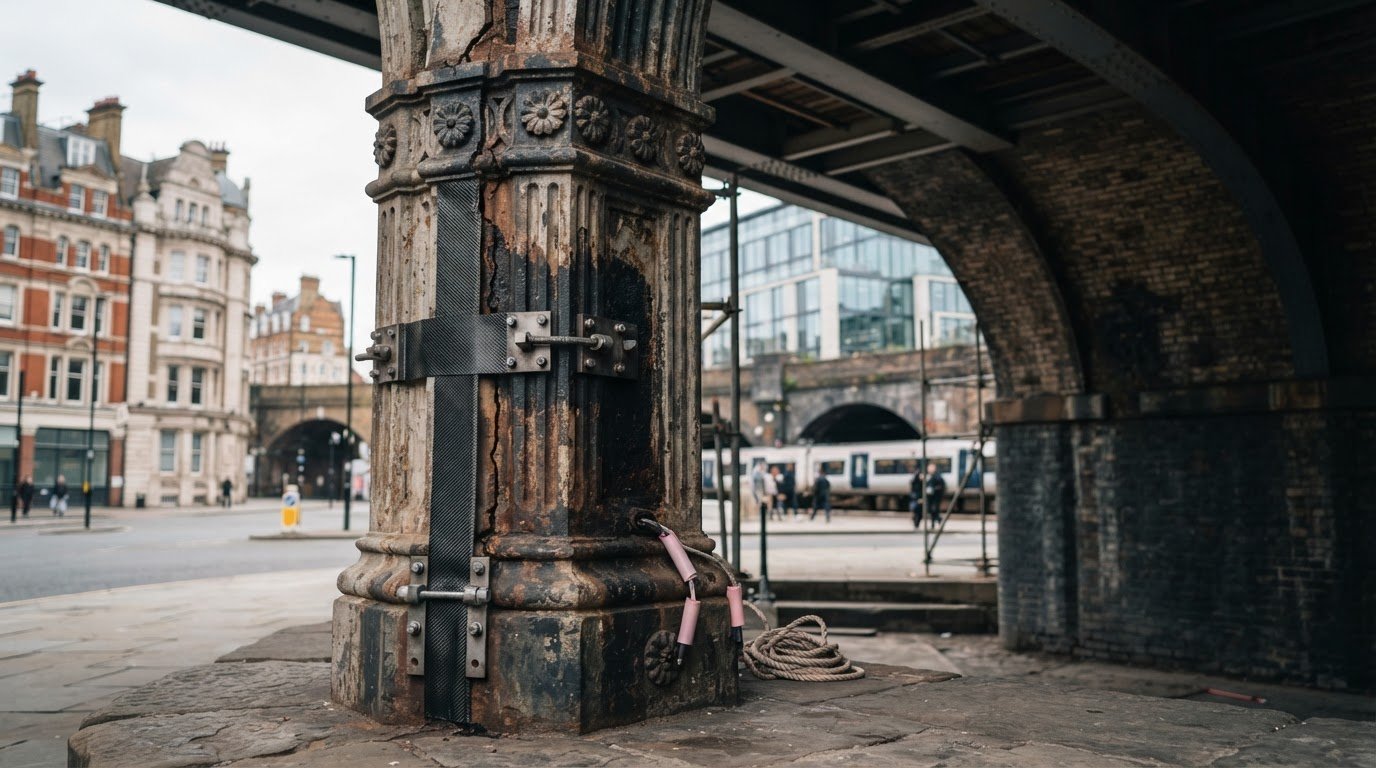
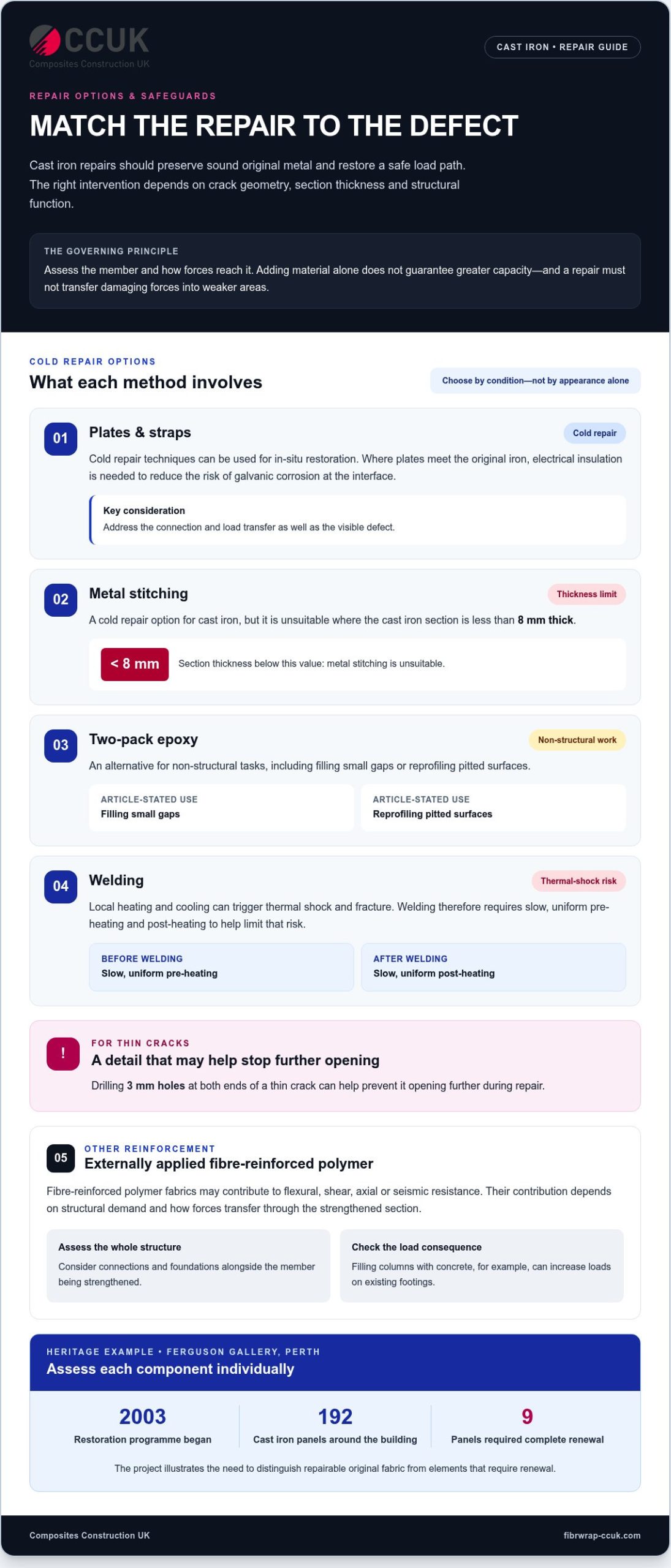
Cold repair techniques include plates, straps, metal stitching and epoxy bonding, which can be used for in-situ restoration. Plates need electrical insulation from the original iron, reducing the risk of galvanic corrosion at the interface. Metal stitching is unsuitable where the cast iron section is less than 8 mm thick. Two-pack epoxy is an alternative for non-structural work, such as filling small gaps or reprofiling pitted surfaces.
Welding demands particular care because local heating and cooling can trigger thermal shock and fracture. Slow, uniform pre-heating and post-heating help limit that risk. For thin cracks, drilling 3 mm holes at both ends can help prevent further opening during repair. Crack geometry, section thickness and structural function determine which intervention is appropriate.
The Ferguson Gallery in Perth, Scotland, shows how cast iron can form part of a heritage repair project. Its restoration programme began in 2003, and the building has 192 cast iron panels surrounding it. Nine panels required complete renewal. The example demonstrates the importance of assessing each component individually, distinguishing repairable fabric from elements requiring renewal.
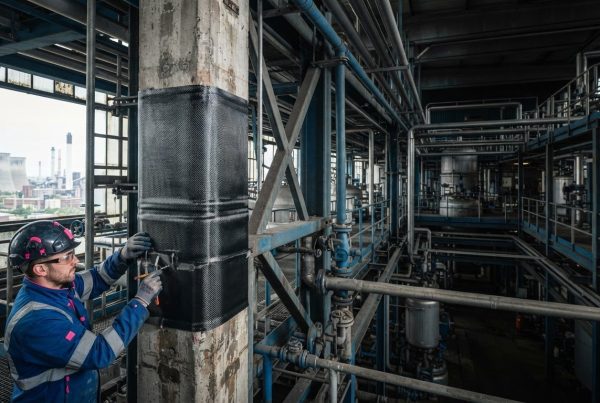
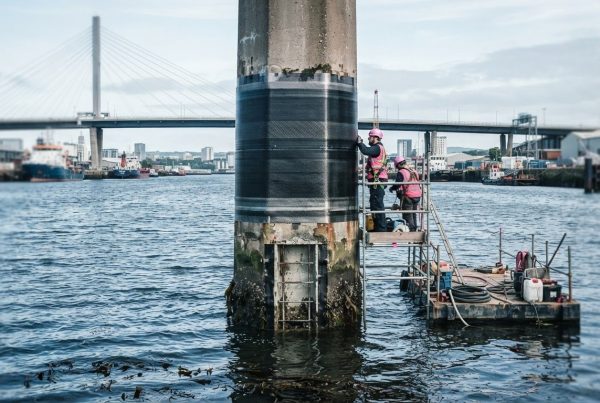
Externally applied fibre-reinforced polymer fabrics can increase flexural, shear, axial or seismic resistance. Their contribution depends on the structural demand and how forces transfer through the strengthened section. A suitable strategy considers the whole structure, including connections and foundations. Filling columns with concrete, for example, can increase loads on existing footings. Reinforcement must therefore be assessed in the context of the surrounding building, not just the visibly damaged member.
Cast iron column capacity and brittle behaviour
The main risk in strengthening historic cast iron structures is changing how loads reach brittle members. Added restraint or altered connections can concentrate stress around defects, while drilling or heating may initiate cracks. Cast iron can fail with little visible deformation, so a column’s appearance alone cannot establish its remaining capacity.
Cast iron performs better in compression than in tension, which explains its historic use in columns rather than iron beams. A column under eccentric loading also bends: one side is compressed while the opposite side is placed in tension. This distinction matters because reinforcement that improves confinement or bending response does not necessarily increase the casting’s intrinsic compressive strength.
Capacity assessment should reflect the actual member, its material condition and the loads it carries. Engineers examine column dimensions, slenderness, restraints, eccentricity and connections, then consider how these factors interact. Historical allowable-stress values cannot establish present-day capacity on their own. Calculations must represent the structure being assessed, including changes in use and load distribution.
Testing can reveal failure behaviour that visual inspection misses. In one reported case, a tensile coupon taken from cast iron columns failed in a brittle manner, without necking or elongation. This illustrates why assessment should consider material behaviour as well as geometry and loading. Variations in historic castings and concealed corrosion can also affect how forces travel through a member.
Externally applied fibre reinforcement may contribute to flexural, shear, axial or seismic resistance, depending on the structural arrangement. For a circular column, confinement and bending response remain distinct from the iron’s compressive strength. A strengthening design should identify the governing failure mode, then examine how forces transfer into sound material. A project-specific structural design can set out that load-path assessment.
Cast iron strength and durability
Cast iron’s carbon content helps explain why its durability cannot be judged from strength alone. Cast iron typically contains 2-5% carbon, and different compositions can respond differently to corrosion and loading. Grey cast iron, common in older construction, is brittle, so deterioration at the surface can matter even when a member still appears substantial. A repair strategy should distinguish material loss from superficial coating failure.
For UK projects, the relevant British Standards and building regulations depend on the structural scope and location. Design should follow the applicable current framework; historical values from foreign codes are not UK acceptance criteria. This matters when assessing historic castings, because old allowable-stress figures cannot establish capacity under present conditions.
Durability also depends on the alloy and its exposure. Cast iron alloys containing silicon, nickel, chromium or copper may reduce or eliminate corrosion problems. Even so, the component’s environment needs careful assessment: trapped moisture, damaged coatings and contact with dissimilar metals can affect the exposed surface. A repair that leaves water pathways or unprotected interfaces may preserve the visible profile while allowing corrosion to continue underneath.
Inspection should link material condition to the cause of deterioration. Map rust, scaling, cracks and section loss, then relate these observations to drainage, ventilation and coating condition. At connections, check whether corrosion has affected bearing surfaces or fasteners, since local damage can alter load transfer. The aim is to retain sound iron and address the cause, rather than simply concealing deterioration with a surface treatment.
In a nineteenth-century building, a durable intervention balances conservation with structural performance. The repair needs compatible materials, a stable bond or connection, and protection suited to the exposure. Monitoring can then help identify renewed corrosion or movement before damage progresses. This measured approach can extend useful service life while avoiding replacement where the existing casting remains structurally valuable.
Maintenance and lifespan
Cast iron can have an approximate lifespan of 100 years with appropriate maintenance. That depends on controlling corrosion and preserving the original section, especially around bearings, joints and areas exposed to moisture. A maintenance plan should record visible changes and compare them during later inspections, so developing damage is distinguished from longstanding surface marks.
Humidity is a relevant exposure factor. Cast iron is highly susceptible to rusting when humidity exceeds 65%, and rusting can occur at 58% when certain pollutants are present. Reducing humidity to 30% or lower can prevent rust, but this is not practical outdoors. For exposed components, protective coatings such as paint, wax or metallic coatings help limit contact with moisture.
Rust is more than a change in colour. It indicates that some original iron has converted to iron oxide and been irreversibly lost. Porous rust can hold liquid water against the metal, allowing corrosion to continue beneath the visible surface. Maintenance should identify and address the moisture source, remove or treat deteriorated material appropriately, and renew protective coatings where needed.
After repair or strengthening, inspections should cover the repaired interface, adjacent iron and any altered load-bearing details. Look for renewed cracking, coating breakdown, trapped water or movement around connections. Where welding has been used, pay particular attention to the repair area and surrounding casting, as thermal effects can cause fracture. Any increase in load or change in use also makes reassessment of the member and its bearings relevant.
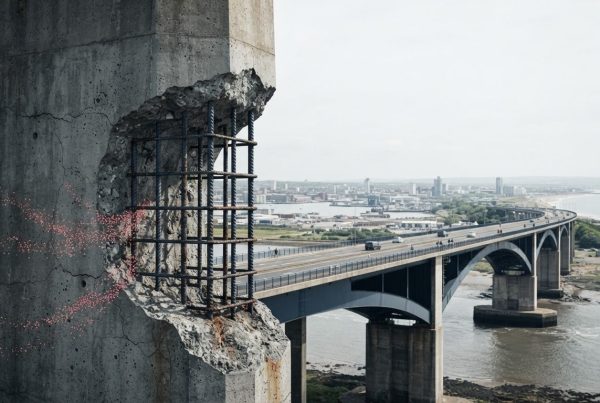
Maintenance records help track these observations over time. Note the location and extent of corrosion, coating condition, water exposure and repair history, then compare findings at later inspections. This provides a practical basis for prioritising work before section loss affects structural performance. If deterioration also affects adjoining concrete, include concrete repair requirements in the wider maintenance plan.
Composites Construction UK: Carbon Fibre Reinforced Polymer (CFRP) Strengthening
Composites Construction UK provides Carbon Fibre Reinforced Polymer (CFRP) Strengthening for structural rehabilitation and upgrades. Its Tyfo® Fibrwrap® Systems can form part of a project requiring additional resistance, provided the member, load path and substrate are assessed together.
For cast iron buildings, this assessment is especially important: CFRP should not replace an understanding of the casting’s condition and brittle behaviour. Feasibility studies and bespoke design solutions help determine how reinforcement could integrate with the existing structure, and professional installation delivers the specified system. If deterioration also affects adjoining concrete, Concrete Repair may form part of the wider intervention.
To discuss a structural strengthening project, contact Composites Construction UK.
Plan the next stage of your structure’s life
Strengthening cast iron structures works best as part of a clear asset strategy, rather than as an isolated repair. Define the building’s intended use, the required structural performance and the areas where intervention must preserve existing fabric. This gives the engineering assessment a practical direction and helps align technical decisions with future operation.
For asset owners, the next step is to turn observed condition and operational needs into a defined project brief. Composites Construction UK can help develop a considered approach to structural rehabilitation, with the scope shaped around the asset’s requirements. An early discussion can establish what information is needed to progress the design and how strengthening may fit into wider maintenance planning.
Contact Composites Construction UK today to discuss your structure and its next stage. With a clearly defined brief, you can move towards a practical, informed plan for extending the useful life of the asset.
Frequently Asked Questions
What methods are used to strengthen existing cast iron structures?
Methods include mechanically connected plates or straps, metal stitching, epoxy for non-structural defects, and externally applied fibre reinforcement where the design supports it. A cracked column and a corroded beam end present different load-transfer problems. Select the intervention according to the defect’s position, the remaining section, connection geometry and intended loading. The aim is to restore a viable load path, not to add reinforcement indiscriminately.
How can cast iron be strengthened without welding?
Cast iron can be strengthened without welding, using bolted plates or straps, metal stitching or externally bonded reinforcement. For example, a plate can bridge a locally damaged area if its fixings engage sound material and the connection transfers the required forces. Epoxy can fill small gaps or restore a profile when the repair is non-structural. The choice depends on the defect, geometry and required structural function.
How do engineers assess the condition and load capacity of a cast iron structure?
Engineers combine a structural survey with an assessment of the material and load path. They record cracking, corrosion, deformation, section dimensions, connection details and bearing conditions, then assess how loads reach the foundations. Where needed, testing helps characterise the material and its failure behaviour. For example, a column with eccentric loading needs assessment for bending as well as compression, while concealed corrosion can reduce its effective section.
What reinforcement methods are suitable for cast iron columns, beams and bridges?
Suitable reinforcement depends on the member’s function and governing failure mode. Columns may need improved restraint or bending resistance; beams require particular attention to tensile demand and connection transfer. On bridges, engineers also consider how loads pass between the deck, cross-members, bearings and supports. Plates, straps or externally bonded fibre systems may form part of a solution, but their anchorage and interface must suit the existing iron.
When should cast iron be repaired, reinforced or replaced?
Repair is appropriate when damage is localised and enough sound iron remains to transfer forces through the member and its connections. Consider reinforcement when the component remains viable but its capacity or structural role needs to change. Replacement becomes relevant when deterioration, cracking or section loss prevents a reliable load path, or a repair cannot address the governing weakness. Foundation and adjoining-member effects also influence the decision.
What case studies show successful strengthening of cast iron structures in the UK?
The Ferguson Gallery in Perth, Scotland, provides a UK example of cast iron conservation. A restoration programme began in 2003 for the Category A listed building, which has 192 cast iron panels surrounding it; nine panels required complete renewal. This illustrates a repair-and-renewal approach to historic fabric, rather than documenting a specific CFRP strengthening scheme or proving that one method suits every structure.