
A lift pit leak often points to a failed joint or another route through the structure, rather than a problem that can be solved by simply removing the water. Lift pit leak sealing at a wall-to-floor joint may involve resin injection to block the water path and help stop ingress. The repair method depends on the concrete’s condition and the source of the leak.
It is reasonable to expect waterproofing to keep water out, but damaged membranes, cracks, construction joints and changing groundwater pressure can undermine that protection. This article explains why lift pit waterproofing fails and how resin injection can seal active leaks at wall-to-floor joints. It also describes the repair process, when further internal waterproofing may be needed, and which site conditions influence the choice of remedial method.
Key Takeaways
- Identify how defects in waterproofing, concrete and joints can create routes for water into a lift pit.
- Understand how resin injection can seal water paths at wall-to-floor joints, and when additional internal waterproofing may be needed.
- See how groundwater pressure and heavy rain can contribute to ingress, even where a sump pump is installed.
- Explore the building, waterproofing and safety considerations relevant to lift pit repairs, and when specialist leak-sealing work may be appropriate.
Why Does Lift Pit Waterproofing Fail So Often?
Waterproofing can fail when defects, groundwater pressure or deteriorating materials create a route through the concrete. Finding the entry point matters because water may reach a lift pit through its walls, base or joints.
Causes and Signs of Water Ingress
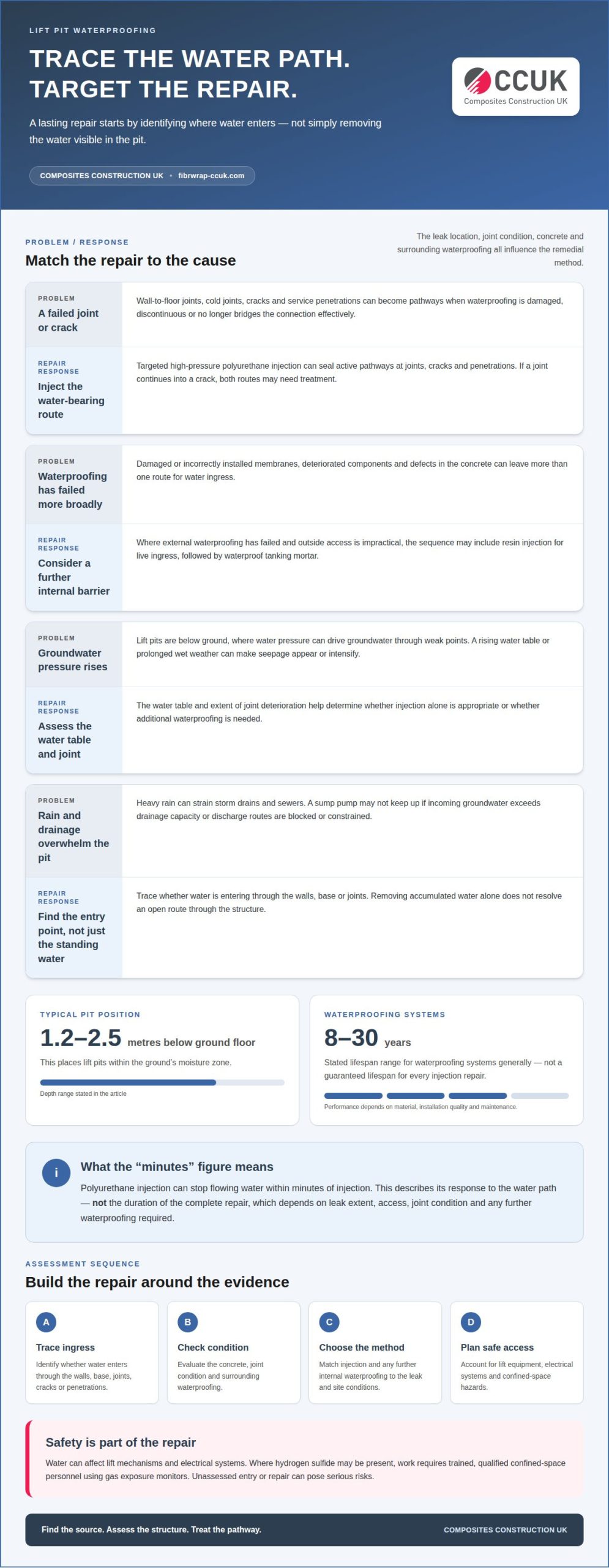
Common causes include damaged or incorrectly installed waterproofing, concrete cracks, construction joints, deteriorated components and changing water-table levels. Wall-to-floor joints and cold joints can also provide pathways, particularly when the waterproofing no longer bridges the connection effectively. Signs include wet patches, active seepage, rust marks and deposits on concrete. The UK Government states that lift pits must be structurally sound and free from polluted groundwater ingress or leakage from soil systems to be suitable for operational use.
When choosing a UK specialist, prioritise an assessment that traces the water path and evaluates the concrete and joint condition. The repair method should address the source of ingress, not just the visible water.
Risks of DIY Leak Repairs
Repairs made without specialist assessment may treat the visible damp area while leaving the actual route through a crack or joint open. An unsuitable coating or seal can also fail to address the conditions causing ingress. Water in a pit may affect lift mechanisms and electrical systems, contributing to breakdowns and safety risks. If a repair overlooks structural deterioration, the underlying defect may remain unresolved.
There may also be confined-space hazards. Where hydrogen sulfide may be present, work requires trained, qualified confined-space personnel using gas exposure monitors. Unassessed entry and repair therefore pose a serious risk, beyond simply choosing the right sealant.
Sealing Time and Longevity
There is no single duration for a lift pit repair. The work depends on the extent of the leak, access, joint condition and whether further waterproofing is required. Polyurethane injection can stop flowing water within minutes of injection, but that describes its response to the water path, not the duration of the complete repair.
Lift-pit waterproofing lifespan is stated to range from 8 to 30 years, depending on material, installation quality and maintenance. That range concerns waterproofing systems generally; it is not a guaranteed lifespan for every injection repair. The condition of the concrete, the cause of ingress and the repair design all matter when assessing long-term performance.
Injection sealing at wall-to-floor joints
Injection sealing targets water pathways in concrete rather than treating only the visible damp surface. At a wall-to-floor junction, the repair design depends on the joint condition, leak location and surrounding waterproofing.
PU Grouting for Active Leaks
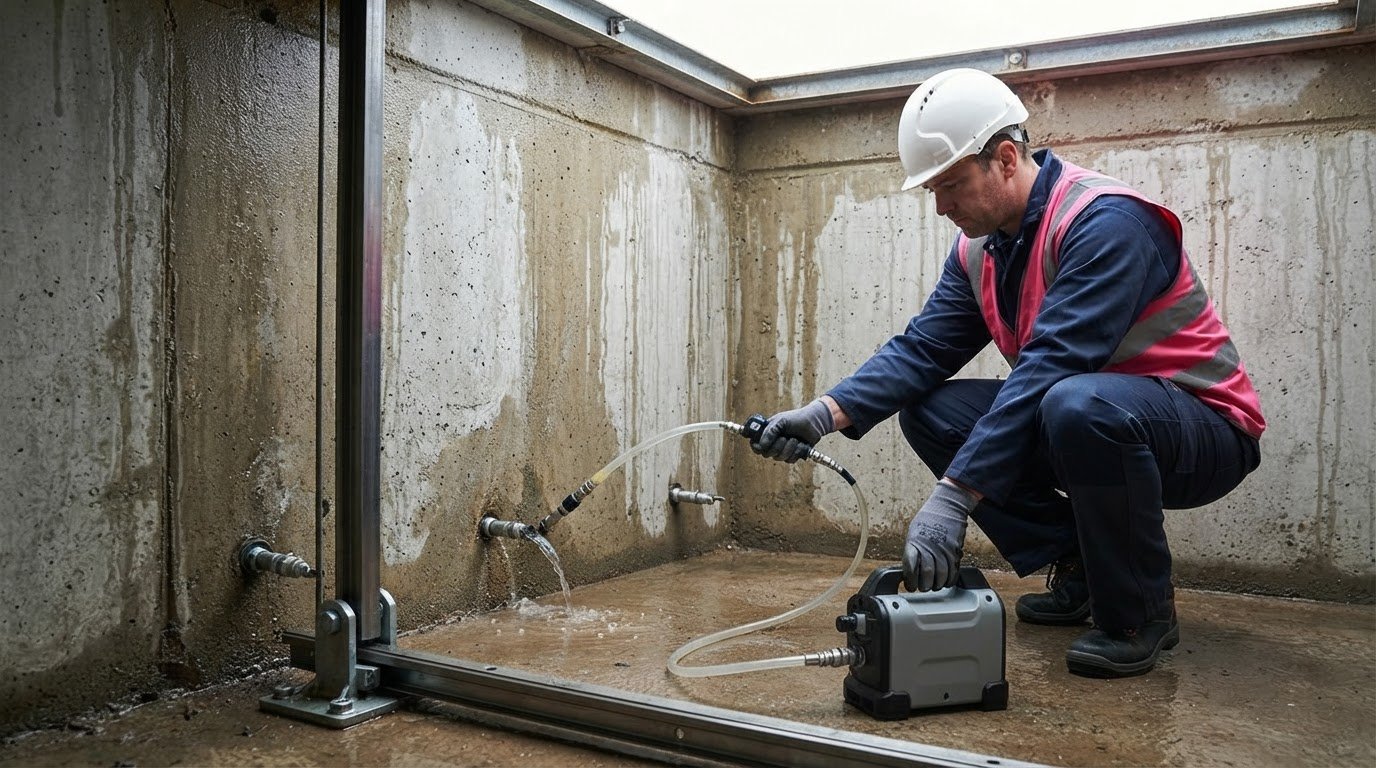
For active ingress, targeted high-pressure polyurethane injection can seal wall-to-floor joints, vertical joints, cracks and service penetrations. The material is directed into the water-bearing route, where it can block the pathway through the concrete. Accurate identification of the leak location is important, especially when water appears along a joint but enters through nearby damaged concrete.
Injection can also be considered when external waterproofing has failed and access from outside is impractical. The internal repair sequence may include resin injection to address live ingress, followed by waterproof tanking mortar. The water table and extent of joint deterioration help determine whether injection alone is appropriate.
Resin Injection for Leak Sealing
Resin injection seals a leak by filling or blocking the route through which water travels. At a wall-to-floor joint, the repair addresses the discontinuity between the floor slab and wall, rather than applying a surface coating without tackling ingress behind it. Construction joints, cracks and penetrations may need separate, targeted treatment if they form additional pathways.
Effective repairs depend on matching the injection approach to the observed leak and concrete condition. For example, a joint that continues into a crack may need treatment along both routes. Where broader waterproofing has been compromised, tanking mortar can provide a further internal barrier after injection. The repair sequence should account for the full affected area, not just one visible seepage point.
A project-specific review should consider the joint geometry, active water path and condition of the surrounding concrete before defining the remedial sequence. For a repair assessment, discuss the leak and joint conditions with the engineering team.
What causes water leaks in lift pits?
Lift pits sit below ground, where surrounding soil can hold water against concrete walls and floor slabs. Hydrostatic pressure then drives groundwater through weak points, including cracks, joints and penetrations. The pit’s depth and local water table affect the pressure acting on its structure. Lift pits are usually 1.2 to 2.5 metres below the finished ground floor, placing them within the ground’s moisture zone.
Water may enter through the base as well as the walls. Leaky foundations and cracks can connect the surrounding ground directly to the pit interior. If the water table rises, water within the pit may rise towards it too. This helps explain why seepage can appear or intensify after prolonged wet weather, even if no new visible damage has occurred.
Rainfall can also overwhelm drainage routes. During heavy rain, storm drains and sewers under strain may prevent water from dispersing from a lift pit, even when a sump pump is installed. A pump cannot remove the underlying cause if incoming groundwater continues to exceed drainage capacity. Blocked or constrained discharge routes can further limit how effectively accumulated water is removed.
Construction details influence where water pressure finds a route. Wall-to-floor junctions, construction joints and cold joints can provide pathways if waterproofing is damaged, discontinuous or incorrectly installed. Movement or deterioration around service penetrations can create additional routes. If the external waterproofing layer has failed, water may travel behind it before becoming visible at an internal joint.
Not all visible moisture indicates a leak in the structure. Condensation can accumulate on cool surfaces, while stagnant water may remain after previous ingress. A persistent wet patch, seepage line or changing water level suggests a continuing source, whereas surface condensation may affect broader areas. Distinguishing these patterns helps establish whether the cause is groundwater pressure, drainage conditions, waterproofing defects or moisture within the pit.
What UK building regulations and safety standards apply to lift pit waterproofing?
For UK lift pits, the operational benchmark is structural soundness and protection from specified forms of water ingress. The UK Government states that a pit is suitable for operational use only if it is structurally sound and free from polluted groundwater ingress or leakage from soil systems. Both the concrete condition and the source of water therefore matter when defining the repair scope.
That benchmark should not be confused with a single waterproofing specification for every pit. The assessment needs to consider how water enters, whether the concrete remains sound and whether the proposed repair addresses the affected area. A local joint leak and widespread deterioration of a pit lining, for example, present different repair conditions. A surface treatment alone may not address an active pathway behind the concrete face.
Safety during access and repair matters too. Where hydrogen sulfide may be present, work requires trained and qualified confined-space personnel using gas exposure monitors. This is a critical consideration for pits with stagnant water or suspected contamination. The method and work sequence should account for conditions within the space, not only the visible leak.
Water containing oil or grease also requires careful handling. A sump pump is not recommended for potentially contaminated water unless disposal follows environmental regulations. This affects decisions about temporary water removal as well as permanent ingress control. Water near lift mechanisms and electrical systems can create operational and safety concerns, so repair planning should account for these interfaces.
A suitable technical review therefore connects the pit’s structural condition, ingress route, water characteristics and access hazards. This provides a reasoned basis for defining remedial work without assuming that one coating or injection method suits every structure. For an assessment of the repair requirements, discuss the lift pit conditions with the engineering team.
Composites Construction UK: Resin Injection and Leak Sealing
Composites Construction UK provides Resin Injection and Leak Sealing for water ingress affecting concrete structures, including lift pits. This is a relevant next step when an active leak or vulnerable wall-to-floor joint needs targeted repair, particularly when the source and concrete condition must inform the approach.
The repair scope can be shaped around the identified leak path and the pit’s condition, rather than treating surface water alone. If concrete damage also needs attention, the remedial assessment can consider how it relates to the ingress and proposed sealing work.
To discuss a lift pit leak, contact Composites Construction UK.
Plan the next step for your lift pit
Once water ingress has been traced, the next decision is how the repair relates to the asset’s wider structural condition. A localised joint intervention may be appropriate, while damage to adjacent concrete could call for broader remedial work. This distinction keeps the work focused on the structure’s needs rather than treating visible water in isolation.
Composites Construction UK also provides Carbon Fibre Reinforced Polymer (CFRP) Strengthening, Tyfo® Fibrwrap® Systems and Blast Mitigation Systems. To begin discussing lift pit leak sealing, describe where ingress appears, how it behaves and any known changes to the pit or surrounding structure. This gives the technical discussion a clear basis for considering the appropriate repair scope and the asset’s condition.
For a considered next step, contact Composites Construction UK to discuss the lift pit and its repair requirements. A clear understanding of the structure can support a focused path towards restoring its function.
Frequently Asked Questions
How do specialists seal a lift pit?
Specialists carry out lift pit leak sealing by identifying the ingress route and selecting a repair suited to the concrete and joint. Resin is injected into the pathway rather than simply applied over the damp surface. If water follows connected defects, the repair scope needs to address those routes too. Internal tanking may then form part of the remedial sequence if further waterproofing is required.
How does a specialist diagnose a lift pit leak?
A specialist assesses where water appears, how it changes over time and which structural details it follows. For example, seepage that increases after heavy rain may point to groundwater or drainage conditions, while moisture spread across a cool surface may indicate condensation. Relating the observed pattern to joints, cracks and penetrations helps distinguish active ingress from residual dampness.
What methods are used to seal a leaking lift pit?
Methods include targeted polyurethane resin injection for active leaks, as well as injection into cracks, joints or penetrations when these form water paths. If external waterproofing has failed, an internal approach may combine injection with waterproof tanking mortar. The method depends on the location and extent of ingress, the concrete condition and whether the existing waterproofing system needs supplementary treatment.
Can a lift pit be sealed from the inside, or is external waterproofing needed?
A lift pit can be treated from the inside: resin injection can address live ingress, followed by internal tanking if the repair requires an additional barrier. This approach is relevant when failed external waterproofing cannot be addressed from outside. The appropriate scope depends on the leak route and structural condition. Injection can target a local pathway, while wider waterproofing failure may require broader remedial work.