
Marine pile strengthening and protection depends on the damage mechanism and the pile’s geometry, material and required load capacity. Bonded carbon-fibre-reinforced polymer sheets or plates can improve a concrete pile’s flexural, shear and fatigue strength, while concrete encasement, reinforcement and protective wrapping address other repair and durability needs. The appropriate intervention is selected to suit the structure and its marine exposure.
Corrosion, marine organisms and physical damage can all affect pile performance. A durable repair must address structural capacity as well as ongoing exposure. The key is to match the method to the pile’s condition rather than treat every defect alike.
This article explains how CFRP strengthening can support existing piles, how corrosion protection and reinforcement contribute to performance, and what to consider when piles have complex geometries. It also covers encasement and scour protection, helping asset owners and engineering teams understand the available approaches and choose an appropriate intervention.
Key Takeaways
- Match CFRP strengthening to the pile’s structural demands, including flexural, shear and fatigue performance.
- Choose corrosion protection with the pile material and marine exposure in mind; surface preparation is part of an effective repair.
- Assess how encasement and steel reinforcement can restore capacity, with concrete specification guided by exposure conditions.
- For irregular pile shapes, consider fabric formwork that can be secured around the structure and filled using a submerged tremie method.
Carbon-fibre-reinforced polymer strengthening
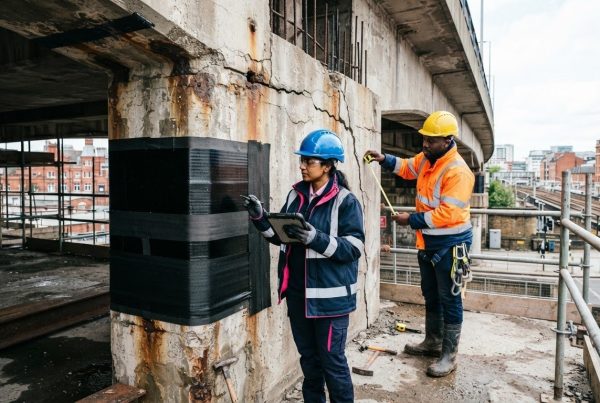
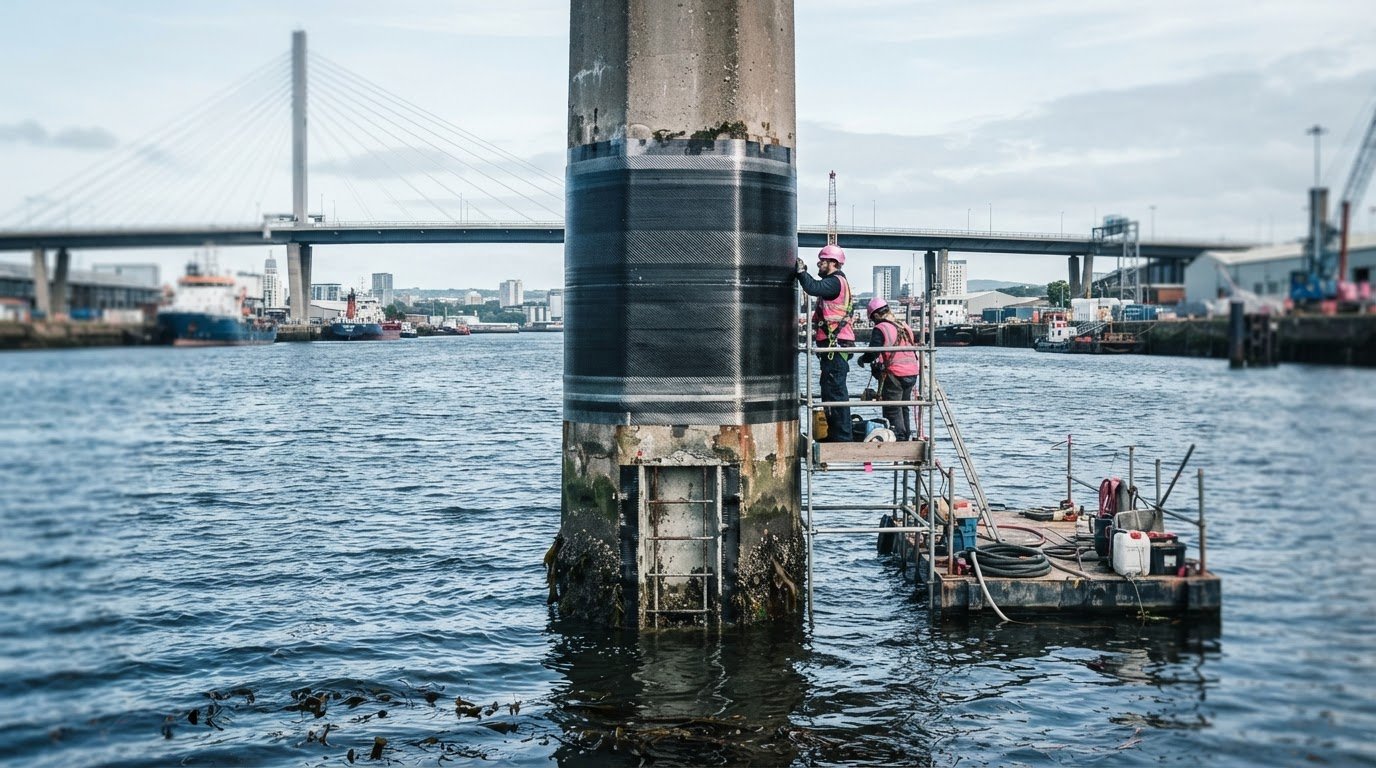
UK marine pile repairs need a defined design basis that records relevant structural, material and environmental requirements, alongside any required consents. Start by identifying the pile material, damage, load path and exposure zone. CFRP sheets or plates can be bonded to concrete piles and, with suitable design, improve flexural, shear and fatigue strength. These properties matter where dock, port or bridge piles face repeated loading. CFRP systems can also increase a pile’s load-bearing capacity and resistance to impact and seismic forces.
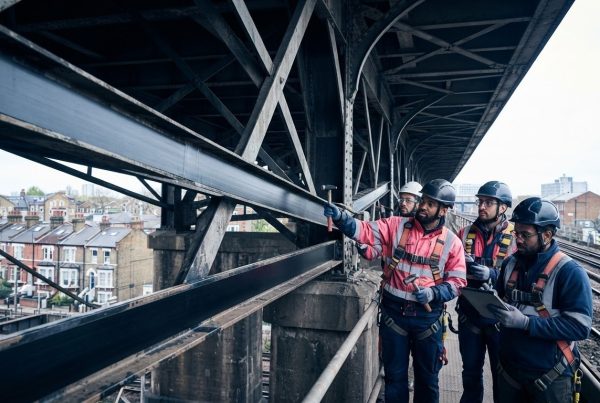
Underwater strengthening may use CFRP sheets or plates with compatible bonding resin. Equipment supports access, surface preparation, mixing and controlled placement. Marine preparation can involve divers removing loose or damaged material and treating corroded sections before encasement. The prepared surface must allow effective bond transfer. A practical sequence is to inspect the pile, remove unsound material, address corrosion, then install the specified system. Tidal access, water conditions and the repair zone shape how this work is carried out.
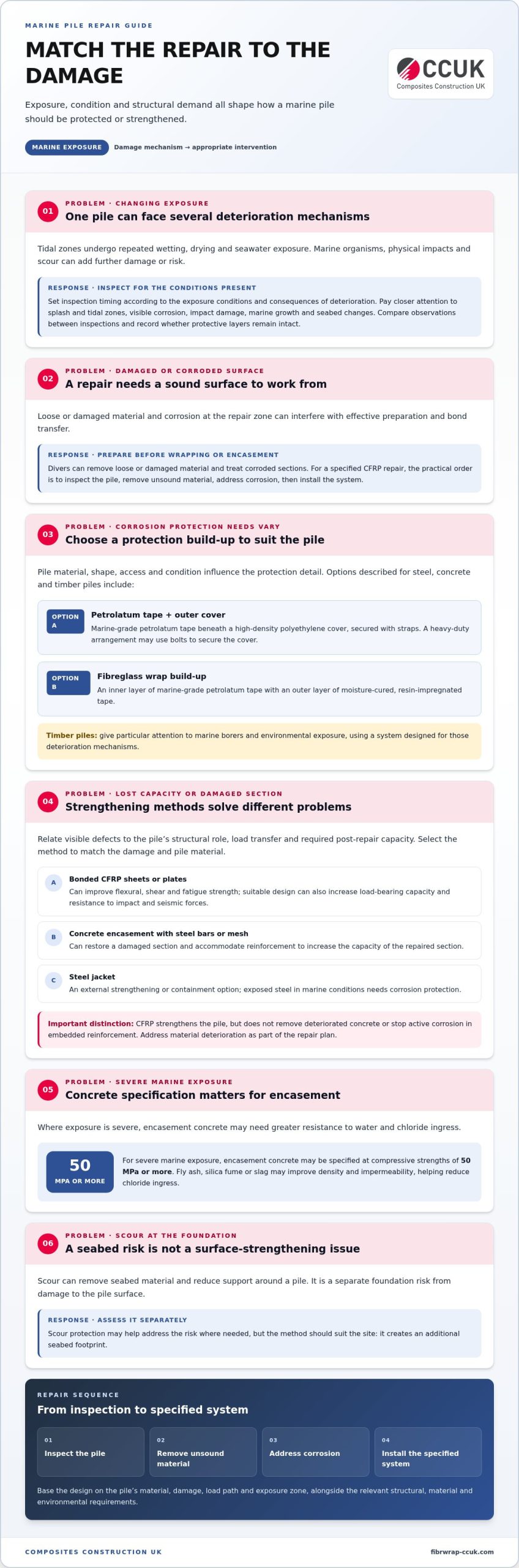
Bond performance depends on the substrate and installation quality. Salt, moisture, biological growth or loose concrete at the interface can interfere with adhesion. CFRP strengthens the pile, but does not remove deteriorated concrete or stop active corrosion in embedded reinforcement. The design assessment should distinguish loss of capacity from ongoing material deterioration. Impact exposure matters too, as a bonded layer can be physically damaged. Inspection access and the condition beneath any applied system should inform repair planning.
Scour is a separate foundation risk, not a surface-strengthening problem. Where needed, scour protection may help address that risk, but the Scottish Government notes that it creates an additional seabed footprint. The method should suit the pile’s material, geometry, load demands and exposure. For example, a concrete pile needing greater flexural capacity may suit bonded CFRP, while extensive section loss may call for repairs that also restore damaged material. Clear inspection findings help distinguish these needs before work is specified.
Document the applicable structural, material and environmental requirements for the repair, together with any required consents. Identify the specific requirements based on the pile’s material, damage, load path and exposure zone.
Marine corrosion prevention
Tidal zones expose piles to changing conditions as water levels rise and fall. Repeated wetting, drying and seawater exposure can accelerate deterioration, while marine organisms and physical impacts create additional damage mechanisms. Scour can remove seabed material and reduce support around a pile. Design and repair should therefore account for the exposure zone, pile material, observed deterioration and seabed conditions together.
Set inspection timing according to these conditions and the consequences of deterioration. Pay closer attention to splash and tidal zones, visible corrosion, impact damage, marine growth and seabed changes. Compare observations across inspections, recording where defects develop and whether protective layers remain intact. This condition-based approach helps identify maintenance needs before deterioration compromises pile performance.
Surface preparation is essential before encasement or protective wrapping. Divers remove loose or damaged material and treat corroded sections to create a sounder substrate for repair. For steel, concrete and timber piles, one protection system combines marine-grade petrolatum tape with a high-density polyethylene outer cover secured by straps. A heavy-duty arrangement may use bolts to secure the cover.
Another option is a fibreglass wrap with an inner layer of marine-grade petrolatum tape and an outer layer of moisture-cured, resin-impregnated tape. Timber piles need particular attention to marine borers and environmental exposure, addressed through a system designed for those deterioration mechanisms. The pile’s shape, access and condition affect the protection detail.
For severe marine exposure, encasement concrete may be specified at compressive strengths of 50 MPa or more. Fly ash, silica fume or slag may improve density and impermeability, helping reduce chloride ingress. Concrete repair can address damaged sections alongside a corrosion-control strategy. For concrete piles requiring repair, discuss concrete repair requirements as part of project planning.
Pile load capacity and reinforcement
As corrosion, physical damage or section loss progresses, marine piles can lose load-bearing capacity. This can increase the risk of collapse or severe damage during storms, splash-zone impacts or heavy use. Assessment must relate visible defects to the pile’s structural role, including how loads transfer through the pile into the supporting ground.
FRP wrapping bonds reinforcement to the pile surface, while concrete encasement can restore a damaged section and accommodate steel bars or mesh. Steel jackets provide an external strengthening or containment option, but exposed steel in marine conditions needs corrosion protection. The choice depends on the pile’s material, deterioration pattern, geometry and required post-repair capacity.
The main methods include bonded CFRP sheets or plates, concrete encasement with steel reinforcement, and protective or strengthening jackets. Each addresses different needs: CFRP can improve flexural, shear and fatigue strength; encasement can rebuild the section; and reinforcement within formwork can increase the capacity of the repaired section.
A practical assessment and repair sequence is:
- Inspect the pile, recording concrete loss, exposed reinforcement, corrosion and impact damage.
- Establish how the pile carries structural loads, and identify which damaged areas affect capacity.
- Remove unsound material and treat corroded sections before applying the repair system.
- Specify the strengthening method, reinforcement detail and protection for the repaired zone.
- Review the completed repair against the design requirements and record its condition for future inspections.
Concrete encasement is often recommended to have a compressive strength of at least 35 MPa. Steel reinforcement bars or mesh may be installed around the pile within formwork to improve the repaired section’s structural capacity. The encasement detail must suit the pile’s shape and the loads transferred through it.
Capacity depends on more than the repair material. The remaining sound section, bond or load transfer, reinforcement arrangement and exposure conditions all affect performance. A pile with local concrete loss may need a different intervention from one with widespread deterioration or repeated impact damage. These distinctions guide repairs that restore function and support continued asset use.
Protection for complex pile geometries
Irregular pile profiles can make uniform encasement difficult. Fabric formwork can enclose piles with changing contours or attachments. It is zipped and secured around the pile, creating a contained space for pumped encasement material. Fit and position matter: gaps or poor alignment can affect how the material fills around the structure. A site assessment should record the pile profile and identify obstructions before positioning the formwork.
The specified arrangement includes a self-sealing turn-up and fillers at the bottom. These features facilitate pump filling using a submerged tremie method. The tremie delivers material underwater into the enclosed formwork, reducing the need to place it from above through open water. For a stepped pile profile, arrange the fabric around the changes in shape, with the lower termination and fillers positioned to support filling.
A practical installation sequence is:
- Record the pile’s shape, damaged areas and any projections that affect the formwork.
- Prepare the fabric, then zip and secure it around the pile.
- Position the self-sealing turn-up and bottom fillers before pumping.
- Fill the formwork by submerged tremie, following the specified repair arrangement.
Every stage depends on the geometry being enclosed. A narrow section beside a wider pile face, for example, may need careful fabric positioning to maintain the intended enclosure. The pumping arrangement must also suit underwater access and the formwork’s position. Planning these details avoids treating a complex profile as a simple, uniform column.
Geometry-specific detailing should be coordinated with the repair design, including the formwork arrangement and filling method. Discuss a project-specific design for a pile where changes in profile affect protection or repair access.
For marine pile encasement, zipped and secured fabric includes a self-sealing turn-up and bottom fillers, supporting pump filling through the submerged tremie method.
Composites Construction UK: Carbon Fibre Reinforced Polymer (CFRP) Strengthening
Composites Construction UK can assess whether CFRP strengthening suits a marine pile, particularly when added structural capacity is needed without replacing the existing element. Its Carbon Fibre Reinforced Polymer strengthening and Tyfo® Fibrwrap® Systems support engineered strengthening solutions, while Concrete Repair addresses damaged concrete as part of rehabilitation.
Start by relating inspection findings to the pile’s material, condition, geometry and structural demands. This helps define whether strengthening, concrete repair or a coordinated approach suits the asset. Composites Construction UK provides feasibility studies, bespoke design solutions and professional installation for infrastructure projects.
Contact Composites Construction UK to discuss your marine pile project.
Plan the next step for your marine asset
Turn inspection findings into a clear engineering brief before selecting an intervention. Bring together available condition records, structural drawings, loading information and details of marine exposure. This gives the design process a practical basis for setting priorities, defining performance requirements and coordinating repairs with continued asset use. A considered approach to marine pile strengthening and protection supports decisions that extend a structure’s useful life without making replacement the default.
Composites Construction UK provides Carbon Fibre Reinforced Polymer (CFRP) Strengthening and Tyfo® Fibrwrap® Systems for structural strengthening, alongside Blast Mitigation Systems for projects with separate impact or blast considerations. The scope should reflect the asset’s engineering needs.
To discuss a strengthening project and its design requirements, contact Composites Construction UK. A clear starting brief can help move the next stage of assessment forward.
Frequently Asked Questions
How can marine piles be protected from corrosion and marine borers?
Choose a protection detail suited to the pile material, deterioration and exposure, and maintain continuity across joints, edges and attachments. For timber, the system should address marine borer activity as well as environmental exposure. During inspection, look for damaged or displaced coverings, exposed surfaces and renewed deterioration around terminations. These checks help identify where protection needs repair before damage spreads beneath the covering.
Which UK contractors provide marine pile strengthening and protection services?
Composites Construction UK provides structural strengthening and concrete repair services across the UK, including CFRP strengthening and Tyfo® Fibrwrap® Systems. For a marine asset, describe the pile’s material, observed condition and structural role to help define the engineering scope. The company also provides feasibility studies, bespoke design solutions and professional installation for infrastructure projects.
How often should marine piles be inspected and maintained?
Set inspection timing according to exposure conditions and the consequences of deterioration. Pay closer attention to splash and tidal zones, visible corrosion, impact damage, marine growth and seabed changes, and compare findings across successive inspections.