
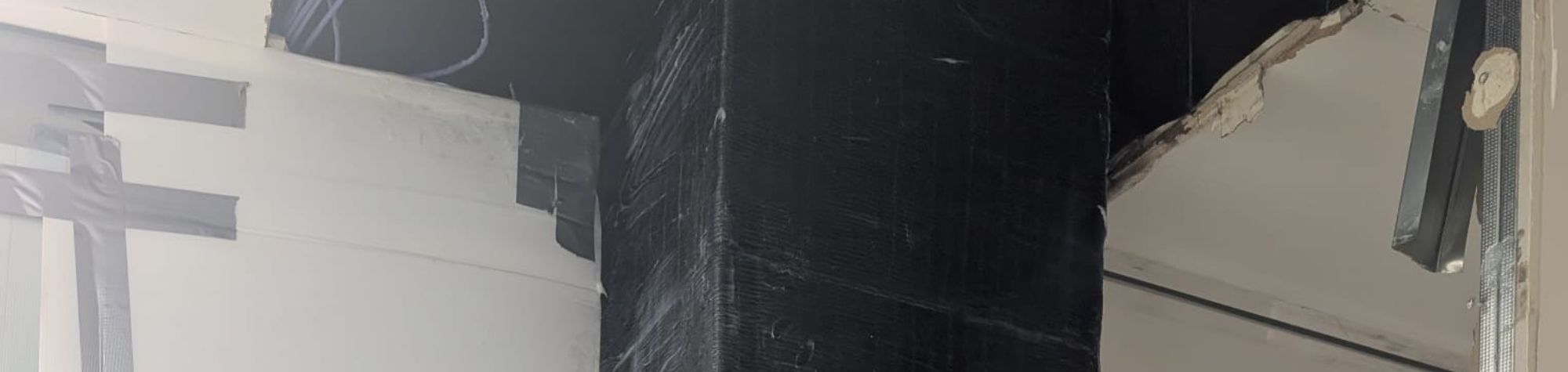
Retrofitting has become a critical part of modern structural engineering. As infrastructure ages, usage changes and design standards evolve, existing assets must be adapted to meet new performance demands. More and more, engineers are turning to carbon fibre reinforced polymer (CFRP) as a preferred solution for retrofit strengthening, which is thanks to its efficiency, versatility and long-term performance.
At Composites Construction UK, we support retrofit projects across a wide range of sectors where CFRP delivers clear technical and practical advantages.
Designed for existing structures
Unlike new-build construction, retrofitting requires solutions that work with what is already there. CFRP systems are particularly well suited to this challenge. Their low weight and thin profiles allow strengthening to be added without significantly changing structural geometry or imposing additional loads.
This makes CFRP ideal for upgrading bridges, buildings and industrial structures where clearance, access or foundation capacity is limited. We can help your business to strengthen existing assets without introducing unnecessary complexity or compromise.
Installation efficiency on live sites
Many retrofitting projects take place on operational sites where downtime must be minimised. Carbon fibre strengthening systems are typically bonded or wrapped externally, avoiding the need for heavy plant, intrusive demolition or prolonged closures. Whether the structure is a transport asset, commercial building or operational facility, this faster installation process helps to reduce risk and disruption to users. CCUK can support your project with installation methodologies that prioritise safety, speed and continuity of service.
Performance-driven strengthening
Engineers value CFRP because it delivers measurable, predictable performance. Our innovative systems can be designed to increase flexural strength, enhance shear capacity, improve confinement or address fatigue-related issues in structural elements.
Because CFRP strengthening is highly targeted, material is only applied where it is structurally required. This allows our engineers to achieve specific performance outcomes without over-strengthening or unnecessary intervention. We can work with your business from assessment through to design and delivery, ensuring retrofit solutions meet both current standards and future demands.
Durability and reduced maintenance
Long-term durability is a key consideration in retrofit design. Fortunately, CFRP doesn’t corrode and performs well in aggressive environments where traditional steel-based solutions may deteriorate over time. By reducing susceptibility to corrosion, CFRP can lower ongoing maintenance requirements and improve whole-life costs.
For asset owners, this translates into fewer interventions, greater reliability and improved long-term value.
Supporting modern engineering priorities
As engineering priorities shift towards sustainability, resilience and asset life extension, CFRP aligns closely with these objectives. Whilst lightweight systems reduce embodied impacts associated with transport and installation, long service life supports more sustainable infrastructure management.
The growing adoption of CFRP reflects a broader change in how retrofitting challenges are approached. It’s no longer just about repair, as the specialists at CCUK also focus on optimising performance and extending asset value. This means we can help your business to implement CFRP retrofitting solutions that are efficient, durable and fit for the demands of modern engineering.
Book your free feasibility survey for carbon Fibre wrap today
If you’ve noticed cracks in your concrete structures, book a free feasibility survey with Composites Construction UK today. We’ll visit your site to see whether carbon Fibre wrap is suited to your requirements and provide a complimentary quote. We look forward to hearing from you!
To learn more about carbon fibre, browse our blog section
Top 5 benefits of carbon fibre strengthening for infrastructure projects
When to choose carbon fibre over steel for structural repairs