

Chloride Attack on Reinforced Concrete: Causes and Risks
Chloride attack on reinforced concrete can begin before visible damage appears: chloride ions reach the steel and, at a critical concentration, can...
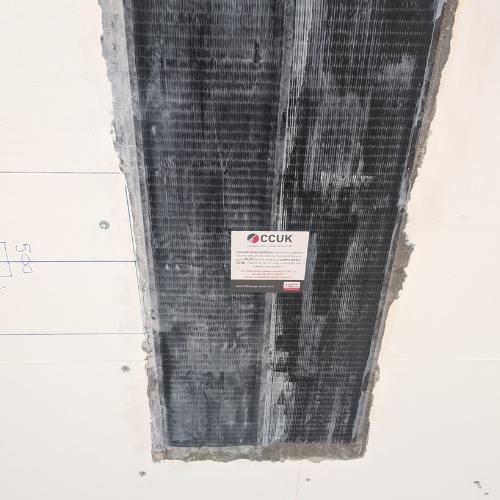
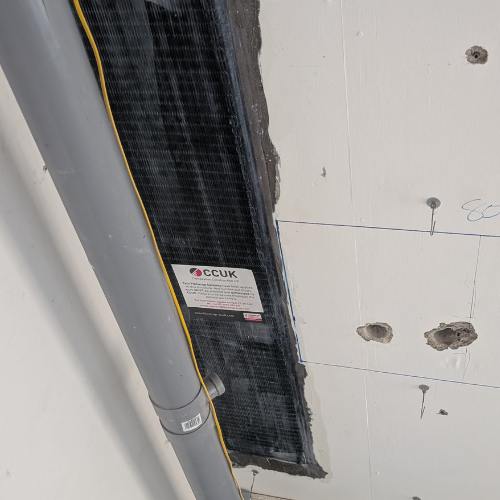
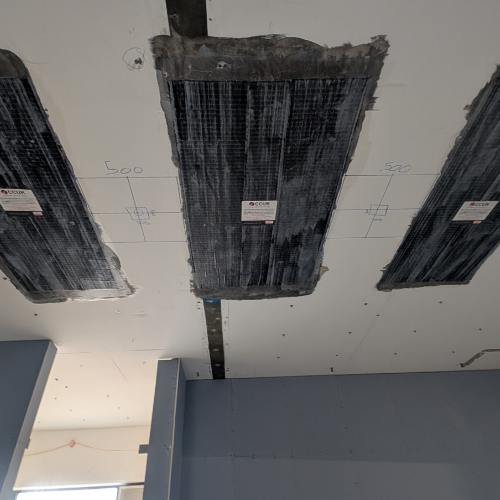
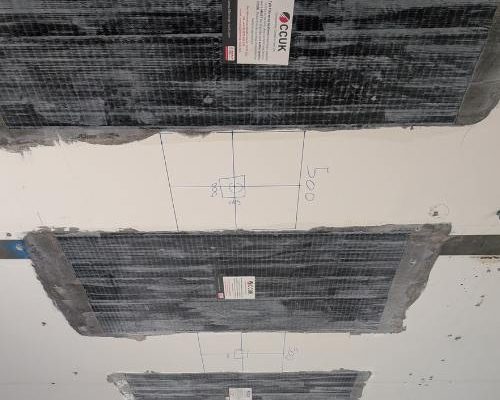
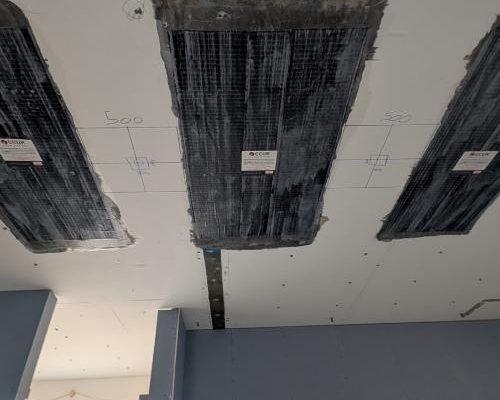
Scope of Work: Brooklands College in Weybridge embarked on an extensive refurbishment of one of its faculty buildings during the late 2024/25 period. As part of the upgrade, new mechanical and electrical services were to be installed, which required the contractor to create 21 openings through the level 2 slab and the roof slab. Structural engineers reviewed the impact of these modifications and determined that 6 of the openings would require additional reinforcement to maintain the structural integrity of the building. CCUK was approached to design and install a strengthening solution that would fit within the constraints of a fast-moving fit-out program and limited working space.
Although the structural issues themselves were straightforward, the project’s primary challenge was the speed at which analysis, design, and installation had to be completed. The building was undergoing a Category A (CAT A) fit-out, meaning finishes and services were being rapidly installed in parallel with structural works. Limited headroom and the advanced stage of internal finishes made the use of traditional steel strengthening both impractical and costly. The project demanded a quick, non-intrusive solution that would not interfere with the existing construction program or compromise the interior spaces.
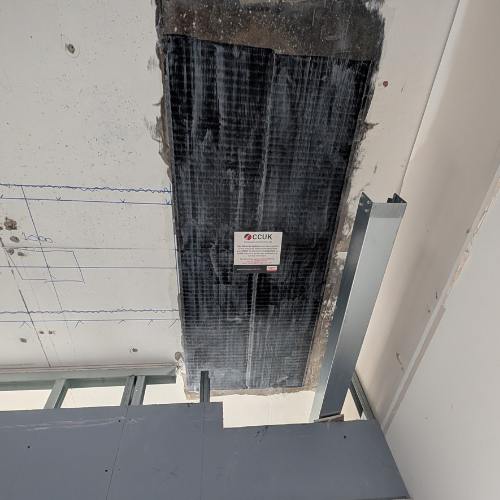
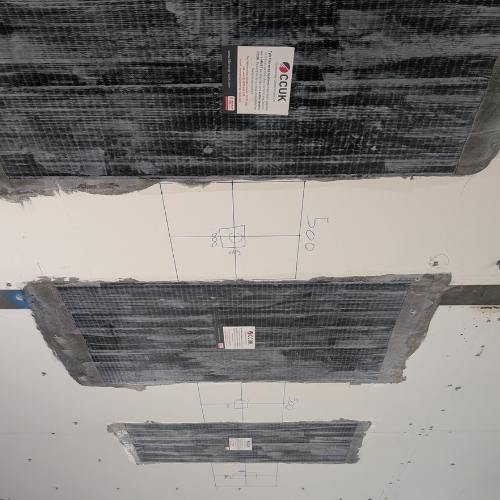
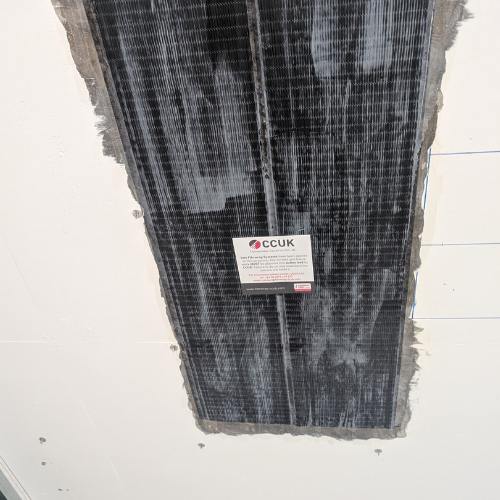
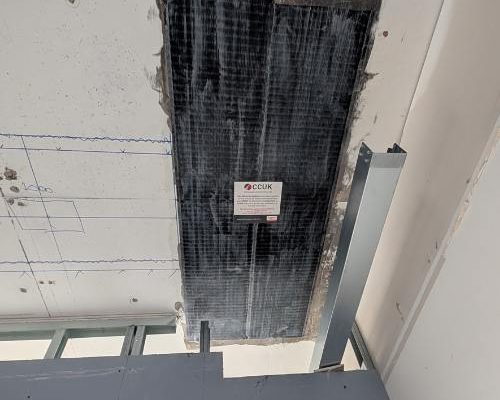
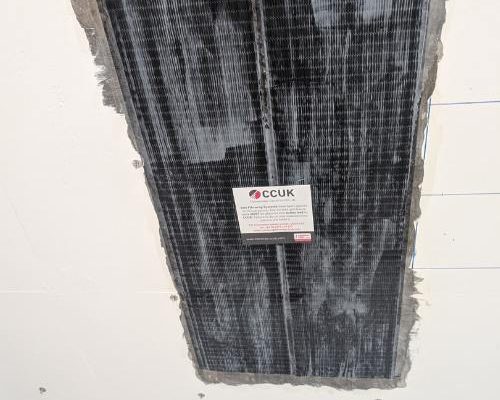
CCUK responded rapidly, producing analysis and feasibility calculations in less than three weeks. A strengthening scheme was designed, costed, and approved within this tight timeframe. Given the relatively small size of the openings, which varied up to 100mm by 550mm, the strengthening focused primarily on controlling localised cracking around the new holes rather than full structural realignment. The chosen solution involved the application of Sikawrap 900C carbon fibre, with up to three layers being installed around each of the six identified openings.
Working with a two-man team, CCUK coordinated closely with the on-site team and HVAC contractors to ensure minimal disruption. The strengthening was carefully phased to complement the ongoing installation of mechanical and electrical services, allowing all parties to continue their work with minimal interference.
The carbon fibre strengthening works were completed swiftly, with all six openings reinforced in under one week. This approach allowed the main contractor to proceed without delay on the critical path activities, including the installation of HVAC and other service equipment. The CFRP solution provided a lightweight, space-efficient method of crack control that required no adjustments to ceiling heights or internal finishes. By working efficiently and collaboratively, CCUK delivered a practical, cost-effective solution that kept the refurbishment programme on track and preserved the high-quality standards expected at Brooklands College.